
Wristwatches · Wristwatch
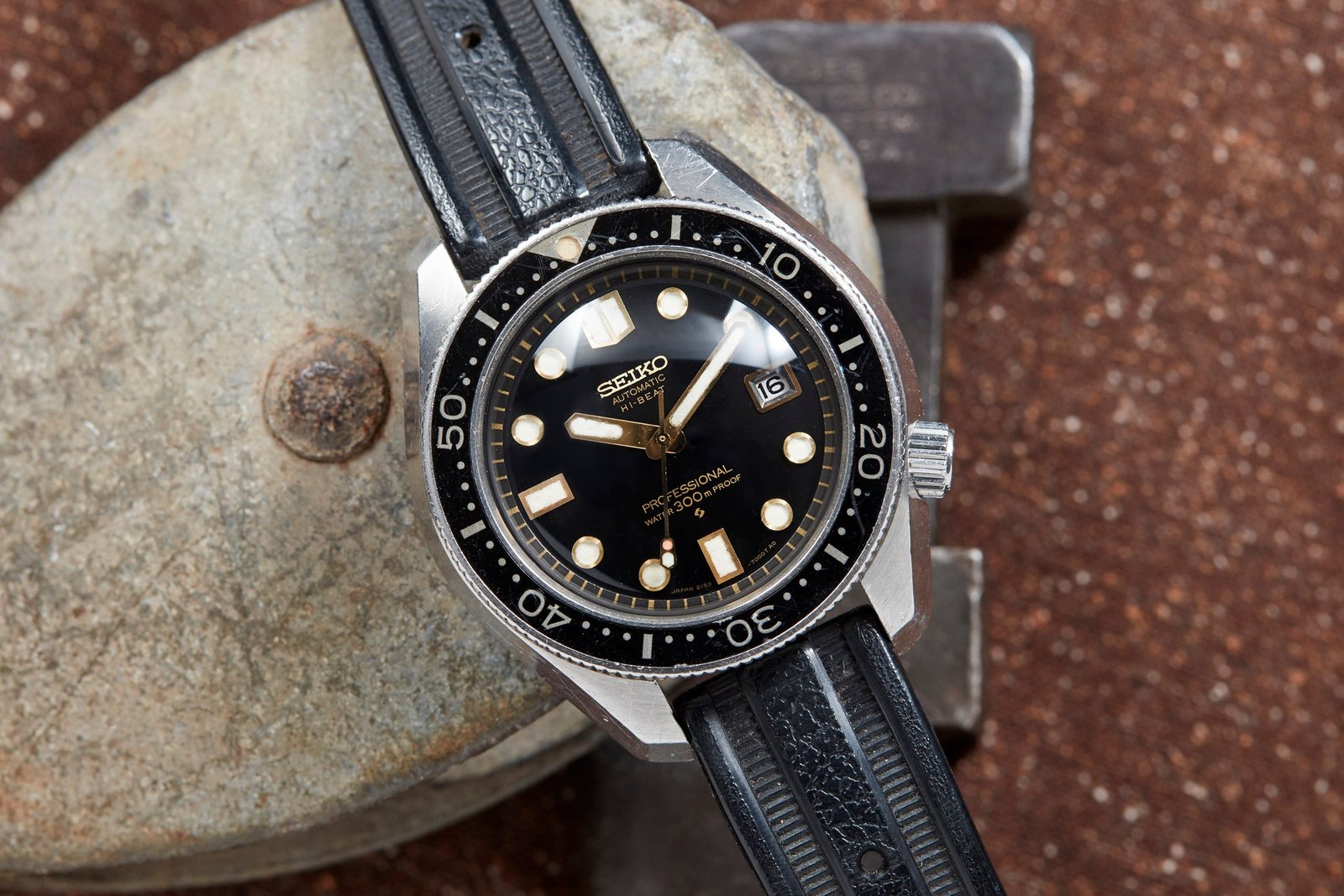
Seiko 6159 Diver, 1969
- Maker / attribution
- Seiko (maker)
- Date
- 1969
- Historical period
- Quartz Revolution (1969 – 1990)
- Country of origin
- Japan
- Object type
- Wristwatch
- Dimensions
- Case 37 mm
- Stock no.
- Product 427278925854
- Credit line
- Dealer listing, Analog/Shift (product 427278925854)
- Catalogue title (original)
- Seiko 6159 Diver (English)
View the source record (dealer listing) ↗ (opens another website in a new tab)Suggest a correction
Record summary
Catalogued by Analog/Shift (dealer), New York (stock number Product 427278925854), this is a wristwatch by Seiko, made in Japan, dated 1969. The Atlas places it in the Quartz Revolution period (1969 – 1990) of its Wristwatches collection. Recorded dimensions: Case 37 mm. The record is illustrated with 6 photographs.
Assembled from the source record's structured fields. Dates and attributions are given as the source states them; where a field is missing the Atlas leaves it blank rather than estimating.
Catalogue description
Dealer description — Analog/Shift
The 1960s were a pivotal time in the history of deep sea exploration, in which new technologies enabled humans to dive deeper and remain submerged longer than they ever had before. As recreational diving became more popular, the watch industry adapted to release watches that could withstand the rigors of deep sea use. Soon, Swiss watch brands such as Blancpain and Rolex released specialized dive watches, the Fifty Fathoms and the Submariner. The success of these watches prompted another brand a continent away to throw its hat in the ring. That brand was Seiko, and the release of its first dive watch in 1965 would be just one in a long line of dive watches that Seiko would make its legacy. The Reference 6217 was water-resistant to 150 meters. Like the Submariner and Fifty Fathoms, it had a rotating bezel, luminous hour markers, and a 17-jewel movement (Calibre 6217) with a beat rate of 18,000. Seiko designed the 6217—also know as 62MAS (for autoMAtic Self-dater)—to be a workhorse, but certain design flaws rendered the watch unsuitable for its intended use. At 37mm, the case was intended to eliminate any potential weak points. However, the fickle nature of the 62MAS’s gaskets—as well as the lack of a screw-down crown—often led to a build-up of helium which in turn could cause the crystal to pop off. Faced with feedback from disgruntled customers, including deep sea divers and welders, Seiko sought to redesign its line of dive watches. The Reference 6159-7001 was what resulted from that redesign, and would set the blueprint for the Seiko dive watches that would follow. It was one of many watches powered by the Calibre 6159, a high-beat movement that Seiko also used in its high-end Grand Seiko line. Around the movement, Seiko built a one-piece stainless steel case that would, they hoped, eliminate the issues that plagued the 62MAS. With the 6159-7001, the addition of a screw-down crown, as well as the watch’s one-piece case construction, increased the water resistance to 300 meters. Manufactured for only a short period of time in 1969 and 1970, the 6159-7001 is considered Seiko's first professional-grade diver and and remains a highly sought after model in their storied history. This particular 6159-7001 dates from 1969. Fresh from a recent service by a master of vintage Seiko, the hi-beat movement ticks away as sedately as ever. With more and more collectors learning of the value of these early Seiko divers, we don’t expect this one to last long—catch it before it’s gone!
Historical context
Quartz Revolution (1969 – 1990)
Seiko's Astron begins mass quartz timekeeping; traditional industries contract sharply.
Quartz and digital watches transformed the market after 1969. Swiss employment collapsed, Japanese and Hong Kong production soared, and the Swatch (1983) helped the Swiss industry recover; mechanical watches survived as luxury goods.
Read the period in the timelineMore wristwatches from this periodEarlier: Modern Mechanical Horology
Atlas type guide
Dive and water-resistant watches
Keeping water and dust out of a wristwatch was a long-standing challenge. Rolex's screw-down Oyster case (1926) and Omega's Marine (1932) were landmarks; in the early 1950s Blancpain's Fifty Fathoms and Rolex's Submariner defined the professional dive watch with rotating bezels for timing dives, luminous dials and high water resistance. The ISO 6425 standard (1982) later codified what a 'diver's watch' must do.
Dive watches became icons of post-war design and exploration, and their evolution — helium escape valves, ceramic bezels, saturation-diving depth ratings — records the history of underwater work.
What to look for
- Unidirectional or bidirectional rotating bezel with minute markings.
- Screw-down crown and case back; depth rating printed on the dial.
- Luminous hands and markers (radium before c. 1960, tritium c. 1960–1998, then Super-LumiNova).
- Reference numbers on the case between the lugs or inside the back.
Dating clues
- Screw-down Oyster cases: from 1926.
- Professional dive watches: from 1953.
- Tritium 'T' marks on dials: c. 1960–1998.
General guidance written by the Atlas editors about this kind of object. It is not a statement about this particular piece; for that, rely on the source record above and on physical examination.
Related records
Wristwatches · 1967
Seiko 300 M, ref. 6215-7000, 1967
Antiquorum auction archive, Geneva
Wristwatches · 1967
Seiko 300 Meter Diver, ref. 6215-7000, 1967
Antiquorum auction archive, Geneva
Wristwatches · c. 1968
Seiko Hi-Beat, ref. 6159-7000, c. 1968
Antiquorum auction archive, Geneva
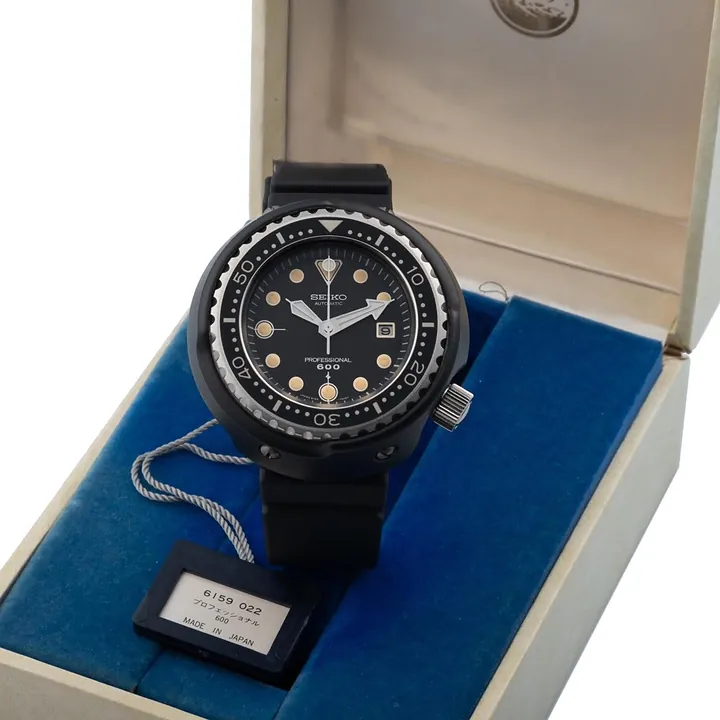
Wristwatches · 1975
Seiko Tuna Professional 600, ref. 6159-7010, 1975
Antiquorum auction archive, Geneva
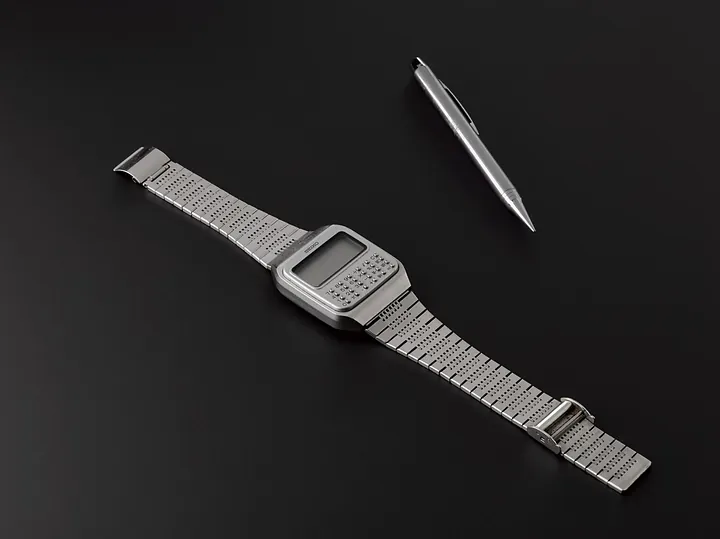
Wristwatches · 1978
Calculator wristwatch by Suwa Seikosha Co. Limited, Japan, 1978
Science Museum Group, London
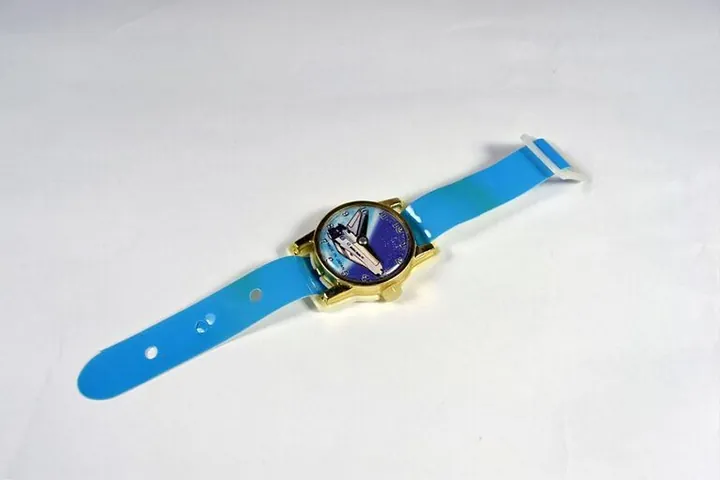
Wristwatches · 1980–1982
Wristwatch, Space Shuttle; plastic, Japan, 1970-1979?
Victoria and Albert Museum, London
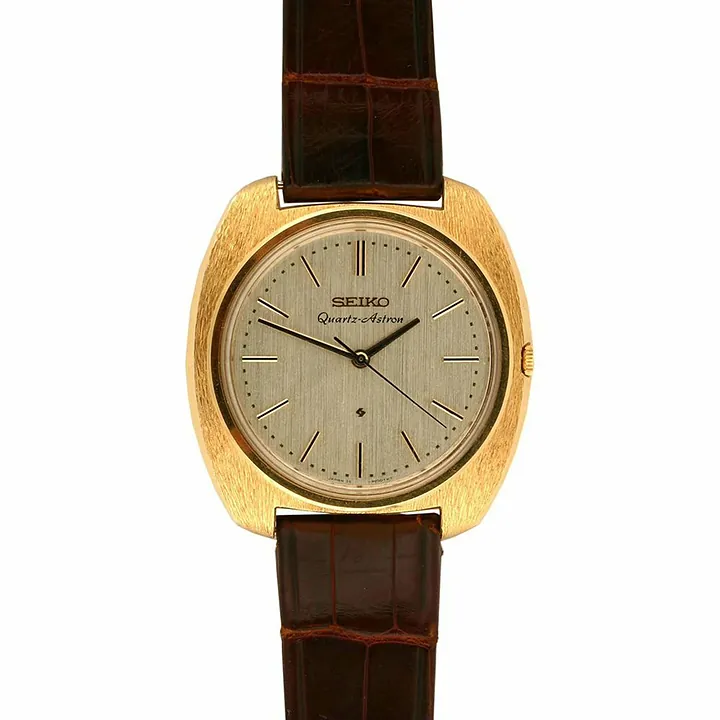
Wristwatches · 1969
Wristwatch, Japan, 1969 (no. 29912)
German Clock Museum
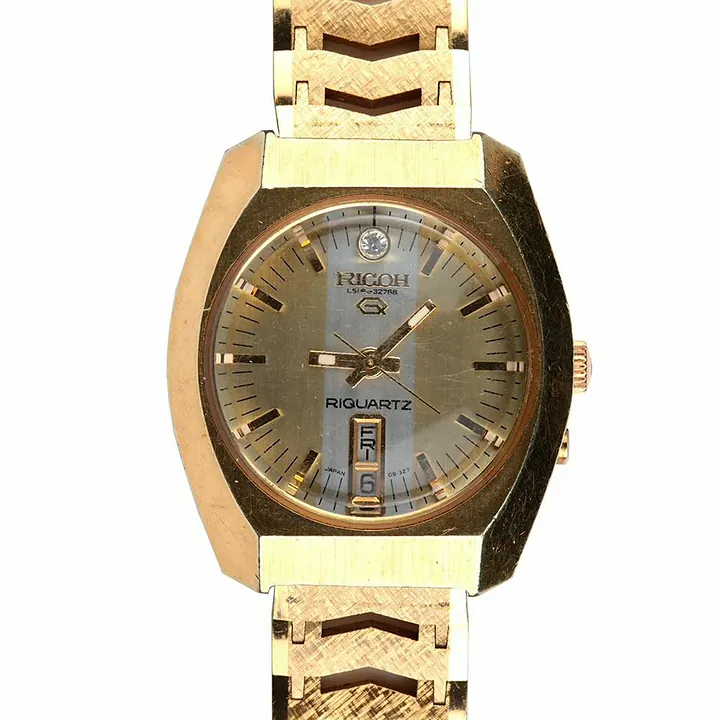
Wristwatches · c. 1972
Wristwatch, Japan, c. 1972
German Clock Museum