
Wristwatches · Wristwatch
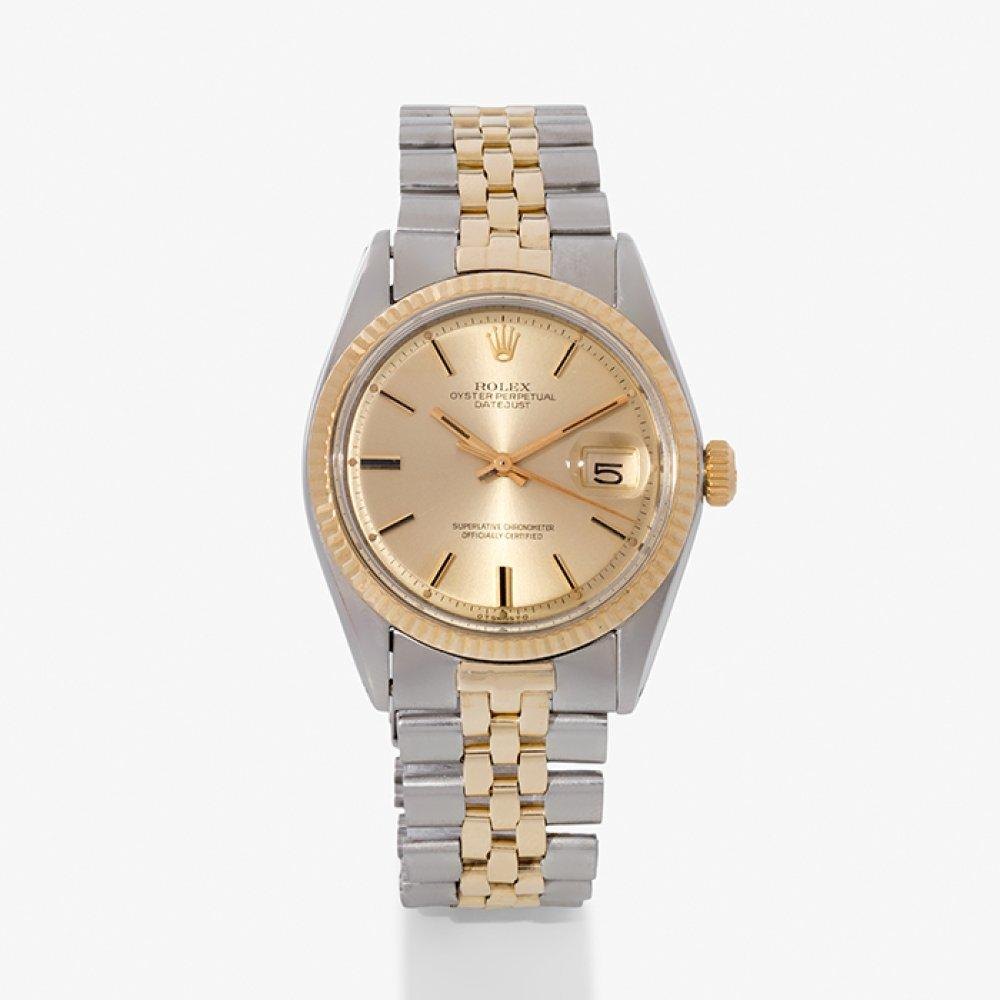
Rolex Oyster Perpetual Datejust watch, ref. 1601, serial no. 36133XX, 1970s
- Maker / attribution
- ROLEX (maker)
- Date
- 1970s
- Historical period
- Quartz Revolution (1969 – 1990)
- Country of origin
- Unrecorded in source
- Object type
- Wristwatch
- Materials / technique
- gold, steel
- Auction house
- Invaluable auction listings
- Lot
- Lot CF2D327C5E
- Credit line
- Auction lot record: lot 111, 30th November - Fine Watches & Fountain Pens, Setdart Auction House (2026), via Invaluable
- Catalogue title (original)
- ROLEX Oyster Perpetual Datejust watch, ref. 1601, serial no. 36133XX. Round stainless steel case with a fixed fluted bezel in 18k yellow gold. (English)
View the source record (auction lot) ↗ (opens another website in a new tab)Suggest a correction
Record summary
Catalogued by Invaluable auction listings (lot Lot CF2D327C5E), this is a wristwatch by ROLEX, dated 1970s. The Atlas places it in the Quartz Revolution period (1969 – 1990) of its Wristwatches collection. Materials and techniques recorded by the source: gold, steel. The record is illustrated with 3 photographs.
Assembled from the source record's structured fields. Dates and attributions are given as the source states them; where a field is missing the Atlas leaves it blank rather than estimating.
Catalogue description
Lot description — Setdart Auction House
Gold dial with applied gold baton hour markers, matching hands, and a central seconds hand. Date window at 3 o’clock with a Cyclops magnifying lens. Inscriptions: “ROLEX OYSTER PERPETUAL DATEJUST” and “SUPERLATIVE CHRONOMETER OFFICIALLY CERTIFIED.” Caliber 1570 automatic movement. Signed Twinlock screw-down crown. Two-tone Jubilee bracelet in steel and 18k yellow gold, with a signed Oysterclasp folding clasp. Measurements: 36 mm (case diameter). The Rolex Datejust Ref. 1601 is one of the Swiss brand’s timeless icons. Introduced in the late 1970s and in production for much of the 1980s, this model stands out for its balance of elegance and robustness, thanks to its Oyster case and gold bezel. In the watch descriptions, when it states “it works,” it means the watch is functioning. Since collector’s watches typically have delicate and complex mechanisms, the buyer is responsible for any general servicing, inspection, battery replacement, adjustment, or repair that may be necessary.
Historical context
Quartz Revolution (1969 – 1990)
Seiko's Astron begins mass quartz timekeeping; traditional industries contract sharply.
Quartz and digital watches transformed the market after 1969. Swiss employment collapsed, Japanese and Hong Kong production soared, and the Swatch (1983) helped the Swiss industry recover; mechanical watches survived as luxury goods.
Read the period in the timelineMore wristwatches from this periodEarlier: Modern Mechanical Horology
Atlas type guide
Dive and water-resistant watches
Keeping water and dust out of a wristwatch was a long-standing challenge. Rolex's screw-down Oyster case (1926) and Omega's Marine (1932) were landmarks; in the early 1950s Blancpain's Fifty Fathoms and Rolex's Submariner defined the professional dive watch with rotating bezels for timing dives, luminous dials and high water resistance. The ISO 6425 standard (1982) later codified what a 'diver's watch' must do.
Dive watches became icons of post-war design and exploration, and their evolution — helium escape valves, ceramic bezels, saturation-diving depth ratings — records the history of underwater work.
What to look for
- Unidirectional or bidirectional rotating bezel with minute markings.
- Screw-down crown and case back; depth rating printed on the dial.
- Luminous hands and markers (radium before c. 1960, tritium c. 1960–1998, then Super-LumiNova).
- Reference numbers on the case between the lugs or inside the back.
Dating clues
- Screw-down Oyster cases: from 1926.
- Professional dive watches: from 1953.
- Tritium 'T' marks on dials: c. 1960–1998.
General guidance written by the Atlas editors about this kind of object. It is not a statement about this particular piece; for that, rely on the source record above and on physical examination.
Related records
Wristwatches · c. 1949
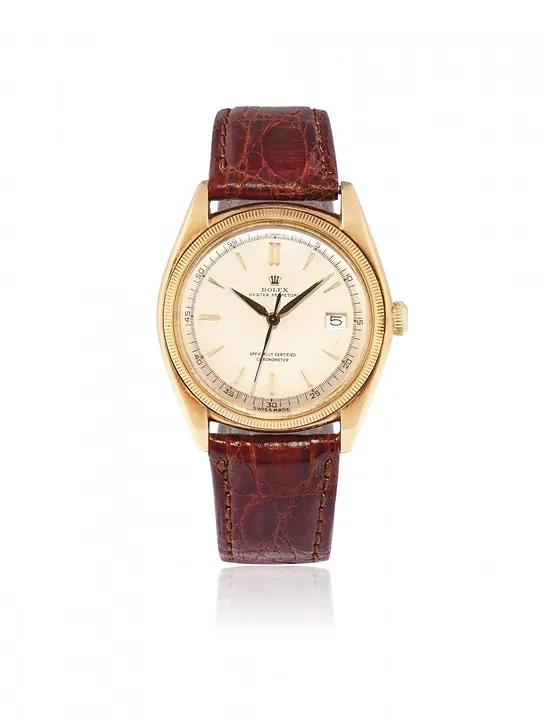
Gold Rolex Datejust 'Big Bubbleback', ref. 4467, c. 1949
LiveAuctioneers auction archive
Wristwatches · c. 1937
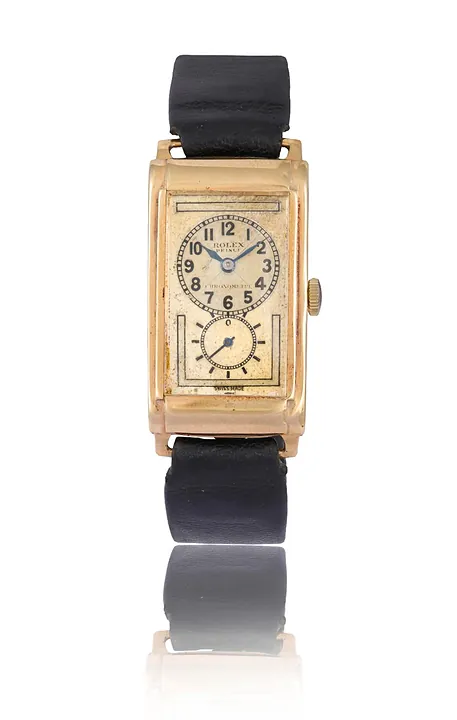
Rolex Prince 'Doctor's watch', ref. 1862, 9K yellow gold
Invaluable auction listings

Wristwatches · 1970
Wristwatch by Heno, Switzerland, 1970
Museum Rotterdam
Wristwatches · 1970s
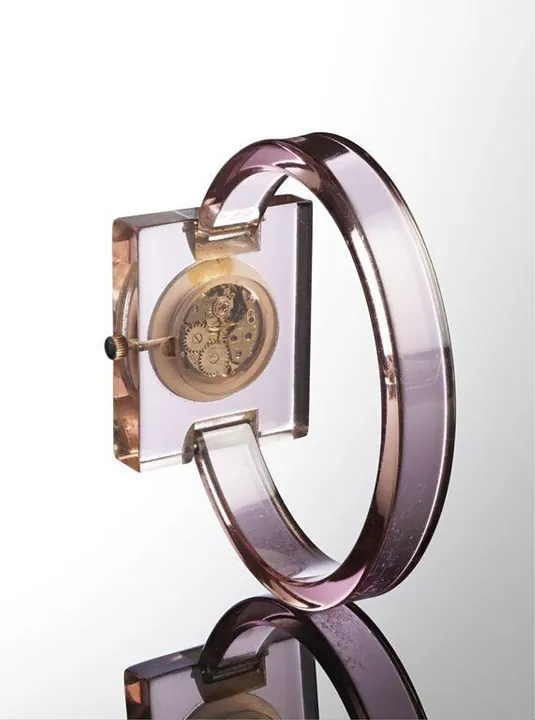
Wristwatch, plastic, by Gucci; Italy, 1970s.
Victoria and Albert Museum, London
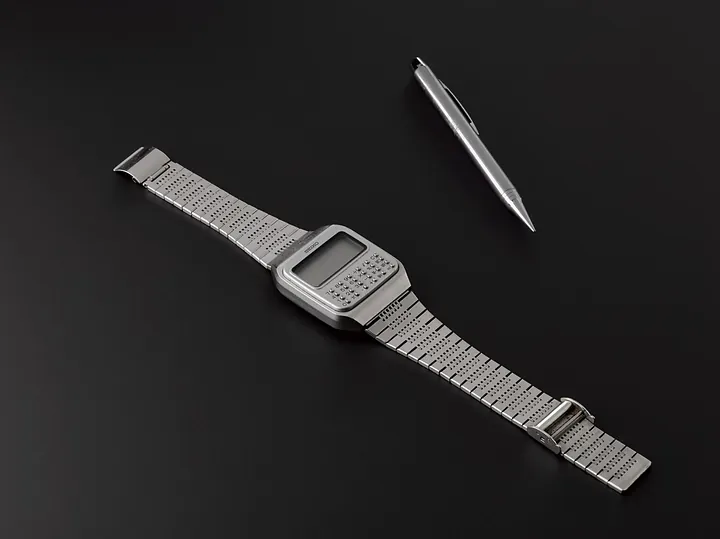
Wristwatches · 1978
Calculator wristwatch by Suwa Seikosha Co. Limited, Japan, 1978
Science Museum Group, London
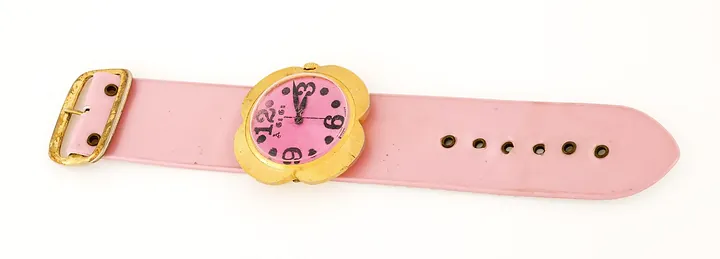
Wristwatches · 1980
Wristwatch, 1980 (no. 71413)
Museum Rotterdam
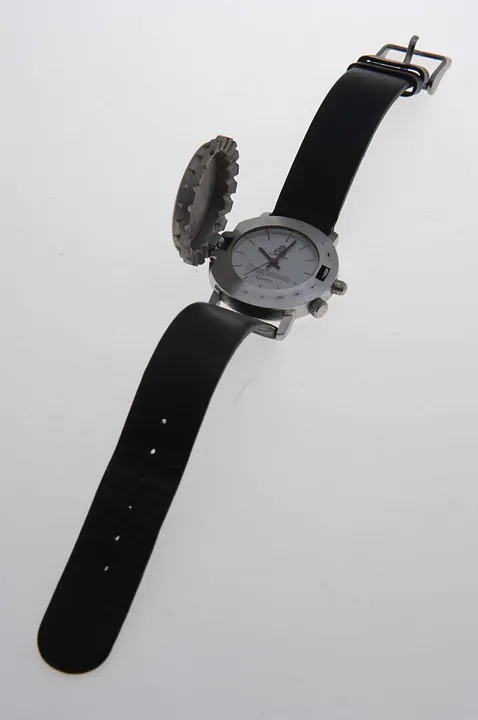
Wristwatches · 1980
Wristwatch, 1980 (no. 91477)
Museum Rotterdam
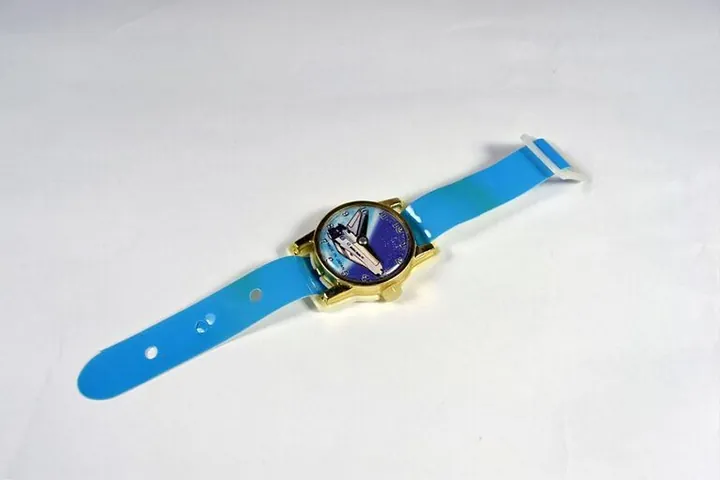
Wristwatches · 1980–1982
Wristwatch, Space Shuttle; plastic, Japan, 1970-1979?
Victoria and Albert Museum, London