
Wristwatches · Wristwatch
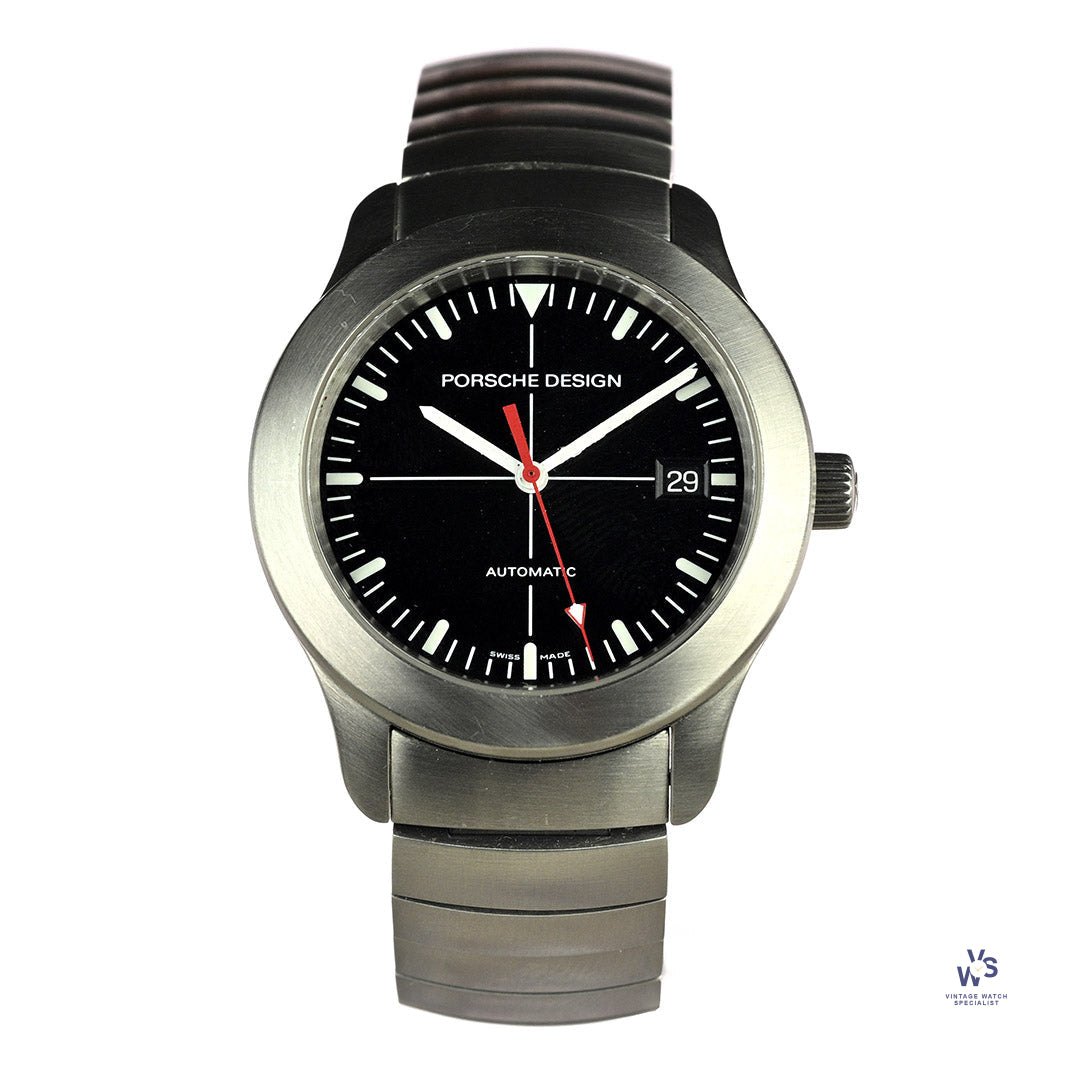
Porsche Design by Eterna, Automatic, ref. 633.6602.41, circa 1990s
- Maker / attribution
- Porsche Design (maker)
- Date
- c. 1990s
- Historical period
- Mechanical Renaissance (1990 – 2010)
- Country of origin
- Unrecorded in source
- Object type
- Wristwatch
- Dimensions
- Case 38.5 mm
- Stock no.
- vws3638
- Credit line
- Dealer listing, Vintage Watch Specialist (vws3638)
- Catalogue title (original)
- Porsche Design by Eterna - Automatic - Model Ref: 633.6602.41 - c.1990s (English)
View the source record (dealer listing) ↗ (opens another website in a new tab)Suggest a correction
Record summary
Catalogued by Vintage Watch Specialist (dealer), United Kingdom (stock number vws3638), this is a wristwatch by Porsche Design, dated c. 1990s. The Atlas places it in the Mechanical Renaissance period (1990 – 2010) of its Wristwatches collection. Recorded dimensions: Case 38.5 mm. The record is illustrated with 6 photographs.
Assembled from the source record's structured fields. Dates and attributions are given as the source states them; where a field is missing the Atlas leaves it blank rather than estimating.
Catalogue description
Dealer description — Vintage Watch Specialist
An Incredibly Well-Preserved Porsche Design by Eterna Automatic Watch with a Classic Black Crosshair Dial and Brushed Steel Bracelet, c.1990s Porsche Design and Eterna Watches share a fascinating journey that intertwines innovation and craftsmanship. Porsche Design, renowned for its avant-garde approach to luxury accessories, decided to venture into the world of horology in the early 1970s. Recognizing the need for technical prowess, the brand collaborated with Eterna, a Swiss watchmaking icon celebrated for its precision engineering and rich history dating back to 1856. This partnership commenced in 1998, marrying Porsche Design's modern aesthetic with Eterna's horological expertise. Together, they unveiled timepieces that exuded a seamless blend of function and style, appealing to both automobile enthusiasts and watch connoisseurs. The collaboration garnered acclaim for its distinctive designs, like the Porsche Design Indicator—one of the first watches to feature a mechanical digital display. While Porsche Design later moved its watch production in-house, the collaboration with Eterna remains a testament to their shared values of innovation and quality, marking a significant chapter in both brands' histories. What's on Offer This watch is in superb condition with barely a sign of previous wear. The dial is rich black with that sporty crosshair detail offering symmetry and a blood-red seconds hand giving a pop of colour. The Porsche Design logo is bold and there is a subtle date window at 3 o'clock. The watch feels robust and is fairly meaty on the wrist, at 38.5mm it certainly has a nice presence. The brushed steel case and bracelet are in fantastic shape and to the case back you will note that the watch is signed by both Porsche Design and Eterna. This is a very stylish watch and is sure to pique both Porsche enthusiasts and vintage lovers alike - we love it!
Historical context
Mechanical Renaissance (1990 – 2010)
Mechanical watches return as cultural objects; independent watchmaking flourishes.
Mechanical watches returned as cultural and luxury objects. Complications, tourbillons and new materials proliferated; independent watchmakers such as George Daniels, F.P. Journe and Philippe Dufour revived artisanal watchmaking; collecting vintage watches became a major field.
Read the period in the timelineMore wristwatches from this periodEarlier: Quartz Revolution
Atlas type guide
Automatic (self-winding) watches
Self-winding watches use the wearer's motion to wind the mainspring. Abraham-Louis Perrelet and Breguet made 'perpétuelle' pocket watches with oscillating weights in the late eighteenth century, but the principle only became practical in the wristwatch. John Harwood patented a bumper automatic in 1923; Rolex's Perpetual rotor (1931) winding in one direction, and later bidirectional rotors (Eterna, Felsa Bidynator), established the modern form. Micro-rotors (Universal Genève, Buren) and peripheral rotors made automatic watches thinner.
What to look for
- A semicircular rotor turning 360° over the movement, or a 'bumper' weight that rebounds between springs.
- 'Automatic', 'Perpetual' or 'Self-winding' on the dial.
- A sealed screw-back case, since automatic watches are wound less often by the crown.
Dating clues
- Bumper automatics: 1923–c. 1955.
- Full rotors: from 1931 (Rolex); widespread after c. 1950.
- Micro-rotors: from 1954–1958.
General guidance written by the Atlas editors about this kind of object. It is not a statement about this particular piece; for that, rely on the source record above and on physical examination.
Related records
Wristwatches · 1980s
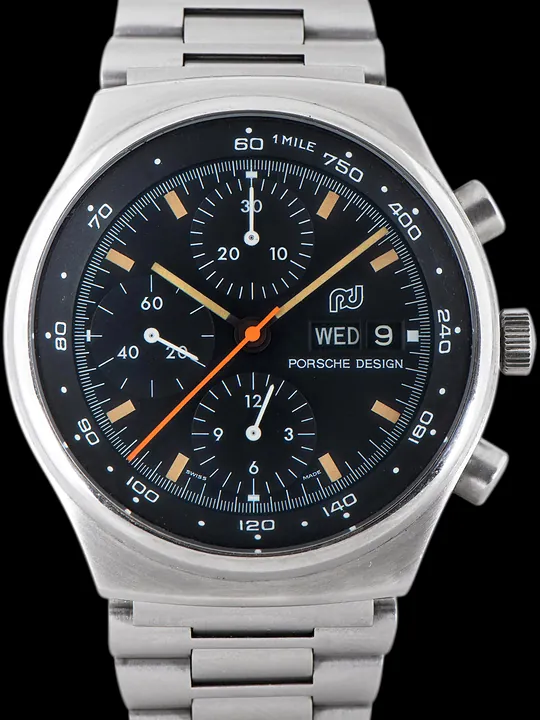
Porsche Design Chronograph (Ref. 7750), 1980s
Craft & Tailored (dealer), Los Angeles
Wristwatches · 1970s
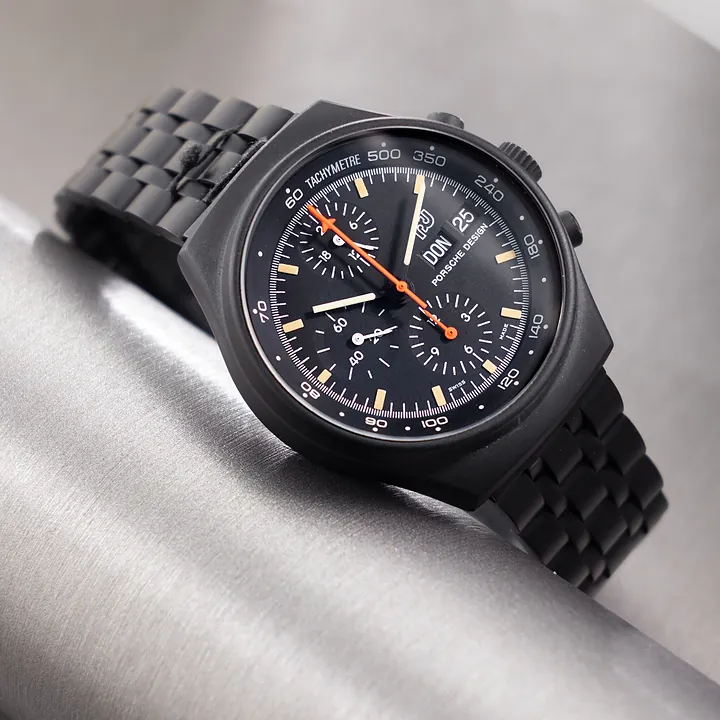
Porsche Design by Orfina Chronograph 1 ref. 7176 NOS, 1970s
Bulang & Sons (dealer), Copenhagen
Wristwatches · 1970s
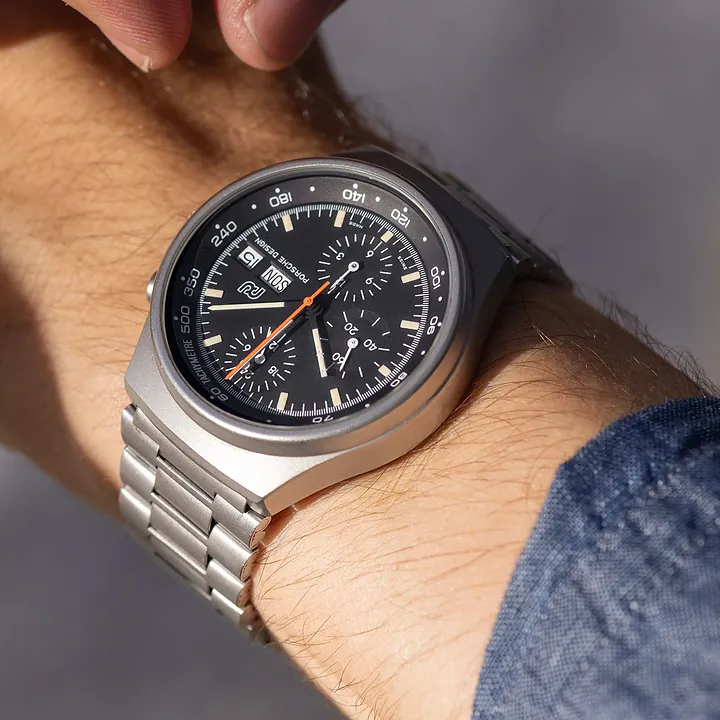
Porsche Design by Orfina Chronograph 1 ref. 7176D Lemania 5100 Sandblasted Grey, 1970s
Bulang & Sons (dealer), Copenhagen
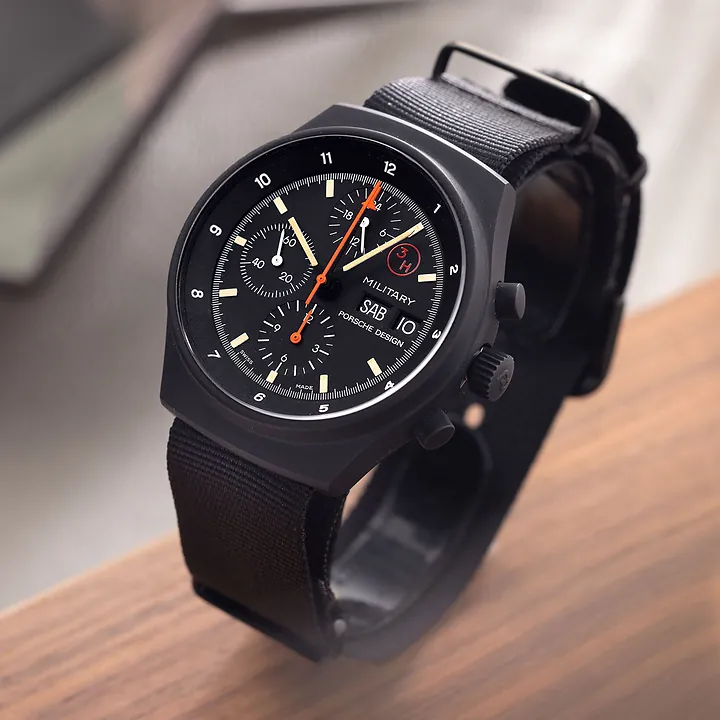
Wristwatches · 1970s
Porsche Design by Orfina Chronograph 1 ref. 7177 'Military' NOS, 1970s
Bulang & Sons (dealer), Copenhagen
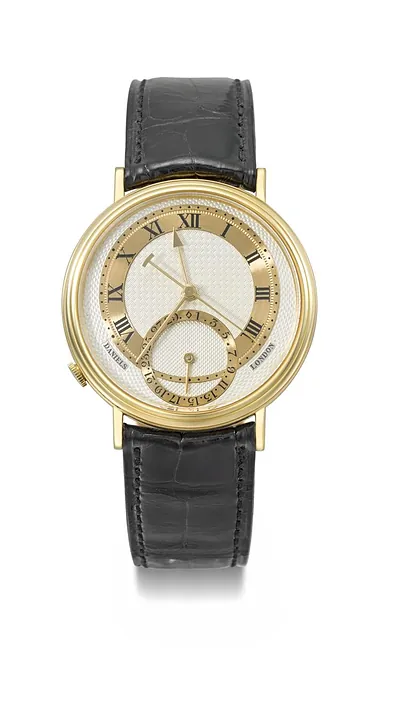
Wristwatches · 1999
'Millennium' co-axial wristwatch by George Daniels and Omega, England, 1999
Science Museum Group, London

Wristwatches · 2008
Wristwatch by Breitling?, 2008
Museum Rotterdam
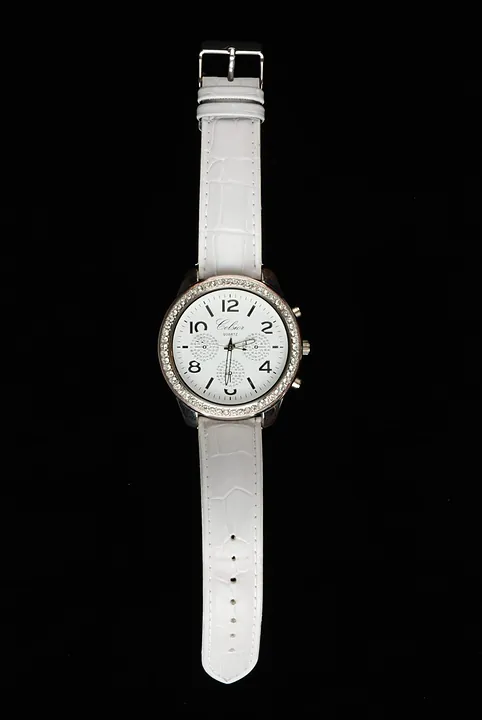
Wristwatches · 2008
Wristwatch by Celsior Quartz, 2008
Museum Rotterdam
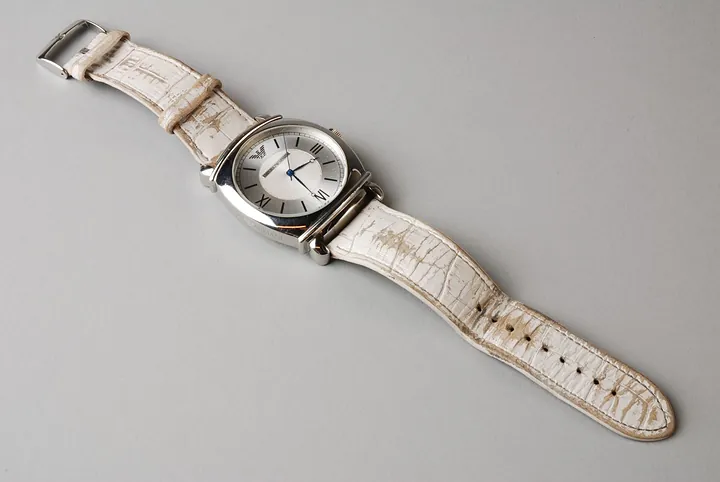
Wristwatches · 2008
Wristwatch possibly by Emporio Armani, 2008
Museum Rotterdam