
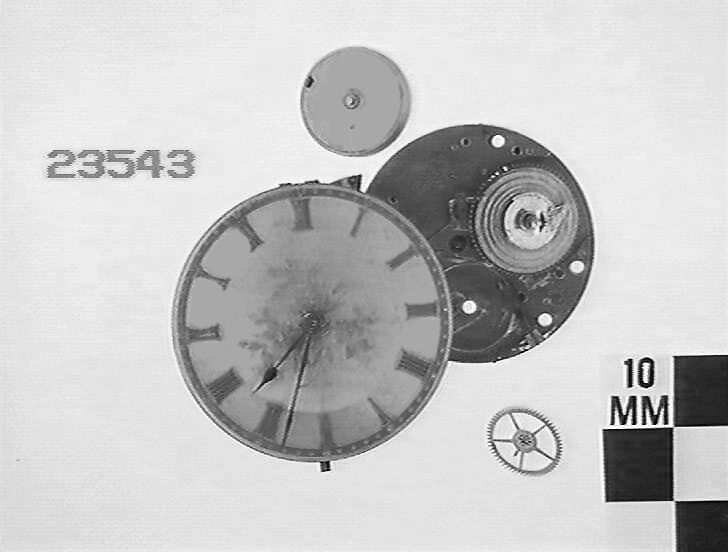
Movements & Components · Pocket watch movement
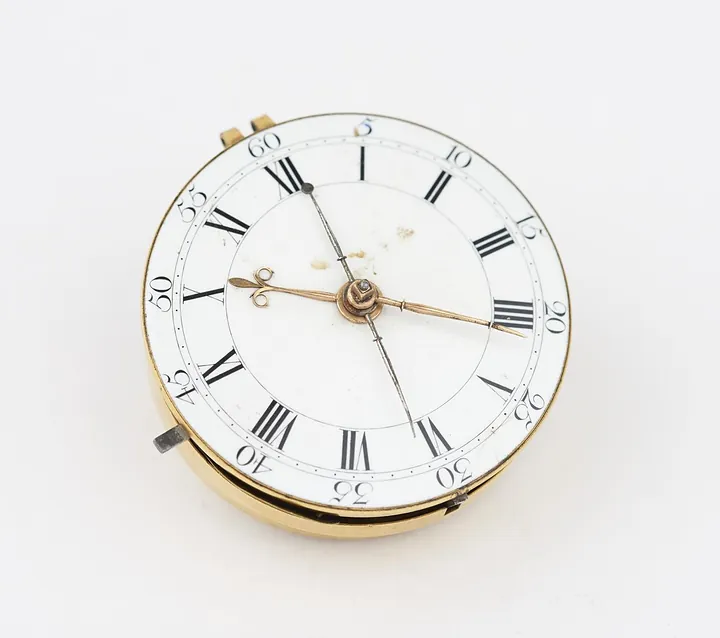
Pocket Watch Movement - Lewis Woolf, Liverpool, circa 1850
- Maker / attribution
- Mr Lewis Woolf (Maker)
- Date
- 1834–1851
- Historical period
- Precision & Scientific Horology (1750 – 1850)
- Country of origin
- England
- Place
- Liverpool, England, Great Britain
- Object type
- Pocket watch movement
- Dimensions
- 3.9 cm (Outside Diameter)
- Holding institution
- Museums Victoria, Melbourne
- Accession / object no.
- ST 23543
- Catalogue title (original)
- Pocket Watch Movement - Lewis Woolf, Liverpool, circa 1850 (English)
View the source record ↗ (opens another website in a new tab)Suggest a correction
Record summary
Held and catalogued by Museums Victoria, Melbourne (object number ST 23543), this is a pocket watch movement by Mr Lewis Woolf, made in Liverpool, England, Great Britain, dated 1834–1851. The Atlas places it in the Precision & Scientific Horology period (1750 – 1850) of its Movements & Components collection. Recorded dimensions: 3.9 cm (Outside Diameter). The record is illustrated with 1 photograph.
Assembled from the source record's structured fields. Dates and attributions are given as the source states them; where a field is missing the Atlas leaves it blank rather than estimating.
Catalogue description
Summary — Museums Victoria
Gents pocket watch movement, Lewis Woolf, Liverpool, no 64160, circa 1850.
Physical description — Museums Victoria
Gold coloured metal dial with foliage design, gold roman numerals and black metal hands. Ornate back mounts. Key wound spring; lever escapement. Fusee and chain. Scale fast to slow. Movement is in pieces.
Inscriptions & marks
Back plate is marked 'Lewis Woolf, 35 South Castle St. Liverpool, n64160'.
Provenance
Donation from Mrs S. Barnett, 01 Dec 1946
Historical context
Precision & Scientific Horology (1750 – 1850)
Harrison solves longitude; Mudge invents the lever; Breguet's Paris workshop defines the modern watch.
The age of escapement invention: cylinder, duplex, lever, detent and many experimental escapements; compensation balances and fine finishing.
Read the period in the timelineMore movements & components from this periodEarlier: Early Modern Horology
Atlas type guide
Clock and watch movements
The movement is the mechanism of a clock or watch, without its case and dial. It consists of the power source (weight or mainspring in its barrel, sometimes with a fusee), the going train of wheels and pinions, the escapement and oscillator, the motion work that drives the hands, and in many cases additional trains for striking or complications.
From the eighteenth century watch movements were increasingly produced in stages: Swiss and French ébauche makers supplied rough movements that finishers, repasseurs and retailers completed and signed. Calibre numbers — first used systematically by American and Swiss factories in the nineteenth century — make it possible to identify movements, find spare parts and date watches.
What to look for
- Plate and bridge layout: full plate, three-quarter plate, Lépine bar calibre, bridges and cocks.
- Jewel count and whether jewels are set in chatons or rubbed in.
- Signatures, calibre and serial numbers on the plate or under the dial.
- Finishing: Geneva stripes (Côtes de Genève), perlage, bevelled edges, blued screws.
- Fusee and chain, going barrel, or electrical components.
Dating clues
- Full-plate English movements dominate before c. 1850; three-quarter plate and Lépine calibres after.
- Jewelled movements spread after Facio and Debaufre's patent of 1704, mainly in English work until c. 1800.
- Calibre numbers and factory serials allow close dating for industrial production after c. 1850.
General guidance written by the Atlas editors about this kind of object. It is not a statement about this particular piece; for that, rely on the source record above and on physical examination.
Read next:Verge escapement
Related records
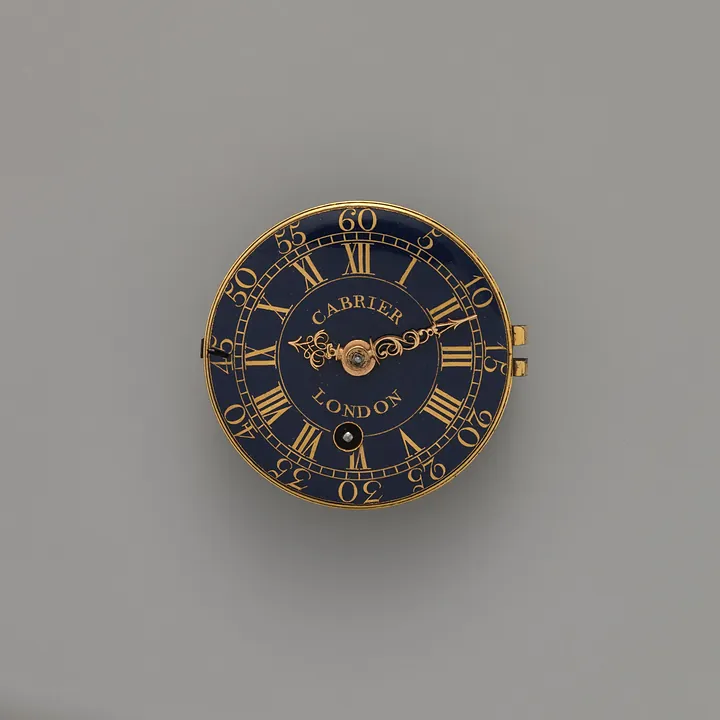
Movements & Components · c. 1740–60
Watch movement by Charles Cabrier II, England, c. 1740–60
The Metropolitan Museum of Art, New York
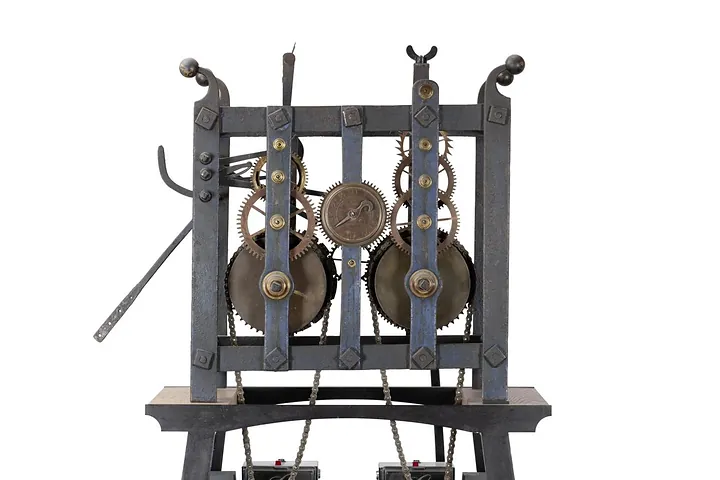
Movements & Components · 1750
Clock movement by William Smith, England, 1750
Science Museum Group, London
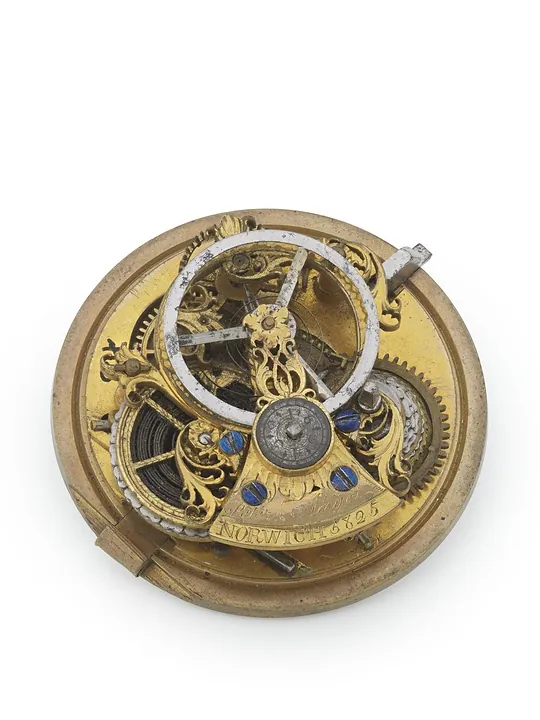
Movements & Components · 1750–1775
Watch movement by Peter Amyot, England, 1750–1775
Science Museum Group, London
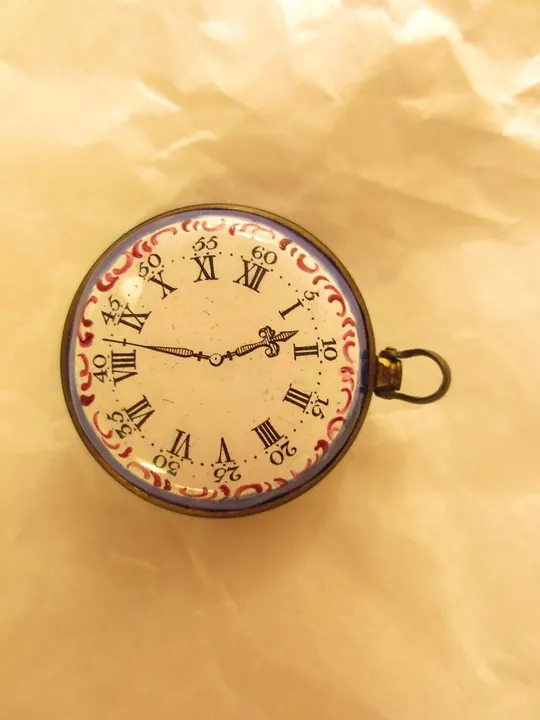
Movements & Components · late 18th century
Watch, Bilston enamel, England, late 18th century
Victoria and Albert Museum, London
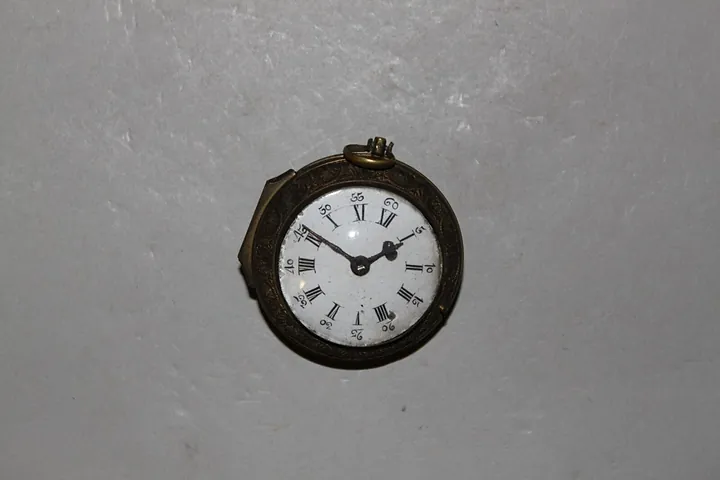
Movements & Components · late 18th century
Watch, cast brass and Bilston enamel, England, late 18th century (V&A 1664-1871)
Victoria and Albert Museum, London
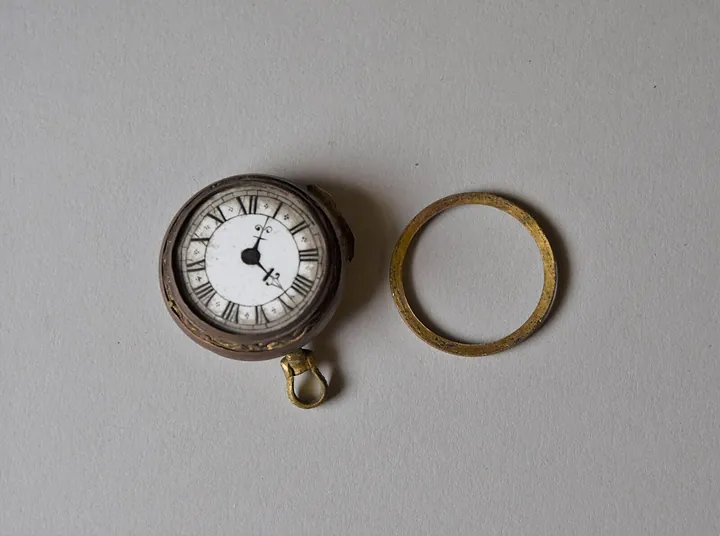
Movements & Components · late 18th century
Watch, cast brass and Bilston enamel, England, late 18th century (V&A 1665-1871)
Victoria and Albert Museum, London
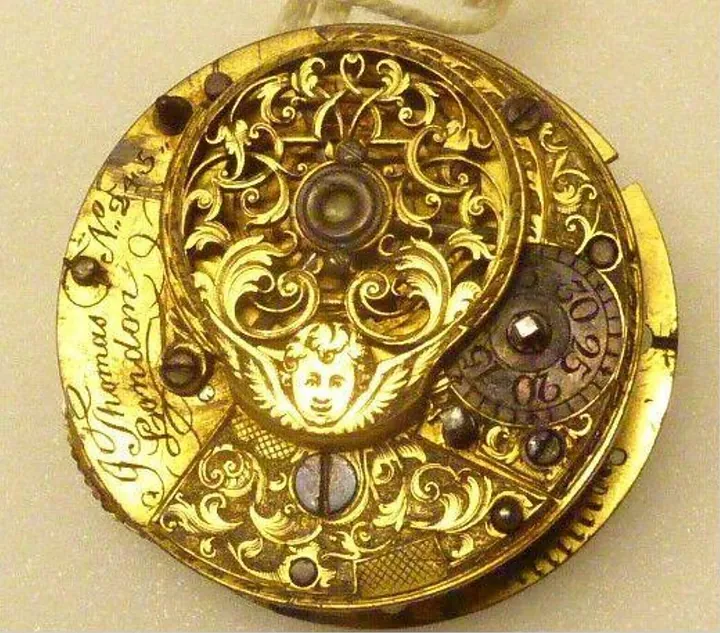
Movements & Components · 1770–1780
Brass, pierced and engraved, English (London), 1770–1780
Victoria and Albert Museum, London
Movements & Components · 1775
Cylinder escapement, by J. Davis, about 1775, England
Science Museum Group, London