
Pocket Watches · Pocket watch
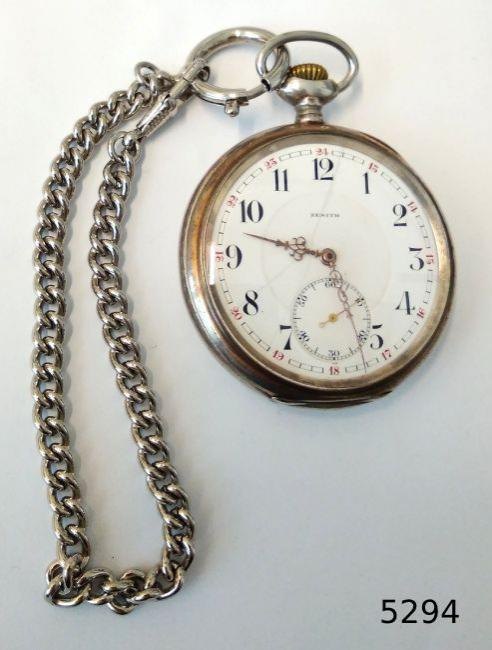
Pocket watch by Zenith, Switzerland, 1900–1909
- Maker / attribution
- Zenith (maker)
- Date
- 1900–1909
- Historical period
- Golden Age of Mechanical Watchmaking (1900 – 1945)
- Country of origin
- Switzerland
- Place
- Switzerland
- Object type
- Pocket watch
- Materials / technique
- metal, silver
- Dimensions
- diameter 5,30 cm; thickness 1,30 cm; length (kellonperät) 25,00 cm
- Holding institution
- KAINUUN MUSEO
- Accession / object no.
- KMKME5294:1
- Credit line
- KAINUUN MUSEO (via Finna)
- Catalogue title (original)
- kello; taskukello; Zenith; Zenith (Finnish)
View the source record ↗ (opens another website in a new tab)Suggest a correction
Record summary
Held and catalogued by KAINUUN MUSEO (object number KMKME5294:1), this is a pocket watch by Zenith, made in Switzerland, dated 1900–1909. The Atlas places it in the Golden Age of Mechanical Watchmaking period (1900 – 1945) of its Pocket Watches collection. Materials and techniques recorded by the source: metal, silver. Recorded dimensions: diameter 5,30 cm; thickness 1,30 cm; length (kellonperät) 25,00 cm. The record is illustrated with 2 photographs.
Assembled from the source record's structured fields. Dates and attributions are given as the source states them; where a field is missing the Atlas leaves it blank rather than estimating.
Catalogue description
Description — KAINUUN MUSEO
Hopeinen taskukello, jonka kellotaulussa on musta arabialaiset numerot. Mustien numeroiden yläpuolella on pienemmät punaiset arabialaiset numerot. Numeroiden välissä on mustat viivat. Kellotaulun alaosassa on pyöreä sekuntitaulu, jossa on mustat arabialaiset numerot tasakymmenille ja niiden välissä musta viivat. Kellon viisarit ovat messinkiä ja niissä on ornamenttikoristelua. Sekuntitaulun viisari on kullattu. Kellon yläosassa on kullattu vetonuppi ja soikean muotoinen lenkki kellonperiä varten. Kellossa on hopeanvärisistä metallisilmukoista koostuvat kellonperät. Kellonperien toisessa päässä on pyöreä lukkolaite. Kellon takakannessa on kaiverrus EL ja verkkomaista koristekuviointia, joka on hieman kulunut. Koneistokannessa on myös kaiverrettua tekstiä ja kuusi leimaa.
Shown in the original language of the source catalogue. An editor-reviewed English translation has not yet been published; we do not publish machine translations as authoritative text.
Inscriptions & marks
kellotaulussa Zenith tuotemerkki painatus; takakannessa EL nimikirjaimet kaiverrus; takakannessa suorakulmion sisällä O.800 / pyöreä logo, jonka yläosassa teksti ZENITH ja keskellä tähtikuvioita / 3345201 / 5225 valmistusmerkintä kaiverrus; takakannen reunassa 6564/95 merkintä kaiverrus; koneistokannessa Grand prix Paris 1900 / kaksi pyöreää kullattua leimaa, toisessa leimassa profiilikuva seppelepäisestä ihmisestä, toisessa leimassa kaksi ihmishahmoa, joilla on soihdut käsissä ja toisella hahmoista on siivet / Médaille d´or Genéve 1896 / neljä pyöreää leimaa ja leimojen välissä teksti ancre, kolmessa leimassa kuvattuna ihmishahmot, yhdessä leimassa temppelirakennus / Levees visibles doouble plateau / 15 rubis / Balancier compense / Spiral Breguet leima kaiverrus
Historical context
Golden Age of Mechanical Watchmaking (1900 – 1945)
The wristwatch displaces the pocket watch; waterproof cases, self-winding and grand complications.
The pocket watch reached technical maturity and then began to give way to the wristwatch after the First World War. Complicated watches for collectors such as Henry Graves Jr. and James Ward Packard, railroad watches, and slim Art Deco dress watches are characteristic.
Read the period in the timelineMore pocket watches from this periodEarlier: Industrial Revolution
Atlas type guide
Pocket watches
The pocket watch was the dominant personal timekeeper from the late seventeenth century until the First World War. Its development tracks the history of the escapement: verge watches with fusees until the late eighteenth century; Thomas Mudge's lever escapement (c. 1755) and the cylinder escapement popularised by George Graham and later by Swiss makers; and the Swiss and English lever watches of the nineteenth century. Lépine's bar-bridge calibre and keyless winding made watches thinner and easier to use.
Industrialisation transformed the trade: American factories such as Waltham (from 1850) and Elgin produced interchangeable parts by machine, and Swiss makers responded with their own mechanisation after the 1876 Philadelphia Exhibition. By 1900 a reliable watch was affordable to millions; the finest makers continued to produce complications and precision watches.
What to look for
- The escapement: verge (crown wheel), cylinder, duplex, English or Swiss lever.
- Key winding (a square arbor in dial or back) or keyless crown winding.
- Signatures and serial numbers on the movement, dial and inside case back.
- Hallmarks, case maker's marks and gold or silver standards stamped in the case.
- Dial material: enamel, silver, gold, later printed metal.
Dating clues
- Verge watches dominate before c. 1800; cylinder watches c. 1770–1900; lever watches after c. 1820.
- Keyless winding: increasingly common after c. 1860.
- Manufacturer serial number lists exist for Waltham, Elgin, Longines, Omega, Patek Philippe and others.
General guidance written by the Atlas editors about this kind of object. It is not a statement about this particular piece; for that, rely on the source record above and on physical examination.
Read next:Verge escapementDetached lever escapementFuseeIdentification Centre
Related records
Pocket Watches · 1900
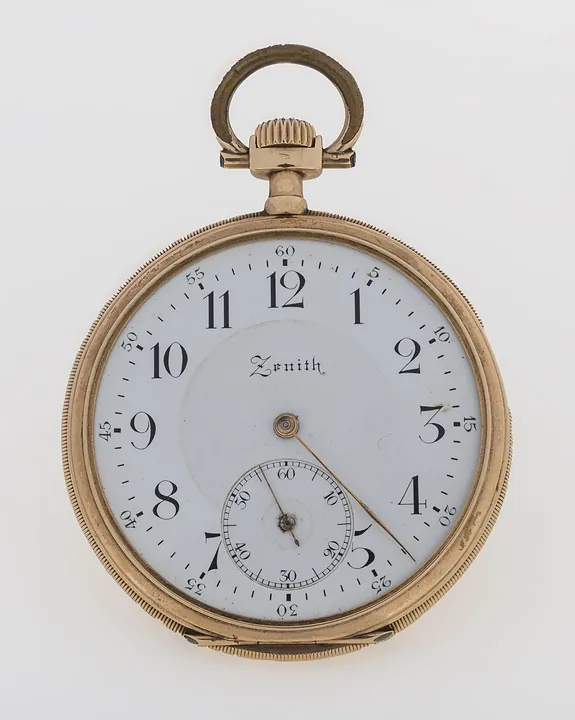
Pocket watch by Zenith, Switzerland, 1900
Museum Rotterdam
Pocket Watches · c. 1900s
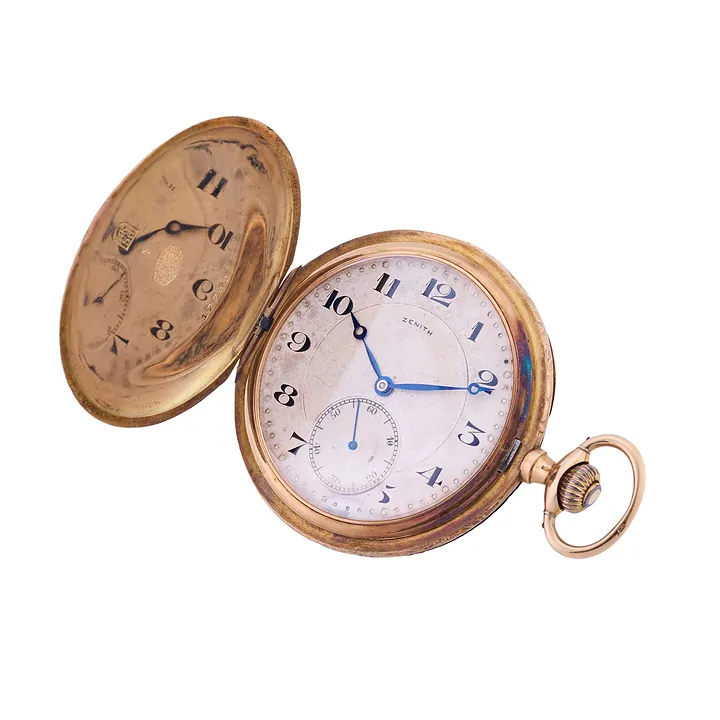
Zenith pocket watch, c. 1900s
Antiquorum auction archive, Geneva
Wristwatches · c. 1980s
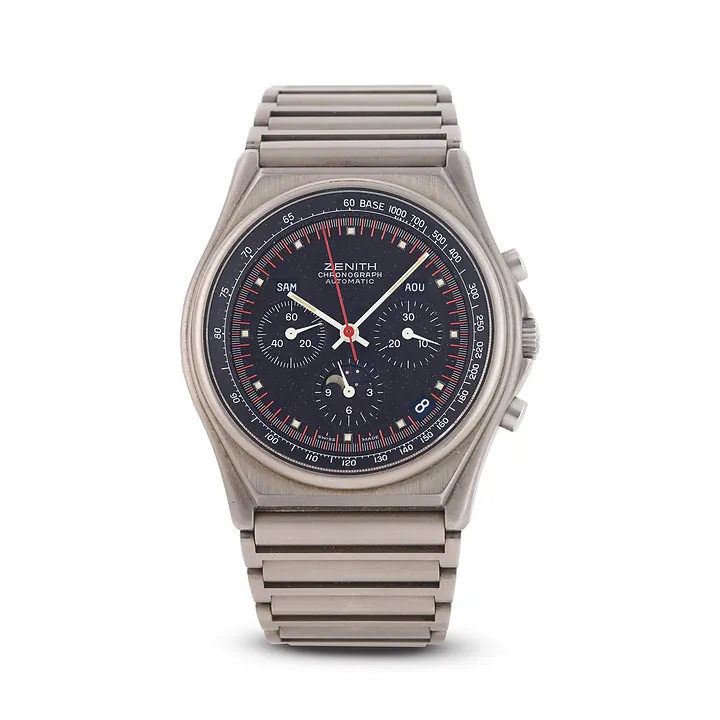
Zenith El Primero Triple Calendar Chronograph, ref. 95.0100.418, c. 1980s
Antiquorum auction archive, Geneva
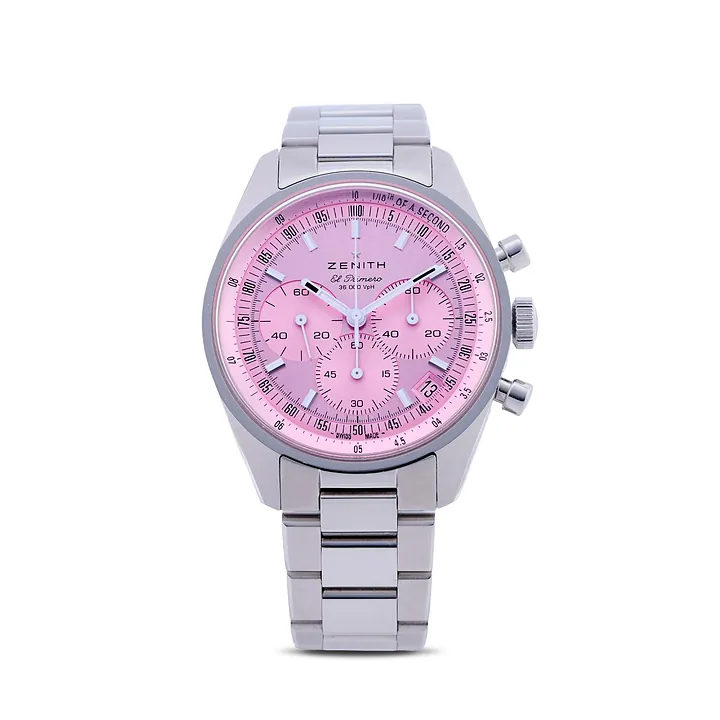
Wristwatches · originally sold in 2022 (per the lot record)
Zenith Chronomaster Original, ref. 03.3202.3600/33.M3200, originally sold in 2022
Antiquorum auction archive, Geneva

Pocket Watches · c. 1900
Patek Philippe Chronometro Gondolo, c. 1900
Antiquorum auction archive, Geneva
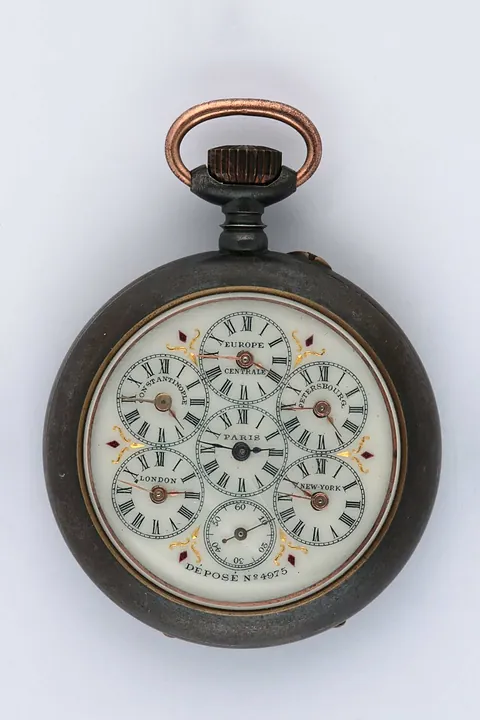
Pocket Watches · c. 1900
Pocket watch by A. Sandoz-Boucherin, Switzerland, c. 1900
German Clock Museum
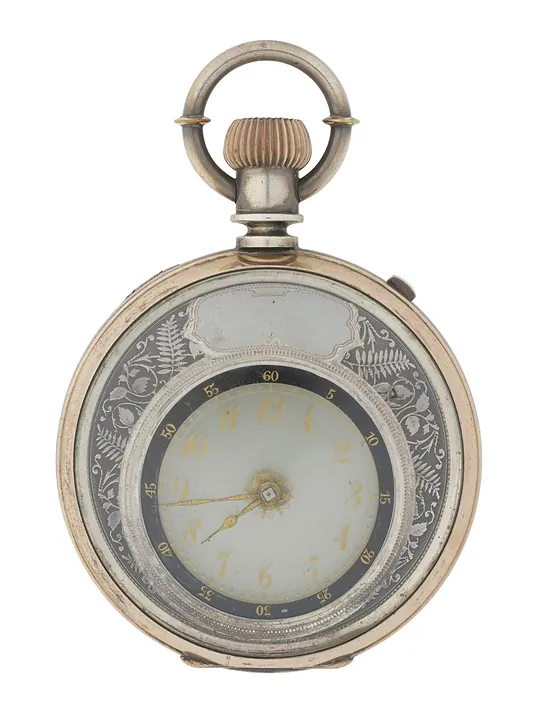
Pocket Watches · 1900
Pocket watch by Armand Schwob & Frère, Switzerland, 1900
Science Museum Group, London
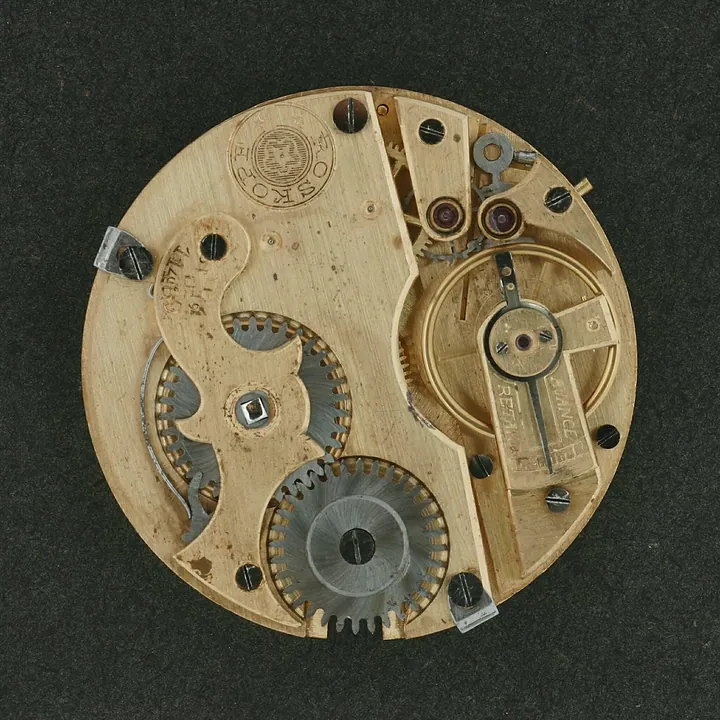
Pocket Watches · c. 1900
Pocket watch by Vve. Chs. Léon Schmid und Cie, Switzerland, c. 1900
German Clock Museum