
Pocket Watches · Pocket watch
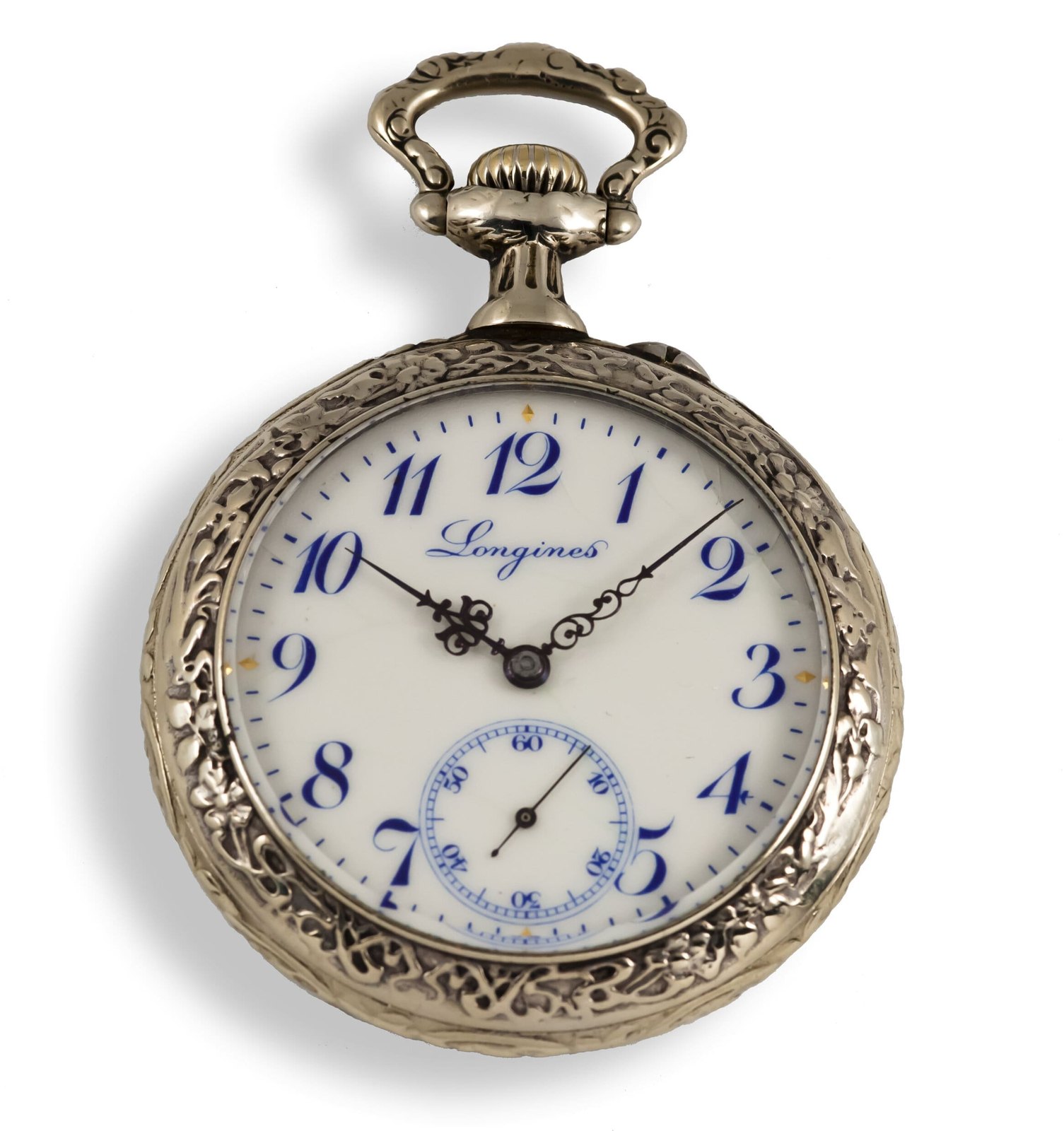
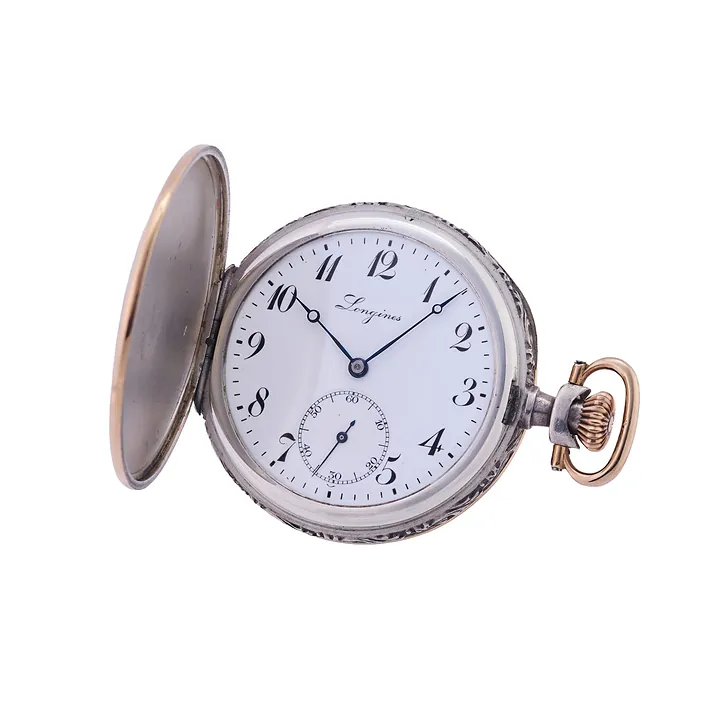
Pocket watch by Longines, 1904
- Maker / attribution
- Longines (maker)
- Date
- 1904
- Historical period
- Golden Age of Mechanical Watchmaking (1900 – 1945)
- Country of origin
- Switzerland
- Object type
- Pocket watch
- Dealer
- WatchMuseum.org shop
- Stock no.
- Product 273
- Credit line
- Dealer listing, WatchMuseum.org shop (product 273)
- Catalogue title (original)
- Longines (English)
View the source record (dealer listing) ↗ (opens another website in a new tab)Suggest a correction
Record summary
Catalogued by WatchMuseum.org shop (stock number Product 273), this is a pocket watch by Longines, made in Switzerland, dated 1904. The Atlas places it in the Golden Age of Mechanical Watchmaking period (1900 – 1945) of its Pocket Watches collection. The record is illustrated with 5 photographs.
Assembled from the source record's structured fields. Dates and attributions are given as the source states them; where a field is missing the Atlas leaves it blank rather than estimating.
Catalogue description
Dealer description — WatchMuseum.org shop
Longines, a name synonymous with precision and innovation, traces its origins back to 1832 when Auguste Agassiz joined the small watchmaking firm of Raiguel Jeune & Cie. Over the years, the company underwent significant transformations, particularly under the leadership of Agassiz’s nephew, Ernest Francillon. Francillon’s visionary decisions, such as the exclusive production of crown-wound watches, set Longines apart from its competitors who were still focused on key-wound mechanisms. The establishment of the company’s first factory in 1867 in the area known as Les Longines marked the beginning of a new era, with their in-house watch winning an award for innovation at the Universal Exhibition in Paris the same year. Recognizing the need for modernization to stay competitive with American watchmakers, technical director Jacques David’s pivotal report after the 1876 World’s Fair in Philadelphia spurred Longines towards industrialization. Renowned for the quality and precision of its timepieces, Longines’ chronographs and stopwatches became the gold standard in timing sporting events. The brand’s legacy continued to evolve, culminating in its acquisition by the Swatch Group in 1971, a conglomerate that now includes prestigious names like Breguet, Omega, and Tissot. Longines’ enduring commitment to excellence is evident in the approximately 15 million watches it produced between 1867 and 1971, solidifying its place in the annals of horological history. In 1832 Auguste Agassiz joined the small watchmaking firm of Raiguel Jeune & Cie, which some 35 years later was to become Longines. By 1846 Agassiz was in sole ownership of the company and a few years later brought in his nephew Ernest Francillon. It was Francillon who made the company stand out from its competitors with several outstanding and radical decisions. One of the most important was the decision to make only crown wound watches while almost all other watch making companies were still concentrating on key wind and set. In 1867 the company’s first factory was established to the south of St Imier in an area known as Les Longines (the long meadows) which the company adopted as its name. By now Francillon had inherited the company and he bought in Jacques David as technical director and they produced their first completely in house watch which won an award for innovation at the 1867 Universal Exhibition in Paris. Some years later realising that the American watch companies were moving ahead of the European competition, technically and in terms of mass production David went to the 1876 World’s Fair in Philadelphia to see what was happening in America. Upon his return he wrote a 100 page report which is considered one of the most important documents in the history of Swiss watchmaking. His conclusion was that the Swiss watch industry had to modernise and industrialise if it were to compete effectively with the watch industry in the USA. Longines became known for the quality and precision of its timepieces, Its chronographs and stop watches became the standard for timing sporting events. In 1971 Longines was bought out by a Swiss company that eventually became the Swatch Group. (The Swatch Group now own Breguet, Longines, Omega, Tissot, Glashutte & Rado amongst several others). Longines produced a total of approximately 15 million watches between 1867 and 1971. This is an unusual and really lovely old Longines which has an almost perfect dial. That in itself is remarkable after 116 years but also a gorgeous rural scene on the back of the case with a young Lad playing the Pan Pipes for a lissome young Lady to dance to. The slightly worn heavy silver plate on the nickel base makes this Albo metal a delight.. Added to this, the watch itself works really well. You’d expect no less from Longines, of course. OVERALL CONDITION: The watch is working well and in generally good condition. SIZE OVERALL: 52.7mm (excluding Crown & Bow) SIZE MOVEMENT: 42.8mm. US size 16 MANUFACTURED IN: St Imier, Switzerland YEAR OF MANUFACTURE: 1904 JEWELS: 15 MOVEMENT TYPE: Three quarter plate MOVEMENT CONDITION: Excellent. Stripped and ultra sound cleaned within the last 12 months. The gilding of the brass movement parts is in particularly good condition. MOVEMENT ACCURACY: +/- 10 minutes in 24 hours RUN TIME: 18 – 24 hours approx. on one full wind. ESCAPEMENT: Lever DIAL: Arabic numerals coloured blue good condition. This is a particularly beautiful dial in remarkable condition for its 116 year life. Just very slight hairlines by 2.00 CRYSTAL: Original Mineral glass bevel edge low dome crystal. WIND: Crown Wind SET: Pin (nail) set CASE: Albo silver. In exceptional condition. (Albo Silver is a base of nickel with a thick layer of silver plate. The name “Albo” was registered in 1886) CONDITION: Very good for its age. KNOWN DEFECTS: No obvious faults. STOCK N0: 509 There may be other faults of which I am not aware. Old mechanical watches may have wear to component parts and may stop working for no obvious reason.
Historical context
Golden Age of Mechanical Watchmaking (1900 – 1945)
The wristwatch displaces the pocket watch; waterproof cases, self-winding and grand complications.
The pocket watch reached technical maturity and then began to give way to the wristwatch after the First World War. Complicated watches for collectors such as Henry Graves Jr. and James Ward Packard, railroad watches, and slim Art Deco dress watches are characteristic.
Read the period in the timelineMore pocket watches from this periodEarlier: Industrial Revolution
Atlas type guide
Pocket watches
The pocket watch was the dominant personal timekeeper from the late seventeenth century until the First World War. Its development tracks the history of the escapement: verge watches with fusees until the late eighteenth century; Thomas Mudge's lever escapement (c. 1755) and the cylinder escapement popularised by George Graham and later by Swiss makers; and the Swiss and English lever watches of the nineteenth century. Lépine's bar-bridge calibre and keyless winding made watches thinner and easier to use.
Industrialisation transformed the trade: American factories such as Waltham (from 1850) and Elgin produced interchangeable parts by machine, and Swiss makers responded with their own mechanisation after the 1876 Philadelphia Exhibition. By 1900 a reliable watch was affordable to millions; the finest makers continued to produce complications and precision watches.
What to look for
- The escapement: verge (crown wheel), cylinder, duplex, English or Swiss lever.
- Key winding (a square arbor in dial or back) or keyless crown winding.
- Signatures and serial numbers on the movement, dial and inside case back.
- Hallmarks, case maker's marks and gold or silver standards stamped in the case.
- Dial material: enamel, silver, gold, later printed metal.
Dating clues
- Verge watches dominate before c. 1800; cylinder watches c. 1770–1900; lever watches after c. 1820.
- Keyless winding: increasingly common after c. 1860.
- Manufacturer serial number lists exist for Waltham, Elgin, Longines, Omega, Patek Philippe and others.
General guidance written by the Atlas editors about this kind of object. It is not a statement about this particular piece; for that, rely on the source record above and on physical examination.
Read next:Verge escapementDetached lever escapementFuseeIdentification Centre
Related records
Instruments · c. 1940
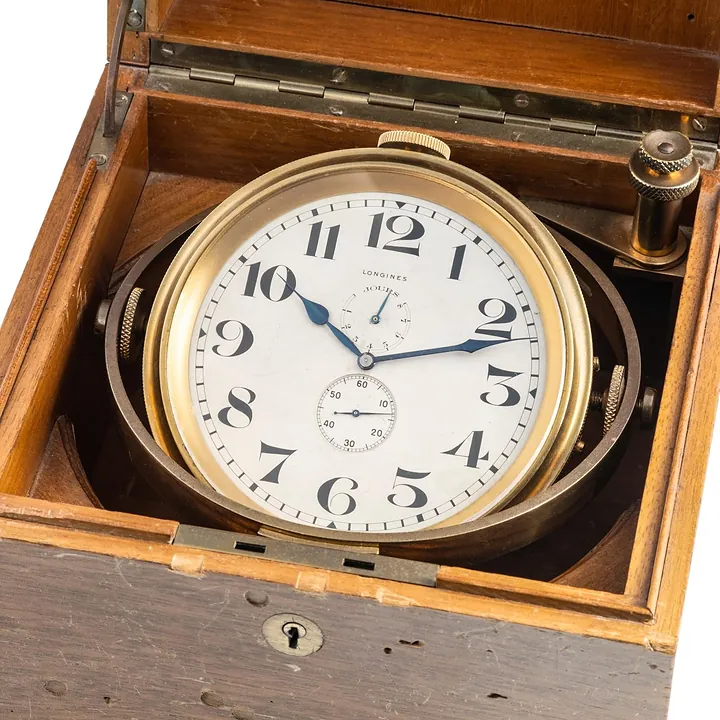
Longines marine chronometer, c. 1940
Antiquorum auction archive, Geneva
Pocket Watches · c. 1910-1920s
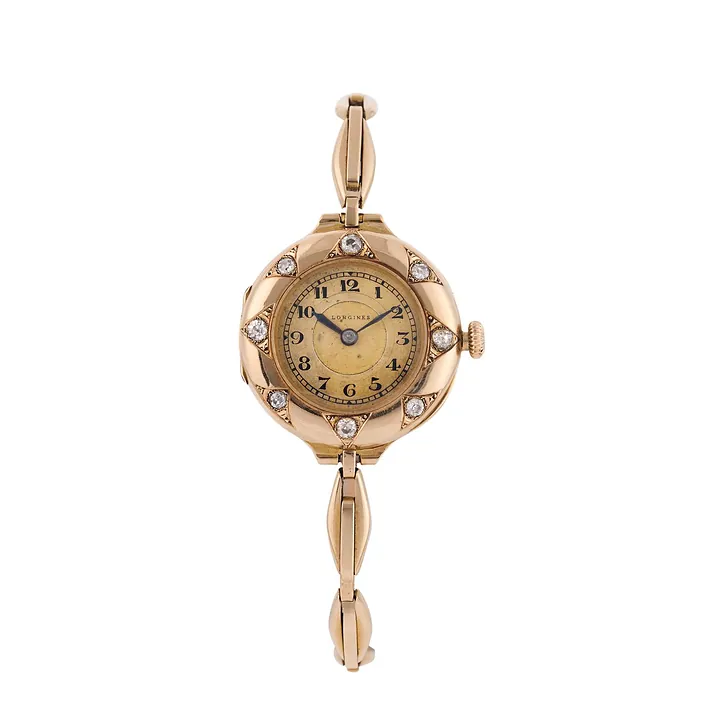
Longines watch, c. 1910-1920s
Antiquorum auction archive, Geneva
Pocket Watches · c. 1915
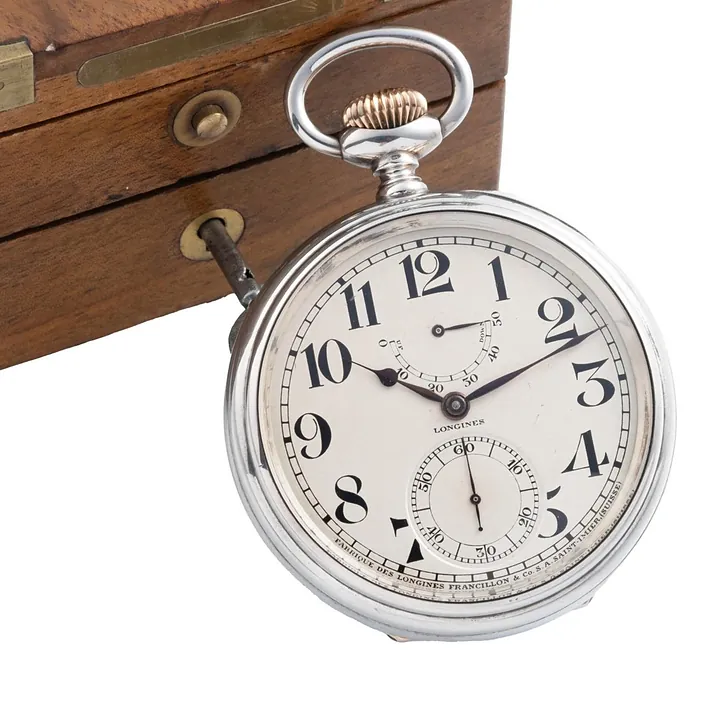
Longines ''torpedo-Boat Watch'', c. 1915
Antiquorum auction archive, Geneva
Pocket Watches · c. 1920s
Longines pocket watch, c. 1920s (Antiquorum Lot 389-59)
Antiquorum auction archive, Geneva

Pocket Watches · c. 1900
Patek Philippe Chronometro Gondolo, c. 1900
Antiquorum auction archive, Geneva
Pocket Watches · c. 1900
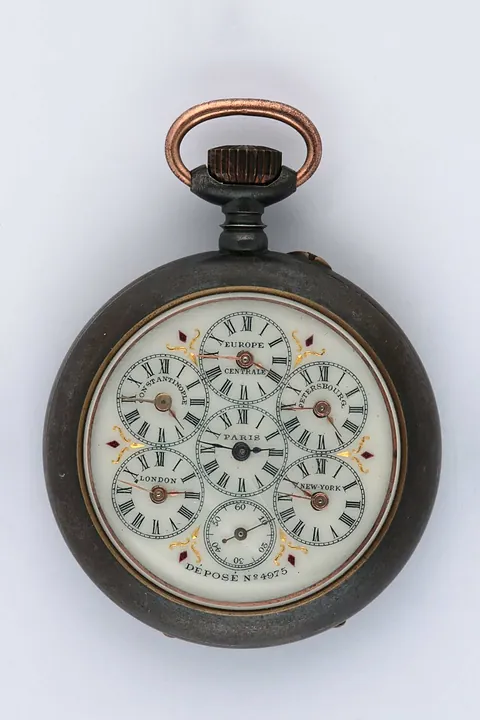
Pocket watch by A. Sandoz-Boucherin, Switzerland, c. 1900
German Clock Museum
Pocket Watches · 1900
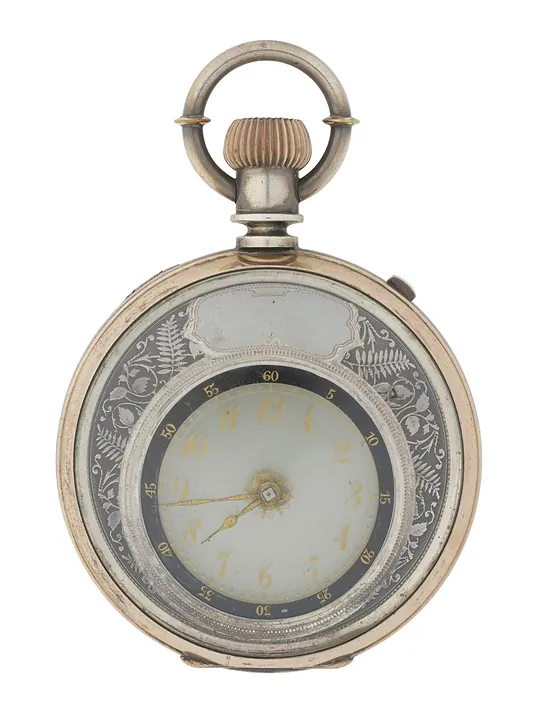
Pocket watch by Armand Schwob & Frère, Switzerland, 1900
Science Museum Group, London
Pocket Watches · c. 1900
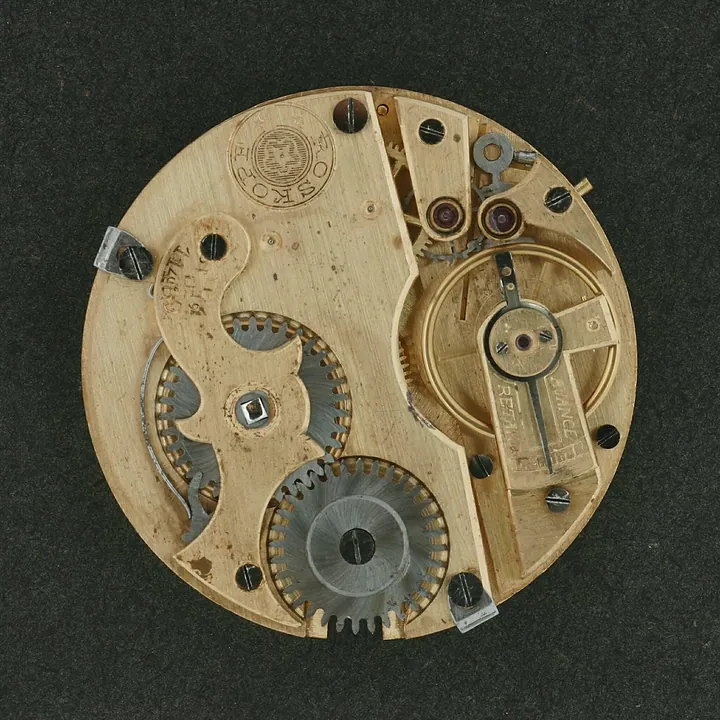
Pocket watch by Vve. Chs. Léon Schmid und Cie, Switzerland, c. 1900
German Clock Museum