
Wristwatches · Wristwatch
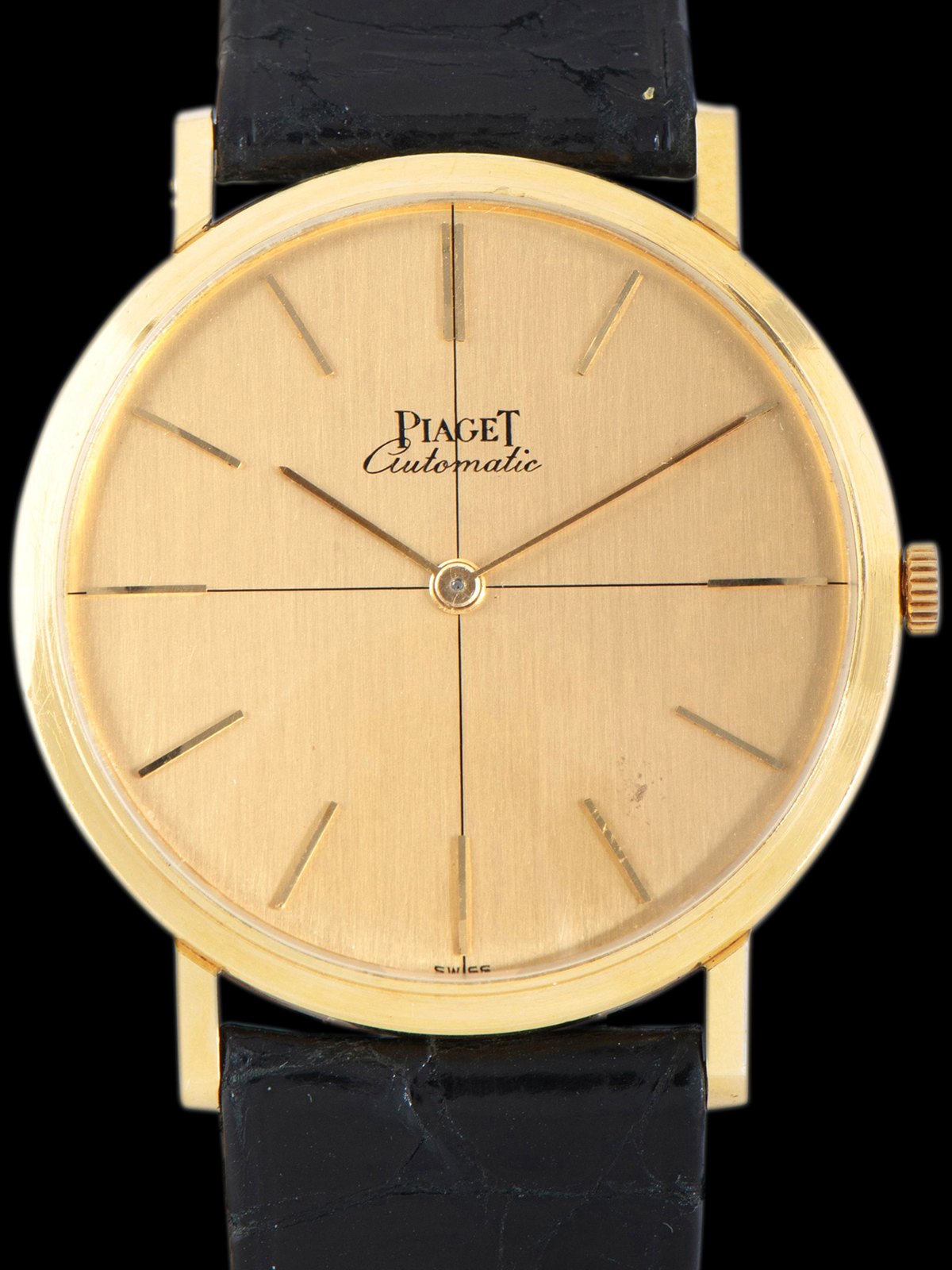
Piaget Automatic Dress Watch 18K YG (Ref. 12603) ‘Cal. 12P, 1980s
- Maker / attribution
- Piaget (maker)
- Date
- 1980s
- Historical period
- Quartz Revolution (1969 – 1990)
- Country of origin
- Switzerland
- Object type
- Wristwatch
- Stock no.
- PGA12603
- Credit line
- Dealer listing, Craft & Tailored (PGA12603)
- Catalogue title (original)
- 1980s Piaget Automatic Dress Watch 18K YG (Ref. 12603) ‘Cal. 12P' (English)
View the source record (dealer listing) ↗ (opens another website in a new tab)Suggest a correction
Record summary
Catalogued by Craft & Tailored (dealer), Los Angeles (stock number PGA12603), this is a wristwatch by Piaget, made in Switzerland, dated 1980s. The Atlas places it in the Quartz Revolution period (1969 – 1990) of its Wristwatches collection. The record is illustrated with 6 photographs.
Assembled from the source record's structured fields. Dates and attributions are given as the source states them; where a field is missing the Atlas leaves it blank rather than estimating.
Catalogue description
Dealer description — Craft & Tailored
Piaget was established in 1874 and is widely celebrated as being one of the most creative and esoteric watchmakers, with a deep foundation in Swiss watchmaking. Their avant-garde approach to design was never without a rigorous dedication to quality, the combination of which is expressed through the brand's inherent comprehension of what high luxury and fine watchmaking truly are and should look like. This beautifully subdued dress watch from the '80s is the perfect example of that. The Piaget in-house caliber 12P is housed inside an ultra-thin, 18k gold case that wears remarkably well no matter the wrist size. It's a timeless piece from a highly-respected yet slightly under-the-radar brand, making it a fantastic option for any collection. SPECS Stock # PGA12603 Brand Piaget Style Automatic Dress Watch Model 12603 Serial 79XXX Size Men's/ Unisex Material 18K Yellow Gold Dial Gold "Crosshair" Millimeters 33 Strap 2pc Black Piaget Strap CASE & BRACELET The gorgeous 18K yellow gold case is in excellent condition, exhibiting no notable evidence of previous polishing and honest signs of gentle use. The case retains its original gold unsigned crown. The case back retains all of the factory markings and hallmarks in deep and visible condition, and shows minor oxidation in the middle. The watch comes supplied on a two-piece Piaget black alligator leather strap. DIAL & HANDS The matte gold 'crosshair' dial is in amazing condition, showing only a few small marks, namely around the 4:30 position. The ultra-thin, original gold baton hands match the dial so well that they almost blend in at times, adding to the sleekness of the package. ACCESSORIES None. The watch is keeping time, but the service history is unknown. A movement service can be provided upon request.
Historical context
Quartz Revolution (1969 – 1990)
Seiko's Astron begins mass quartz timekeeping; traditional industries contract sharply.
Quartz and digital watches transformed the market after 1969. Swiss employment collapsed, Japanese and Hong Kong production soared, and the Swatch (1983) helped the Swiss industry recover; mechanical watches survived as luxury goods.
Read the period in the timelineMore wristwatches from this periodEarlier: Modern Mechanical Horology
Atlas type guide
Automatic (self-winding) watches
Self-winding watches use the wearer's motion to wind the mainspring. Abraham-Louis Perrelet and Breguet made 'perpétuelle' pocket watches with oscillating weights in the late eighteenth century, but the principle only became practical in the wristwatch. John Harwood patented a bumper automatic in 1923; Rolex's Perpetual rotor (1931) winding in one direction, and later bidirectional rotors (Eterna, Felsa Bidynator), established the modern form. Micro-rotors (Universal Genève, Buren) and peripheral rotors made automatic watches thinner.
What to look for
- A semicircular rotor turning 360° over the movement, or a 'bumper' weight that rebounds between springs.
- 'Automatic', 'Perpetual' or 'Self-winding' on the dial.
- A sealed screw-back case, since automatic watches are wound less often by the crown.
Dating clues
- Bumper automatics: 1923–c. 1955.
- Full rotors: from 1931 (Rolex); widespread after c. 1950.
- Micro-rotors: from 1954–1958.
General guidance written by the Atlas editors about this kind of object. It is not a statement about this particular piece; for that, rely on the source record above and on physical examination.
Related records
Wristwatches · c. 1980
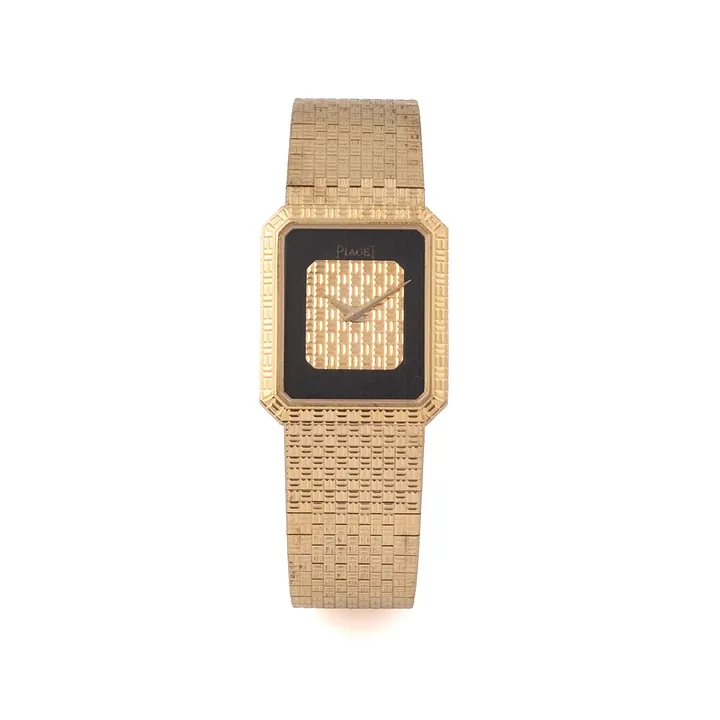
Piaget wristwatch, ref. 7141 C5, c. 1980
Antiquorum auction archive, Geneva
Wristwatches · c. 1984
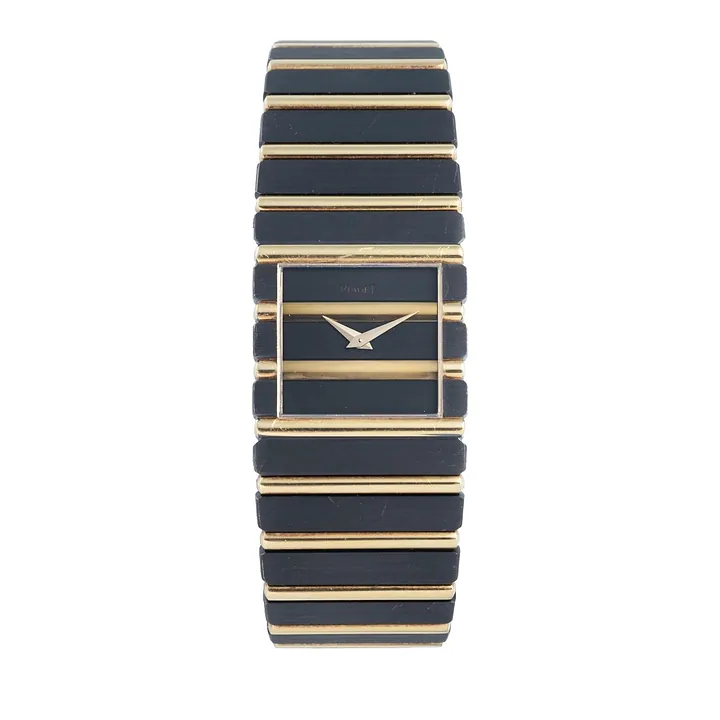
Piaget Polo Square ''zebra'', ref. 7131 C 701, c. 1984
Antiquorum auction archive, Geneva
Wristwatches · c. 1990
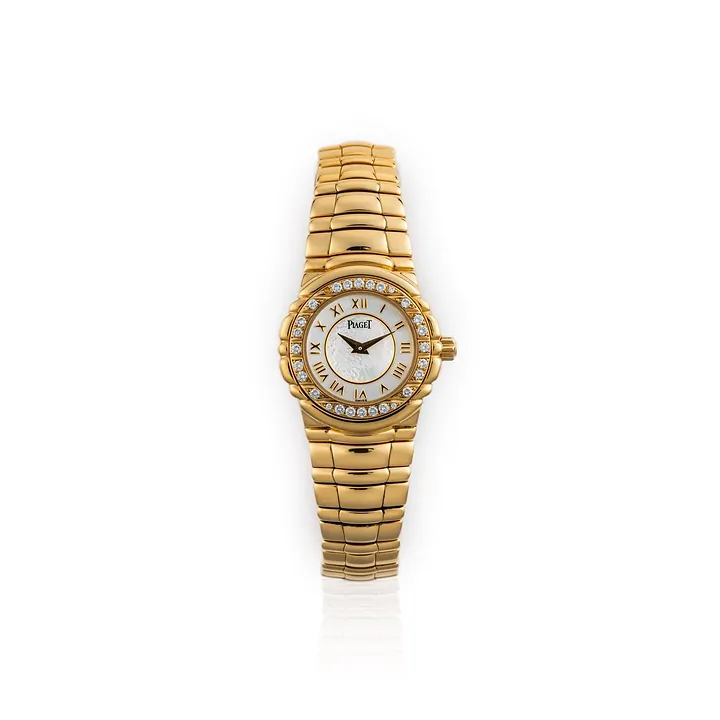
Piaget Lady Gold and Diamond Watch, ref. 16033, c. 1990
Antiquorum auction archive, Geneva
Wristwatches · c. 2000s
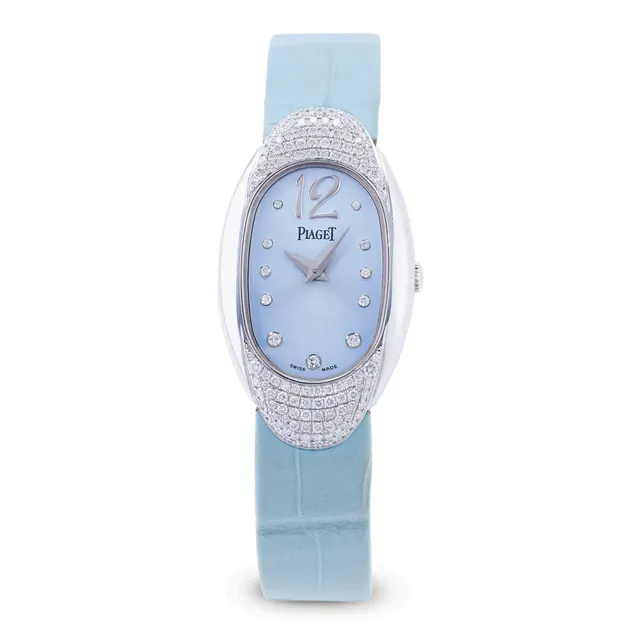
Piaget wristwatch, ref. PI0002, Limelight, circa 2000s
Antiquorum auction archive, Geneva

Wristwatches · 1970
Wristwatch by Heno, Switzerland, 1970
Museum Rotterdam

Wristwatches · 1960–1986
'Tri-Compax' calendar chronograph wristwatch in gold case, by Universal, Geneva, Switzerland, 1960–1986.
Science Museum Group, London

Wristwatches · 1969–1970
Beta 21 Quartz wristwatch movement, made in Switzerland, 1970.
Science Museum Group, London

Wristwatches · c. 1969
Omega Speedmaster Moonwatch, ref. 145022-69st, c. 1969
Antiquorum auction archive, Geneva