
Wristwatches · Wristwatch
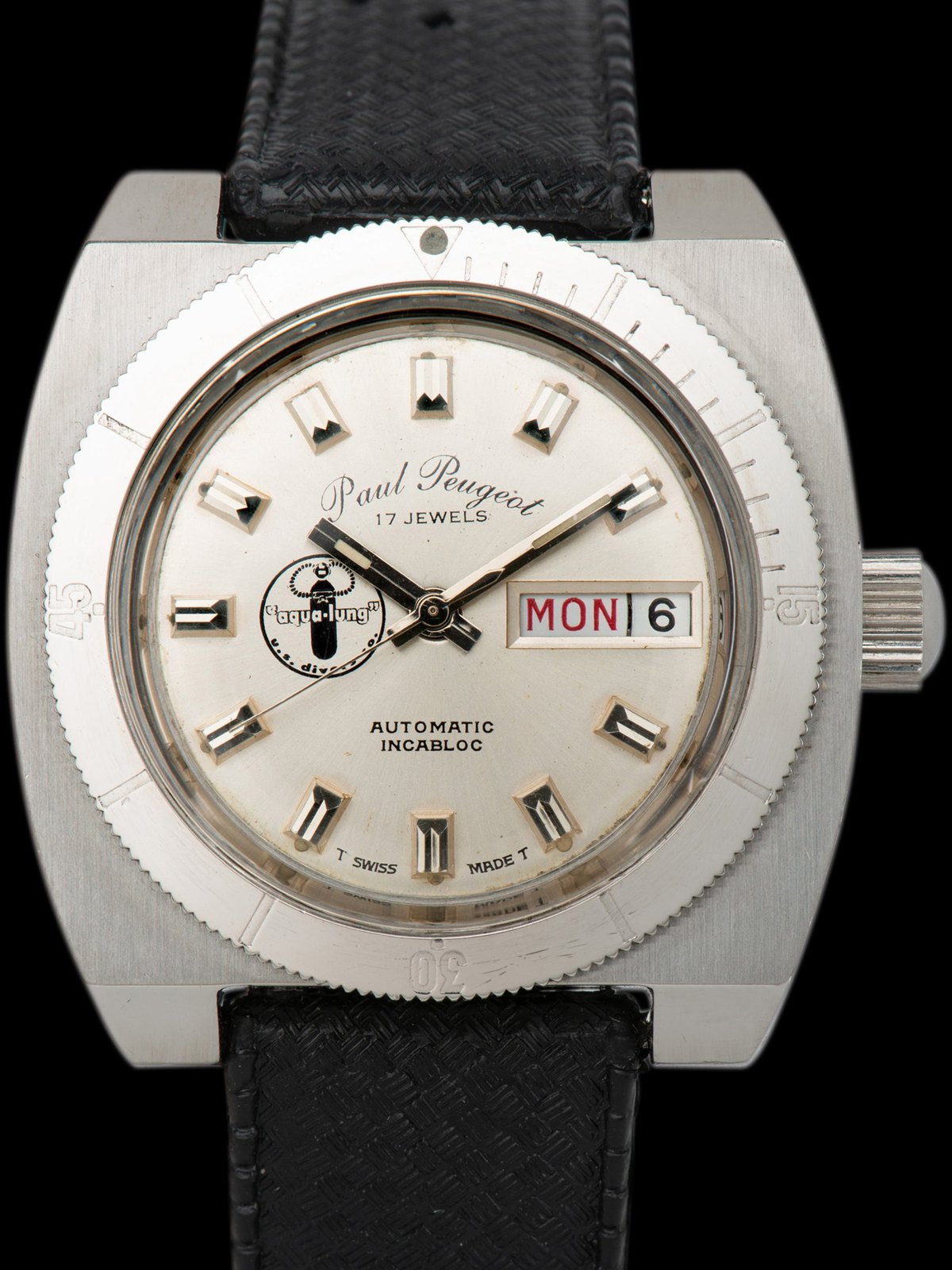
Paul Peugeot Diver "Aqua Lung", 1970s
- Maker / attribution
- Unrecorded in source
- Date
- 1970s
- Historical period
- Quartz Revolution (1969 – 1990)
- Country of origin
- Unrecorded in source
- Object type
- Wristwatch
- Dimensions
- Case 37 mm
- Stock no.
- PPGD70
- Credit line
- Dealer listing, Craft & Tailored (PPGD70)
- Catalogue title (original)
- 1970s Paul Peugeot Diver "Aqua Lung" (English)
View the source record (dealer listing) ↗ (opens another website in a new tab)Suggest a correction
Record summary
Catalogued by Craft & Tailored (dealer), Los Angeles (stock number PPGD70), this is a wristwatch, dated 1970s. The Atlas places it in the Quartz Revolution period (1969 – 1990) of its Wristwatches collection. Recorded dimensions: Case 37 mm. The record is illustrated with 6 photographs.
Assembled from the source record's structured fields. Dates and attributions are given as the source states them; where a field is missing the Atlas leaves it blank rather than estimating.
Catalogue description
Dealer description — Craft & Tailored
As an aesthetic style, the dive watch is as popular as it is ubiquitous – there are probably as many various models of dive watches as there are watch brands today. From Rolex to Bulova, Seiko to Doxa, there are many incredible and iconic dive watches to be had. But not many of them get an Aqua Lung stamp of approval from the U.S. Divers. That’s one thing that sets this stout piece from Paul Peugeot apart from the others. Paul Peugeot (no relation to the European car brand, by the way) was a boutique watch brand more known for their “fashion” watches. But they had a few tricks up their sleeve as well – this 37mm beast being one of them. The chunky case has been rated to 600 feet, not too shabby for the ‘70s considering many other dive watches couldn’t go that deep. There’s also the Incabloc signature on the dial, indicating the shock-absorbing technology inside. And of course, there’s that super cool Aqua Lung stamp that just makes this watch look like it really means business, whether you’re exploring the deep with it… or just hanging out poolside. Stock # PPGD70 Brand Paul Peugeot Style Diver Model N/A Serial N/A Size Men's Material Stainless Steel Dial Silver "Aqua Lung" Millimeters 37 Bracelet 2pc Rubber Tropic Strap CASE & BRACELET The bulky stainless steel case features thick beveled lugs, showing light signs of use. The case retains its original oversized screw-down crown. The original rotating bezel is in overall excellent condition. The silver case back is clean with no markings. The watch will be supplied on a 2-piece black rubber Tropic strap. DIAL & HANDS The silver sunburst dial has a remarkable sheen up close and exhibits light aging, the chunky indices at every hour and the rectangular hands complement the design of the case and are in great condition with the tritium lume still intact. For an added element of style the day wheel text is in red, a vintage element we love to see. ACCESSORIES None. The watch is running and functioning correctly, previous service history is unknown.
Historical context
Quartz Revolution (1969 – 1990)
Seiko's Astron begins mass quartz timekeeping; traditional industries contract sharply.
Quartz and digital watches transformed the market after 1969. Swiss employment collapsed, Japanese and Hong Kong production soared, and the Swatch (1983) helped the Swiss industry recover; mechanical watches survived as luxury goods.
Read the period in the timelineMore wristwatches from this periodEarlier: Modern Mechanical Horology
Atlas type guide
Dive and water-resistant watches
Keeping water and dust out of a wristwatch was a long-standing challenge. Rolex's screw-down Oyster case (1926) and Omega's Marine (1932) were landmarks; in the early 1950s Blancpain's Fifty Fathoms and Rolex's Submariner defined the professional dive watch with rotating bezels for timing dives, luminous dials and high water resistance. The ISO 6425 standard (1982) later codified what a 'diver's watch' must do.
Dive watches became icons of post-war design and exploration, and their evolution — helium escape valves, ceramic bezels, saturation-diving depth ratings — records the history of underwater work.
What to look for
- Unidirectional or bidirectional rotating bezel with minute markings.
- Screw-down crown and case back; depth rating printed on the dial.
- Luminous hands and markers (radium before c. 1960, tritium c. 1960–1998, then Super-LumiNova).
- Reference numbers on the case between the lugs or inside the back.
Dating clues
- Screw-down Oyster cases: from 1926.
- Professional dive watches: from 1953.
- Tritium 'T' marks on dials: c. 1960–1998.
General guidance written by the Atlas editors about this kind of object. It is not a statement about this particular piece; for that, rely on the source record above and on physical examination.
Related records

Wristwatches · 1970
Wristwatch by Heno, Switzerland, 1970
Museum Rotterdam
Wristwatches · 1970s
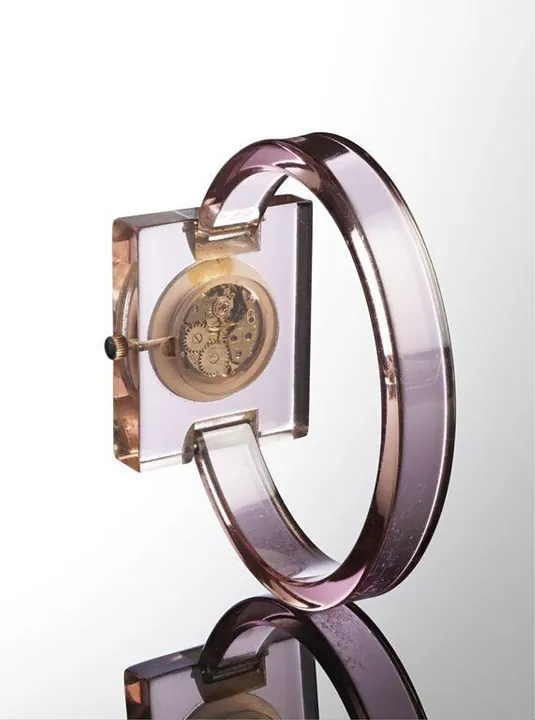
Wristwatch, plastic, by Gucci; Italy, 1970s.
Victoria and Albert Museum, London
Wristwatches · 1978
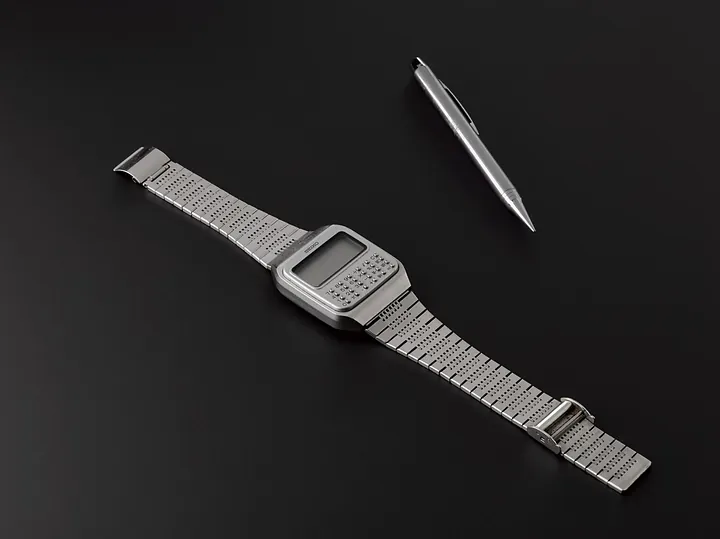
Calculator wristwatch by Suwa Seikosha Co. Limited, Japan, 1978
Science Museum Group, London
Wristwatches · 1980
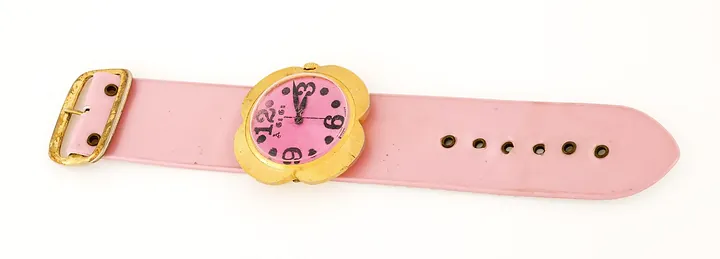
Wristwatch, 1980 (no. 71413)
Museum Rotterdam
Wristwatches · 1980
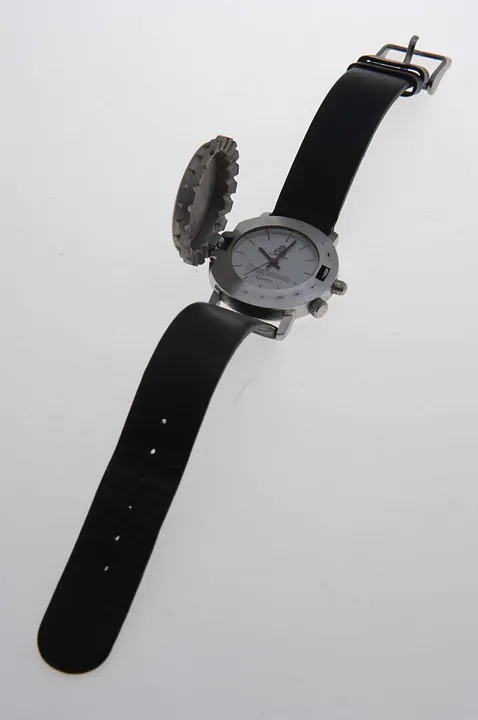
Wristwatch, 1980 (no. 91477)
Museum Rotterdam
Wristwatches · 1980–1982
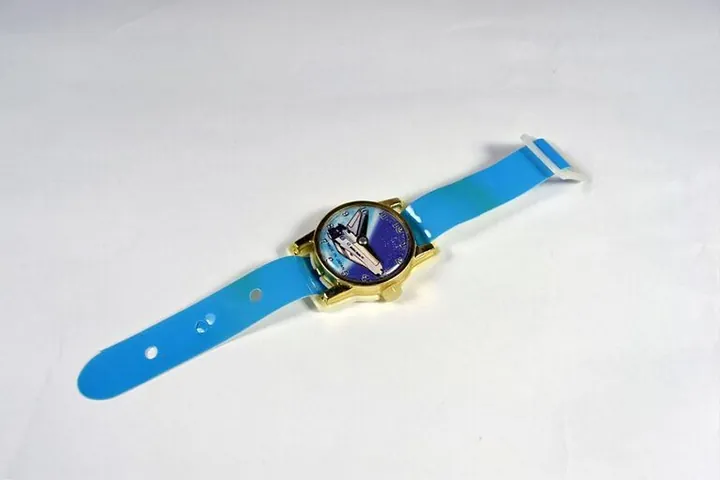
Wristwatch, Space Shuttle; plastic, Japan, 1970-1979?
Victoria and Albert Museum, London
Wristwatches · 1949–1992
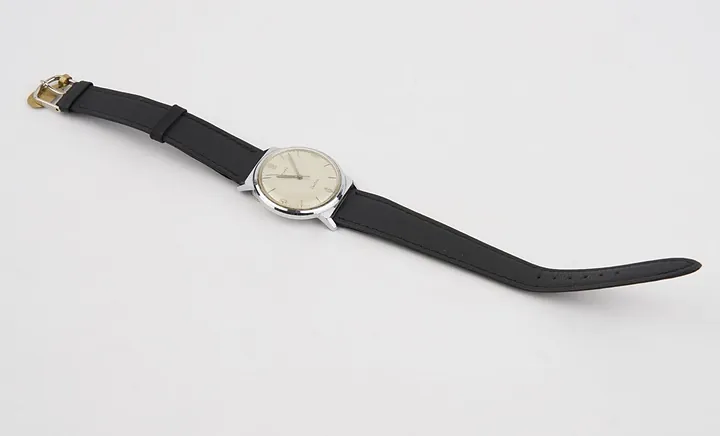
Timex `Electric' wristwatch, with electrically operated balance wheel mechanism, United States, 1949–1992
Science Museum Group, London

Wristwatches · 1960–1986
'Tri-Compax' calendar chronograph wristwatch in gold case, by Universal, Geneva, Switzerland, 1960–1986.
Science Museum Group, London