
Pocket Watches · Pocket watch
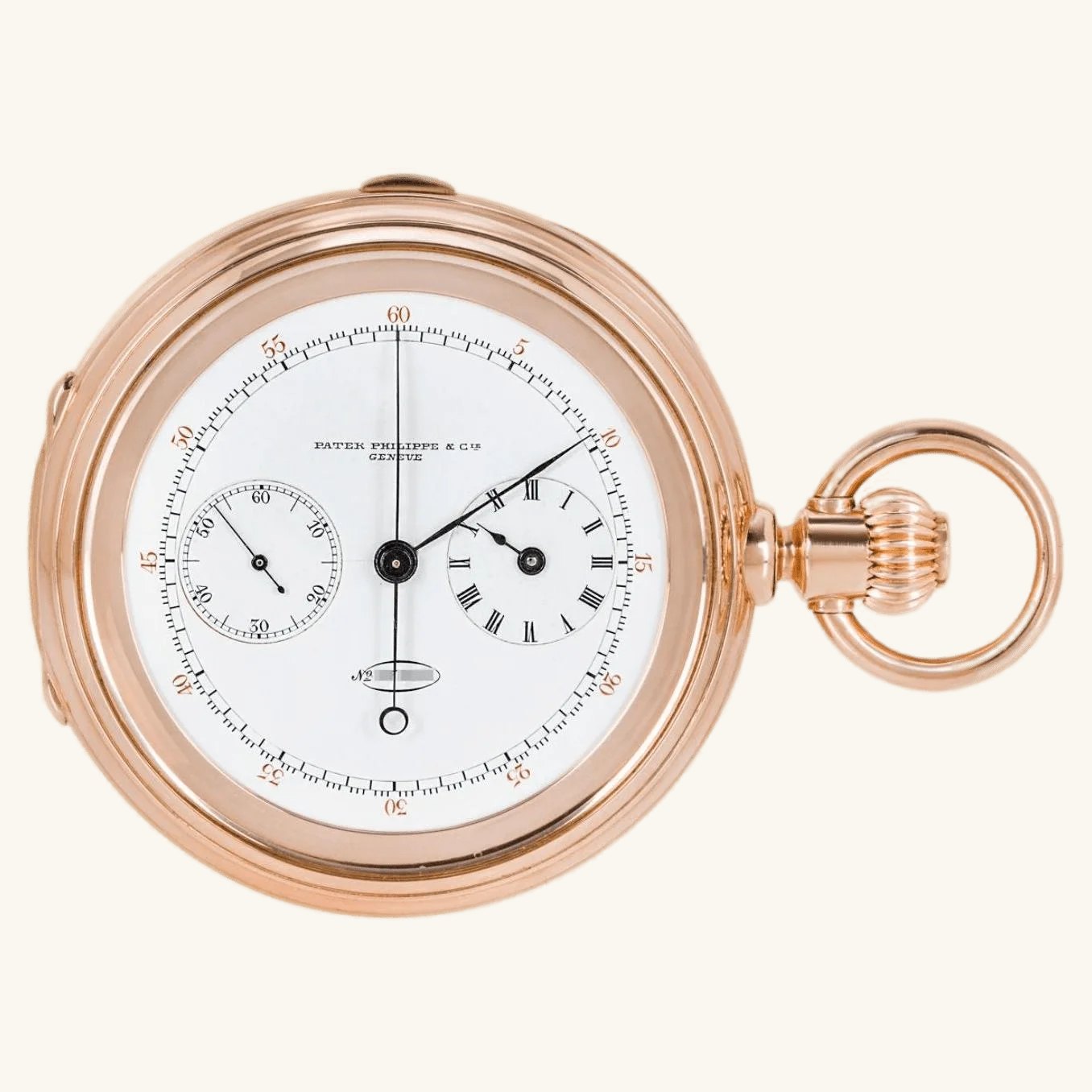
Patek Philippe Regulator Dial Split Second Chronograph, 1878
- Maker / attribution
- Patek Philippe (maker)
- Date
- 1878
- Historical period
- Industrial Revolution (1850 – 1900)
- Country of origin
- Switzerland
- Object type
- Pocket watch
- Dealer
- WatchMuseum.org shop
- Stock no.
- Product 1805
- Credit line
- Dealer listing, WatchMuseum.org shop (product 1805)
- Catalogue title (original)
- Patek Philippe Regulator Dial Split Second Chronograph (English)
View the source record (dealer listing) ↗ (opens another website in a new tab)Suggest a correction
Record summary
Catalogued by WatchMuseum.org shop (stock number Product 1805), this is a pocket watch by Patek Philippe, made in Switzerland, dated 1878. The Atlas places it in the Industrial Revolution period (1850 – 1900) of its Pocket Watches collection. The record is illustrated with 6 photographs.
Assembled from the source record's structured fields. Dates and attributions are given as the source states them; where a field is missing the Atlas leaves it blank rather than estimating.
Catalogue description
Dealer description — WatchMuseum.org shop
The Patek Philippe Regulator Dial Split Second Chronograph from 1878 stands as a testament to the pinnacle of horological craftsmanship and innovation. This extraordinary timepiece, a rare gem in the annals of watchmaking history, exemplifies the meticulous artistry and technical prowess that Patek Philippe is renowned for. With its intricately designed regulator dial and the sophisticated split second chronograph function, this pocket watch not only serves as a precise timekeeping instrument but also as a symbol of luxury and exclusivity. Crafted in an era when precision and elegance were paramount, this 1878 masterpiece encapsulates the essence of timeless beauty and mechanical excellence, making it a coveted treasure for collectors and connoisseurs alike. The watch’s historical significance and unparalleled craftsmanship ensure that it remains a revered artifact, embodying the rich legacy of Patek Philippe’s innovative spirit and dedication to perfection. Introducing a magnificent timepiece from Patek Philippe, an extremely rare and significant regulator dial split second chronograph pocket watch crafted in 1878. The watch features a pristine white enamel dial that bears the Patek Philippe & Cie Geneve signature and a minute track with red Arabic numbers at five-minute intervals, along with a single blued steel minute hand. The dial also showcases Roman hour numerals and a blued steel hour hand in a subsidiary dial at three o’clock, as well as a subsidiary seconds dial at nine o’clock with a blued steel seconds hand. The split seconds hands are also in blued steel, creating a visually stunning contrast against the white enamel dial. This pocket watch is housed in a heavy 18ct rose gold open face case adorned with a plain back that exposes the inner case back that features the signature and serial number. The watch has a five knuckle hinge and a split second function, which is operated by a button in the winder and a secondary split by another button on the side of the case at twelve o’clock. The superb movement of this watch is fully jeweled and finished in nickel gold, with an exposed chronograph mechanism, compensation balance, and fast-slow regulation. It serves as an excellent example of Patek Philippe’s finest craftsmanship. This pocket watch is a rare and historically significant piece that reflects Patek Philippe’s reputation for excellence and artistry. Very few regulator dials with split seconds were produced by Patek Philippe, making this particular watch a highly valuable and collectible piece. In addition, this watch comes with its original wooden box, alongside an Extract of Archive from Patek Philippe, indicating its sale date in September 1878. Creator: Patek Philippe Design: Pocket Watch Case Material: 18k Gold,Rose Gold Case Shape: Round Movement: Manual Wind Case Dimensions: Diameter: 55 mm (2.17 in) Place of Origin: Switzerland Period: Late 19th Century Date of Manufacture: 1878 Condition: Excellent. In original box.
Historical context
Industrial Revolution (1850 – 1900)
American interchangeable-parts manufacture; railroad time standards; Swiss and German factory systems.
Machine production with interchangeable parts, pioneered by Waltham (1850s) and adopted by Elgin, Longines, Omega and others, made reliable lever watches widely affordable. Keyless winding became standard, railroad watch standards were introduced (1890s), and Swiss and American industries competed globally.
Read the period in the timelineMore pocket watches from this periodEarlier: Precision & Scientific Horology
Atlas type guide
Chronographs and split-seconds watches
A chronograph is a watch with an additional seconds hand that can be started, stopped and returned to zero independently of the timekeeping. Louis Moinet built an early example in 1816 and Nicolas Rieussec a recording 'chronographe' in 1821; Adolphe Nicole's heart-shaped reset cam (patented 1862) made the modern return-to-zero possible. Split-seconds (rattrapante) chronographs add a second hand that can be stopped for intermediate times; flyback chronographs restart instantly.
Chronographs were essential tools for doctors (pulsometer scales), artillery (telemeter), engineers and sport. In wristwatches, Valjoux, Venus, Lemania and later the automatic chronographs of 1969 (Zenith El Primero, the Chronomatic Calibre 11 group and Seiko 6139) are milestones.
What to look for
- Push-pieces on the case band or a single button in the crown (monopusher).
- Subsidiary registers for minutes and hours; tachymeter, telemeter or pulsometer scales.
- Column wheel versus cam control visible in the movement.
- Calibre markings of specialist makers (Valjoux, Lemania, Venus, Landeron).
Dating clues
- Pocket chronographs with heart cam reset: after 1862.
- Wrist chronographs: from c. 1910; two-button designs from the 1930s.
- Automatic chronographs: from 1969.
General guidance written by the Atlas editors about this kind of object. It is not a statement about this particular piece; for that, rely on the source record above and on physical examination.
Read next:Flyback chronographChronograph
Related records
Clocks · 1965–1975
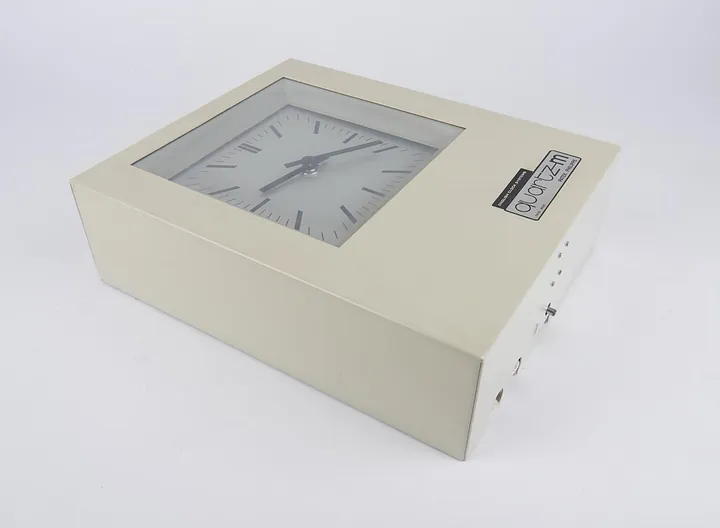
Quartz master clock QM 1, with movement by Patek Phillippe, Switzerland, 1965–1975. Supplied by English Clock Systems.
Science Museum Group, London
Instruments · 1965–1984
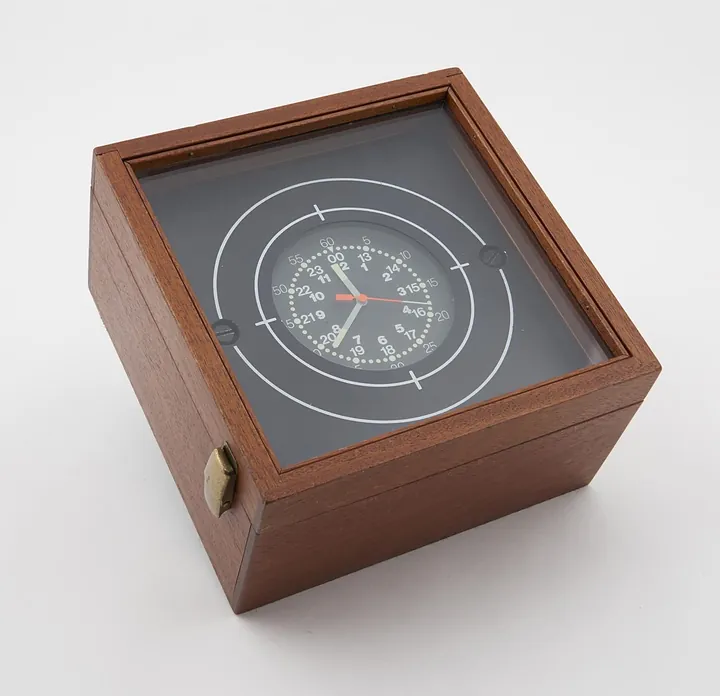
Chronometer by Patek Philippe and Kelvin Hughes, England, 1965–1984
Science Museum Group, London
Pocket Watches · c. 1895
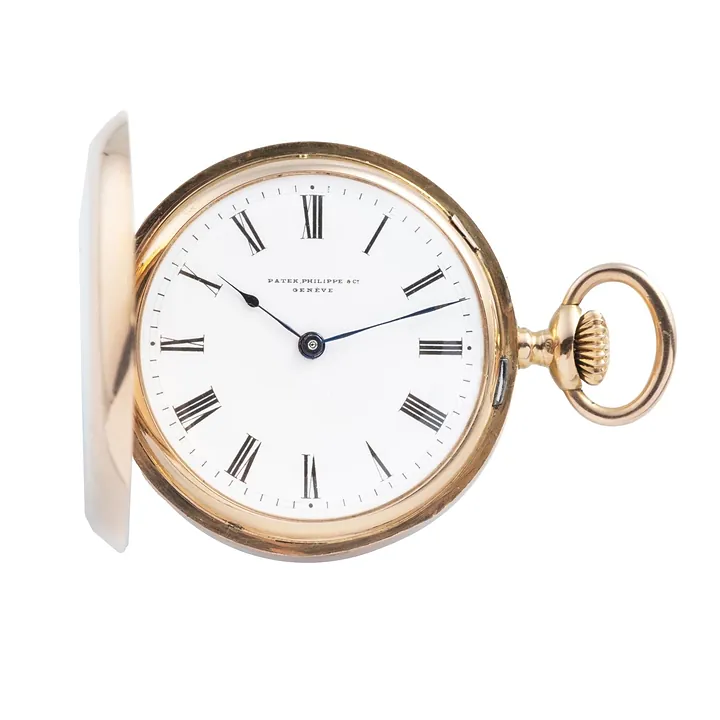
Patek Philippe pocket watch, c. 1895
Antiquorum auction archive, Geneva
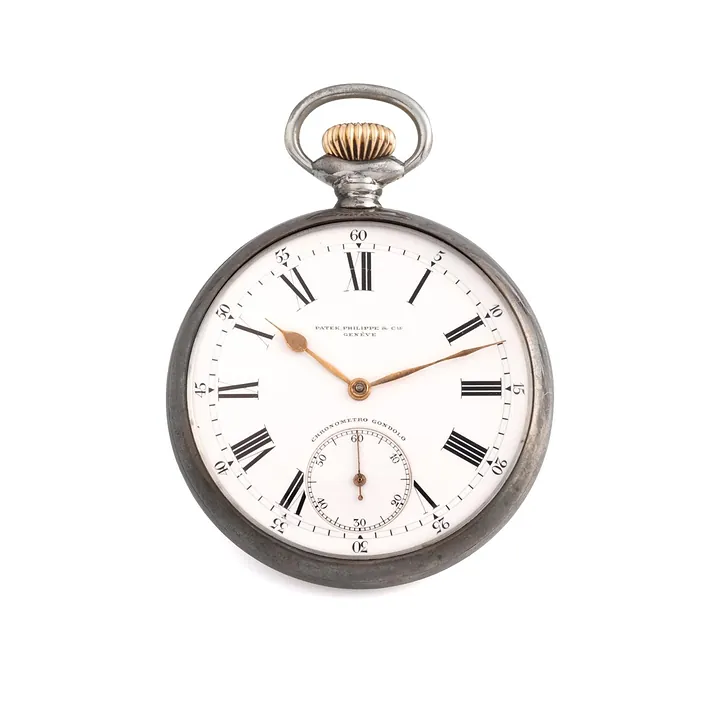
Pocket Watches · c. 1900
Patek Philippe Chronometro Gondolo, c. 1900
Antiquorum auction archive, Geneva
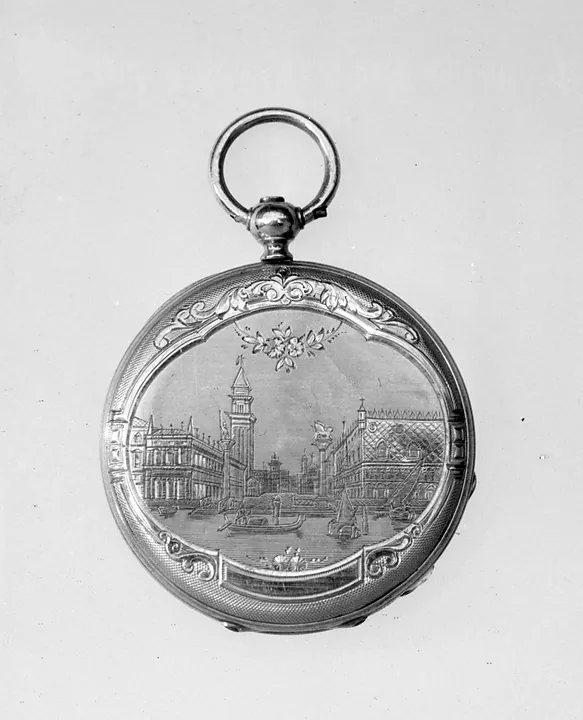
Pocket Watches · c. 1850
Watch by Eugène Bornand, Switzerland, c. 1850
The Metropolitan Museum of Art, New York
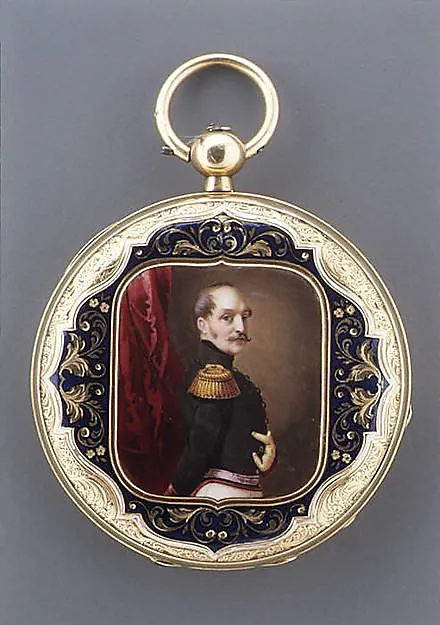
Pocket Watches · probably c. 1850–55
Watch by Firm of Perret & Cie, Switzerland, probably c. 1850–55
The Metropolitan Museum of Art, New York
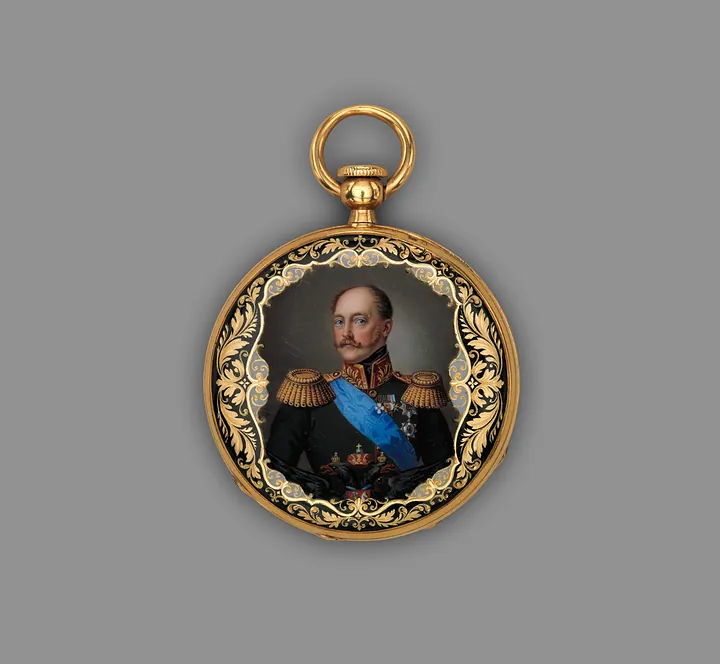
Pocket Watches · c. 1850–55
Watch by François Czapek, c. 1850–55
The Metropolitan Museum of Art, New York
Pocket Watches · c. 1850
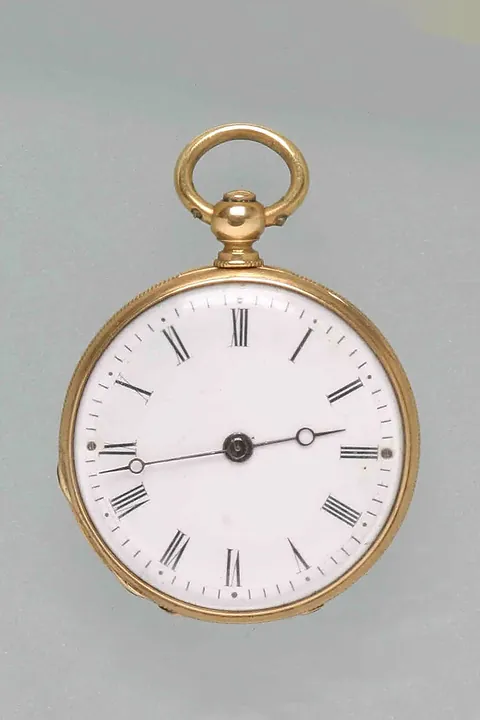
Pocket watch by D Bachelard et Fils, Switzerland, c. 1850
German Clock Museum