
Wristwatches · Wristwatch
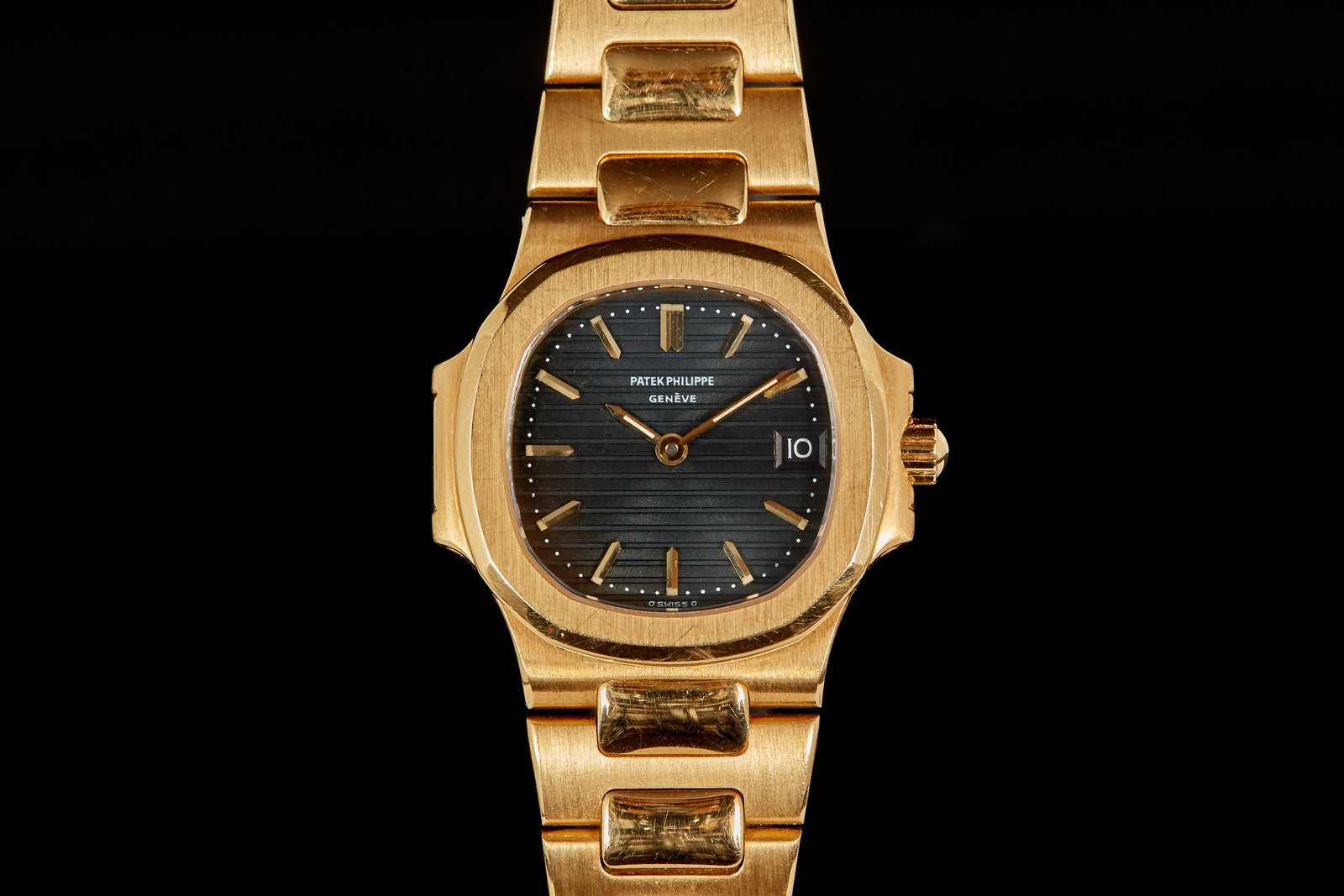
Patek Philippe Ladies Nautilus, 1980s
- Maker / attribution
- Patek Philippe (maker)
- Date
- 1980s
- Historical period
- Quartz Revolution (1969 – 1990)
- Country of origin
- Switzerland
- Object type
- Wristwatch
- Dimensions
- Case 27 mm
- Stock no.
- Product 3525611880535
- Credit line
- Dealer listing, Analog/Shift (product 3525611880535)
- Catalogue title (original)
- Patek Philippe Ladies Nautilus (English)
View the source record (dealer listing) ↗ (opens another website in a new tab)Suggest a correction
Record summary
Catalogued by Analog/Shift (dealer), New York (stock number Product 3525611880535), this is a wristwatch by Patek Philippe, made in Switzerland, dated 1980s. The Atlas places it in the Quartz Revolution period (1969 – 1990) of its Wristwatches collection. Recorded dimensions: Case 27 mm. The record is illustrated with 6 photographs.
Assembled from the source record's structured fields. Dates and attributions are given as the source states them; where a field is missing the Atlas leaves it blank rather than estimating.
Catalogue description
Dealer description — Analog/Shift
Why We Love It While the Nautilus is without question one of the great horological icons of the 1970s, it has in recent years once again become one of the most in-demand timepiece models on the planet. Collectors and prospectors alike are clamoring to get their hands on Genta's second great luxury sports watch- and this dramatic rise shows no signs of slowing down. This year at Baselworld, Patek released a new Ladies' Nautilus, and a lot of people took notice. This release however, was not the first time that the iconic model had been adapted for a feminine clientele. This Nautilus, a Reference 4700/001J, embodies all of the porthole-inspired character of its larger steel brothers. Dating from the 1980s, the 4700 series is presented in an elegant 27mm 18k solid yellow gold case with integrated 18k gold bracelet, Philippe Calibre e19c quartz movement, and a classic charcoal tapestry dial (no wavy lines in sight here!) Wether commemorating a milestone, continuing a collection buildout, or treating someone special with something special, this Ladies' Nautilus is as lovely as the wrist it will soon adorn. The Story Patek Philippe’s history has been driven by its discerning female clientele. One of the company’s earliest clients was a Madame Goscinska, who bought the first three watches Patek Philippe ever produced. Although meant to be worn on brooches or suspended from chains at the waist, these watches were remarkable for their exquisite construction, featuring enamel decorations surrounded by diamonds, and often containing complications like a keyless winding system. Queen Victoria herself fell in love with one such watch at the Great Exhibition in London in 1851. When Patek Philippe made its first wristwatches in the 1870s, they were not for men, but for women, who liked the practicality of a wrist-worn watch while engaged in sports like horseback riding. These watches were petite and stylish, and powered by movements so small that they could fit into a ring. To manufacture parts on such a scale requires mastery, which the watchmakers at Patek Philippe certainly possessed… and still do.
Historical context
Quartz Revolution (1969 – 1990)
Seiko's Astron begins mass quartz timekeeping; traditional industries contract sharply.
Quartz and digital watches transformed the market after 1969. Swiss employment collapsed, Japanese and Hong Kong production soared, and the Swatch (1983) helped the Swiss industry recover; mechanical watches survived as luxury goods.
Read the period in the timelineMore wristwatches from this periodEarlier: Modern Mechanical Horology
Atlas type guide
Wristwatches
Bracelet watches were worn by women from the early nineteenth century — Breguet made one for Caroline Murat, Queen of Naples, in 1810–12 — but the wristwatch only became a man's instrument with military use and aviation in the early twentieth century. Between the World Wars it overtook the pocket watch; the 1920s and 1930s brought rectangular Art Deco cases, water-resistant cases and the first automatic winding systems.
After 1945 the wristwatch became a carrier of identity — dress watches, sports and dive watches, chronographs, calendars — produced by Swiss, American, Japanese, German, Soviet and Chinese industries. The quartz revolution after 1969 and the mechanical renaissance since the 1990s, including the rise of independent watchmakers, complete the story.
What to look for
- The reference number (between the lugs or inside the case back) and serial number, the starting point for dating.
- The calibre: its maker and number are often stamped under the dial or on the bridge.
- Originality of dial, hands and crown — refinished ('redial') dials are common.
- Case material marks: 18K/750, 14K/585, stainless steel, gold-filled, plated.
Dating clues
- Wire-lug cases: before c. 1925.
- Water-resistant screw-down cases: from 1926.
- Quartz movements: from 1969; sapphire crystals widespread after c. 1980.
General guidance written by the Atlas editors about this kind of object. It is not a statement about this particular piece; for that, rely on the source record above and on physical examination.
Related records
Clocks · 1965–1975
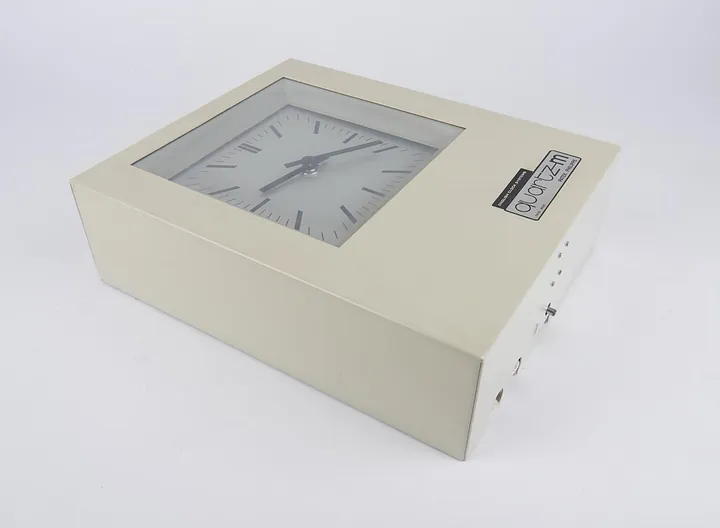
Quartz master clock QM 1, with movement by Patek Phillippe, Switzerland, 1965–1975. Supplied by English Clock Systems.
Science Museum Group, London
Instruments · 1965–1984
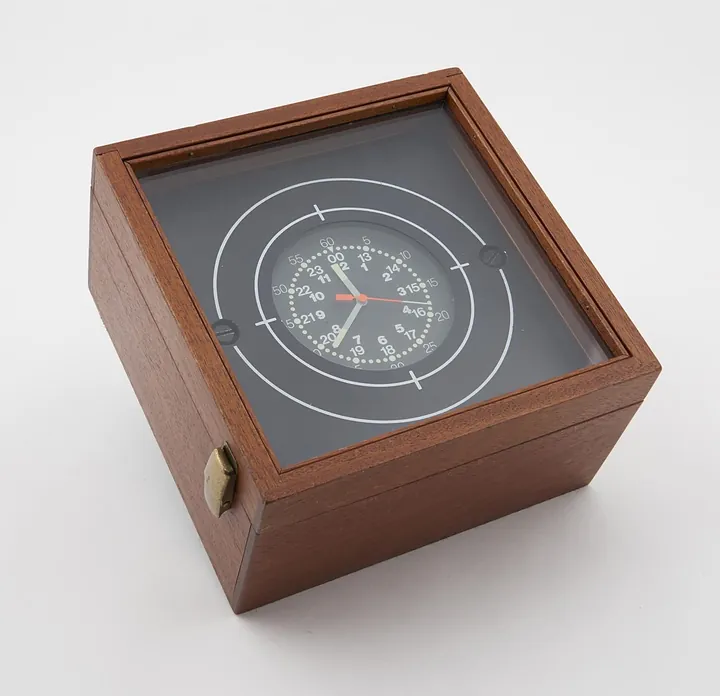
Chronometer by Patek Philippe and Kelvin Hughes, England, 1965–1984
Science Museum Group, London
Pocket Watches · c. 1895
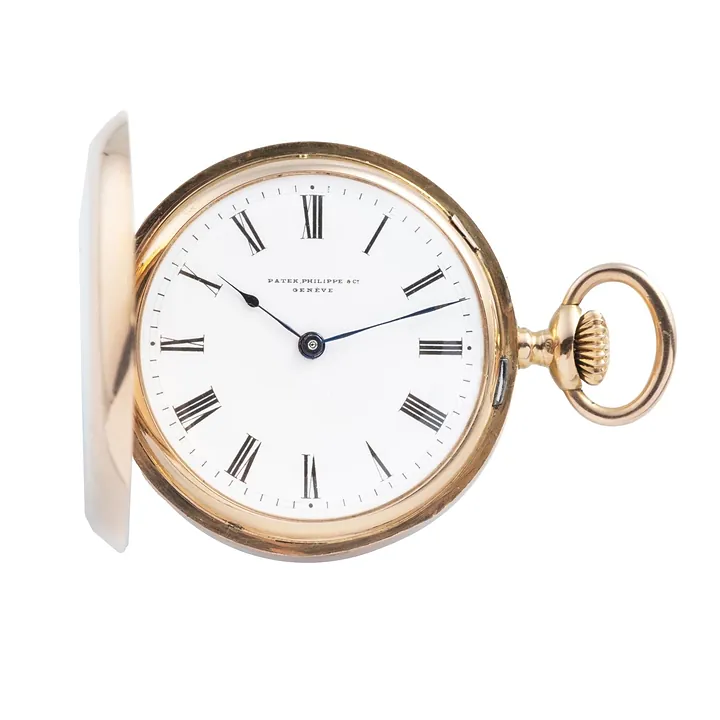
Patek Philippe pocket watch, c. 1895
Antiquorum auction archive, Geneva

Pocket Watches · c. 1900
Patek Philippe Chronometro Gondolo, c. 1900
Antiquorum auction archive, Geneva

Wristwatches · 1970
Wristwatch by Heno, Switzerland, 1970
Museum Rotterdam

Wristwatches · 1960–1986
'Tri-Compax' calendar chronograph wristwatch in gold case, by Universal, Geneva, Switzerland, 1960–1986.
Science Museum Group, London

Wristwatches · 1969–1970
Beta 21 Quartz wristwatch movement, made in Switzerland, 1970.
Science Museum Group, London

Wristwatches · c. 1969
Omega Speedmaster Moonwatch, ref. 145022-69st, c. 1969
Antiquorum auction archive, Geneva