
Wristwatches · Wristwatch
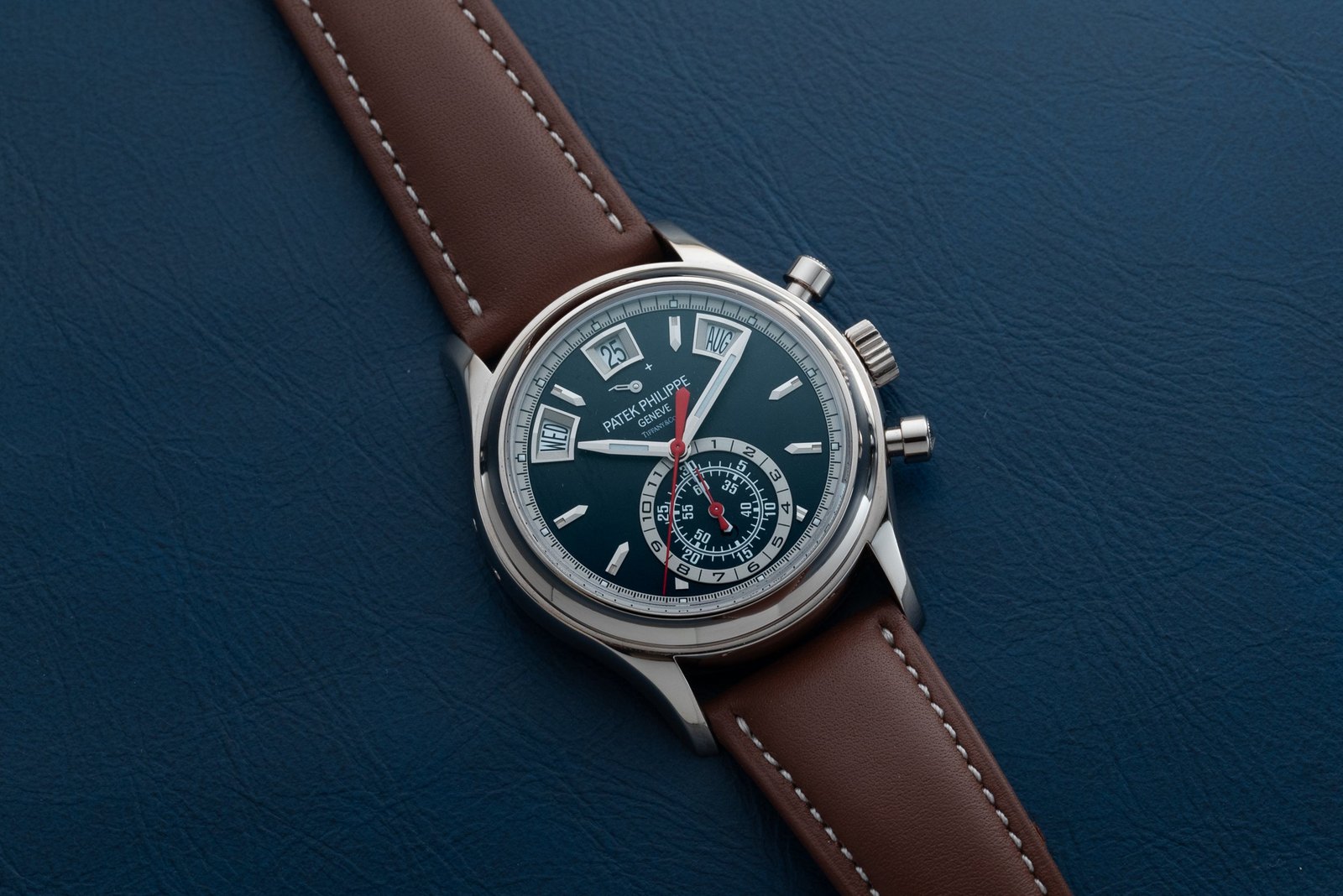
Patek Philippe Annual Calendar Chronograph 'Tiffany & Co.', 2020
- Maker / attribution
- Patek Philippe (maker)
- Date
- 2020
- Historical period
- Contemporary Horology (2010 – Present)
- Country of origin
- Switzerland
- Object type
- Wristwatch
- Dimensions
- Case 40.5 mm
- Stock no.
- 40930408
- Credit line
- Dealer listing, Analog/Shift (40930408)
- Catalogue title (original)
- Patek Philippe Annual Calendar Chronograph 'Tiffany & Co.' (English)
View the source record (dealer listing) ↗ (opens another website in a new tab)Suggest a correction
Record summary
Catalogued by Analog/Shift (dealer), New York (stock number 40930408), this is a wristwatch by Patek Philippe, made in Switzerland, dated 2020. The Atlas places it in the Contemporary Horology period (2010 – Present) of its Wristwatches collection. Recorded dimensions: Case 40.5 mm. The record is illustrated with 6 photographs.
Assembled from the source record's structured fields. Dates and attributions are given as the source states them; where a field is missing the Atlas leaves it blank rather than estimating.
Catalogue description
Dealer description — Analog/Shift
The inaugural Reference 5035 Annual Calendar of 1996 was a tremendous success, and ever since, Patek’s Annual Calendars have been a popular favorite. Annual Calendars from Patek represent the bread and butter of the brand— perfectly executed complicated dress watches. In 2006, Patek Philippe released the Reference 5960P, a platinum annual calendar coupled with a flyback chronograph. Distinguished from the other annual calendars because of its decidedly sporty look, the 5960 stood out from the crowd. It wasn’t only noteworthy for the flyback, however, it also featured a modern annual calendar layout. Instead of displaying the annual calendar in subsidiary dials, Patek instead used aperture displays. While apertures have been used by Patek throughout history (take the Reference 3448 perpetual calendar, for example), usually, the apertures are displayed in-line. For the 5960, Patek instead made vaulted, framed apertures that follow the curve of the case. This made for a really modern take on the annual calendar and breathed new life into the collection. It’s not for everyone, but it’s a completely new look. This particular Reference 5960/01G-001 is executed in white gold, with a deep blue Tiffany-stamped dial and red accents for the chronograph hand and counters. The calendar complications and power reserve sit at the top of the dial, while the minute and hour totalizers are placed at 6 o’clock within a single oversized sub-register. A day/night indicator is easy to miss within the subdial. The case is topped with a sapphire crystal. A number of other stylistic choices were made with the 5960 that separated it from previous references. Unlike the 5035 and 5146 annual calendars, the 5960 has a concave bezel that helps reinforce the modern look of this piece. Additionally, the 5960 was sized at a comfortable 40.5mm— a sporty sizing for a Patek complication, but one that suits the rest of the look of the watch. The 5960 is finished with a signed crown and engraved pump pushers. Dating to 2020, this example is presented with its inner and outer boxes, papers, and certificate of origin. The aesthetics of this piece are classic and modern all at the same time. The 5960 is one of the most beloved modern Patek references, and one of the greatest places to start with complicated Patek Philippe if you’re a sports watch fan. Rip off the bandaid with the 5960 and then go full send on a 3940. You’ll thank us later.
Historical context
Contemporary Horology (2010 – Present)
Silicon components, connected watches, optical-lattice research clocks and a thriving independent scene.
Smartwatches became the world's best-selling watches, while mechanical watchmaking focuses on craft, innovation (silicon components, new escapements) and independent makers.
Read the period in the timelineMore wristwatches from this periodEarlier: Mechanical Renaissance
Atlas type guide
Chronographs and split-seconds watches
A chronograph is a watch with an additional seconds hand that can be started, stopped and returned to zero independently of the timekeeping. Louis Moinet built an early example in 1816 and Nicolas Rieussec a recording 'chronographe' in 1821; Adolphe Nicole's heart-shaped reset cam (patented 1862) made the modern return-to-zero possible. Split-seconds (rattrapante) chronographs add a second hand that can be stopped for intermediate times; flyback chronographs restart instantly.
Chronographs were essential tools for doctors (pulsometer scales), artillery (telemeter), engineers and sport. In wristwatches, Valjoux, Venus, Lemania and later the automatic chronographs of 1969 (Zenith El Primero, the Chronomatic Calibre 11 group and Seiko 6139) are milestones.
What to look for
- Push-pieces on the case band or a single button in the crown (monopusher).
- Subsidiary registers for minutes and hours; tachymeter, telemeter or pulsometer scales.
- Column wheel versus cam control visible in the movement.
- Calibre markings of specialist makers (Valjoux, Lemania, Venus, Landeron).
Dating clues
- Pocket chronographs with heart cam reset: after 1862.
- Wrist chronographs: from c. 1910; two-button designs from the 1930s.
- Automatic chronographs: from 1969.
General guidance written by the Atlas editors about this kind of object. It is not a statement about this particular piece; for that, rely on the source record above and on physical examination.
Read next:Chronograph
Related records
Clocks · 1965–1975
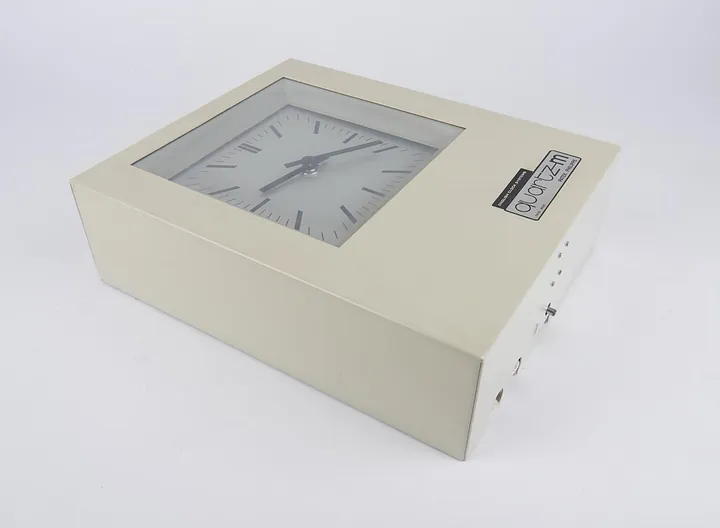
Quartz master clock QM 1, with movement by Patek Phillippe, Switzerland, 1965–1975. Supplied by English Clock Systems.
Science Museum Group, London
Instruments · 1965–1984
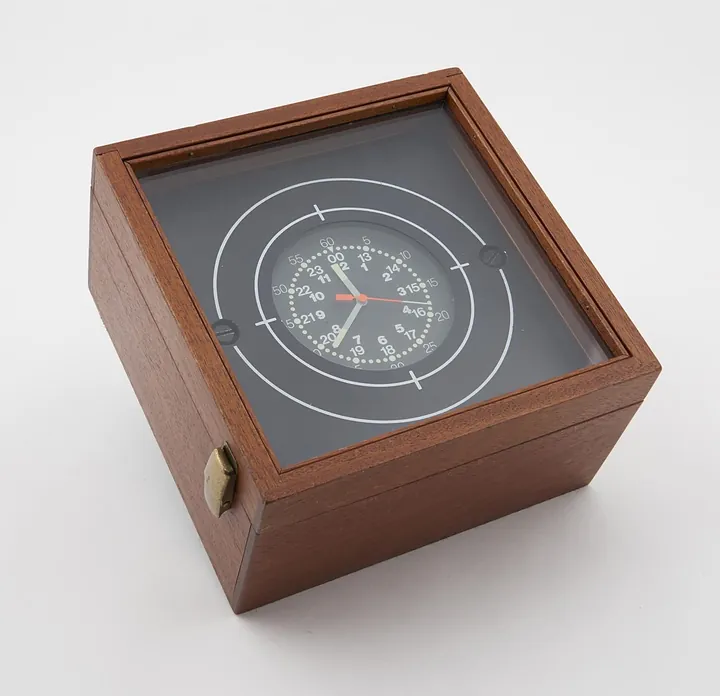
Chronometer by Patek Philippe and Kelvin Hughes, England, 1965–1984
Science Museum Group, London
Pocket Watches · c. 1895
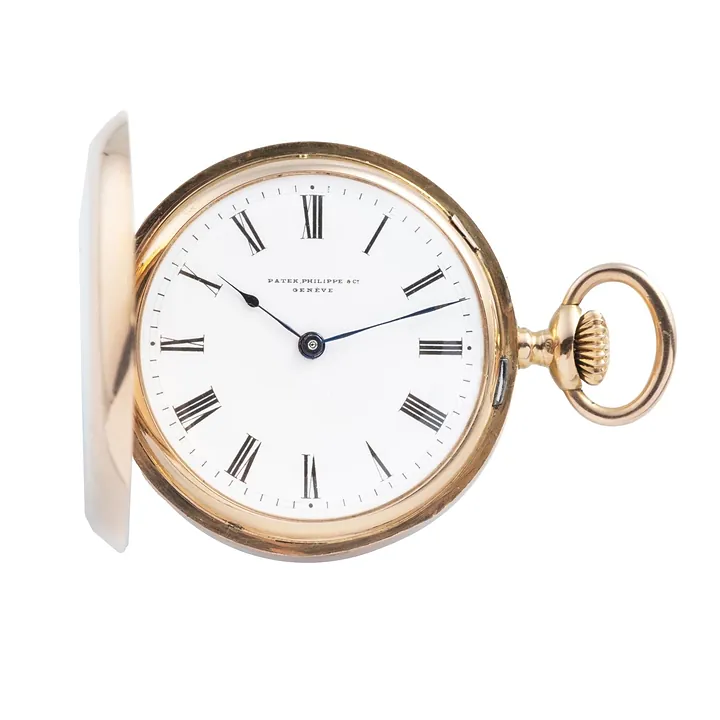
Patek Philippe pocket watch, c. 1895
Antiquorum auction archive, Geneva
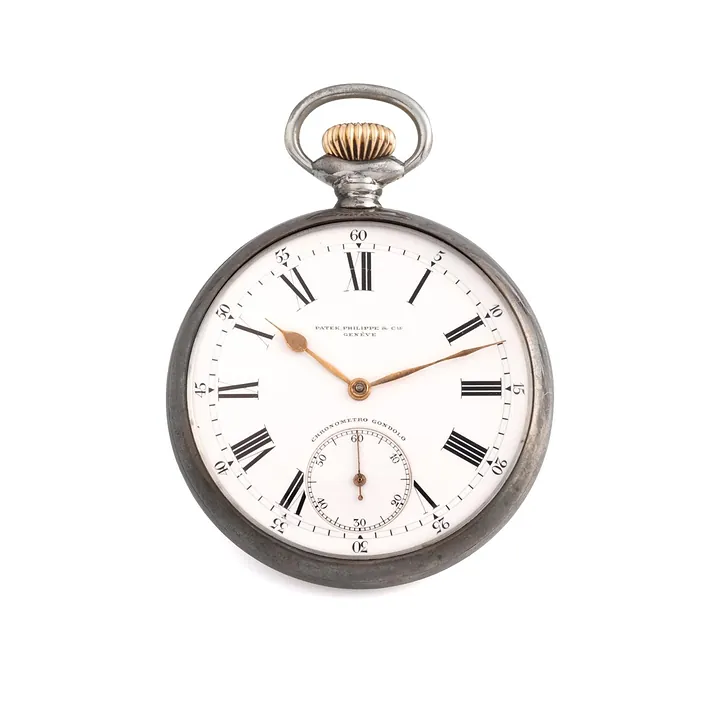
Pocket Watches · c. 1900
Patek Philippe Chronometro Gondolo, c. 1900
Antiquorum auction archive, Geneva

Wristwatches · c. 2010s
Breguet Type XXI, ref. 3810, c. 2010s (Antiquorum Lot 381-24)
Antiquorum auction archive, Geneva

Wristwatches · c. 2010s
Breguet Type XXI, ref. 3810, c. 2010s (Antiquorum Lot 386-229)
Antiquorum auction archive, Geneva

Wristwatches · Sold in September 2010
Breitling Cosmonaute, ref. A 22322, Sold in September 2010
Antiquorum auction archive, Geneva

Wristwatches · c. 2010
Corum Bubble Chrono, ref. 396.150.20, c. 2010
Antiquorum auction archive, Geneva