
Pocket Watches · Pocket watch
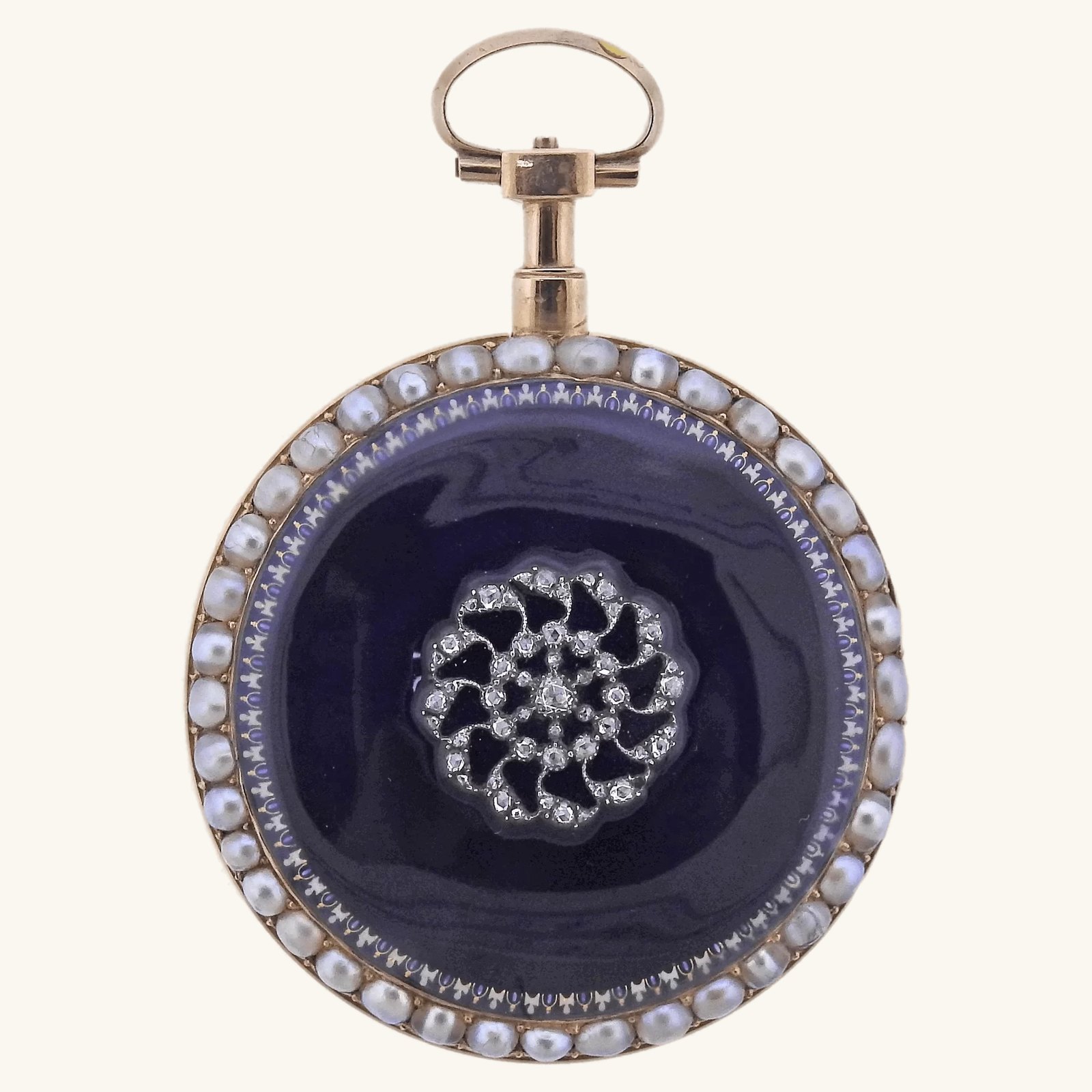
Paris Gold Pearl Enamel Diamond Pocket Watch
- Maker / attribution
- Unrecorded in source
- Date
- 19th century
- Historical period
- Precision & Scientific Horology (1750 – 1850)
- Country of origin
- France
- Object type
- Pocket watch
- Materials / technique
- gold, enamel, pearl, diamond
- Dealer
- WatchMuseum.org shop
- Stock no.
- Product 4825
- Credit line
- Dealer listing, WatchMuseum.org shop (product 4825)
- Catalogue title (original)
- Paris Gold Pearl Enamel Diamond Pocket Watch (English)
View the source record (dealer listing) ↗ (opens another website in a new tab)Suggest a correction
Record summary
Catalogued by WatchMuseum.org shop (stock number Product 4825), this is a pocket watch, made in France, dated 19th century. The Atlas places it in the Precision & Scientific Horology period (1750 – 1850) of its Pocket Watches collection. Materials and techniques recorded by the source: gold, enamel, pearl, diamond. The record is illustrated with 4 photographs.
Assembled from the source record's structured fields. Dates and attributions are given as the source states them; where a field is missing the Atlas leaves it blank rather than estimating.
Catalogue description
Dealer description — WatchMuseum.org shop
The Paris Gold Pearl Enamel Diamond Pocket Watch from the 19th Century is a magnificent embodiment of timeless elegance and exquisite craftsmanship, capturing the essence of an era where artistry and precision were paramount in horology. This antique treasure, crafted in 18k gold, is a stunning testament to the opulence and sophistication of its time, featuring a beautifully decorated blue enamel case that is intricately adorned with lustrous pearls and sparkling rose cut diamonds. Its porcelain dial adds a touch of refined elegance, enhancing the overall allure of this remarkable timepiece. Powered by a key wind mechanical movement, this pocket watch exudes vintage charm, offering a glimpse into the meticulous engineering of the past. With a substantial 50mm diameter case and a weight of approximately 83.7 grams, it stands as a substantial piece of history that can be held in the palm of your hand. While the passage of time may have affected its precision, making it less reliable for keeping time, it remains a true collector’s item, cherished for its historical significance and the masterful craftsmanship it represents. The minor scratches on the crystal do little to diminish its beauty, serving instead as a testament to its journey through time. For those who appreciate the allure of antique timepieces, this Parisian masterpiece offers an exceptional opportunity to own a piece of history. Its exquisite design and intricate detailing ensure it will be a treasured addition to any collection, celebrating the artistry and elegance of 19th-century French watchmaking. With its origins firmly rooted in France, this pocket watch is not only a functional accessory but also a work of art that speaks to the grandeur of its period, making it an exceptional choice for connoisseurs and collectors alike. For sale is a stunning Antique Paris 18k gold pocket watch. This exquisite timepiece features a beautifully decorated blue enamel case, adorned with pearls and rose cut diamonds. The porcelain dial adds an elegant touch to the overall design. The pocket watch is powered by a key wind mechanical movement, providing a vintage charm to its operation. It has a 50mm diameter case and weighs approximately 83.7 grams. Please note that due to its age, the watch may not be keeping time accurately. Nonetheless, this antique piece is a true collector’s item and a testament to the craftsmanship of the era. While there are some minor scratches on the crystal, they do not detract from the overall beauty and appeal of the pocket watch. If you appreciate the allure of antique timepieces, this 18k gold pocket watch from Paris is an exceptional choice. Its exquisite design and intricate detailing will surely make it a treasured addition to any collection. Case Material: Gold,Enamel Stone: Diamond,Pearl Stone Cut: Rose Cut Place of Origin: France Period: 19th Century Date of Manufacture: 19th century Condition: Excellent
Historical context
Precision & Scientific Horology (1750 – 1850)
Harrison solves longitude; Mudge invents the lever; Breguet's Paris workshop defines the modern watch.
From 1750 to 1850 the watch became a precision instrument. Mudge's lever escapement, the cylinder escapement, Lépine's thin bar calibre, Breguet's innovations (overcoil, tourbillon, perpétuelle) and the pocket chronometer of Arnold and Earnshaw all date from this period, while verge watches remained common in cheaper production.
Read the period in the timelineMore pocket watches from this periodEarlier: Early Modern Horology
Atlas type guide
Pocket watches
The pocket watch was the dominant personal timekeeper from the late seventeenth century until the First World War. Its development tracks the history of the escapement: verge watches with fusees until the late eighteenth century; Thomas Mudge's lever escapement (c. 1755) and the cylinder escapement popularised by George Graham and later by Swiss makers; and the Swiss and English lever watches of the nineteenth century. Lépine's bar-bridge calibre and keyless winding made watches thinner and easier to use.
Industrialisation transformed the trade: American factories such as Waltham (from 1850) and Elgin produced interchangeable parts by machine, and Swiss makers responded with their own mechanisation after the 1876 Philadelphia Exhibition. By 1900 a reliable watch was affordable to millions; the finest makers continued to produce complications and precision watches.
What to look for
- The escapement: verge (crown wheel), cylinder, duplex, English or Swiss lever.
- Key winding (a square arbor in dial or back) or keyless crown winding.
- Signatures and serial numbers on the movement, dial and inside case back.
- Hallmarks, case maker's marks and gold or silver standards stamped in the case.
- Dial material: enamel, silver, gold, later printed metal.
Dating clues
- Verge watches dominate before c. 1800; cylinder watches c. 1770–1900; lever watches after c. 1820.
- Keyless winding: increasingly common after c. 1860.
- Manufacturer serial number lists exist for Waltham, Elgin, Longines, Omega, Patek Philippe and others.
General guidance written by the Atlas editors about this kind of object. It is not a statement about this particular piece; for that, rely on the source record above and on physical examination.
Read next:Verge escapementDetached lever escapementFuseeIdentification Centre
Related records
Pocket Watches · 1745–1755
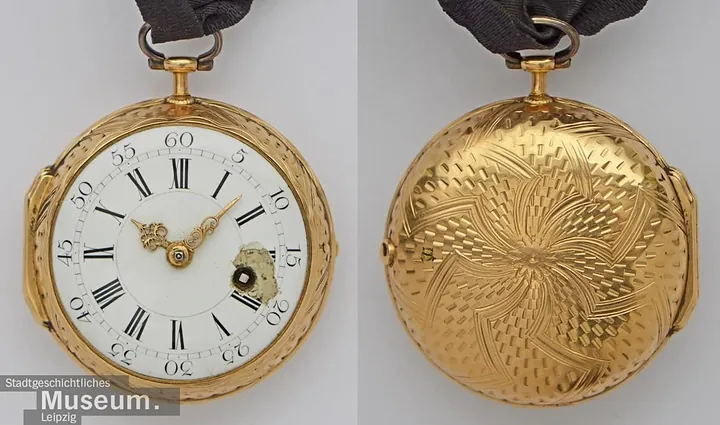
Pocket watch by Jean Baptiste Baillon, France, 1745–1755
Museum of City History Leipzig
Pocket Watches · c. 1750
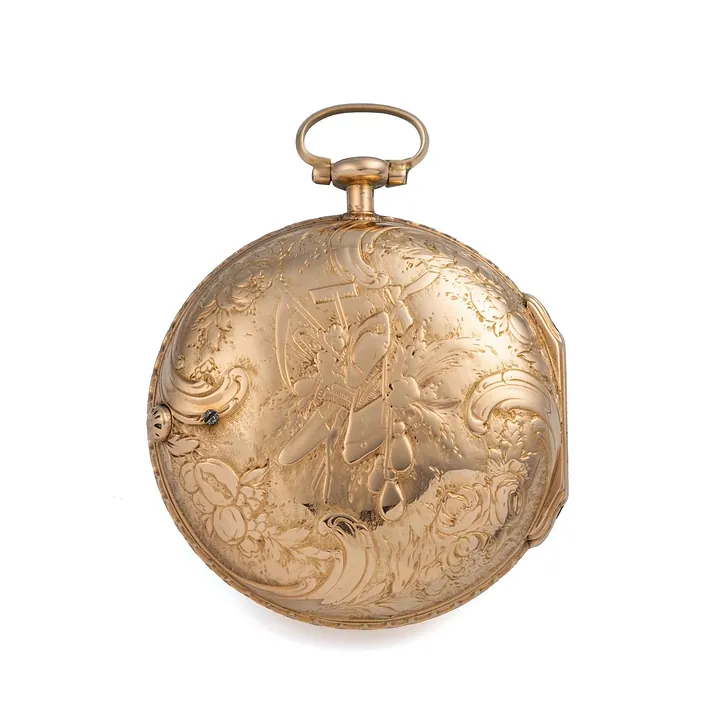
Baillon À Paris pocket watch, c. 1750
Antiquorum auction archive, Geneva
Pocket Watches · 1750–1780
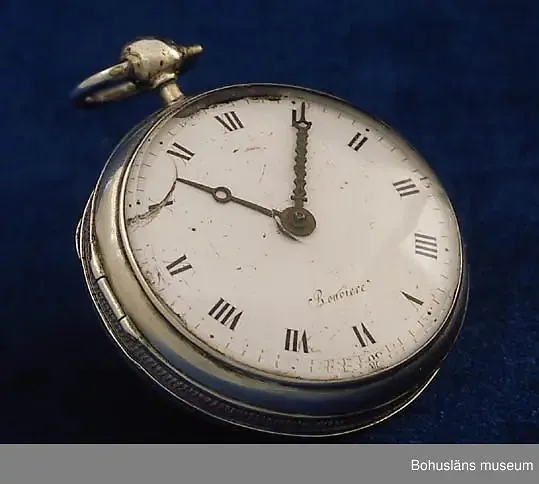
Pocket watch by BONBIERE, France, 1750–1780
Bohuslän Museum
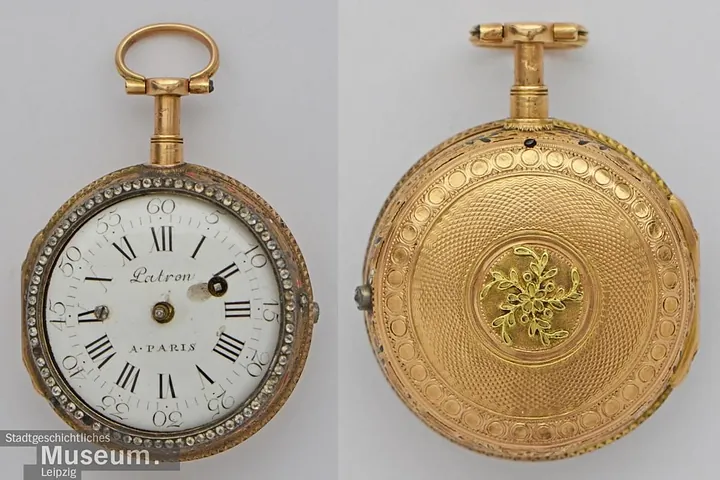
Pocket Watches · 1750
Pocket watch by Patron, France, 1750
Museum of City History Leipzig
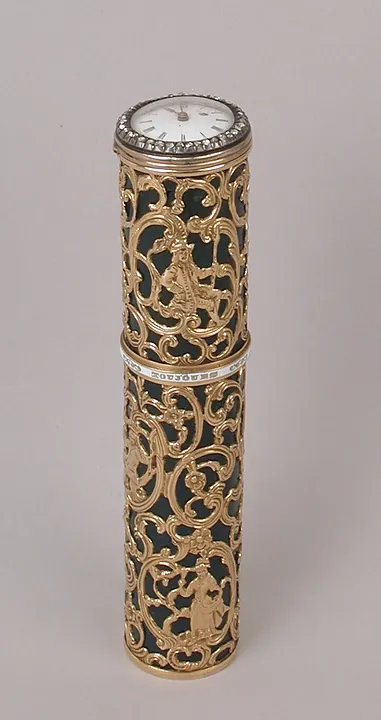
Pocket Watches · second half 18th century
Watch probably by by an imitator of Abraham-Louis Bréguet, France, second half 18th century
The Metropolitan Museum of Art, New York
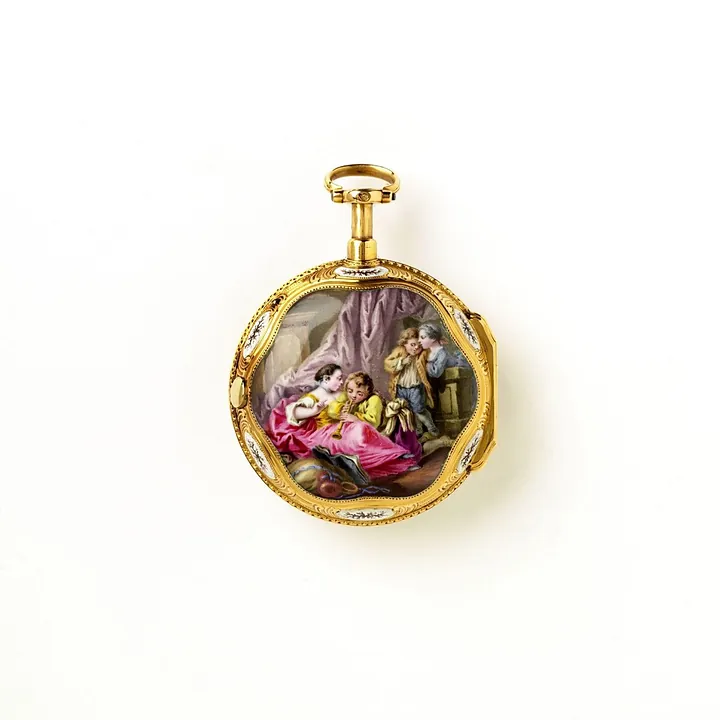
Pocket Watches · 1760–1761
Enamelled gold, quarter repeating watch, Paris, 1760-62, Romilly
Victoria and Albert Museum, London
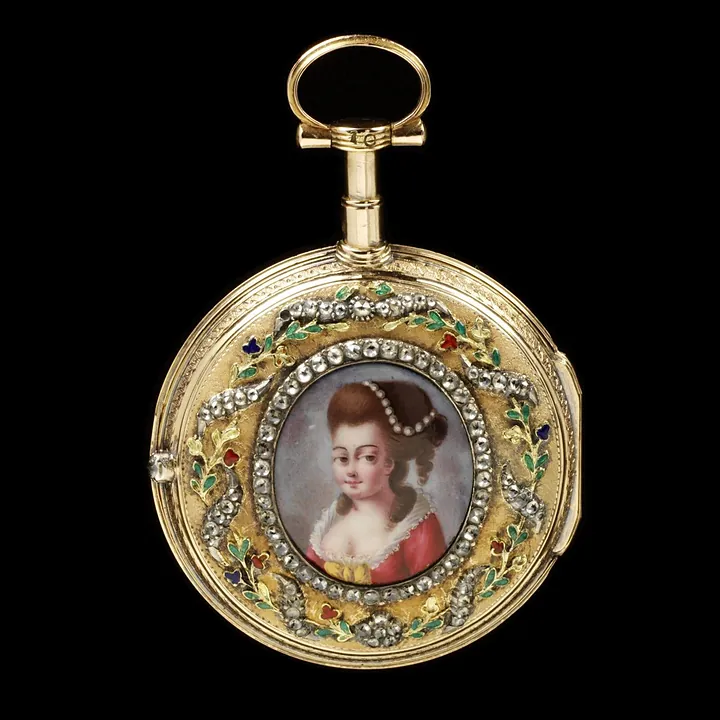
Pocket Watches · 1770-5
Enamelled copper gilt watch set with pastes, signed 'Vauchez A Paris'; made in France or Switzerland, 1770-5
Victoria and Albert Museum, London
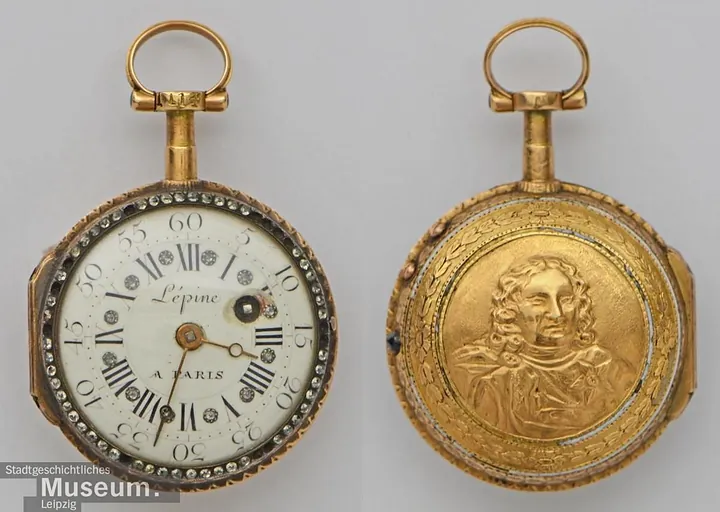
Pocket Watches · 1770–1780
Pocket watch by Lepine, France, 1770–1780
Museum of City History Leipzig