
Wristwatches · Wristwatch
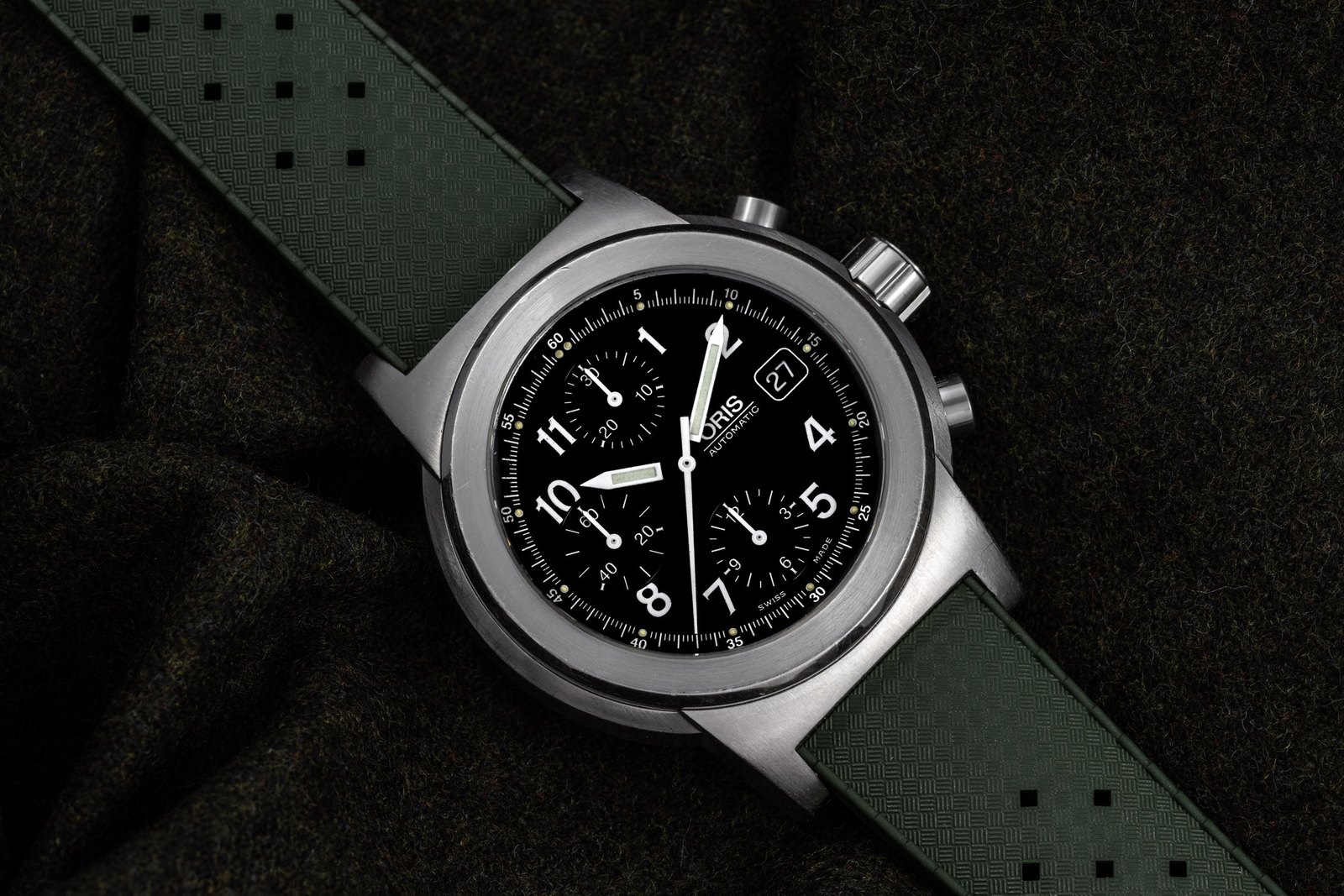
Oris BC3 Chronograph
- Maker / attribution
- Oris (maker)
- Date
- c. 2001
- Historical period
- Mechanical Renaissance (1990 – 2010)
- Country of origin
- Unrecorded in source
- Object type
- Wristwatch
- Stock no.
- 40990270
- Credit line
- Dealer listing, Analog/Shift (40990270)
- Catalogue title (original)
- Oris BC3 Chronograph (English)
View the source record (dealer listing) ↗ (opens another website in a new tab)Suggest a correction
Record summary
Catalogued by Analog/Shift (dealer), New York (stock number 40990270), this is a wristwatch by Oris, dated c. 2001. The Atlas places it in the Mechanical Renaissance period (1990 – 2010) of its Wristwatches collection. The record is illustrated with 6 photographs.
Assembled from the source record's structured fields. Dates and attributions are given as the source states them; where a field is missing the Atlas leaves it blank rather than estimating.
Catalogue description
Dealer description — Analog/Shift
Oris is a darling amongst watch enthusiasts today. With hits such as the Diver 65, Pointer Date, and Big Crown Pilot line headlining their collection, a slew of awesome special limited-edition models released annually, and a decidedly community-facing way of doing business rounding them out, Oris is appreciated - if not beloved - by beginner and tenured collectors alike. With all of the attention Oris is getting these past several years, however, it is easy to forget that they have been making exceptional watches for nearly 120 years, and there are quite a few forgotten hits from the recent past. This model, a BC3 Chronograph, dates to circa 2001 and offers a tremendous bang for the buck in terms of styling and mechanics. With a look that blurs the lines between aviation and diving, the BC3 series combined brushed and polished stainless steel case elements with a highly legible and clutter-free dial. Powered by a Valjoux 7750 automatic winding chronograph movement, the BC3 is no slouch on the movement side, either. Utilizing a triple subsidiary register layout with a color-matched date wheel, barrel pushers, and an oversized winding crown, its function-forward layout is playfully contrasted by its hooded lug case design and stepped bezel.
Historical context
Mechanical Renaissance (1990 – 2010)
Mechanical watches return as cultural objects; independent watchmaking flourishes.
Mechanical watches returned as cultural and luxury objects. Complications, tourbillons and new materials proliferated; independent watchmakers such as George Daniels, F.P. Journe and Philippe Dufour revived artisanal watchmaking; collecting vintage watches became a major field.
Read the period in the timelineMore wristwatches from this periodEarlier: Quartz Revolution
Atlas type guide
Chronographs and split-seconds watches
A chronograph is a watch with an additional seconds hand that can be started, stopped and returned to zero independently of the timekeeping. Louis Moinet built an early example in 1816 and Nicolas Rieussec a recording 'chronographe' in 1821; Adolphe Nicole's heart-shaped reset cam (patented 1862) made the modern return-to-zero possible. Split-seconds (rattrapante) chronographs add a second hand that can be stopped for intermediate times; flyback chronographs restart instantly.
Chronographs were essential tools for doctors (pulsometer scales), artillery (telemeter), engineers and sport. In wristwatches, Valjoux, Venus, Lemania and later the automatic chronographs of 1969 (Zenith El Primero, the Chronomatic Calibre 11 group and Seiko 6139) are milestones.
What to look for
- Push-pieces on the case band or a single button in the crown (monopusher).
- Subsidiary registers for minutes and hours; tachymeter, telemeter or pulsometer scales.
- Column wheel versus cam control visible in the movement.
- Calibre markings of specialist makers (Valjoux, Lemania, Venus, Landeron).
Dating clues
- Pocket chronographs with heart cam reset: after 1862.
- Wrist chronographs: from c. 1910; two-button designs from the 1930s.
- Automatic chronographs: from 1969.
General guidance written by the Atlas editors about this kind of object. It is not a statement about this particular piece; for that, rely on the source record above and on physical examination.
Read next:Flyback chronographChronograph
Related records
Wristwatches · sold in Oct 3rd 2011
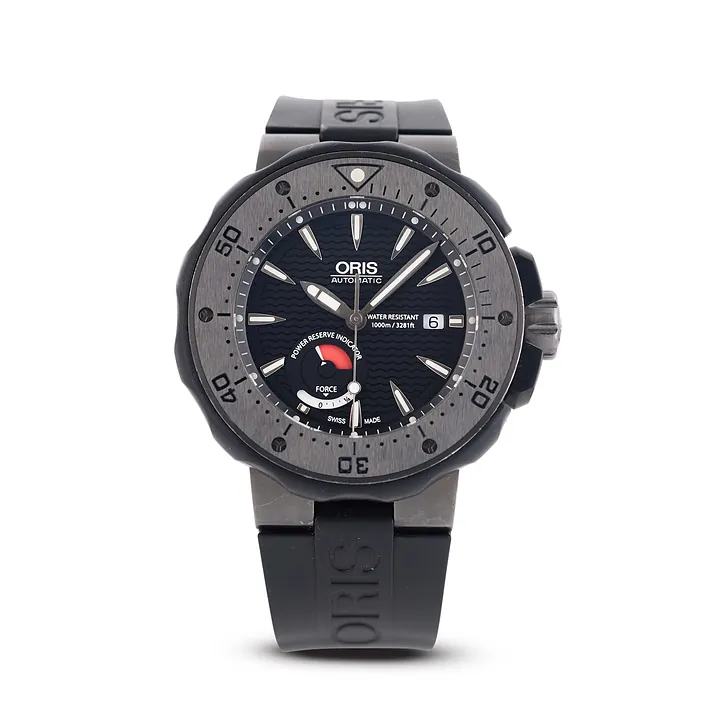
Oris Col Moschin Limited Edition, ref. 01 667 7645 7284-Set, sold in Oct 3rd 2011
Antiquorum auction archive, Geneva
Wristwatches · 2020
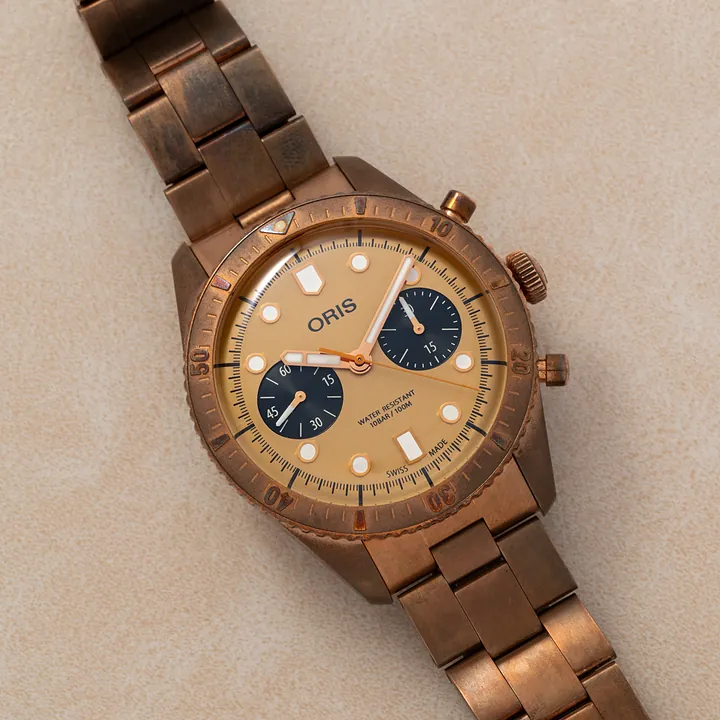
Oris Diver 65 Chronograph Holstein Edition, 2020
Analog/Shift (dealer), New York
Wristwatches · 2006
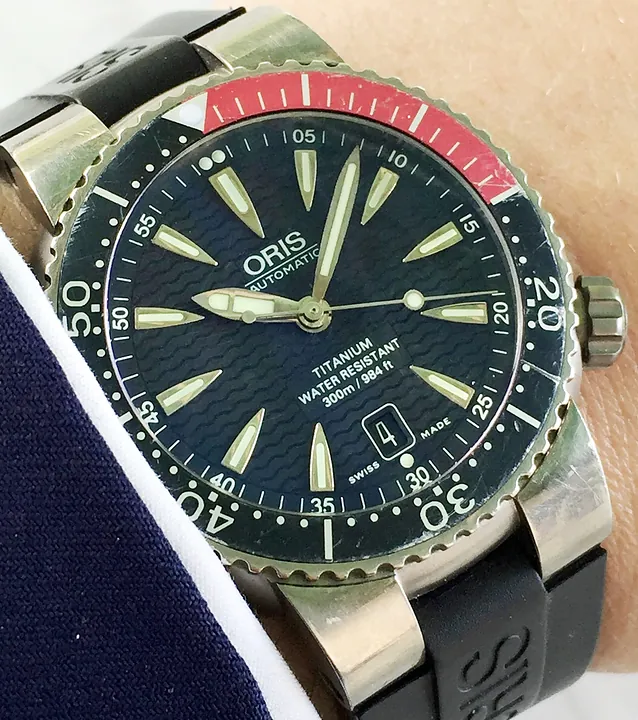
Oris Pepsi Diver Automatic, 2006
Vintage Portfolio (dealer), Vienna
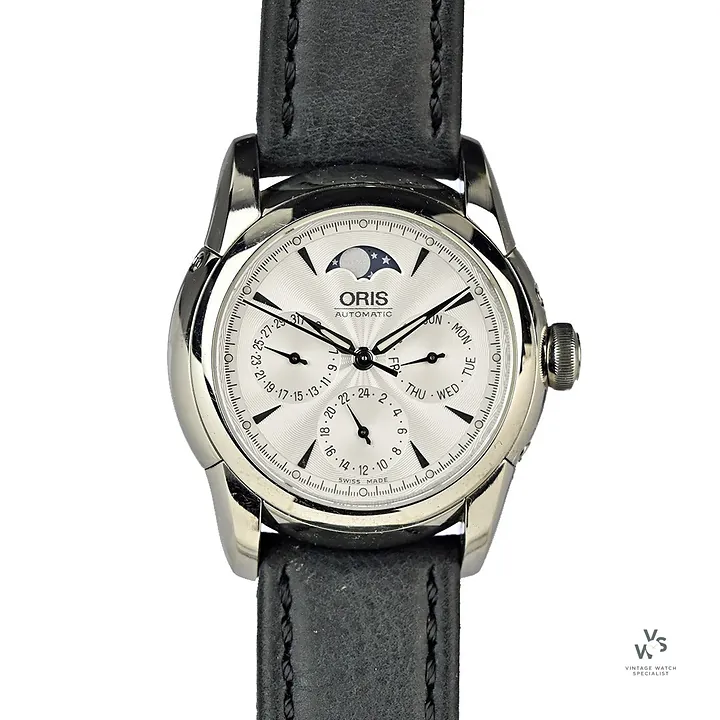
Wristwatches · c. 2004
Oris Artelier Complication Triple Moonphase Watch, ref. 7554A, circa 2004
Vintage Watch Specialist (dealer), United Kingdom
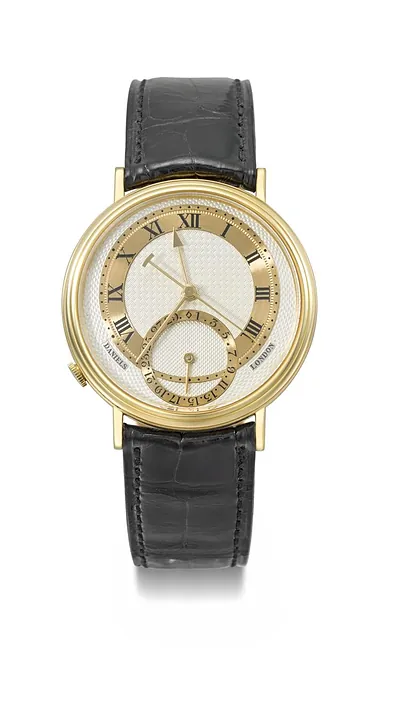
Wristwatches · 1999
'Millennium' co-axial wristwatch by George Daniels and Omega, England, 1999
Science Museum Group, London

Wristwatches · 2008
Wristwatch by Breitling?, 2008
Museum Rotterdam
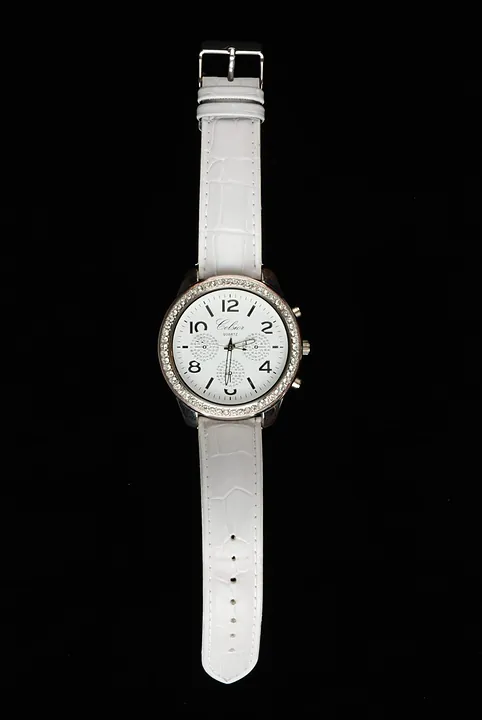
Wristwatches · 2008
Wristwatch by Celsior Quartz, 2008
Museum Rotterdam
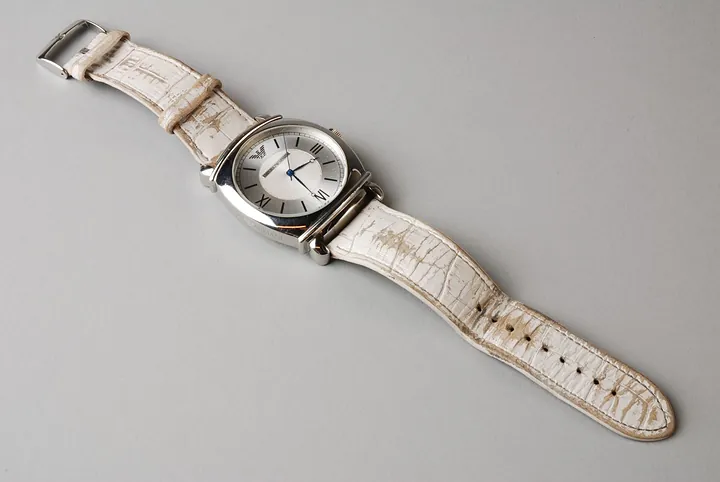
Wristwatches · 2008
Wristwatch possibly by Emporio Armani, 2008
Museum Rotterdam