
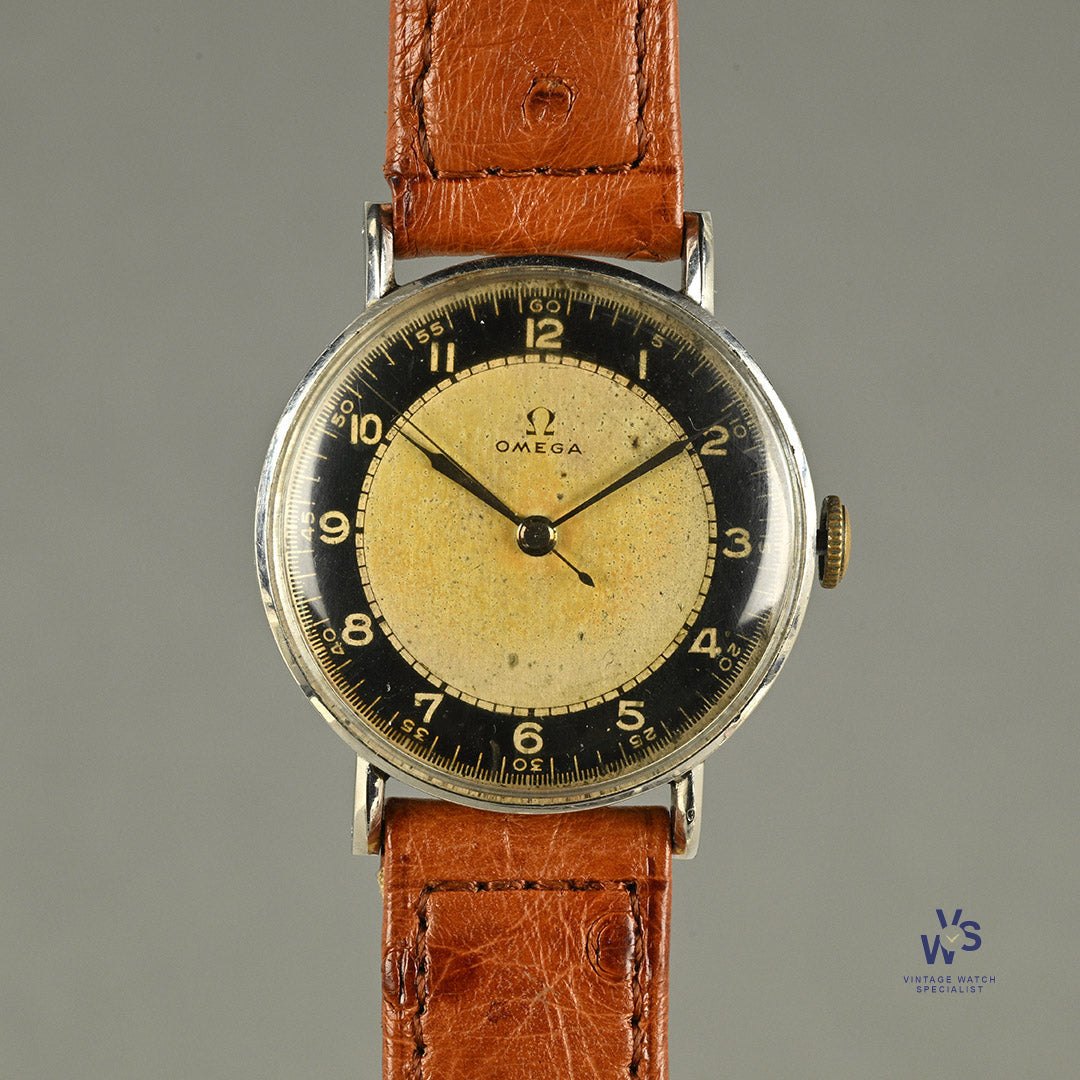
Wristwatches · Wristwatch
Omega Bullseye Dial, Stainless Steel Watch, circa 1940
- Maker / attribution
- Omega (maker)
- Date
- c. 1940
- Historical period
- Golden Age of Mechanical Watchmaking (1900 – 1945)
- Country of origin
- Switzerland
- Object type
- Wristwatch
- Materials / technique
- stainless steel
- Dimensions
- Case 30 mm
- Stock no.
- vws4368cs
- Credit line
- Dealer listing, Vintage Watch Specialist (vws4368cs)
- Catalogue title (original)
- Omega Bullseye Dial - Stainless Steel Watch - c.1940 (English)
View the source record (dealer listing) ↗ (opens another website in a new tab)Suggest a correction
Record summary
Catalogued by Vintage Watch Specialist (dealer), United Kingdom (stock number vws4368cs), this is a wristwatch by Omega, made in Switzerland, dated c. 1940. The Atlas places it in the Golden Age of Mechanical Watchmaking period (1900 – 1945) of its Wristwatches collection. Materials and techniques recorded by the source: stainless steel. Recorded dimensions: Case 30 mm. The record is illustrated with 6 photographs.
Assembled from the source record's structured fields. Dates and attributions are given as the source states them; where a field is missing the Atlas leaves it blank rather than estimating.
Catalogue description
Dealer description — Vintage Watch Specialist
Omega's 30mm movement family is one of the most important chapters in the manufacturer's pre- and post-war history. Introduced at the end of the 1930s, the architecture proved remarkably successful and would remain in production, through a succession of developments and renamed calibres, for more than two decades. The 30 SC T2 was the centre-seconds version of the celebrated hand-wound movement. Its comparatively large movement diameter allowed Omega to build robust, straightforward watches with excellent timekeeping potential, and the basic design earned a reputation for reliability that helped establish the 30mm family among Omega's most respected vintage movements. The late 1930s and early 1940s were also a particularly interesting period for Omega dial design. Alongside more conventional silver and Arabic numeral layouts were striking two-tone and sector-style designs, including what collectors now commonly describe as "bullseye" dials. Their contrasting concentric areas provided strong visual definition and have made surviving examples particularly distinctive today. These early watches pre-date the familiar named collections that would come to dominate Omega's catalogue in subsequent decades. Instead, the movement, case construction and dial design are very much the stars of the show. What’s on Offer Here we have a wonderful early Omega dating to circa 1940, housed in a stainless-steel case and featuring a particularly striking black and white bullseye dial that has developed considerable natural patina over the intervening decades. The dial is undoubtedly the star of this watch. Its originally pale central section has aged to a wonderfully warm champagne tone, surrounded by a contrasting black chapter carrying large Arabic hour numerals. Around the very edge sits a detailed minutes and seconds track, while a further track separates the centre from the black outer chapter to create the distinctive concentric design now commonly referred to by collectors as a bullseye dial. There is extensive age-related spotting and tonal variation across the centre of the dial, giving this approximately 85-year-old Omega a great deal of individual character. The black outer chapter has aged too, with the cream-coloured numerals and markings taking on an attractive warmth that works beautifully against the central patina. A pair of slim dark hands are accompanied by a central sweep seconds hand, while the simple Omega logo and signature sit neatly beneath 12 o'clock. It's a wonderfully balanced design, with very little unnecessary decoration beyond the contrasting dial itself. The stainless-steel case measures 34.5mm across and is particularly attractive in profile. The relatively slender lugs extend away from the case before curving downwards towards the wrist, helping the watch sit neatly despite its distinctly vintage proportions. The drilled lug ends are another lovely period detail. Inside is Omega's manually wound 16-jewel calibre 30 SC-T2, part of the highly regarded family of 30mm Omega movements that became such an important part of the manufacturer's output during this period. The watch is currently paired with a warm brown leather strap, which works particularly well with the aged tones that have developed across the dial. This is a very characterful early Omega. The bullseye layout gives it immediate visual impact, while more than eight decades of natural ageing have transformed what began as a contrasting black and white dial into something completely individual. Should you prefer to have the watch professionally serviced before delivery, this can be arranged through our watchmaker at an additional cost. Simply add a note when placing the watch in your basket, and we will contact you to discuss the available servicing options.
Historical context
Golden Age of Mechanical Watchmaking (1900 – 1945)
The wristwatch displaces the pocket watch; waterproof cases, self-winding and grand complications.
The wristwatch overtook the pocket watch. Military use in the First World War, aviation, water-resistant cases (1926), automatic winding (1923–31), rectangular Art Deco designs and early chronographs and calendars defined the period.
Read the period in the timelineMore wristwatches from this periodEarlier: Industrial Revolution
Atlas type guide
Wristwatches
Bracelet watches were worn by women from the early nineteenth century — Breguet made one for Caroline Murat, Queen of Naples, in 1810–12 — but the wristwatch only became a man's instrument with military use and aviation in the early twentieth century. Between the World Wars it overtook the pocket watch; the 1920s and 1930s brought rectangular Art Deco cases, water-resistant cases and the first automatic winding systems.
After 1945 the wristwatch became a carrier of identity — dress watches, sports and dive watches, chronographs, calendars — produced by Swiss, American, Japanese, German, Soviet and Chinese industries. The quartz revolution after 1969 and the mechanical renaissance since the 1990s, including the rise of independent watchmakers, complete the story.
What to look for
- The reference number (between the lugs or inside the case back) and serial number, the starting point for dating.
- The calibre: its maker and number are often stamped under the dial or on the bridge.
- Originality of dial, hands and crown — refinished ('redial') dials are common.
- Case material marks: 18K/750, 14K/585, stainless steel, gold-filled, plated.
Dating clues
- Wire-lug cases: before c. 1925.
- Water-resistant screw-down cases: from 1926.
- Quartz movements: from 1969; sapphire crystals widespread after c. 1980.
General guidance written by the Atlas editors about this kind of object. It is not a statement about this particular piece; for that, rely on the source record above and on physical examination.
Related records

Instruments · 1950–1976
Omega Megaquartz 2400 marine chronometer, 1950–1976
Science Museum Group, London

Instruments · 1960–1979
Stopwatch / timer by Omega, 1960–1979
Science Museum Group, London

Instruments · 1960–1979
Stopwatch / timer by Omega, Switzerland, 1960–1979
Science Museum Group, London

Instruments · 1960–1979
Stopwatch by Omega, Swiss made, single-button type reading 0 - 60 seconds in fifths and 0 - 5 minutes in minutes on subsidiary dial, 1960-79.
Science Museum Group, London

Wristwatches · 1931
Rolex 'Oyster Perpetual' rotor self-winding wrist-watch, lever escapement, in steel case with glass in back, Montres Rolex SA, Geneva, Switzerland, 1931
Science Museum Group, London

Wristwatches · 1900–1999
Wristwatch by Certina, Switzerland, 1900–1999
Nordic Museum Foundation
Wristwatches · 1900–1999
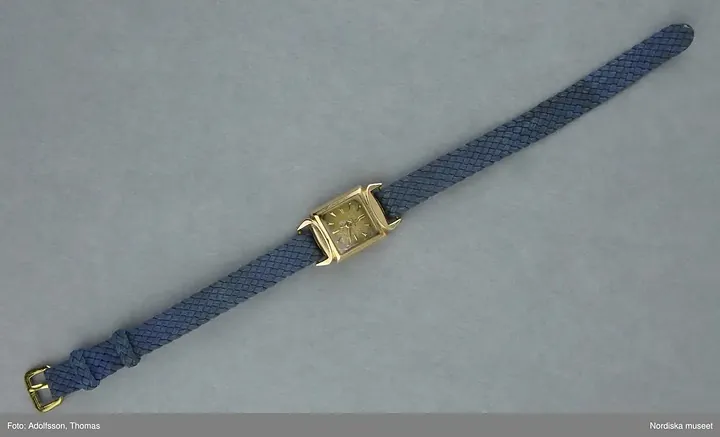
Wristwatch by Omega, Västerås, 1900–1999
Nordic Museum Foundation
Wristwatches · 1900–1999
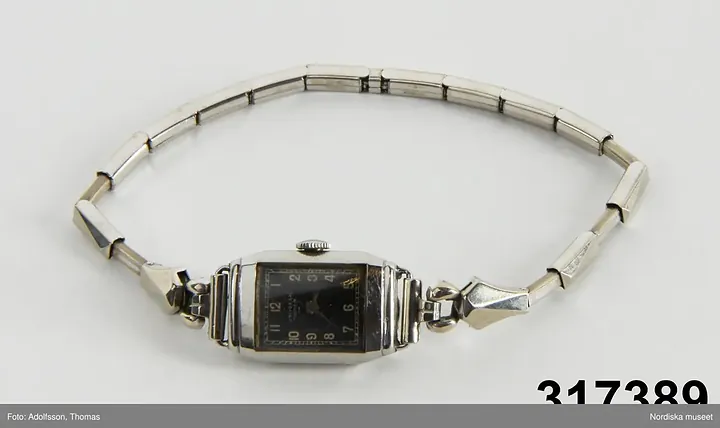
Wristwatch by Universal, Switzerland, 1900–1999
Nordic Museum Foundation