
Wristwatches · Wristwatch
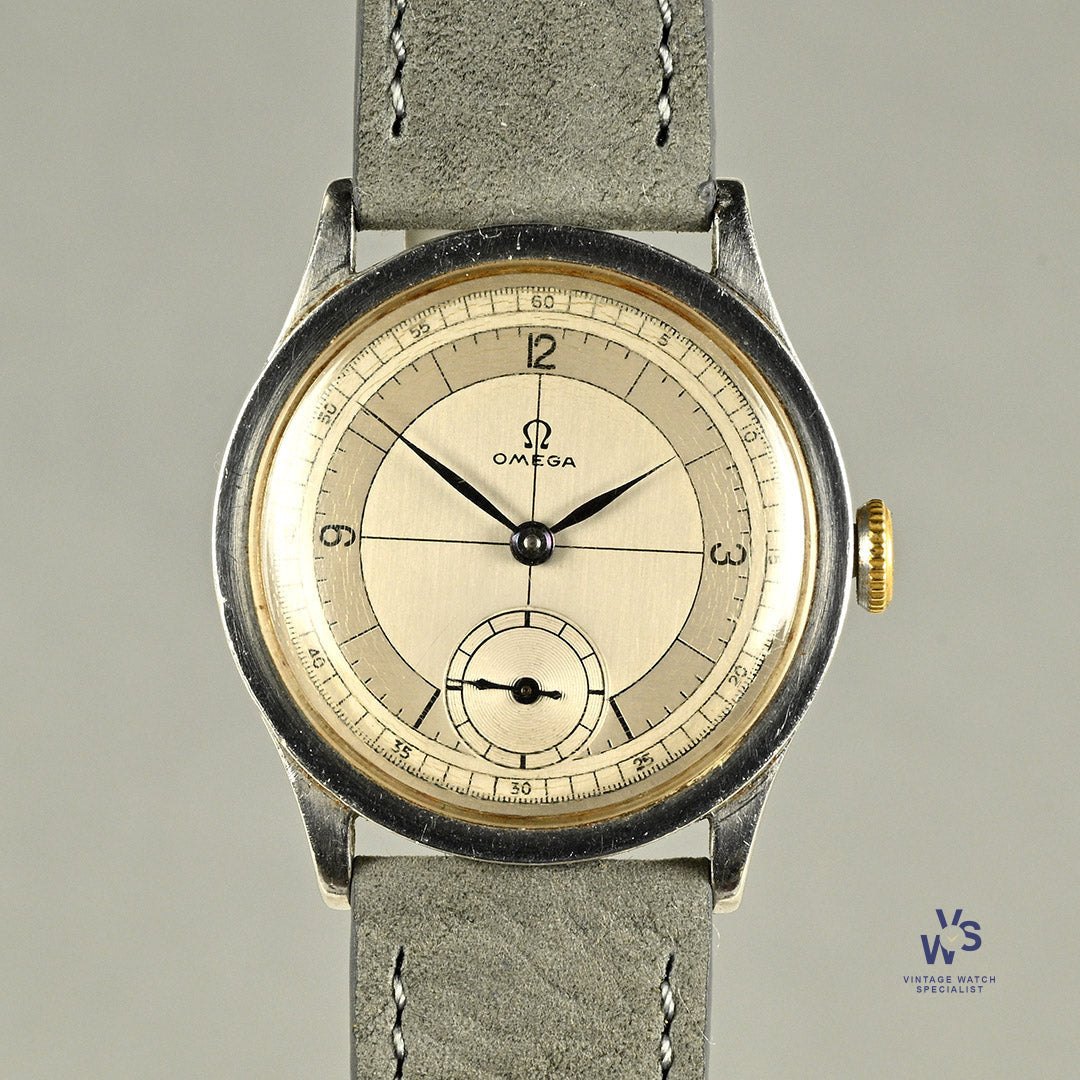
Omega Art Deco Sector Dial Watch, circa 1930s
- Maker / attribution
- Omega (maker)
- Date
- c. 1930s
- Historical period
- Golden Age of Mechanical Watchmaking (1900 – 1945)
- Country of origin
- Switzerland
- Object type
- Wristwatch
- Dimensions
- Case 32 mm
- Stock no.
- vws4495
- Credit line
- Dealer listing, Vintage Watch Specialist (vws4495)
- Catalogue title (original)
- Vintage Omega Art Deco Sector Dial Watch c.1930s (English)
View the source record (dealer listing) ↗ (opens another website in a new tab)Suggest a correction
Record summary
Catalogued by Vintage Watch Specialist (dealer), United Kingdom (stock number vws4495), this is a wristwatch by Omega, made in Switzerland, dated c. 1930s. The Atlas places it in the Golden Age of Mechanical Watchmaking period (1900 – 1945) of its Wristwatches collection. Recorded dimensions: Case 32 mm. The record is illustrated with 6 photographs.
Assembled from the source record's structured fields. Dates and attributions are given as the source states them; where a field is missing the Atlas leaves it blank rather than estimating.
Catalogue description
Dealer description — Vintage Watch Specialist
The 1930s marked an exciting period for Omega, as the Swiss manufacturer combined its established reputation for precision watchmaking with the changing tastes of the Art Deco era. Wristwatches were becoming increasingly sophisticated, with cleaner case designs, carefully balanced proportions and striking geometric dials replacing some of the more decorative styles of earlier decades. Among the most recognisable designs of this period were sector dials, characterised by concentric rings, carefully divided hour markers and fine crosshair detailing. Their distinctive appearance reflected the Art Deco fascination with symmetry and geometry, creating watches that were both practical instruments and beautifully considered pieces of design. Often described by collectors as Calatrava-style watches, these elegant round Omega models share the restrained proportions and understated sophistication associated with classic dress watches of the period. The Omega 26.5 movement family, introduced during the 1920s, became an important part of the manufacturer's early wristwatch production and remained in use through various developments during the following decades. Today, these early Omega sector dial watches are appreciated for their period styling, mechanical craftsmanship and enduring elegance. What's on Offer Here we have a beautifully presented Omega Art Deco sector dial wristwatch , dating to approximately 1935–1939, housed in a stainless steel case and powered by the manually wound Omega Calibre 26.5 T3 RC.T1. Measuring approximately 32mm across, excluding the crown, the case features a slim, rounded bezel and elegantly tapered lugs that give the watch its classic 1930s proportions. The lug-to-lug measurement is 37mm, with an 18mm lug width, creating a compact and comfortable vintage dress watch. The stainless steel case displays marks of wear consistent with its considerable age, retaining the attractive lines and understated character of the original design. A contrasting gold-coloured crown adds a subtle touch of warmth, with some wear to its plating revealing the underlying metal. The real attraction, however, is the refinished ivory sector dial , which beautifully captures the geometric styling of the Art Deco period. A softly contrasting taupe sector ring surrounds the silver-toned central section, while fine black crosshair lines divide the dial into four precisely balanced quarters. The outer railway minute track features detailed markings and numerals at five-minute intervals, providing a lovely sense of depth and intricacy. Stylised Arabic numerals at 12, 3 and 9 o'clock reinforce the watch's period appearance, while the traditional Omega signature sits neatly beneath 12. At 6 o'clock, a recessed subsidiary seconds dial features delicate concentric detailing, completing the beautifully symmetrical arrangement. Elegant dark hands provide a striking contrast against the lighter dial, maintaining excellent legibility. The watch is protected by a vintage-style crystal which displays some signs of age, as visible in the photographs. Inside is the Omega Calibre 26.5 T3 RC.T1 , a 15-jewel manually wound mechanical movement. The movement has been serviced, offering reassurance alongside the pleasure of owning an early example of Omega's mechanical watchmaking. The watch is fitted with a soft grey leather strap featuring contrasting stitching, which complements the cool tones of the stainless steel case and understated dial. With its beautifully executed Art Deco styling, refined proportions and serviced mechanical movement, this is a delightful example of pre-war Omega design. Condition Details: Crystal: Good Dial: Excellent Bezel: Very Good Case: Good Movement: Serviced Overall: Very Good
Historical context
Golden Age of Mechanical Watchmaking (1900 – 1945)
The wristwatch displaces the pocket watch; waterproof cases, self-winding and grand complications.
The wristwatch overtook the pocket watch. Military use in the First World War, aviation, water-resistant cases (1926), automatic winding (1923–31), rectangular Art Deco designs and early chronographs and calendars defined the period.
Read the period in the timelineMore wristwatches from this periodEarlier: Industrial Revolution
Atlas type guide
Wristwatches
Bracelet watches were worn by women from the early nineteenth century — Breguet made one for Caroline Murat, Queen of Naples, in 1810–12 — but the wristwatch only became a man's instrument with military use and aviation in the early twentieth century. Between the World Wars it overtook the pocket watch; the 1920s and 1930s brought rectangular Art Deco cases, water-resistant cases and the first automatic winding systems.
After 1945 the wristwatch became a carrier of identity — dress watches, sports and dive watches, chronographs, calendars — produced by Swiss, American, Japanese, German, Soviet and Chinese industries. The quartz revolution after 1969 and the mechanical renaissance since the 1990s, including the rise of independent watchmakers, complete the story.
What to look for
- The reference number (between the lugs or inside the case back) and serial number, the starting point for dating.
- The calibre: its maker and number are often stamped under the dial or on the bridge.
- Originality of dial, hands and crown — refinished ('redial') dials are common.
- Case material marks: 18K/750, 14K/585, stainless steel, gold-filled, plated.
Dating clues
- Wire-lug cases: before c. 1925.
- Water-resistant screw-down cases: from 1926.
- Quartz movements: from 1969; sapphire crystals widespread after c. 1980.
General guidance written by the Atlas editors about this kind of object. It is not a statement about this particular piece; for that, rely on the source record above and on physical examination.
Related records

Instruments · 1950–1976
Omega Megaquartz 2400 marine chronometer, 1950–1976
Science Museum Group, London

Instruments · 1960–1979
Stopwatch / timer by Omega, 1960–1979
Science Museum Group, London

Instruments · 1960–1979
Stopwatch / timer by Omega, Switzerland, 1960–1979
Science Museum Group, London

Instruments · 1960–1979
Stopwatch by Omega, Swiss made, single-button type reading 0 - 60 seconds in fifths and 0 - 5 minutes in minutes on subsidiary dial, 1960-79.
Science Museum Group, London

Wristwatches · 1931
Rolex 'Oyster Perpetual' rotor self-winding wrist-watch, lever escapement, in steel case with glass in back, Montres Rolex SA, Geneva, Switzerland, 1931
Science Museum Group, London

Wristwatches · 1900–1999
Wristwatch by Certina, Switzerland, 1900–1999
Nordic Museum Foundation
Wristwatches · 1900–1999
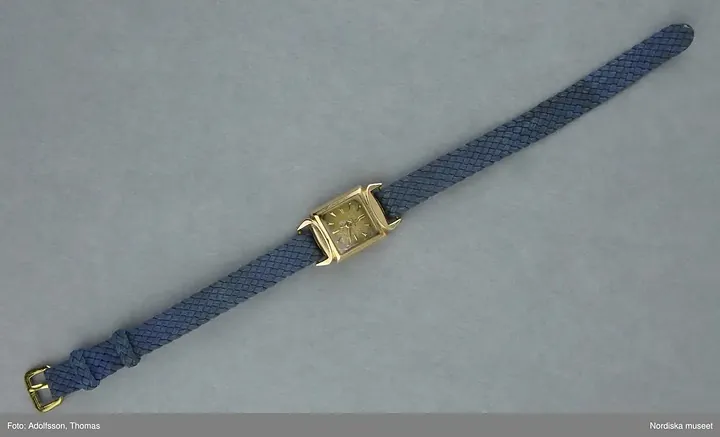
Wristwatch by Omega, Västerås, 1900–1999
Nordic Museum Foundation
Wristwatches · 1900–1999
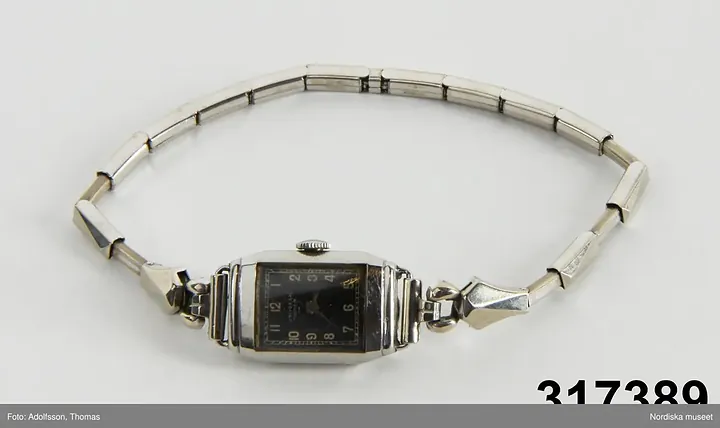
Wristwatch by Universal, Switzerland, 1900–1999
Nordic Museum Foundation