
Wristwatches · Diver's wristwatch
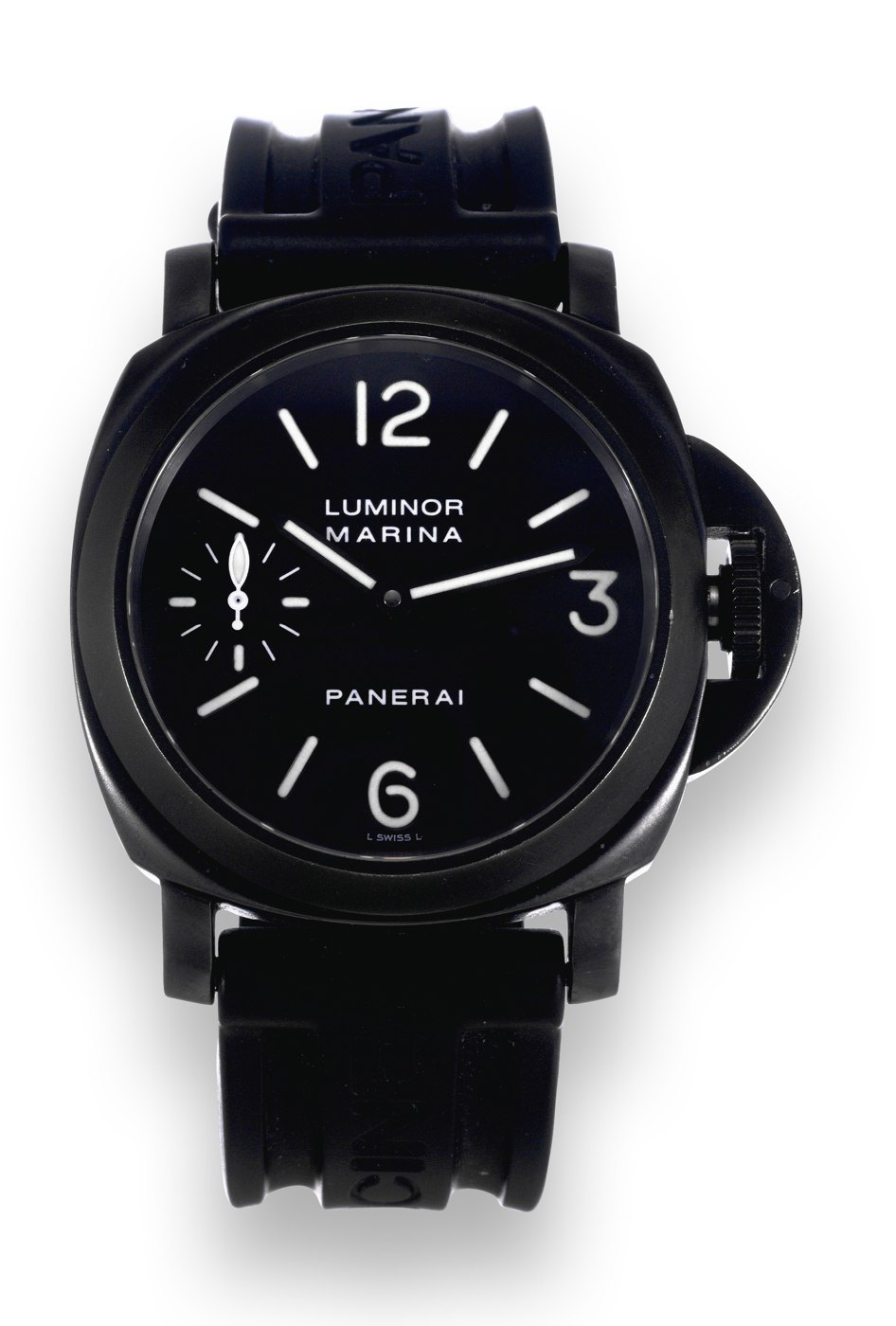
Officine Panerai Luminor Marina PAM 4
- Maker / attribution
- Officine Panerai (source attribution)
- Date
- 1999
- Historical period
- Mechanical Renaissance (1990 – 2010)
- Country of origin
- Italy
- Object type
- Diver's wristwatch
- Holding institution
- Antiquorum
- Accession / object no.
- 296
- Credit line
- Antiquorum
- Catalogue title (original)
- PAM 4\nOfficine Panerai, Firenze 1860, \"Luminor - Marina\",\nNo. B 2340/3000, case No. BB985149, Ref. OP 6519. Made in\na limited edition of 3000 examples in 1999.\nFine, large, cushion-shaped, water (English)
View the source record ↗ (opens another website in a new tab)Suggest a correction
Record summary
Held and catalogued by Antiquorum (object number 296), this is a diver's wristwatch attributed to Officine Panerai, made in Italy, dated 1999. The Atlas places it in the Mechanical Renaissance period (1990 – 2010) of its Wristwatches collection. The record is illustrated with 1 photograph.
Assembled from the source record's structured fields. Dates and attributions are given as the source states them; where a field is missing the Atlas leaves it blank rather than estimating.
Catalogue description
Original object description
Produced in 1999 as number B 2340/3000 from an edition of 3,000 units, this Officine Panerai Luminor Marina (reference OP 6519) carries individual case number BB985149 and was catalogued as lot 296. Its water-resistant, three-piece cushion case measures 44 mm square by 14 mm thick, finished in black PVD with straight lugs, a concave bezel, a screw-down back, a sapphire crystal, and Panerai's patented lever-operated crown-protection bridge. The black dial—graded in mint condition—displays luminescent baton indices, Arabic numerals at 12 and 6, blackened luminous hands, and a small-seconds register at 9 o'clock. Visible superficial scratches are present on the case. Powering the watch is the signed, rhodium-plated manual-wind Caliber OPII, decorated with fausses côtes and equipped with 17 jewels, an in-line lever escapement, shock absorption, a self-compensating flat balance spring, and a monometallic balance adjusted to four positions. The movement requires an overhaul despite its intact running condition. The original COSC chronometer certificate and a factory PVD-finished stainless steel pin buckle accompany the timepiece.
Inscriptions & marks
BB985149
Historical context
Mechanical Renaissance (1990 – 2010)
Mechanical watches return as cultural objects; independent watchmaking flourishes.
Mechanical watches returned as cultural and luxury objects. Complications, tourbillons and new materials proliferated; independent watchmakers such as George Daniels, F.P. Journe and Philippe Dufour revived artisanal watchmaking; collecting vintage watches became a major field.
Read the period in the timelineMore wristwatches from this periodEarlier: Quartz Revolution
Atlas type guide
Dive and water-resistant watches
Keeping water and dust out of a wristwatch was a long-standing challenge. Rolex's screw-down Oyster case (1926) and Omega's Marine (1932) were landmarks; in the early 1950s Blancpain's Fifty Fathoms and Rolex's Submariner defined the professional dive watch with rotating bezels for timing dives, luminous dials and high water resistance. The ISO 6425 standard (1982) later codified what a 'diver's watch' must do.
Dive watches became icons of post-war design and exploration, and their evolution — helium escape valves, ceramic bezels, saturation-diving depth ratings — records the history of underwater work.
What to look for
- Unidirectional or bidirectional rotating bezel with minute markings.
- Screw-down crown and case back; depth rating printed on the dial.
- Luminous hands and markers (radium before c. 1960, tritium c. 1960–1998, then Super-LumiNova).
- Reference numbers on the case between the lugs or inside the back.
Dating clues
- Screw-down Oyster cases: from 1926.
- Professional dive watches: from 1953.
- Tritium 'T' marks on dials: c. 1960–1998.
General guidance written by the Atlas editors about this kind of object. It is not a statement about this particular piece; for that, rely on the source record above and on physical examination.
Related records
Wristwatches · c. 2007
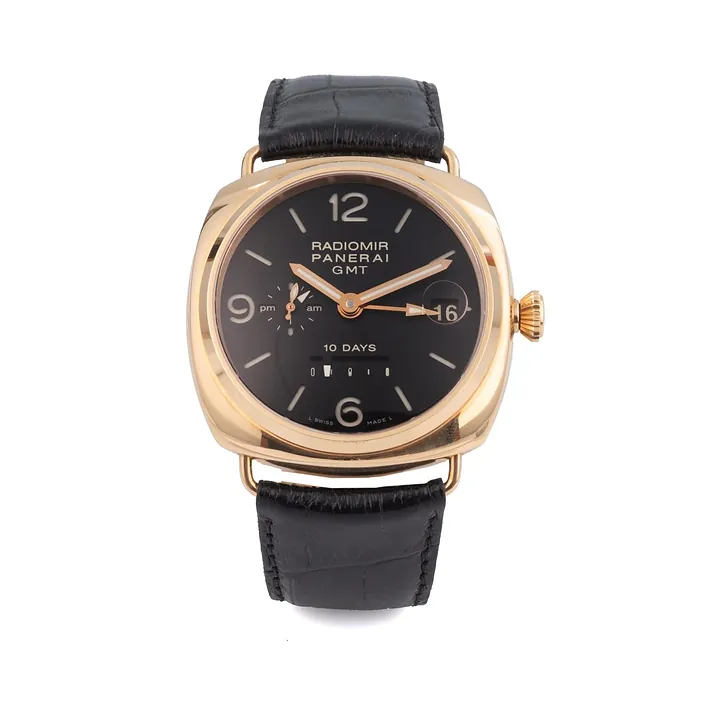
Officine Panerai Radiomir GMT, ref. 06706, c. 2007
Antiquorum auction archive, Geneva
Wristwatches · c. 2007
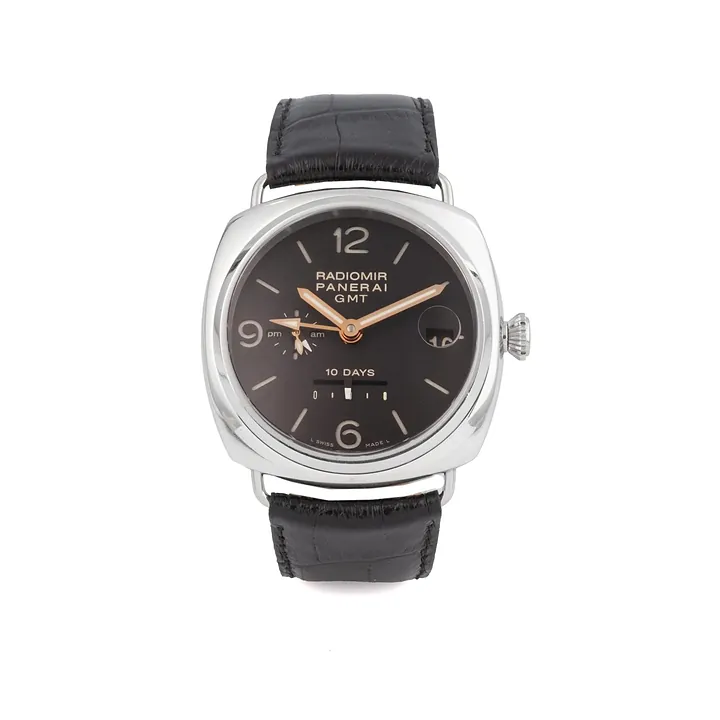
Officine Panerai Radiomir GMT, ref. PAAM00274, c. 2007
Antiquorum auction archive, Geneva
Wristwatches · sold on May 18, 2018
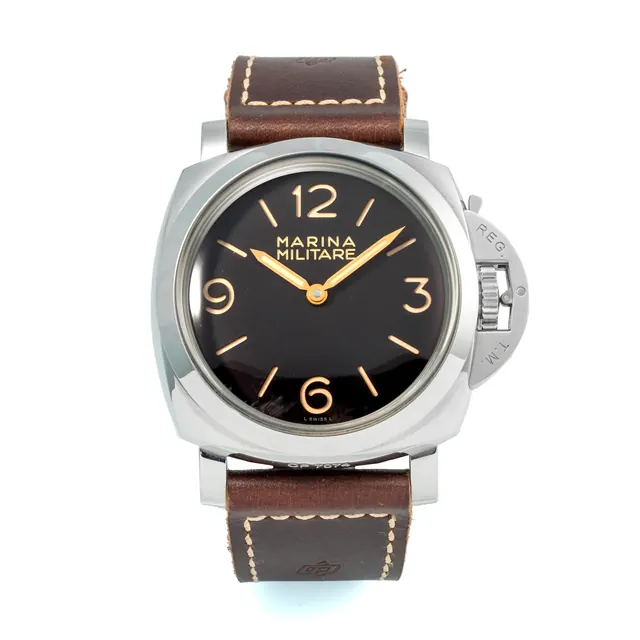
Officine Panerai wristwatch, ref. PAM, 3-Day Going;, sold on May 18, 2018
Antiquorum auction archive, Geneva
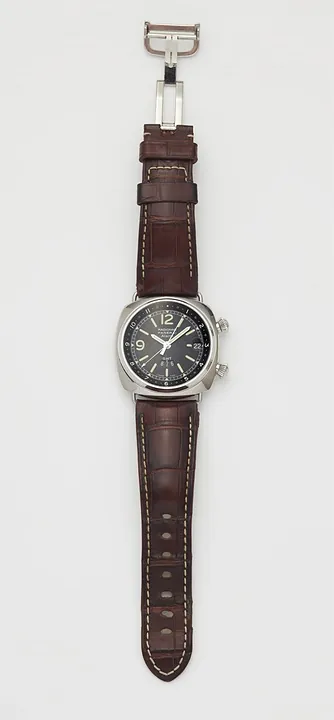
Wristwatches · c. 2006
Officine Panerai Radiomir GMT Alarm wristwatch
Lempertz
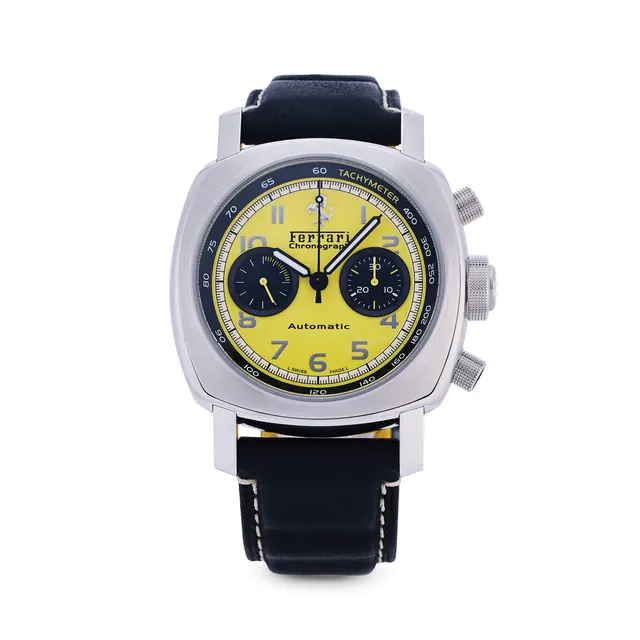
Wristwatches · Sold in Nov 2006
Panerai wristwatch, ref. FER00011, Ferrari Granturismo Chronograph Limited 169/700, Sold in Nov 2006
Antiquorum auction archive, Geneva
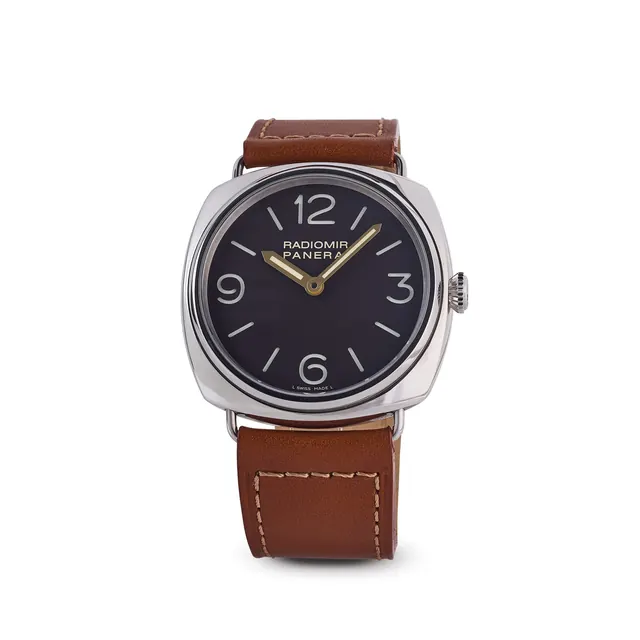
Wristwatches · originally sold in October 2007 (per the lot record)
Panerai wristwatch, ref. PAM, Radiomir 1938 New Old Stock, originally sold in October 2007
Antiquorum auction archive, Geneva
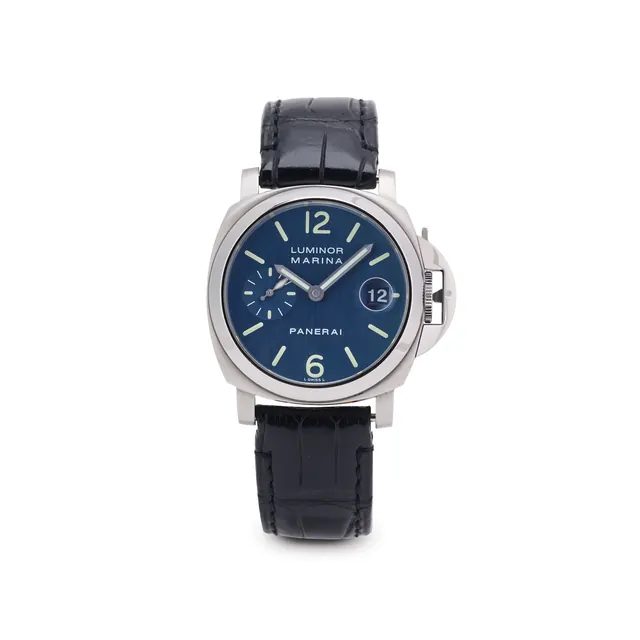
Wristwatches · c. 2002-2006
Panerai wristwatch, ref. PAM, Lumior Marina, circa 2002-2006
Antiquorum auction archive, Geneva
Wristwatches · c. 2009
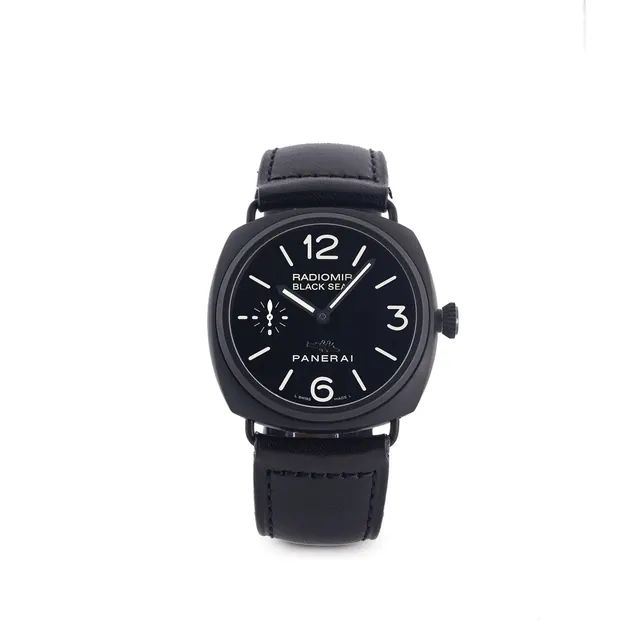
Panerai wristwatch, ref. PAM00292, Radiomir Black Seal Limited Edition of 1000 Pieces, circa 2009
Antiquorum auction archive, Geneva