
Wristwatches · Wristwatch
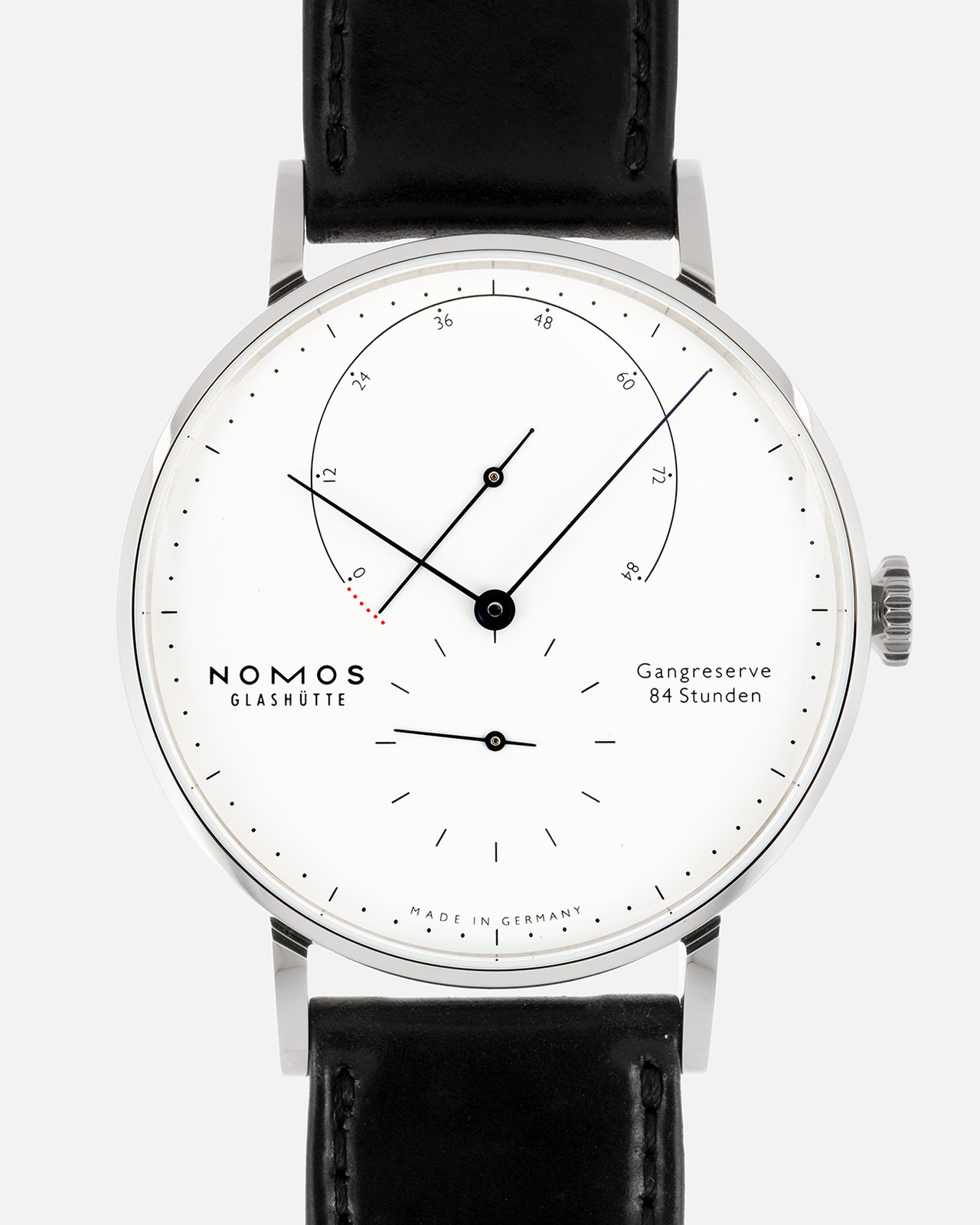
Nomos Lambda 175 Years Watchmaking, 2020
- Maker / attribution
- NOMOS Glashütte (maker)
- Date
- 2020
- Historical period
- Contemporary Horology (2010 – Present)
- Country of origin
- Germany
- Object type
- Wristwatch
- Dimensions
- Case 40.5 mm
- Stock no.
- Product 6760679014487
- Credit line
- Dealer listing, S.Song Watches (product 6760679014487)
- Catalogue title (original)
- Nomos Lambda 175 Years Watchmaking (English)
View the source record (dealer listing) ↗ (opens another website in a new tab)Suggest a correction
Record summary
Catalogued by S.Song Watches (dealer), Seattle (stock number Product 6760679014487), this is a wristwatch by NOMOS Glashütte, made in Germany, dated 2020. The Atlas places it in the Contemporary Horology period (2010 – Present) of its Wristwatches collection. Recorded dimensions: Case 40.5 mm. The record is illustrated with 6 photographs.
Assembled from the source record's structured fields. Dates and attributions are given as the source states them; where a field is missing the Atlas leaves it blank rather than estimating.
Catalogue description
Dealer description — S.Song Watches
Over the past few years, Nomos has established itself as one of the most reputable and respectable watch brands to come out of Glashütte. Making their name as a completely in-house manufacturer that delivers amazing value for money, Nomos has become the go-to watch for many, from seasoned collectors who appreciate the philosophy of the brand to new buyers looking for their first ‘serious’ watch. The watch we have on here is the Nomos Lambda Ref. 960.S1 in steel. It takes on the DNA and aesthetics of the original Lambda introduced in 2015 which was regarded as one of the higher-end offerings to come out of the German manufacture. The dial on the Lambda is very clearly Bauhaus-inspired and possesses a certain sense of airiness and openness due to the spacing between each sub-dial. The larger sub-dial you see at the 12 o’clock position is the power reserve indicator, which is one of the Lambda’s biggest selling points- the in-house caliber DUW 1001 encased within a 40.5mm steel case that boasts a mighty 84-hour power reserve. Flip over to the caseback and you will be greeted with the impressive movement itself, which is a rhodium-plated, three-quarter plate with sunburst Glashütte-ribbing (similar to Geneva stripes) finished off with six jewels with corresponding gold chatons held down by a set of blued screws. One of my favorite features of the Lambda is the beautifully hand-engraved balance cock that reads “Mit Liebe gefertigt in Glashütte”, which reads “made with love in Glashütte” in German. It is one of those watches that makes you want to, quote John Mayer – “Look closer, look closer still”. The Lambda was Nomos’s first high-end offering when it was first introduced in 2015, but this particular release (in 2020) was the brand’s way of celebrating the 175 th anniversary of watchmaking in Glashütte. To any watch collector, seasoned or new, Nomos is an exciting brand to watch and collect, and the brand’s offering which is the Lambda is no exception. It is a testament to the brand’s capabilities and technical expertise on how to make Bauhaus watch design this beautiful, fine, and approachable. This Lambda 960.S1 in steel is a limited edition of 175 pieces and this is your chance to own one of the most exciting watchmaking brands in the collecting scene today.
Historical context
Contemporary Horology (2010 – Present)
Silicon components, connected watches, optical-lattice research clocks and a thriving independent scene.
Smartwatches became the world's best-selling watches, while mechanical watchmaking focuses on craft, innovation (silicon components, new escapements) and independent makers.
Read the period in the timelineMore wristwatches from this periodEarlier: Mechanical Renaissance
Atlas type guide
Wristwatches
Bracelet watches were worn by women from the early nineteenth century — Breguet made one for Caroline Murat, Queen of Naples, in 1810–12 — but the wristwatch only became a man's instrument with military use and aviation in the early twentieth century. Between the World Wars it overtook the pocket watch; the 1920s and 1930s brought rectangular Art Deco cases, water-resistant cases and the first automatic winding systems.
After 1945 the wristwatch became a carrier of identity — dress watches, sports and dive watches, chronographs, calendars — produced by Swiss, American, Japanese, German, Soviet and Chinese industries. The quartz revolution after 1969 and the mechanical renaissance since the 1990s, including the rise of independent watchmakers, complete the story.
What to look for
- The reference number (between the lugs or inside the case back) and serial number, the starting point for dating.
- The calibre: its maker and number are often stamped under the dial or on the bridge.
- Originality of dial, hands and crown — refinished ('redial') dials are common.
- Case material marks: 18K/750, 14K/585, stainless steel, gold-filled, plated.
Dating clues
- Wire-lug cases: before c. 1925.
- Water-resistant screw-down cases: from 1926.
- Quartz movements: from 1969; sapphire crystals widespread after c. 1980.
General guidance written by the Atlas editors about this kind of object. It is not a statement about this particular piece; for that, rely on the source record above and on physical examination.
Related records
Wristwatches · 2016
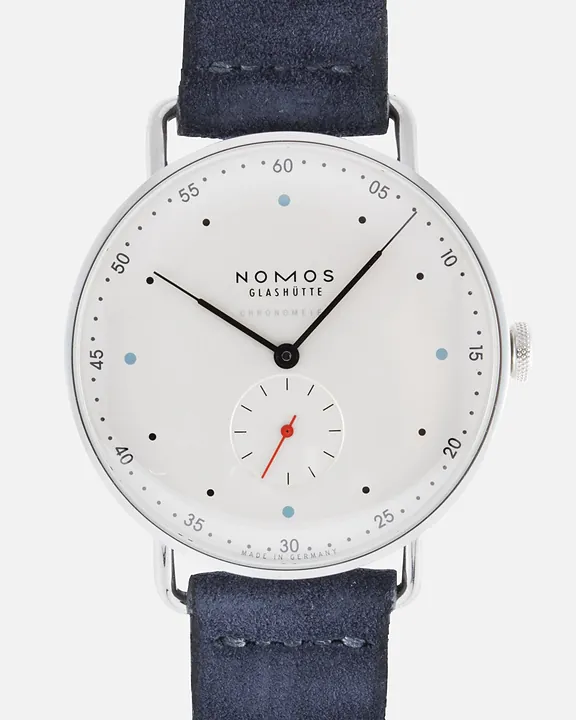
Nomos Metro Chronometer for Hodinkee, 2016
S.Song Watches (dealer), Seattle
Wristwatches · c. 2018
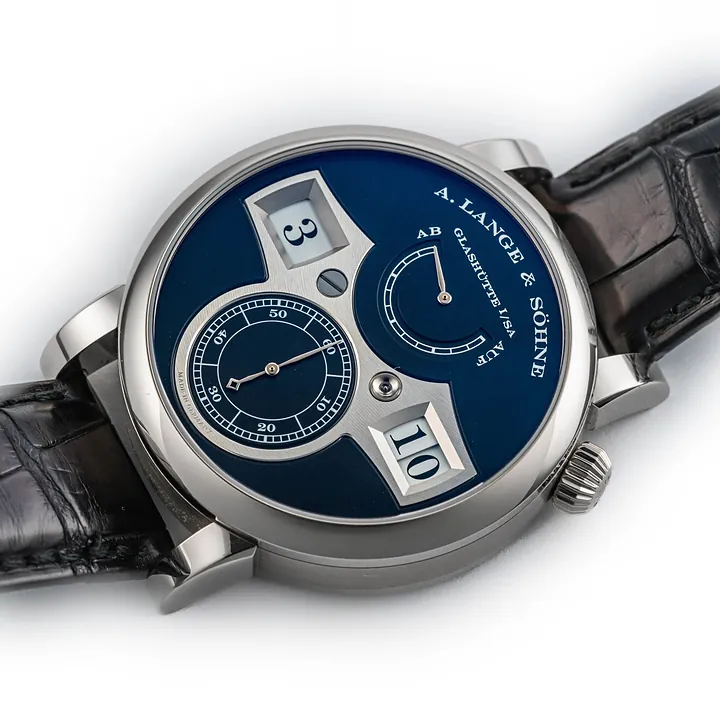
A.Lange & Söhne Zeitwerk, ref. 140.029, c. 2018
Antiquorum auction archive, Geneva
Wristwatches · originally sold in April 2022 (per the lot record)
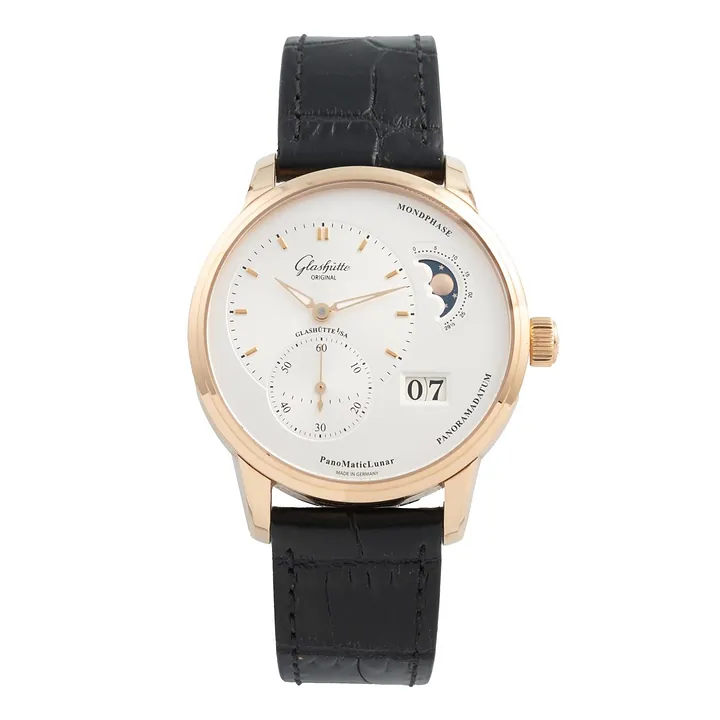
Glashã¼tte Original Panomaticlunar, ref. 1-90-02-45-35-04, originally sold in April 2022
Antiquorum auction archive, Geneva
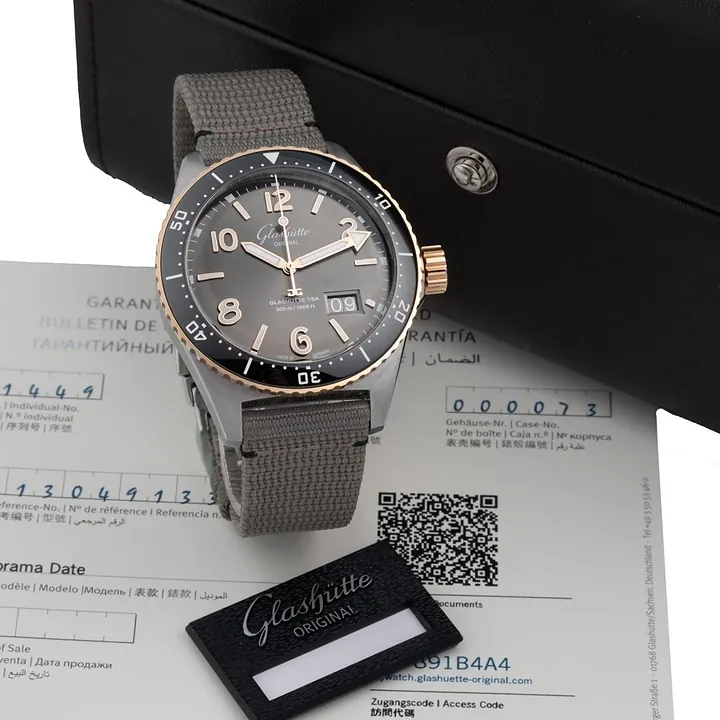
Wristwatches · c. 2022
Glashütte Original Seaq Panorama Date, ref. 1-36-13-04-91-33, c. 2022
Antiquorum auction archive, Geneva
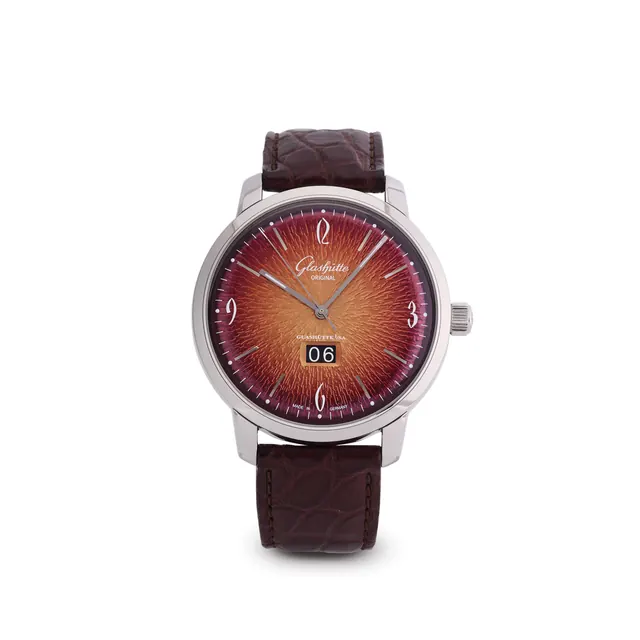
Wristwatches · originally sold in December 2021 (per the lot record)
Glashütte Original wristwatch, ref. W23947090204, Sixities Panorama Date Annual Edition, originally sold in December 2021 (per the lot record)
Antiquorum auction archive, Geneva
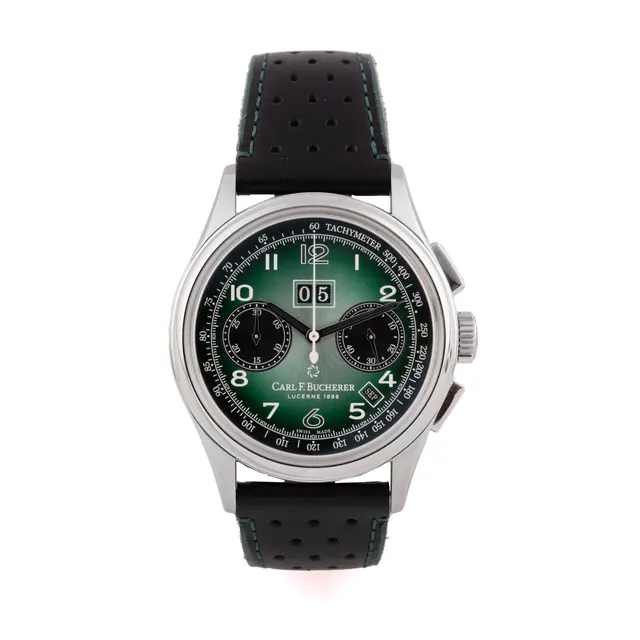
Wristwatches · Sold in June 2022
Carl F. Bucherer wristwatch, ref. 00.10803.08.92.86, Heritage Berlin Limited Edition of 88 Pieces, Sold in June 2022
Antiquorum auction archive, Geneva
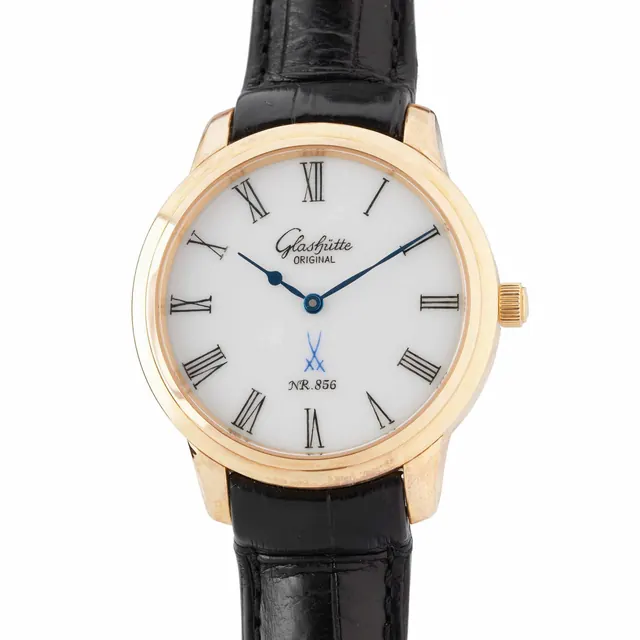
Wristwatches · c. 2010s
Glashütte Original wristwatch, ref. 100-10-01-01-04, Senator Meissen No. 0856, circa 2010s
Antiquorum auction archive, Geneva
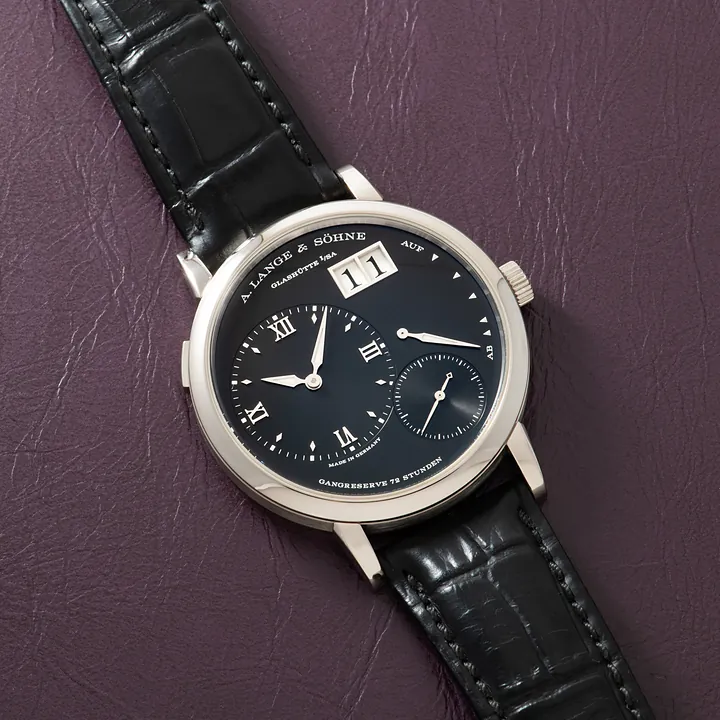
Wristwatches · mid 2010s
A. Lange & Söhne Grand Lange 1, mid 2010s
Analog/Shift (dealer), New York