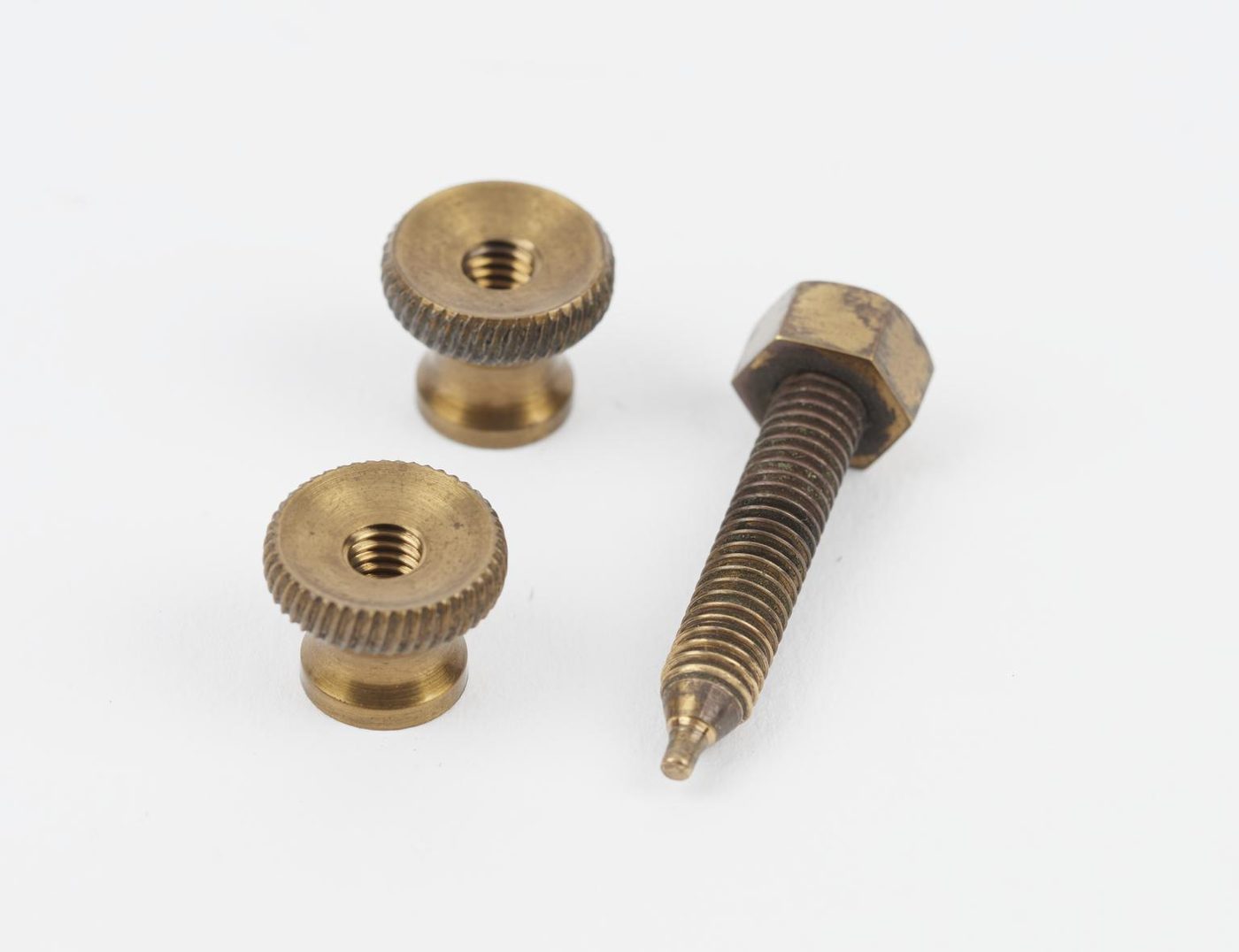
Movements & Components · Weight-driven pendulum clock
Movement screw from free pendulum clock, by R. J. Judd, Croydon, London, United Kingdom, 1899
- Maker / attribution
- Rudd, R. J. (maker)
- Date
- 1899
- Historical period
- Industrial Revolution (1850 – 1900)
- Country of origin
- England
- Place
- Croydon, Croydon, Greater London, England, United Kingdom, England, Croydon
- Object type
- Weight-driven pendulum clock
- Holding institution
- Science Museum Group, London
- Accession / object no.
- 1930-665/6
- Credit line
- F.Hope-Jones (Synchronome Co., Ltd.)
- Catalogue title (original)
- Movement screw from free pendulum clock
Record summary
Held and catalogued by Science Museum Group, London (object number 1930-665/6), this is a weight-driven pendulum clock by Rudd, R. J., made in Croydon, Croydon, Greater London, England, United Kingdom, England, Croydon, dated 1899. The Atlas places it in the Industrial Revolution period (1850 – 1900) of its Movements & Components collection. The record is illustrated with 1 photograph.
Assembled from the source record's structured fields. Dates and attributions are given as the source states them; where a field is missing the Atlas leaves it blank rather than estimating.
Catalogue description
The source record does not include a narrative description. The structured fields above are reproduced from it.
Historical context
Industrial Revolution (1850 – 1900)
American interchangeable-parts manufacture; railroad time standards; Swiss and German factory systems.
Standardised calibres, interchangeable parts and machine tools allowed movements to be mass-produced in American and Swiss factories.
Read the period in the timelineMore movements & components from this periodEarlier: Precision & Scientific Horology
Atlas type guide
Pendulums, balances and balance springs
The oscillator determines a timekeeper's rate. Galileo observed the near-isochronism of the pendulum; Huygens applied it to clocks in 1656 and the balance spring to watches in 1675. Temperature changes alter pendulum length and balance-spring elasticity, so eighteenth- and nineteenth-century makers devised compensation: Graham's mercury pendulum, Harrison's gridiron, bimetallic split balances for chronometers and watches, and Charles-Édouard Guillaume's invar and elinvar alloys (Nobel Prize in Physics, 1920).
Balance springs evolved from flat spirals to Breguet's overcoil (1795) and helical springs for chronometers; twentieth-century alloys (Nivarox) and twenty-first-century silicon springs largely solved temperature and magnetism problems.
What to look for
- Compensated pendulums: multiple rods of steel and brass (gridiron), jars of mercury, or wood and invar rods.
- Bimetallic split balances with screws, versus monometallic (Glucydur) solid balances.
- Overcoil (Breguet) or flat hairsprings; regulator index arms.
- Material names stamped on the balance or spring (e.g. 'Nivarox', 'Glucydur').
Dating clues
- Gridiron and mercury pendulums: from c. 1720–1730.
- Cut bimetallic balances: c. 1780–1950.
- Monometallic balances with self-compensating springs: after c. 1930.
General guidance written by the Atlas editors about this kind of object. It is not a statement about this particular piece; for that, rely on the source record above and on physical examination.
Read next:Balance spring (hairspring)Anchor (recoil) escapement
Related records
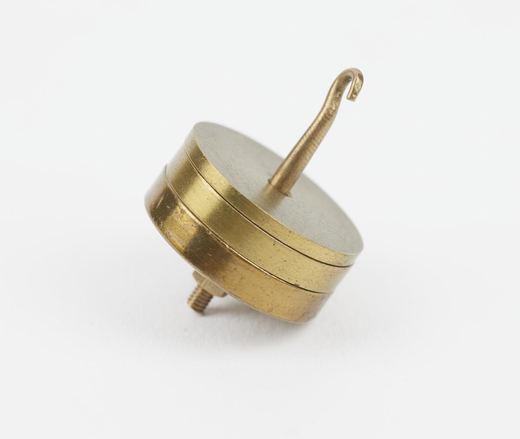
Clocks · 1899
Auxillary counter weight from free pendulum clock, by R. J. Judd, Croydon, London, United Kingdom, 1899
Science Museum Group, London
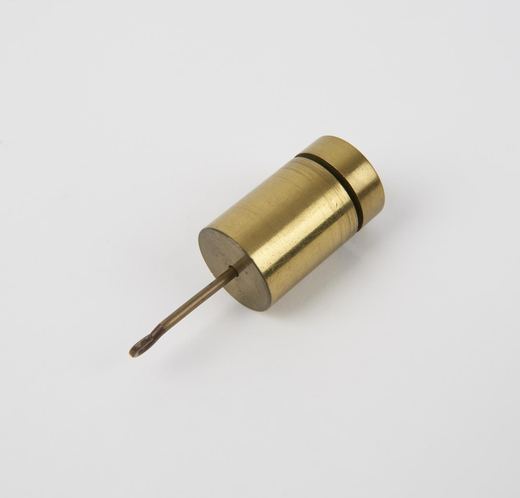
Clocks · 1899
Auxillary driving weight from the free pendulum clock, by R. J. Judd, Croydon, London, United Kingdom, 1899
Science Museum Group, London
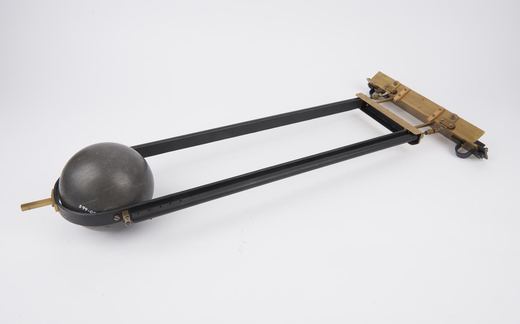
Clocks · 1899
Free pendulum from the free pendulum clock, by R. J. Judd, Croydon, London, United Kingdom, 1899
Science Museum Group, London
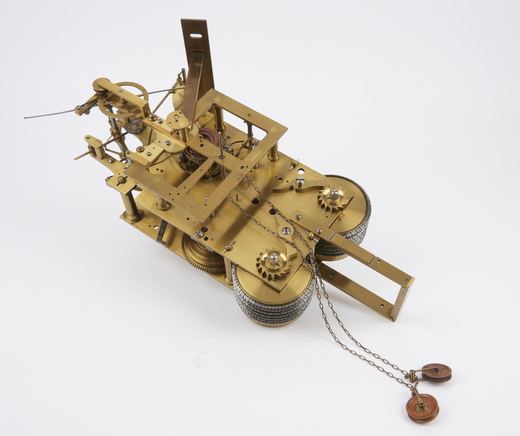
Movements & Components · 1899
Movement from free pendulum clock, by R. J. Judd, United Kingdom, 1899
Science Museum Group, London
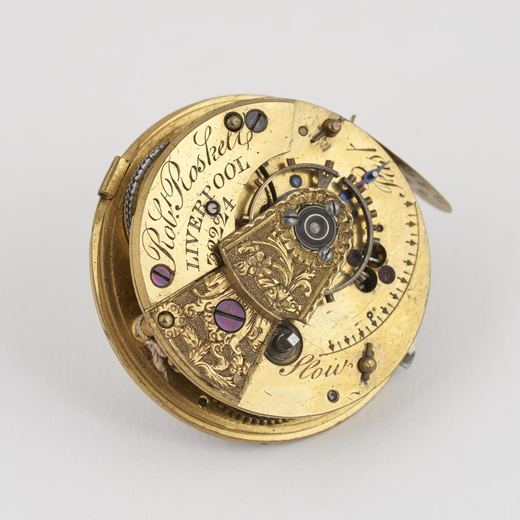
Movements & Components · 1840-1900
English lever, by Roskell, "banking" on escape wheel arbor, no.32224, 1840-1900
Science Museum Group, London
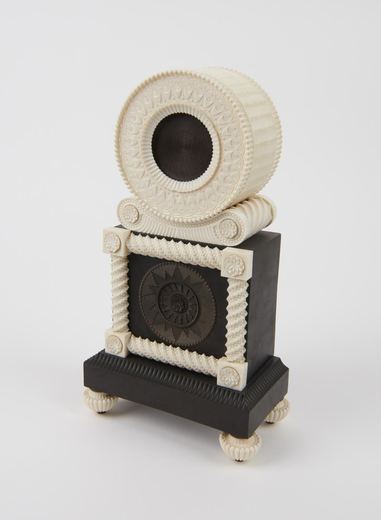
Movements & Components · 1843-1884
Ivory and blackwood clock case, by Holtzapffel and Company, London, England, 1843-1884
Science Museum Group, London
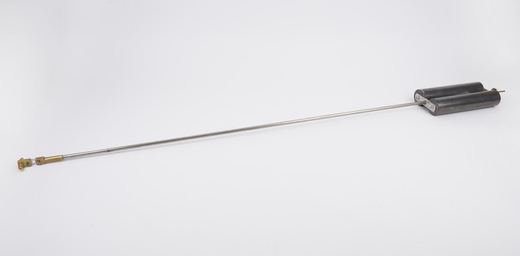
Movements & Components · 1844-1929
Pendulum from the electric master clock (no.663, seconds pendulum model), by Robert Mann Lowne, England, 1844-1929
Science Museum Group, London
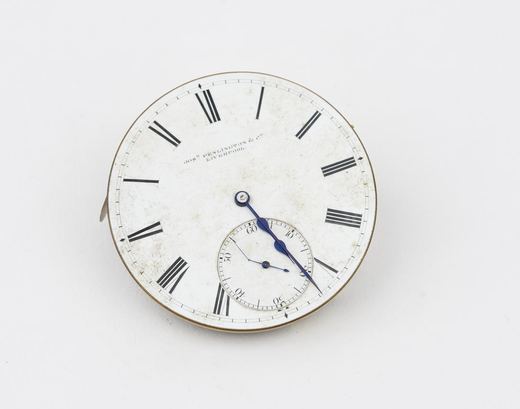
Movements & Components · 1848-1903
Watch movement by Josh Penlington, Liverpool, No.15231, with bi-metallic compensation balance and overcoil hairspring
Science Museum Group, London