Movements & Components · Clock
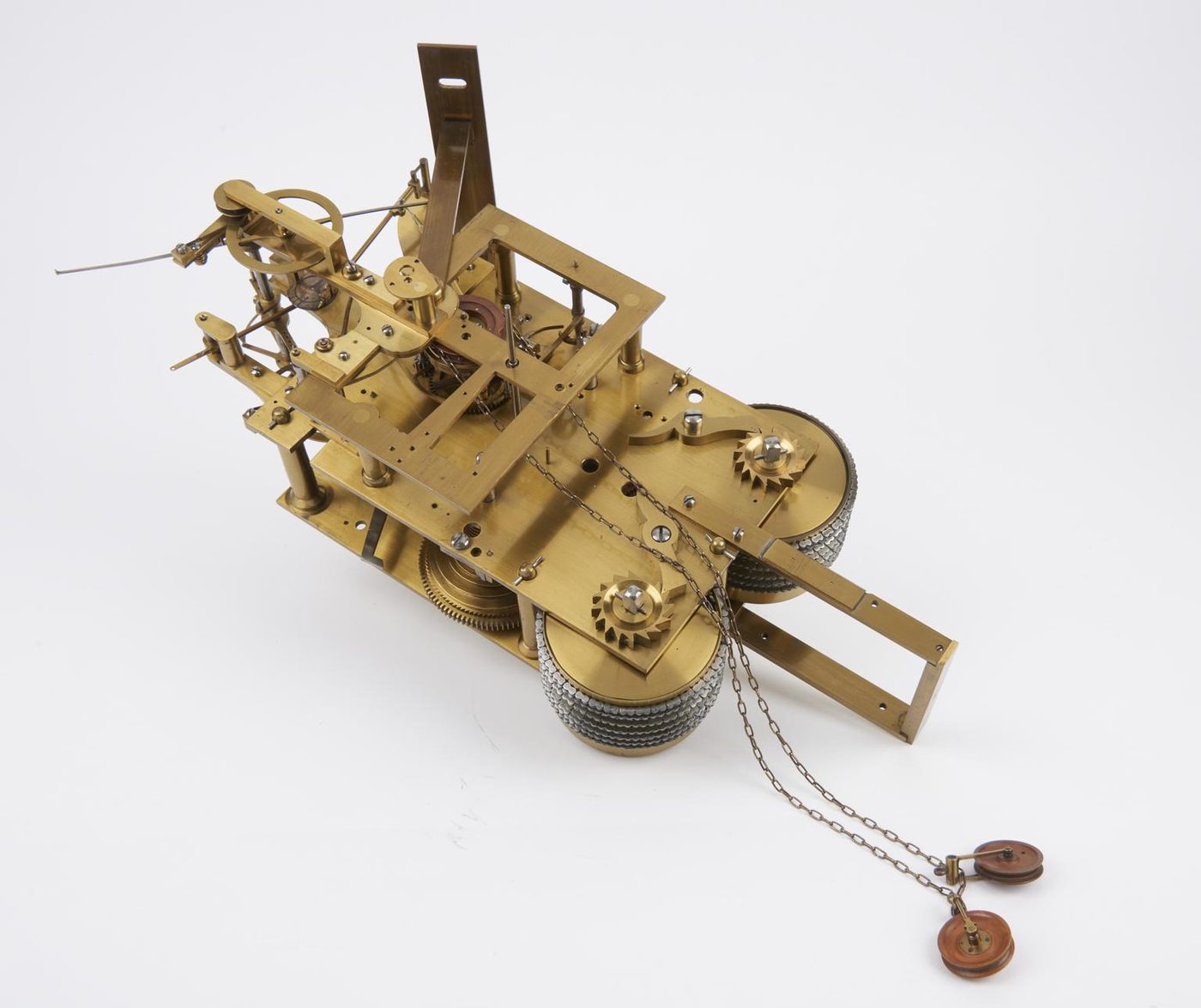
Movement from free pendulum clock, by R. J. Judd, United Kingdom, 1899
- Maker / attribution
- Rudd, R. J. (maker)
- Date
- 1899
- Historical period
- Industrial Revolution (1850 – 1900)
- Country of origin
- United Kingdom
- Place
- United Kingdom, United Kingdom
- Object type
- Clock
- Dimensions
- overall: 1285 mm x 450 mm x 330 mm,
- Holding institution
- Science Museum Group, London
- Accession / object no.
- 1930-665 Pt1
- Credit line
- Synchronome Company Limited
- Catalogue title (original)
- Movement from free pendulum clock by Rudd
Record summary
Held and catalogued by Science Museum Group, London (object number 1930-665 Pt1), this is a clock by Rudd, R. J., made in United Kingdom, United Kingdom, dated 1899. The Atlas places it in the Industrial Revolution period (1850 – 1900) of its Movements & Components collection. Recorded dimensions: overall: 1285 mm x 450 mm x 330 mm. The record is illustrated with 1 photograph.
Assembled from the source record's structured fields. Dates and attributions are given as the source states them; where a field is missing the Atlas leaves it blank rather than estimating.
Catalogue description
The source record does not include a narrative description. The structured fields above are reproduced from it.
Historical context
Industrial Revolution (1850 – 1900)
American interchangeable-parts manufacture; railroad time standards; Swiss and German factory systems.
Standardised calibres, interchangeable parts and machine tools allowed movements to be mass-produced in American and Swiss factories.
Read the period in the timelineMore movements & components from this periodEarlier: Precision & Scientific Horology
Atlas type guide
Electric and synchronous clocks
Alexander Bain patented the electric clock in 1841, and through the later nineteenth century electricity was used both to drive pendulums and to distribute time. Master clocks sent impulses every half-minute or minute to subsidiary ('slave') dials across factories, schools, railway stations and post offices; Matthäus Hipp's toggle (1842) kept pendulums swinging with minimal interference. William Hamilton Shortt's free-pendulum clock (1921), with a slave pendulum doing the mechanical work, became the most accurate mechanical clock ever made in series.
In the 1920s and 1930s synchronous motor clocks, which count the alternating-current cycles of the mains supply (50 or 60 Hz), arrived in homes; Telechron in the United States and Smiths 'Sectric' and Ferranti in Britain made them in great numbers. Battery clocks such as the Bulle, Eureka and ATO used electromagnetic impulsing of balances or pendulums.
What to look for
- Electromagnets, contacts and coils in place of springs or weights.
- Cables, terminal blocks and labels for voltage or frequency.
- Master/subsidiary systems: a subsidiary dial has a stepping mechanism and no escapement.
- Brand names such as Synchronome, Gent, Magneta, Telechron, Smiths, Ferranti.
Dating clues
- Bain and Hipp clocks: from the 1840s.
- Synchronome master clocks: from 1895.
- Synchronous mains clocks: from the late 1920s (UK grid frequency standardised in the 1930s).
General guidance written by the Atlas editors about this kind of object. It is not a statement about this particular piece; for that, rely on the source record above and on physical examination.
Related records
Clocks · 1899
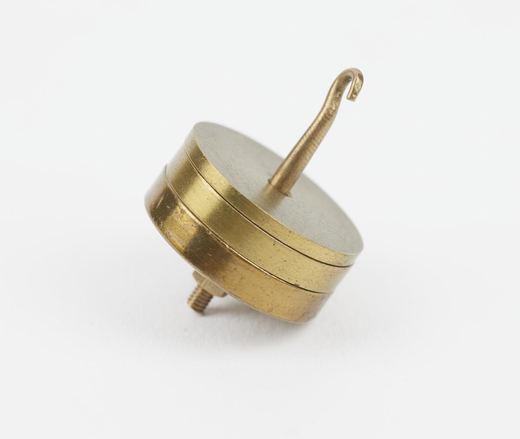
Auxillary counter weight from free pendulum clock, by R. J. Judd, Croydon, London, United Kingdom, 1899
Science Museum Group, London
Clocks · 1899
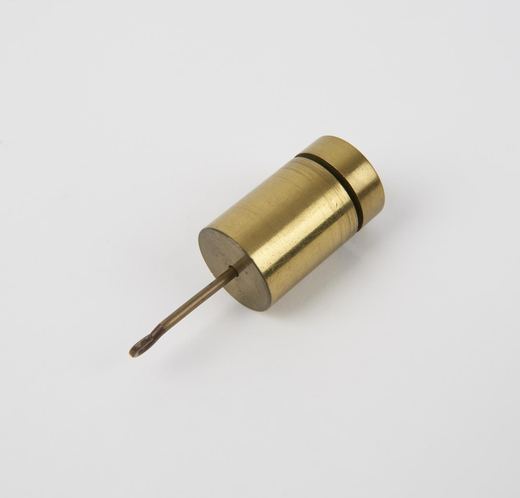
Auxillary driving weight from the free pendulum clock, by R. J. Judd, Croydon, London, United Kingdom, 1899
Science Museum Group, London
Clocks · 1899
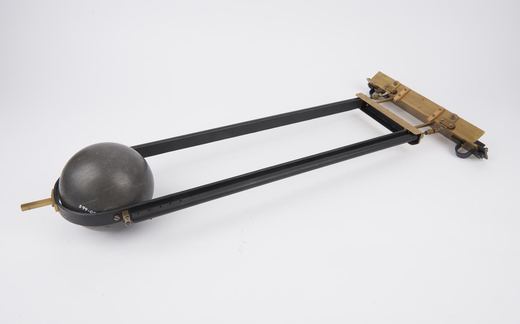
Free pendulum from the free pendulum clock, by R. J. Judd, Croydon, London, United Kingdom, 1899
Science Museum Group, London
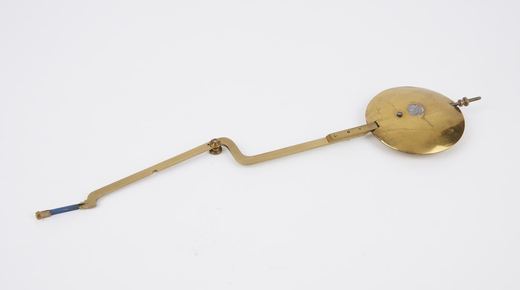
Movements & Components · 1899
Movement pendulum from the free pendulum clock, by R. J. Judd, Croydon, London, United Kingdom, 1899
Science Museum Group, London
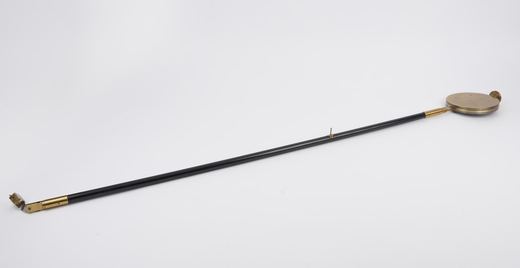
Movements & Components · 1841-1870
Pendulum from electric clock, unsigned, London, United Kingdom, 1841-1870
Science Museum Group, London
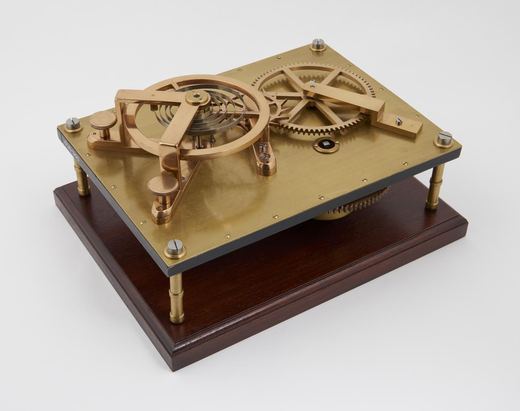
Movements & Components · 1860-1928
Model of lever escapement, Unsigned, 1860-1928
Science Museum Group, London
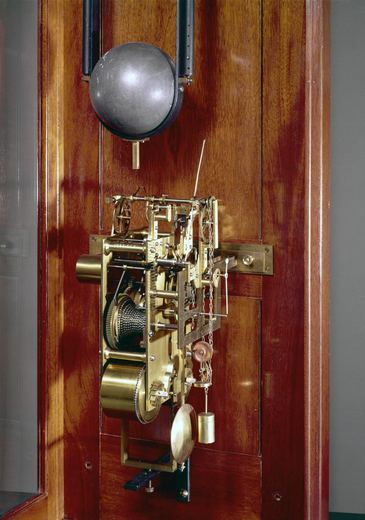
Movements & Components · 1899
Clock, United Kingdom, 1899
Science Museum Group, London
Movements & Components · 1801-1900
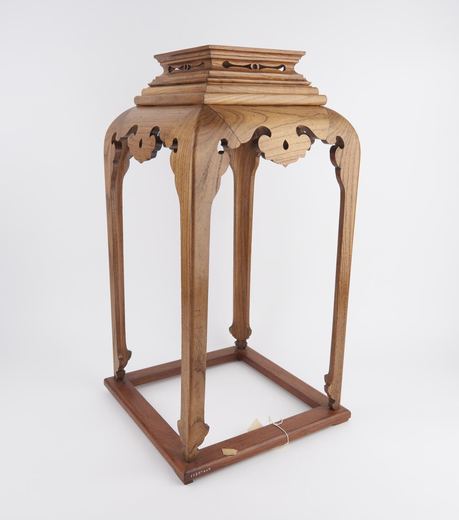
Stand for Japanese clock with two-balance foliot escapement and double strike arrangement
Science Museum Group, London