
Wristwatches · Wristwatch
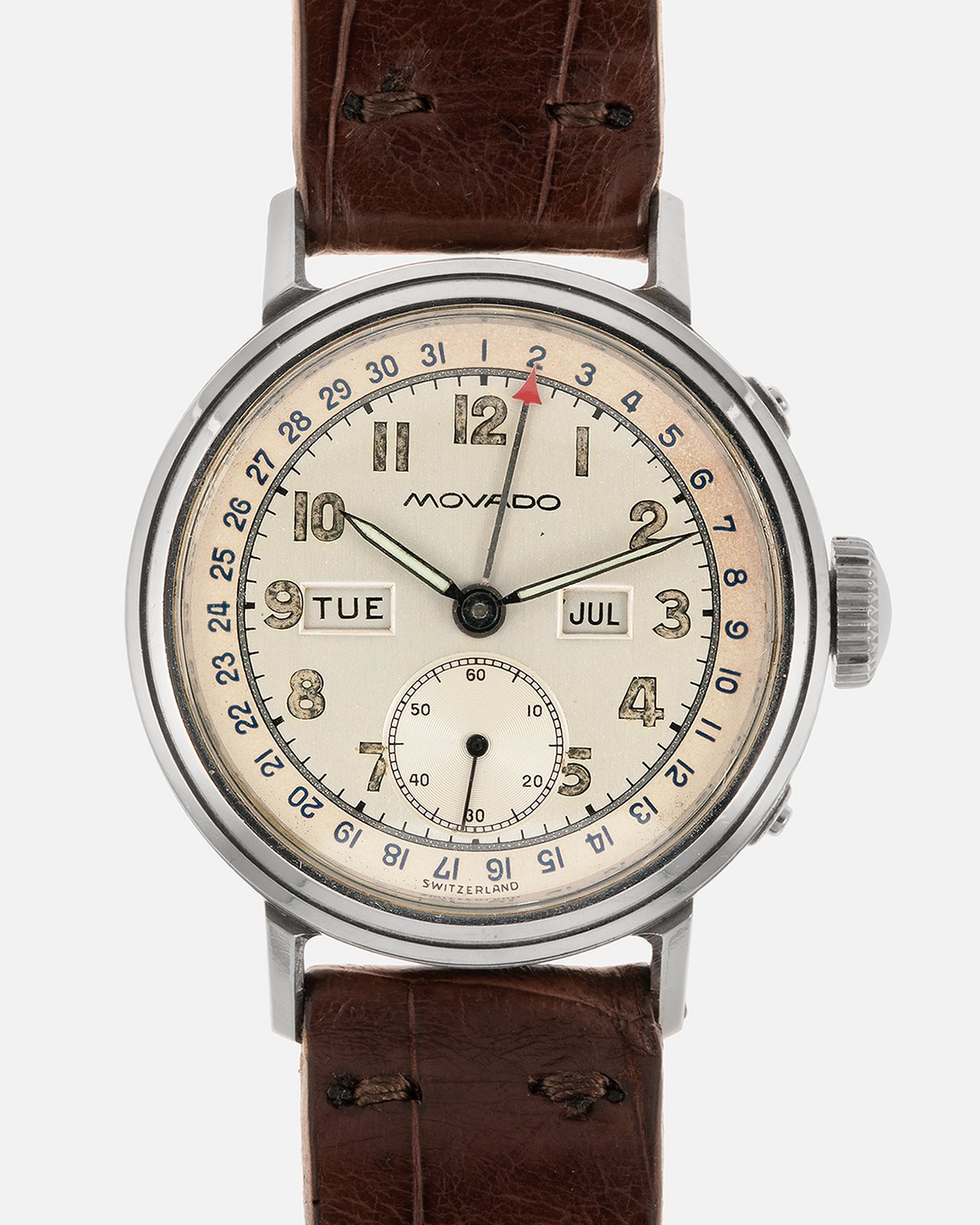
Movado Triple Date Steel, 1940s
- Maker / attribution
- Movado (maker)
- Date
- 1940s
- Historical period
- Golden Age of Mechanical Watchmaking (1900 – 1945)
- Country of origin
- Switzerland
- Object type
- Wristwatch
- Materials / technique
- steel
- Dimensions
- Case 33 mm
- Stock no.
- Product 7346467536983
- Credit line
- Dealer listing, S.Song Watches (product 7346467536983)
- Catalogue title (original)
- Movado Triple Date Steel (English)
View the source record (dealer listing) ↗ (opens another website in a new tab)Suggest a correction
Record summary
Catalogued by S.Song Watches (dealer), Seattle (stock number Product 7346467536983), this is a wristwatch by Movado, made in Switzerland, dated 1940s. The Atlas places it in the Golden Age of Mechanical Watchmaking period (1900 – 1945) of its Wristwatches collection. Materials and techniques recorded by the source: steel. Recorded dimensions: Case 33 mm. The record is illustrated with 6 photographs.
Assembled from the source record's structured fields. Dates and attributions are given as the source states them; where a field is missing the Atlas leaves it blank rather than estimating.
Catalogue description
Dealer description — S.Song Watches
As someone who began watch-dealing through collecting vintage watches, Movado is a brand you simply cannot overlook—no, I am not talking about the modern-day Movado, which pales in comparison to its historic stature. For those who do not know, Movado was once renowned for crafting some of the world's finest watches from the 1930s to the 1970s. This Triple Calendar we have here today exemplifies their golden era of watchmaking excellence, a testament to their enduring legacy well into the latter half of the 20th century and beyond. While a 33mm case might seem small to some, it's important to remember that specifications on paper don’t always tell the full story—especially with watches from the 1940s. In this case, the Movado Triple Calendar features straight-faceted lugs with a subtle downturn curvature, which more than make up for its modest size and contribute to its exceptional wearability. Housed within this slim, stepped case is a captivating two-tone dial with a well-balanced calendar complication. The dial’s periphery is marked with a date indicator, with day and month indicators at 9:00 and 3:00, respectively. A small-second sub-dial at 6:00 adds further symmetry, while the luminous hands and the distinctive red arrow-tipped date hand provide both contrast and visual interest. Powering this compact mechanical marvel is the Movado Cal. 470, a 15-jewel, no-frills manual-winding movement equipped with day, date and month-display functions, along with a respectable 36-hour power reserve. It is simple, and functional, and yet offers a charming complexity. "Quirky, compact yet mighty” —that’s how I would describe this remarkable Movado Triple Calendar. It's an intriguing, fun, and distinctive piece that provides outstanding value, making it an excellent addition to any vintage watch collection.
Historical context
Golden Age of Mechanical Watchmaking (1900 – 1945)
The wristwatch displaces the pocket watch; waterproof cases, self-winding and grand complications.
The wristwatch overtook the pocket watch. Military use in the First World War, aviation, water-resistant cases (1926), automatic winding (1923–31), rectangular Art Deco designs and early chronographs and calendars defined the period.
Read the period in the timelineMore wristwatches from this periodEarlier: Industrial Revolution
Atlas type guide
Calendar, moon-phase and perpetual calendar watches
Calendar complications range from a simple date to the perpetual calendar, which automatically allows for months of different lengths and leap years until 2100. Pocket watches with perpetual calendars were made in the eighteenth and nineteenth centuries; Patek Philippe made the first perpetual calendar wristwatch in 1925, and series production followed in 1941. The annual calendar (Patek Philippe, 1996) needs correction only once a year.
Moon-phase displays use a disc with two moons and 59 teeth advanced daily, approximating the 29.5-day lunation; more precise trains reduce the error to one day in over a century.
What to look for
- Apertures or subsidiary dials for day, date, month and leap year.
- Moon disc under a 'bosom' shaped aperture.
- Recessed correctors on the case band for setting the calendar.
Dating clues
- Triple-date wristwatches: popular c. 1940–1955.
- Perpetual calendar wristwatches: from 1925 (unique) and 1941 (series).
General guidance written by the Atlas editors about this kind of object. It is not a statement about this particular piece; for that, rely on the source record above and on physical examination.
Related records
Pocket Watches · c. 1960s
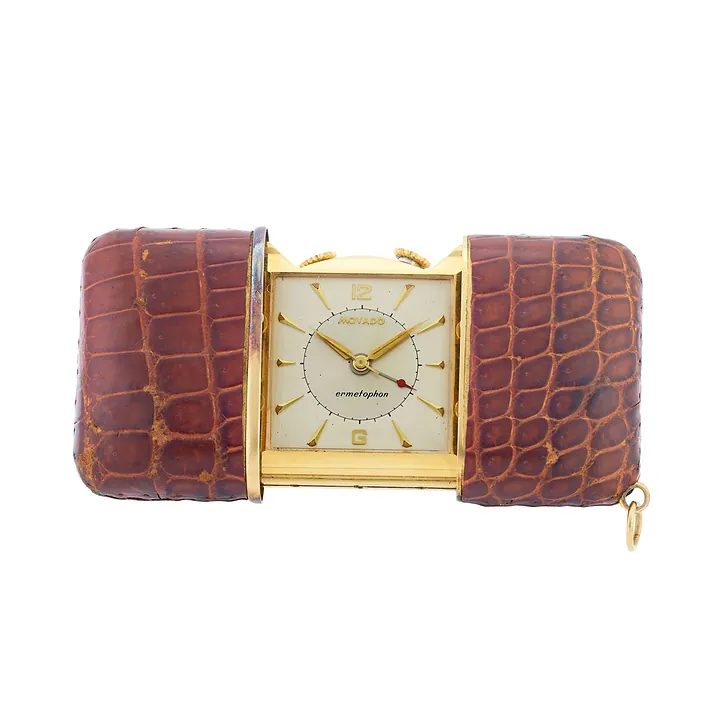
Movado Ermetophone, c. 1960s
Antiquorum auction archive, Geneva
Wristwatches · c. 1920s
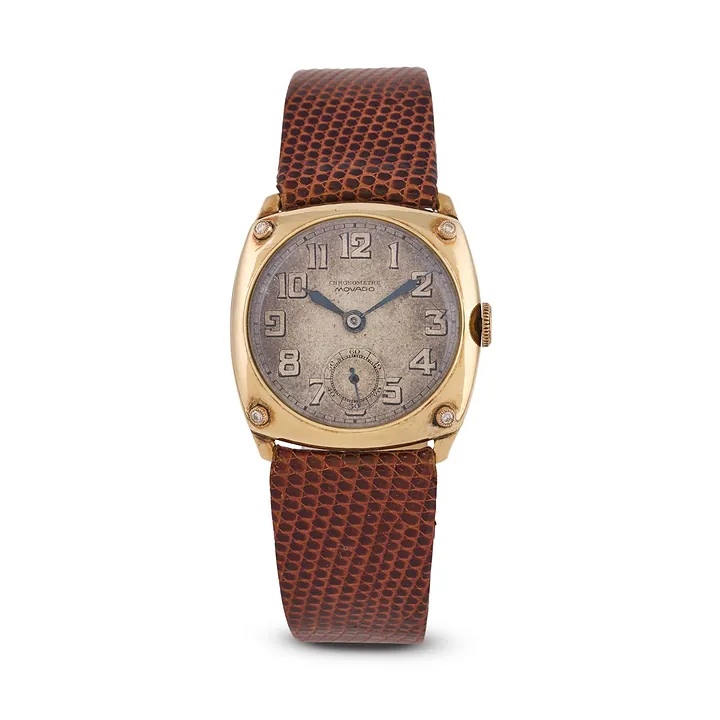
Movado Chronometre, ref. 41536, c. 1920s
Antiquorum auction archive, Geneva
Wristwatches · c. 1930s
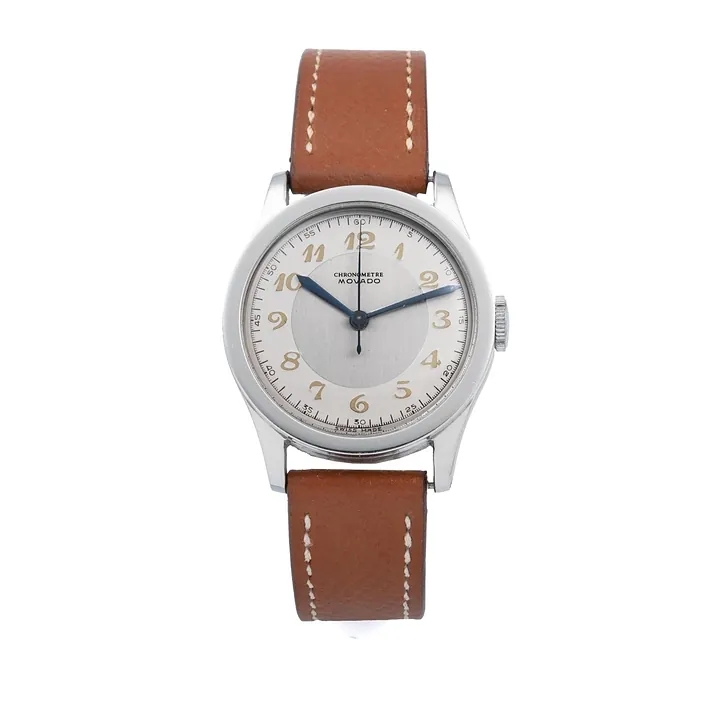
Movado "calatrava", ref. 17726, c. 1930s
Antiquorum auction archive, Geneva
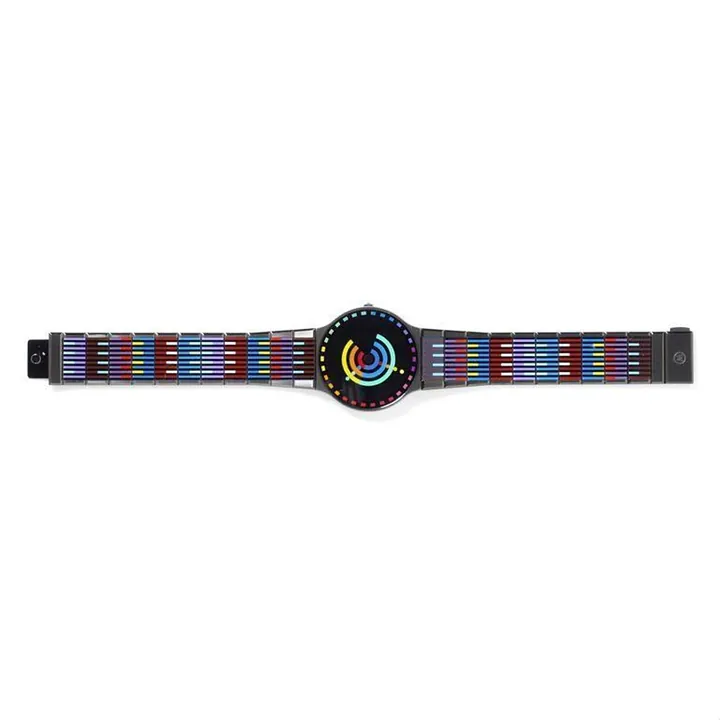
Wristwatches · c.1989
Steel, France and Switzerland, 1989; designed by Yaacov Agam (born 1928) for a limited edition by Movado
Victoria and Albert Museum, London

Wristwatches · 1931
Rolex 'Oyster Perpetual' rotor self-winding wrist-watch, lever escapement, in steel case with glass in back, Montres Rolex SA, Geneva, Switzerland, 1931
Science Museum Group, London

Wristwatches · 1900–1999
Wristwatch by Certina, Switzerland, 1900–1999
Nordic Museum Foundation
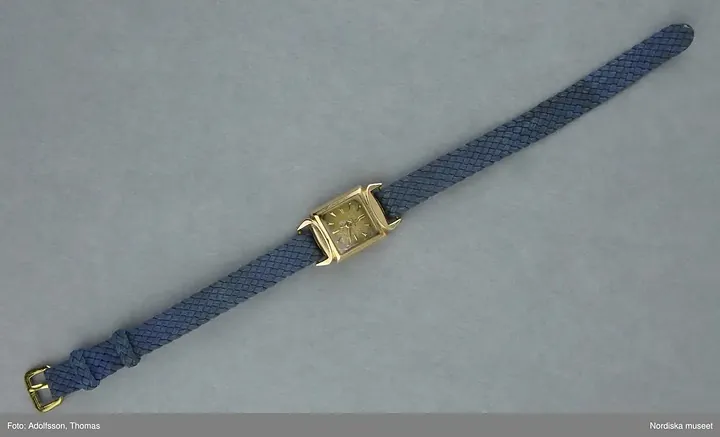
Wristwatches · 1900–1999
Wristwatch by Omega, Västerås, 1900–1999
Nordic Museum Foundation
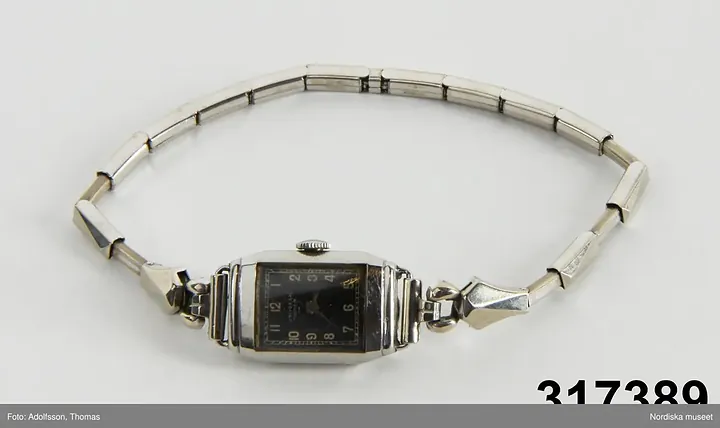
Wristwatches · 1900–1999
Wristwatch by Universal, Switzerland, 1900–1999
Nordic Museum Foundation