
Clocks · Travel clock
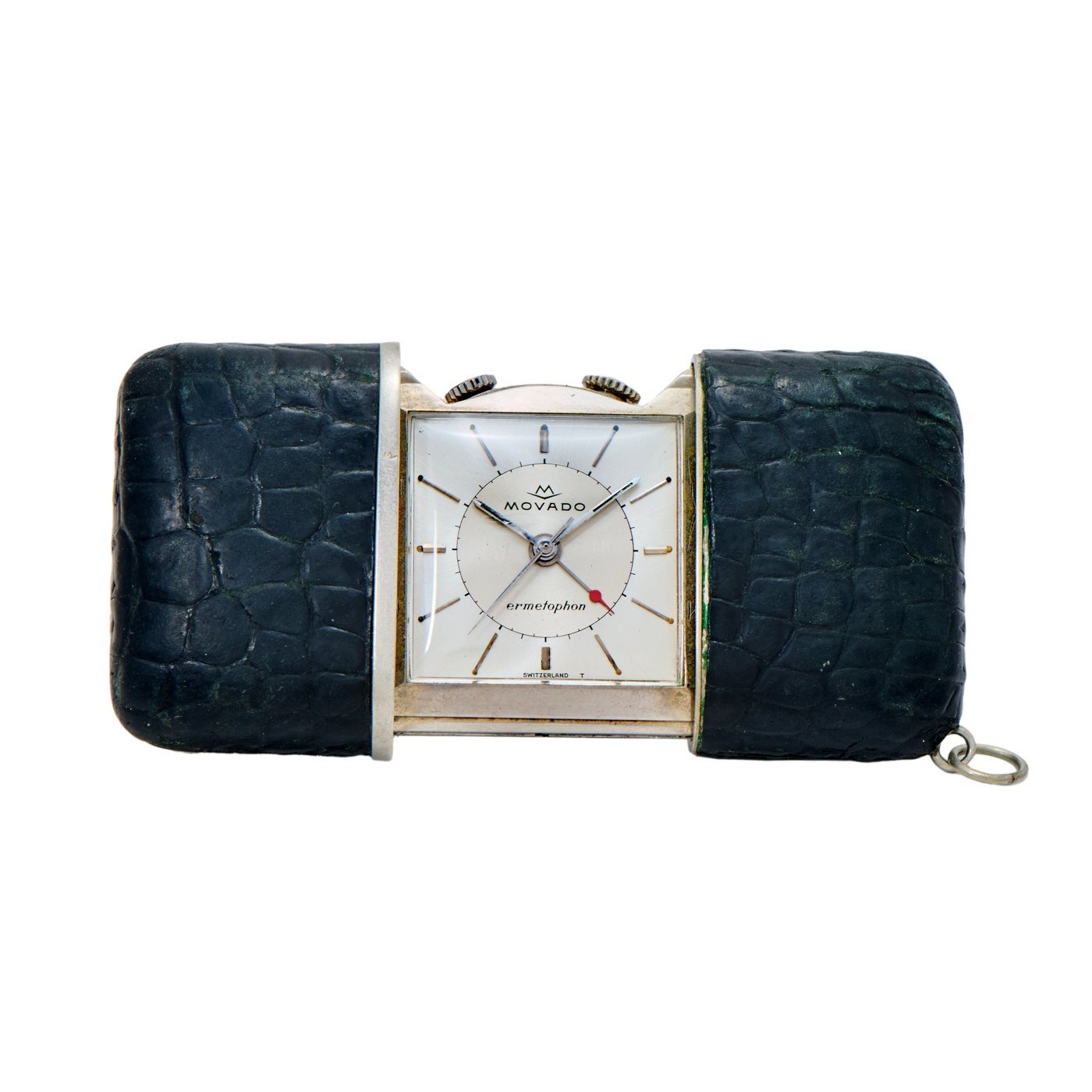
Movado Ermetophon Travel Clock
- Maker / attribution
- Movado (source attribution)
- Date
- 1950s
- Historical period
- Modern Mechanical Horology (1945 – 1969)
- Country of origin
- Switzerland
- Object type
- Travel clock
- Materials / technique
- Stainless steel and alligator leather
- Holding institution
- Analog:Shift
- Accession / object no.
- movado-ermetophon-travel-clock-d19b92aea3
- Credit line
- Analog:Shift
- Catalogue title (original)
- ساعت مسافرتی زنگدار Movado Ermetophon با روکش چرم تمساح (English)
View the source record ↗ (opens another website in a new tab)Suggest a correction
Record summary
Held and catalogued by Analog:Shift (object number movado-ermetophon-travel-clock-d19b92aea3), this is a travel clock attributed to Movado, made in Switzerland, dated 1950s. The Atlas places it in the Modern Mechanical Horology period (1945 – 1969) of its Clocks collection. Materials and techniques recorded by the source: Stainless steel and alligator leather. The record is illustrated with 1 photograph.
Assembled from the source record's structured fields. Dates and attributions are given as the source states them; where a field is missing the Atlas leaves it blank rather than estimating.
Catalogue description
Original object description
Hailing from Movado's Ermeto series, this 1950s Ermetophon travel clock incorporates an alarm complication and is styled for pocket carriage, luggage, or desk use. The rectangular core in stainless steel is enclosed by sliding black alligator-covered covers that protect the dial and winding components when brought together. Pocket chains or lanyards can be secured to a dedicated metal loop on the leather case side. At the 12 o'clock position, twin manual crowns govern time-setting, winding, and alarm operations. Its silvered dial is detailed with applied dart indexes, primary alpha hands, an internal circular alarm track, and a red-pointed indicator for the alarm. The dial is lettered "Movado" below 12, "ermetophon" over the 6 o'clock index, and "SWITZERLAND T" at the lower edge. When the outer shell is extended, the hand-wound Movado movement is revealed and ready for immediate adjustment.
Historical context
Modern Mechanical Horology (1945 – 1969)
Tool watches for divers, pilots and astronauts; electric watches anticipate the electronic age.
Post-war clocks combined new materials and industrial design: plastic and metal cases, battery-powered transistor movements from the late 1950s, and design classics by George Nelson, Max Bill and others. The first caesium atomic clock (1955) moved the definition of time from astronomy to physics.
Read the period in the timelineMore clocks from this periodEarlier: Golden Age of Mechanical Watchmaking
Atlas type guide
Carriage and travel clocks
The carriage clock is a portable spring clock with a balance-wheel escapement and a brass case with glass panels and a carrying handle. Abraham-Louis Breguet made early examples around 1800, and from the 1830s Paul Garnier and other French makers industrialised production, with the small towns of Saint-Nicolas-d'Aliermont and the Franche-Comté supplying movements for retailers worldwide.
Typical features include a platform escapement mounted horizontally on top of the movement (usually a lever, sometimes cylinder or Garnier's chaff-cutter), striking or repeating work, and alarms. English carriage clocks, generally larger and with fusees, were made by firms such as Frodsham and Dent. Travel clocks in folding leather cases became popular in the twentieth century.
What to look for
- A platform escapement visible through the top glass.
- Case styles: corniche, gorge, anglaise, obis or engraved cases.
- Repeat buttons on top and strike/silent levers.
- Stamps of movement makers (e.g. Drocourt, Jacot, Margaine, Richard & Co.) on the backplate.
Dating clues
- Early carriage clocks with Breguet or Garnier features: c. 1800–1850.
- Mass-produced French carriage clocks: c. 1850–1914.
- Folding travel clocks and alarm travel clocks: mostly 1920–1970.
General guidance written by the Atlas editors about this kind of object. It is not a statement about this particular piece; for that, rely on the source record above and on physical examination.
Read next:Detached lever escapement
Related records
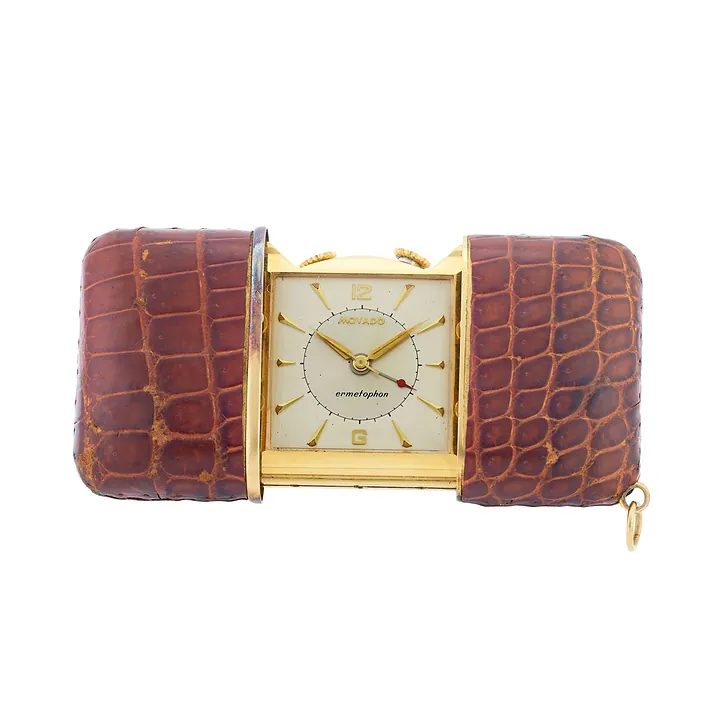
Pocket Watches · c. 1960s
Movado Ermetophone, c. 1960s
Antiquorum auction archive, Geneva
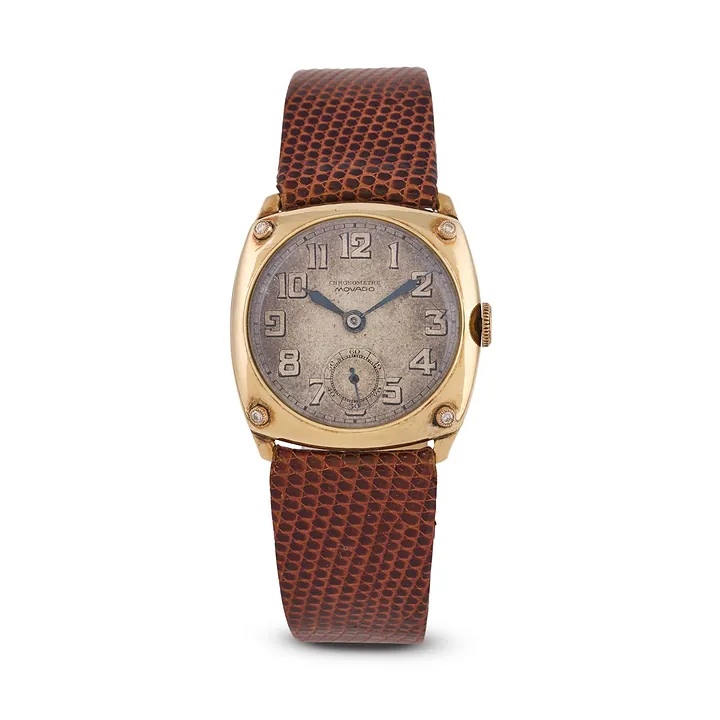
Wristwatches · c. 1920s
Movado Chronometre, ref. 41536, c. 1920s
Antiquorum auction archive, Geneva
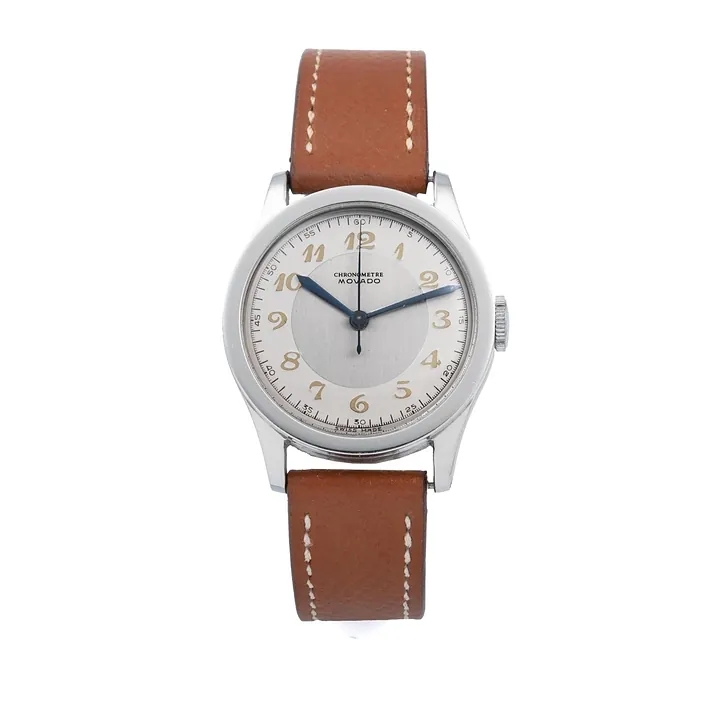
Wristwatches · c. 1930s
Movado "calatrava", ref. 17726, c. 1930s
Antiquorum auction archive, Geneva
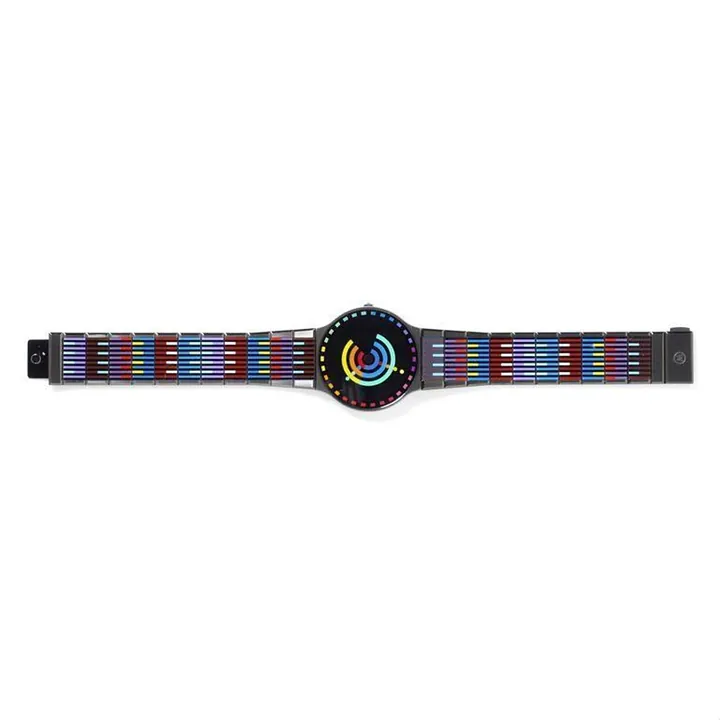
Wristwatches · c.1989
Steel, France and Switzerland, 1989; designed by Yaacov Agam (born 1928) for a limited edition by Movado
Victoria and Albert Museum, London
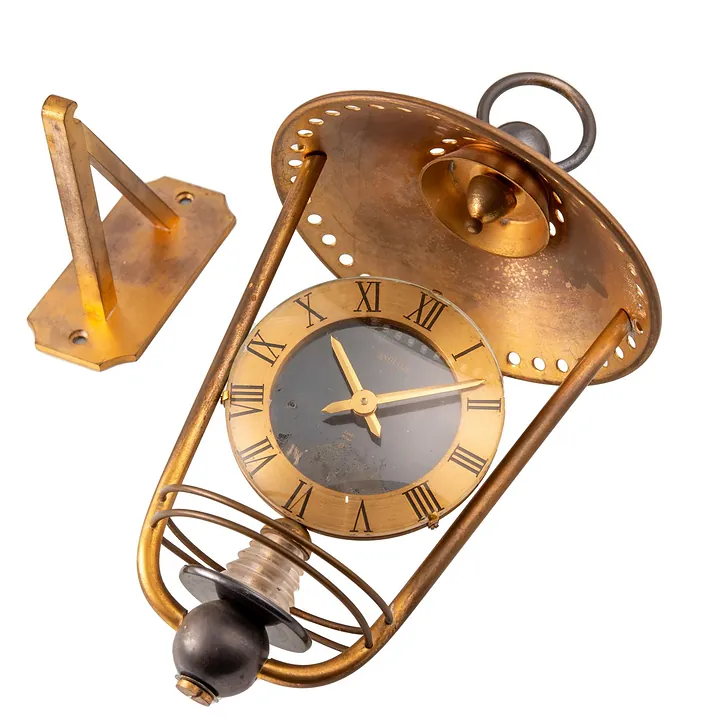
Clocks · c. 1950
Angelus Retailed by Gobbi, Milano, c. 1950
Antiquorum auction archive, Geneva
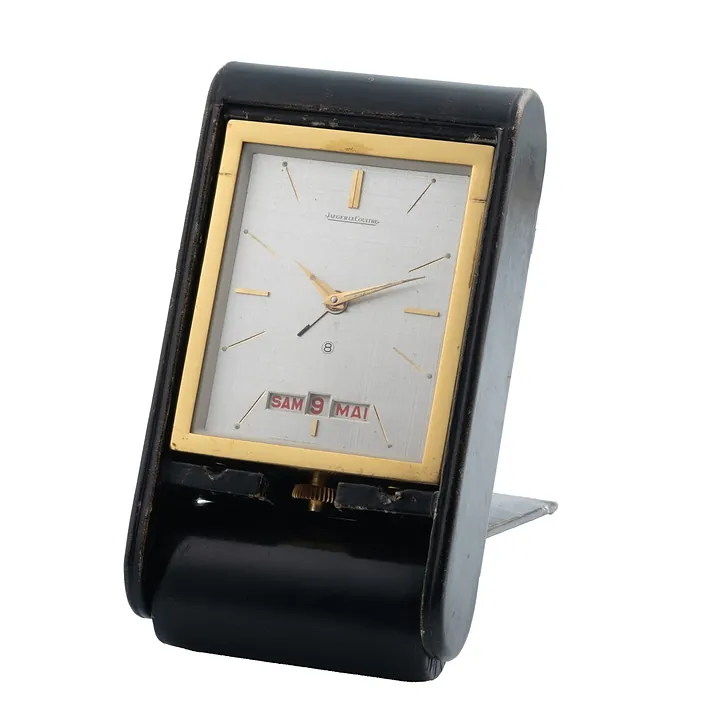
Clocks · c. 1960s
Jaeger Lecoultre Ados Calendrier, c. 1960s
Antiquorum auction archive, Geneva
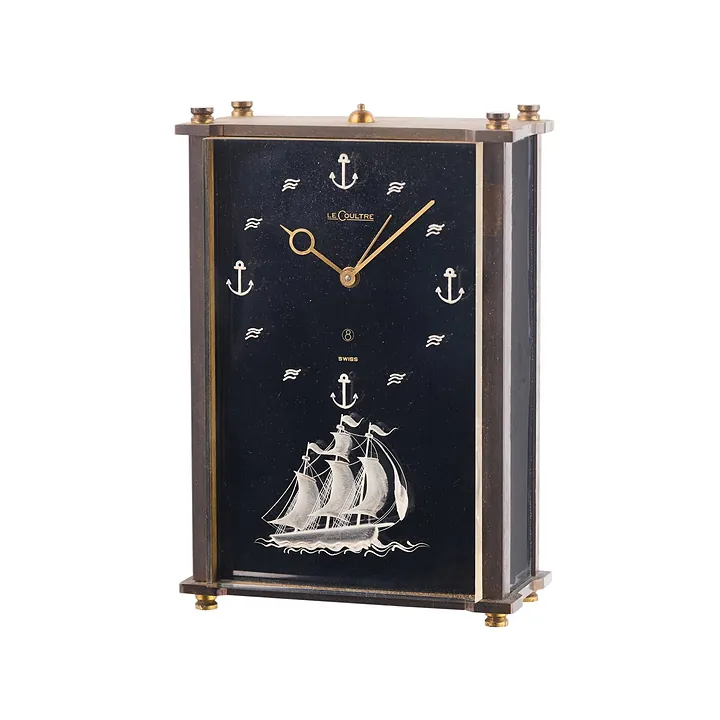
Clocks · c. 1960s
Lecoultre Music Alarm, ref. 2163, c. 1960s
Antiquorum auction archive, Geneva
Clocks · 1953
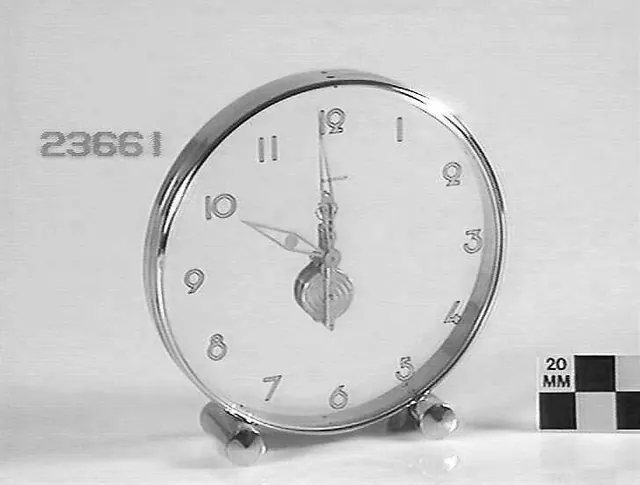
Mantel Clock - Jaeger-LeCoultre, Switzerland, 1953
Museums Victoria, Melbourne