
Instruments · Marine chronometer
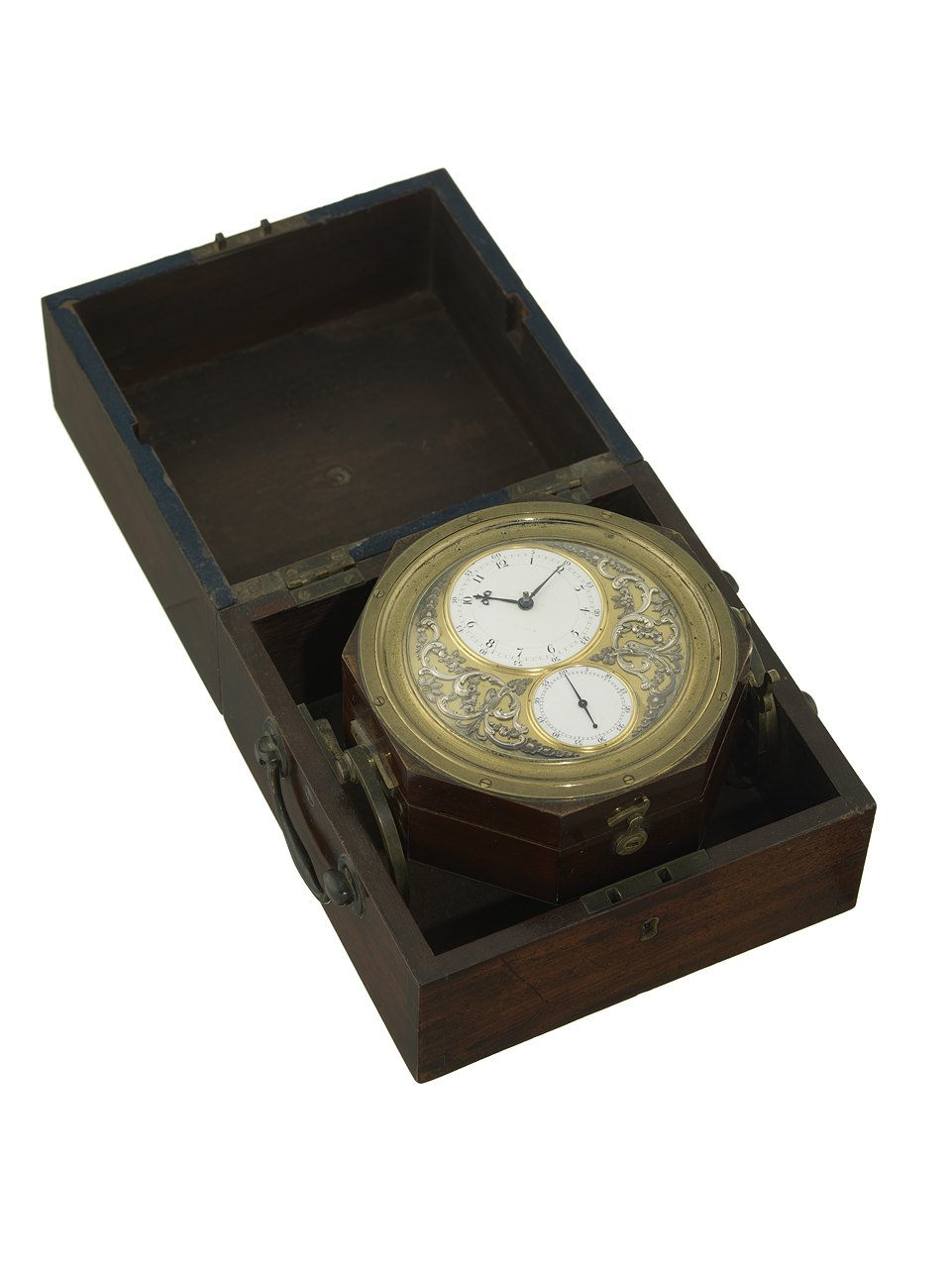
Marine chronometer no. 326 by Barraud and Lund
- Maker / attribution
- Barraud and Lund (maker)
- Date
- c. 1803
- Historical period
- Precision & Scientific Horology (1750 – 1850)
- Country of origin
- England
- Place
- London
- Object type
- Marine chronometer
- Dimensions
- 7 1/4 x 7 1/4 x 5 1/2 in.
- Holding institution
- Royal Museums Greenwich
- Accession / object no.
- ZBA2247
- Credit line
- On loan to the National Maritime Museum, Greenwich, London, from a private lender.
- Catalogue title (original)
- 326 (English)
View the source record ↗ (opens another website in a new tab)Suggest a correction
Record summary
Held and catalogued by Royal Museums Greenwich (object number ZBA2247), this is a marine chronometer by Barraud and Lund, made in London, England, dated c. 1803. The Atlas places it in the Precision & Scientific Horology period (1750 – 1850) of its Instruments collection. Recorded dimensions: 7 1/4 x 7 1/4 x 5 1/2 in. The record is illustrated with 6 photographs.
Assembled from the source record's structured fields. Dates and attributions are given as the source states them; where a field is missing the Atlas leaves it blank rather than estimating.
Catalogue description
Catalogue description — Royal Museums Greenwich
Box/Mounting The timekeeper is housed in an outer, two-tier square mahogany box, of dovetail construction, measuring 141mm high, 203 wide and 186 deep. The top surface of the upper section is inlaid with a lozenge-shaped ebony plaque. Inside the upper section there is a block in the rear left which is hollowed out to receive something, possibly the winding key, for storage. The arrangement is however incomplete and the current winding crank does not fit well in the recess it provides. There are also screw holes and a small hollowed out recess in this area which suggest there may have been a small thermometer fixed in the back of the upper section originally. There are marks and the residue of old glue inside the front right of the upper section which suggests another piece fitted here at some stage. The upper section opens right over and rests on the table. The lower edge of the upper section has a strip of blue baize stuck along it, forming a dust seal with the lower section when the box is closed. The base of the box is covered with coarse green baize. The lower section has simple brass drop handles on the sides and a narrow brass escutcheon lining the keyhole on the front. Mounted on either side on the inside of the lower section are curved brass arms, terminating in trunnions upon which the internal box for the timekeeper is pivoted, enabling it to swing over from front to back. A brass latch, mounted on the inside of the right brass arm, engages with a double-ended brass piece on the internal box, and secures the internal box in one of two horizontal positions: dial facing up or dial facing down. The fine and delicate winding key is in brass, with an ivory handle, and is of the crank type. The key is also of the ratchet type, a set of mating ratchet ‘crown wheels’ on the shaft of the key allowing only clock-wise rotation. The two-tier internal box is also in mahogany, and is externally of octagonal shape, but circular inside. It measures 140mm across flats and is 59mm high. The eight sides of the upper section are joined round the top with a circular brass ring, veneered under with satinwood, and screwed down into the top edge with eight brass screws. The sides are probably also connected inside each adjoining face with a hidden inserted slip. The eight sides of the lower section are probably also joined with hidden inset slips near the upper edge, but also have joining slips, morticed into the lower parts of adjacent sides, which are visible from inside the box. The two mating faces of the two sections of the box are veneered with satinwood. The base of the box is covered with an octagonal lacquered brass plate, fixed up into the sides of the box with eight brass screws, and engraved on the underside: 326 / Barraud, / Cornhill, / LONDON. The plate is also marked in ink: SII317 and is scratched: 6/55 / 4. Off-centre on this plate is a revolving brass shutter for the winding hole. A single, seven-knuckle brass hinge on the rear of the box is fixed to the upper and lower sections, each with three brass screws threaded into brass sockets, inserted into the wood of the rear sides of the box. The inside of the box is painted with black lacquer and there is a brass upstanding peg at the back of the lower section, at the 60 minutes position, on which the glazed-brass timekeeper case locates. The box closes with a brass hook on the lower section engaging under a shoulder screw on the front of the upper section. Inner Lock However, the box can also be more securely closed with a special brass lock on the front of the lower section. A single pierced peg, projecting down from the upper section, enters a hole in the lock in the usual way, while two brass pins, on either side, also projecting down from the upper section and entering holes in the edge of the lower section, positively locate the two sections together. The rectangular keyhole for the lock is in a swivelling boss, mounted at the centre about which the brass hook swings, the boss revolving independently of the hook. The lock has the unusual feature (perhaps unique?) of enabling locking without a key, but unlocking can only be performed with the key. A simple clockwise turn of the boss using any rectangular-section, peg-like implement inserted in the rectangular keyhole and turned, will throw the bolt inside the lock into the locked position. However, as the bolt moves into the locked position, a latch inside the lock drops behind the bolt and the lock cannot then be unlocked by simply turning the boss in an anti-clockwise direction. For unlocking, a special key has to be inserted and turned. This key, which is also of simple, rectangular, peg-like section, has pivoted on its end a small steel part. This normally forms a part of the simple rectangular peg, but when the key is inserted and the handle of the key is turned, the steel end of the key revolves first, about 50°, independently of the rest of the ‘peg-like’ end, and releases the latch. Continuing to turn the key then revolves the central brass boss and causes the bolt to withdraw. When the timekeeper was first received at the museum there was no key for the lock. Fortunately it was not locked and dismantling and study enabled a key to be designed and made (2008). Such is the unique design of the lock that the original key is unlikely to have differed in any material way from that which is now with the timekeeper. There are three drilled dots on the front of the boss of the lock, also under the top brass ring and under the brass base plate. The hinge and adjacent woodwork, and the brass trunnion plates on the sides of the box, are all marked III. The inner, glazed brass case of the timekeeper is in the form of an eight-pillar, glazed drum, and with a fixed, flat glazed base. The eight turned pillars have flat glass panels between them. Over the top of the case, there is a shaped, moulded brass bezel with a convex glass protecting the dial. The bezel is mounted on a single, five
Historical context
Precision & Scientific Horology (1750 – 1850)
Harrison solves longitude; Mudge invents the lever; Breguet's Paris workshop defines the modern watch.
The longitude problem was solved by the marine chronometer and lunar distance methods; dividing engines made precision scales possible, and observatories set time by transit instruments.
Read the period in the timelineMore instruments from this periodEarlier: Early Modern Horology
Atlas type guide
Marine chronometers
A marine chronometer is a precision timekeeper carried at sea to find longitude: the navigator compares local noon, observed with a sextant, with the time at a reference meridian kept by the chronometer. Each hour of difference corresponds to fifteen degrees of longitude. John Harrison proved the method in the 1760s; Pierre Le Roy, Ferdinand Berthoud, John Arnold and Thomas Earnshaw then developed the detent escapement and the compensation balance that made chronometers practical to manufacture.
By the nineteenth century London, Liverpool, Le Locle and Glashütte supplied navies and merchant fleets. A typical box chronometer has a spring-detent escapement, a fusee to equalise mainspring torque, a bimetallic compensation balance with a helical balance spring, and is mounted in gimbals inside a wooden box so that it stays level.
What to look for
- Gimbals and a three-tier wooden box with a glazed inner lid.
- A power-reserve ('up and down') indicator on the dial, usually showing 56 hours on two-day instruments.
- Spring-detent escapement and a cylindrical (helical) balance spring visible through the movement.
- Admiralty or navy marks (broad arrow), and rating certificates from observatories.
- The maker's number on the dial and movement; many makers' registers survive, allowing dating.
Dating clues
- Earnshaw-type spring-detent chronometers became standard after about 1800.
- Auxiliary compensation devices on the balance appear from the mid-nineteenth century.
- Quartz and radio time signals ended routine use of mechanical chronometers in the 1970s and 1980s.
General guidance written by the Atlas editors about this kind of object. It is not a statement about this particular piece; for that, rely on the source record above and on physical examination.
Read next:Spring detent (chronometer) escapementFuseeBalance spring (hairspring)Detent escapement
Related records
Instruments · c. 1837
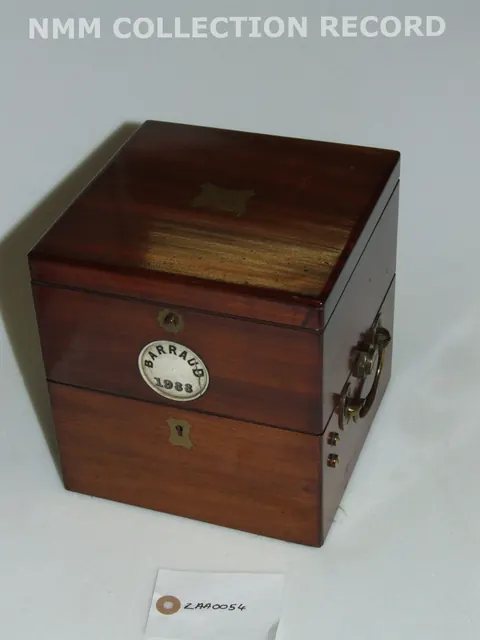
Marine chronometer no. 1988 by Barraud and Lund
Royal Museums Greenwich
Instruments · c.1815 / 1845
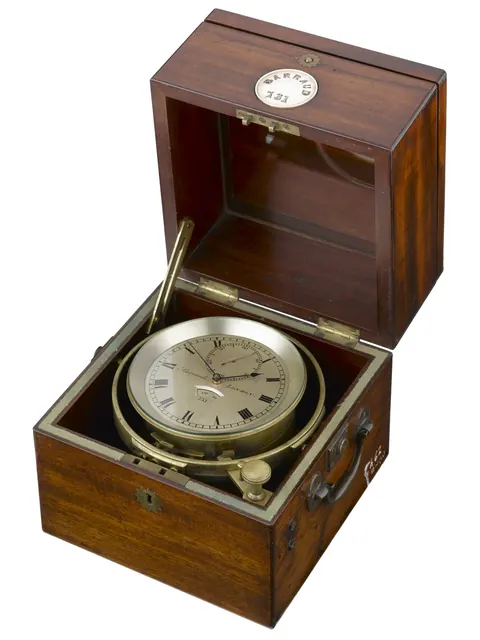
Marine chronometer no. 731 by Barraud and Lund
Royal Museums Greenwich
Instruments · 1731–1776
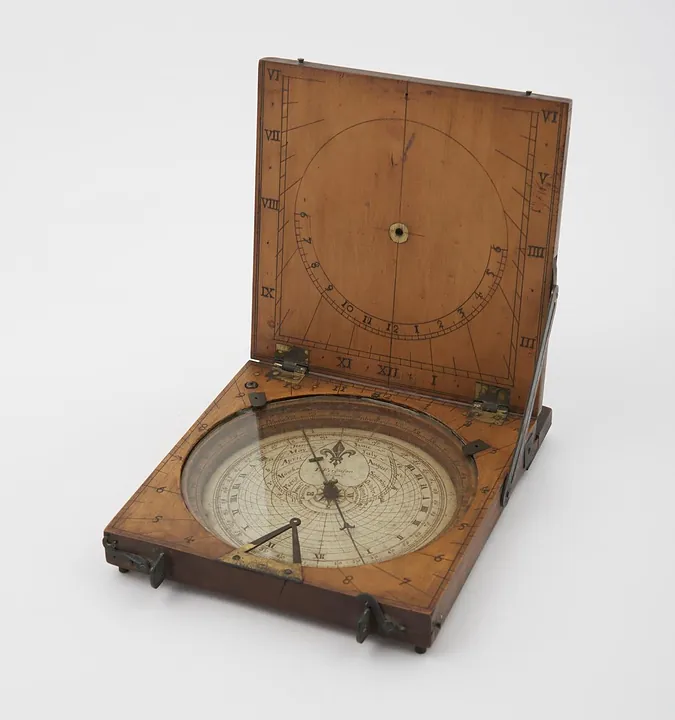
Azimuth compass sundial by James Ferguson, London, England, 1731–1776. Could also be used as a tablet sundial - string gnomon is missing (see note).
Science Museum Group, London
Instruments · 1738–1777
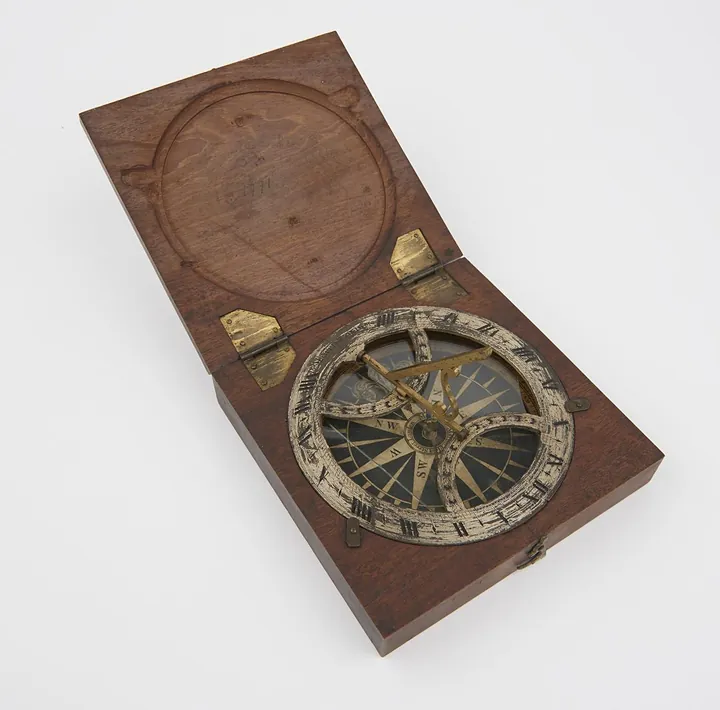
Azimuth sundial 4 3/8" diam, with folding gnomon fitted in mahogany case, made by B. Martin
Science Museum Group, London
Instruments · 1750–1800
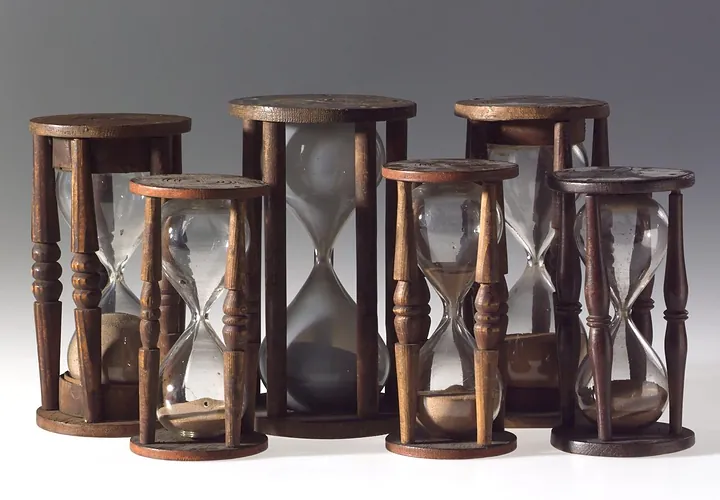
Single sand glass in four pillared wooden mount. 17 minutes. Horne Type B. Second half of the 18th century
Science Museum Group, London
Instruments · 1751–1825
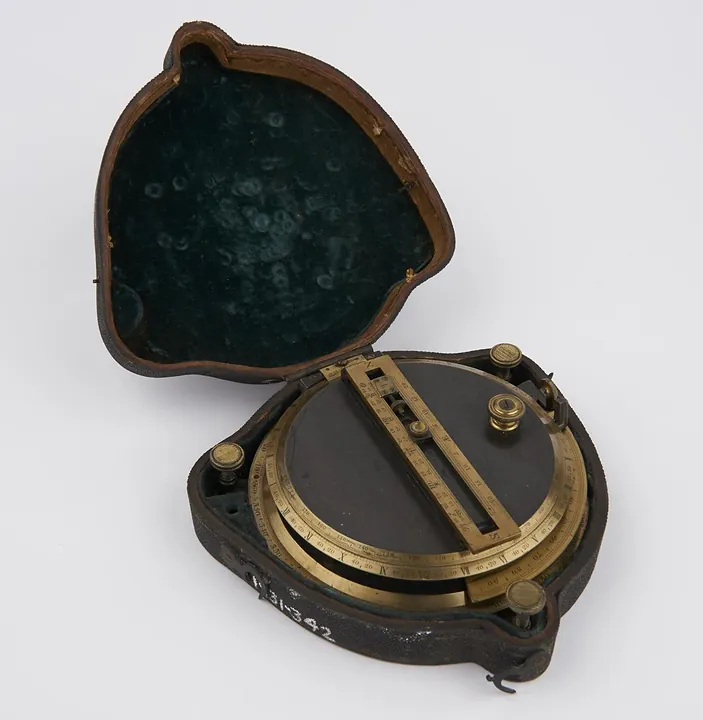
Sundial, by Troughton, in case. Invented and made by Troughton
Science Museum Group, London
Instruments · 1751–1850
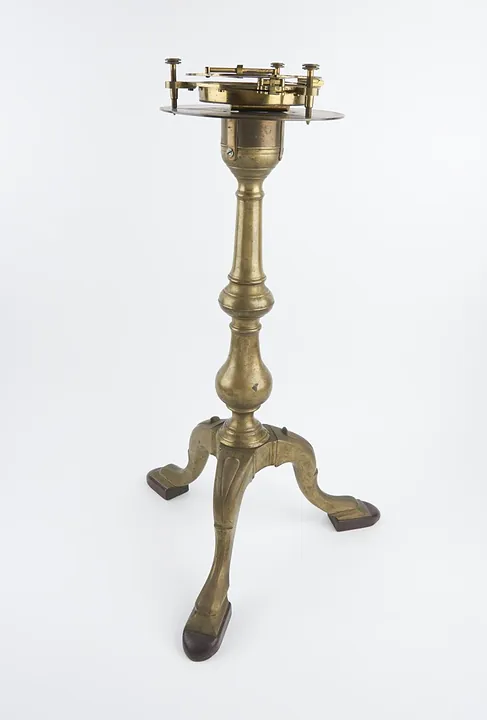
Universal Sundial; by Dollond and large brass stand, engraved "Dollond London" 6-inch hours circle, divided to 2 min, 3 levelling screws
Science Museum Group, London
Instruments · 1760–1769
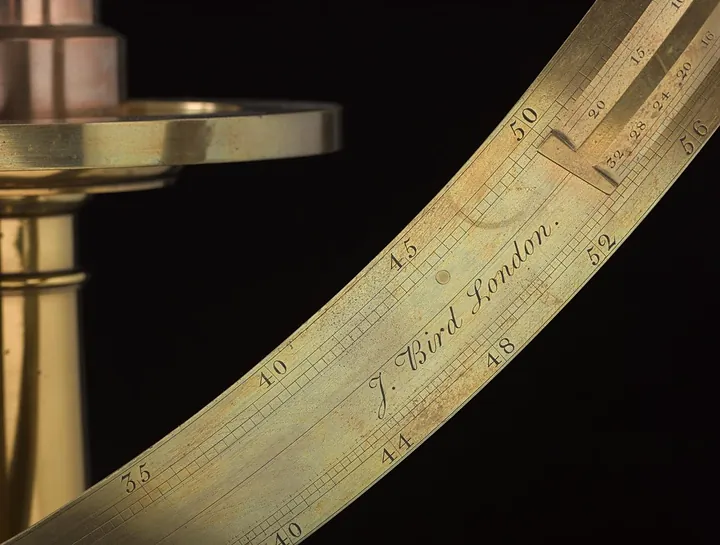
Armillary / astronomical instrument by John Bird, England, 1760–1769
Science Museum Group, London