
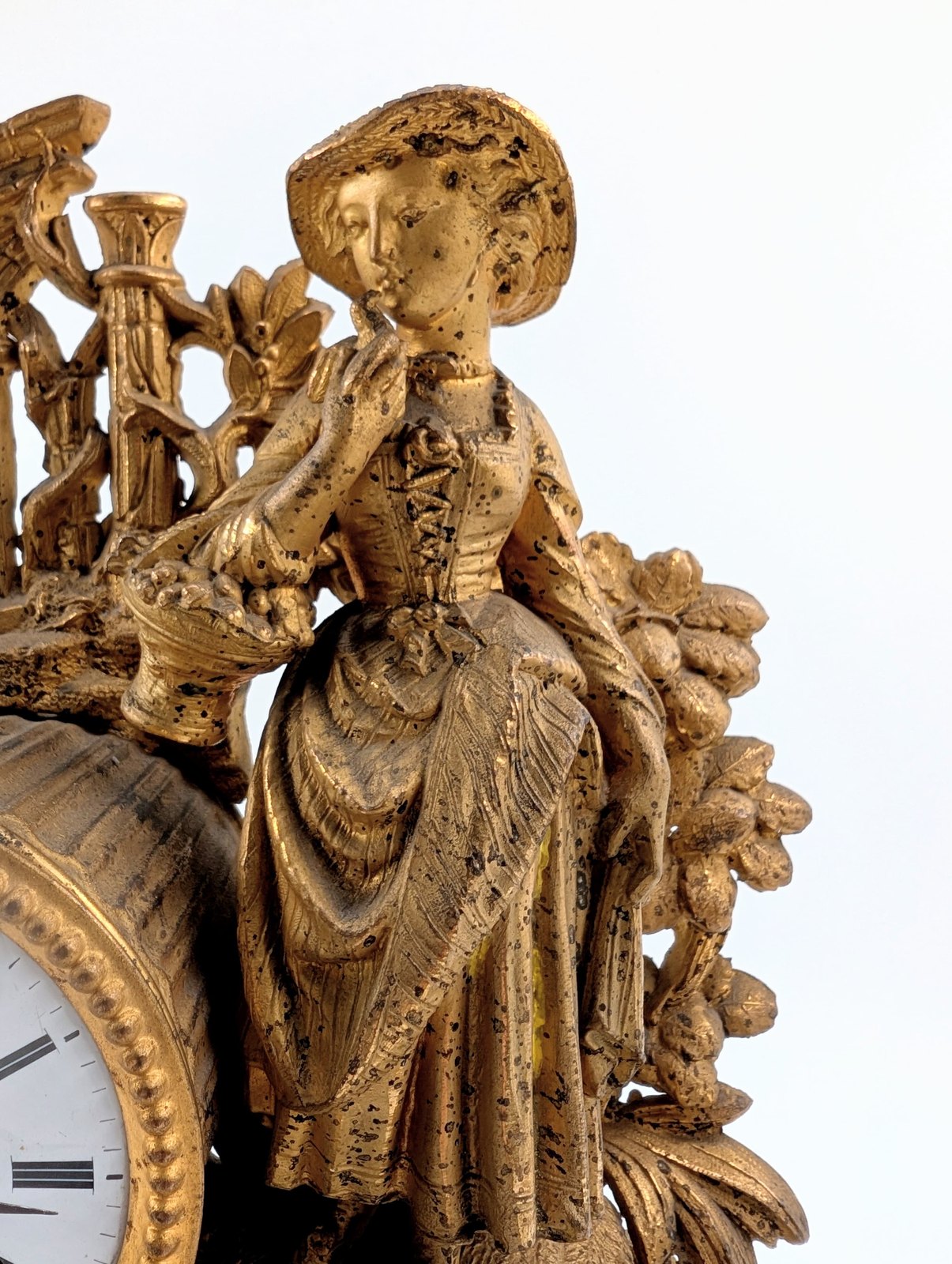
Clocks · Mantel clock
Mantel clock by Marti, c. 1860
- Maker / attribution
- Marti (Created)
- Date
- c. 1860
- Historical period
- Industrial Revolution (1850 – 1900)
- Country of origin
- Unrecorded in source
- Place
- Montbéliard
- Object type
- Mantel clock
- Materials / technique
- Gold / Messing / Bronze / Emaile / gegossen / feuervergoldet
- Dimensions
- Höhe: 25.7 cm, Gewicht: 772 g, Durchmesser: 13.9 cm, Anzahl von Teilen: 3 Bestandteile
- Holding institution
- Städtisches Museum Meerane
- Accession / object no.
- 0004551-A6
- Credit line
- Städtisches Museum Meerane
- Catalogue title (original)
- Französische Kaminuhr von J. Marti - um 1860 (German)
View the source record ↗ (opens another website in a new tab)Suggest a correction
Record summary
Held and catalogued by Städtisches Museum Meerane (object number 0004551-A6), this is a mantel clock by Marti, made in Montbéliard, dated c. 1860. The Atlas places it in the Industrial Revolution period (1850 – 1900) of its Clocks collection. Materials and techniques recorded by the source: Gold / Messing / Bronze / Emaile / gegossen / feuervergoldet. Recorded dimensions: Höhe: 25.7 cm, Gewicht: 772 g, Durchmesser: 13.9 cm, Anzahl von Teilen: 3 Bestandteile. The record is illustrated with 6 photographs.
Assembled from the source record's structured fields. Dates and attributions are given as the source states them; where a field is missing the Atlas leaves it blank rather than estimating.
Catalogue description
Catalogue description from Städtisches Museum Meerane (German)
Die Kaminuhr wurde um das Jahr 1860 von J. Marti, einem Uhrmacher aus Montbéliard in Frankreich, angefertigt. Auf dem Uhrwerk ist seine Punzierung mit der Inschrift „J. Marti et Cie. Medaille de bronze” zu erkennen. Dies lässt den Schluss zu, dass J. Marti zum Zeitpunkt der Produktion der Kaminuhr bereits Träger der bronzenen Medaille gewesen sein muss, wodurch sich das Herstellungsjahr auf die Jahre zwischen 1860 und 1869 eingrenzen lässt. Das Gehäuse wurde aus feuervergoldeter Bronze, das Uhrwerk aus Messing, die Glocke aus Eisen und das Zifferblatt aus Email gefertigt. Die Uhr steht auf fünf Füßen. Der vordere Fuß, der sich unter der nach vorne gewölbten Vorderseite der Kaminuhr befindet, wurde in Form eines einzelnen Astragals geformt. Rechts und links davon befinden sich jeweils ein weiterer Fuß, der an den äußeren Rändern in Form von C-Schwüngen gestaltet ist. Die beiden äußeren Füße verbinden sich mithilfe von zwei Blumengirlanden mit dem Füß in der Objektmitte. Dieser trägt eine große cabochonförmige Gestaltung der Bronze mit einer Blüte auf der Stirnseite sowie zwei Rocaillen, die sie flankieren. Von diesem angedeuteten Cabochon gehen horizontal beidseitig Balken zu den floralen Weiterentwicklungen der äußeren Füße hinein und verschwinden unter ihnen. Die Balken werden auf der Stirnseite mit einem romanischen Eierstab geschmückt. Die beiden letzten Füße an den Ecken der Rückseite sind schmucklose, dünne Blechfüße, die sich der formlosen Rückseite anpassen. Über dem Fuß und dem Grundaufbau der Kaminuhr erstreckt sich ein felsiger Boden, auf dem das Uhrwerk in einem zylindrischen Gefäß sitzt. Dieses Gefäß ist in seiner Längsseite kanalisiert und besitzt ein schmuckloses Perlenband am Rand der Stirnseite. Rechts neben dem Uhrwerk steht eine weibliche Figur in einem knöchellangen Korsettkleid mit einem Korb, gefüllt mit Früchten, in der rechten Armbeuge sowie einer Taube in der Hand, die sie vor ihrem Gesicht hält. Die Darstellung der Frau mit der Taube sowie die restliche Gestaltung des Uhrenkorpus lassen auf eine Antikenrezeption schließen. Dabei würde man die junge Frau, die lieblich und ruhig die Taube anschaut, in die Tradition der Aphrodite-Darstellungen setzen, deren Tiersymbol die weiße Taube ist. Auch der Korb mit den Früchten würde in diesem Zusammenhang eine Verbindung zur Göttin der Blumen und Früchte herstellen. Links neben dem Uhrwerk ist eine stangenförmige Pflanze mit Blattwerk zu erkennen. Über dem Uhrwerk ist eine kleine, von Pflanzen überwachsene Ruine mit einer kanalisierten Säule mit korinthischem Kapitell sowie einer horizontal kanalisierten Säule mit vermeintlich dorischem Kapitell, welche ein Teil eines Gesimses tragen.
Shown in the original language of the source catalogue. An editor-reviewed English translation has not yet been published; we do not publish machine translations as authoritative text.
Historical context
Industrial Revolution (1850 – 1900)
American interchangeable-parts manufacture; railroad time standards; Swiss and German factory systems.
Factory production transformed the clock into an everyday object. American makers (Seth Thomas, Ansonia, Waterbury) and German factories (Junghans, Gustav Becker, Lenzkirch) sold millions of shelf, wall and alarm clocks worldwide; France produced standardised Paris movements and carriage clocks; electric time distribution began.
Read the period in the timelineMore clocks from this periodEarlier: Precision & Scientific Horology
Atlas type guide
Mantel and French pendule clocks
The mantel clock — the French pendule de cheminée — is as much decorative art as timekeeper. From the late seventeenth century Parisian clockmakers worked with cabinet-makers, bronze founders and gilders (ciseleurs-doreurs) to create cases in Boulle marquetry, gilt bronze and marble, while the movements were often supplied by specialist makers. Clocks of the Louis XIV, Louis XV and Louis XVI periods, and Empire clocks with allegorical figures, set fashions copied across Europe.
The nineteenth century industrialised the type. The 'Paris movement', a standardised round movement with silk-thread or Brocot suspension and count-wheel striking, was made in huge numbers by firms such as Japy and Vincenti, and fitted into cases of every style and material.
What to look for
- Round 'Paris' movements with makers' stamps (e.g. Japy Frères, Vincenti, S. Marti) and medal marks from exhibitions.
- Suspension type: silk thread (earlier) or Brocot adjustable suspension (after c. 1840).
- Visible Brocot escapement on the dial in later clocks.
- Fire-gilt (mercury) gilding on bronzes versus later electro-gilding.
- Signed dials naming a retailer rather than the movement maker.
Dating clues
- Silk-suspension Paris movements: c. 1800–1850.
- Brocot suspension and visible escapements: after c. 1840.
- Exhibition medal stamps on movements give dates after the medal year.
General guidance written by the Atlas editors about this kind of object. It is not a statement about this particular piece; for that, rely on the source record above and on physical examination.
Read next:Anchor (recoil) escapement
Related records
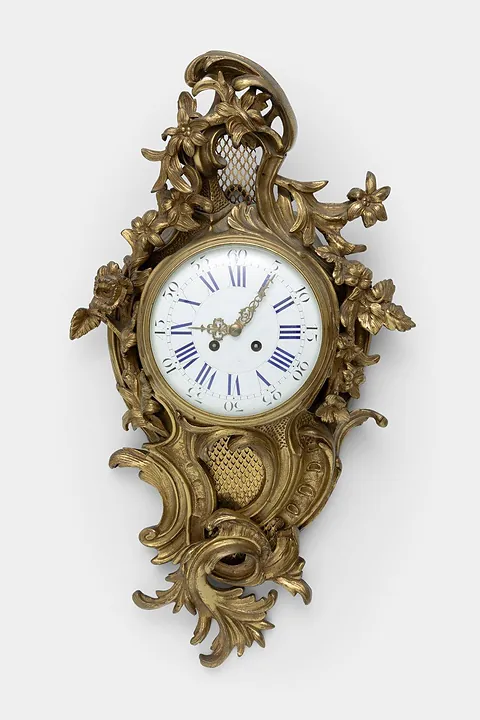
Clocks · late 19th century
Louis XV-style wall clock
Invaluable auction listings
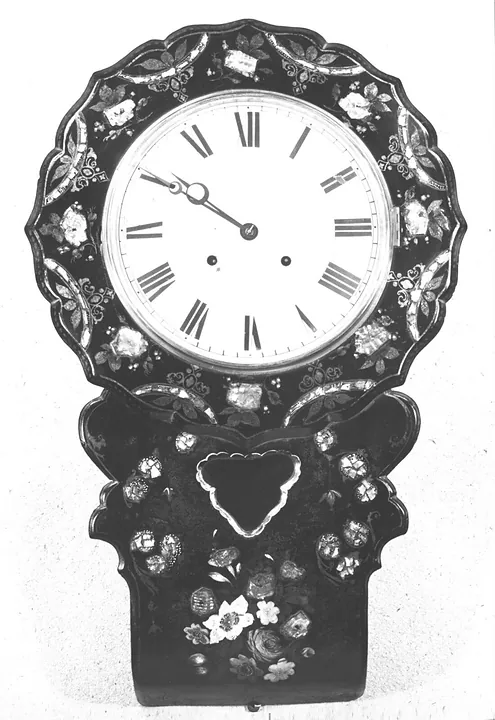
Clocks · 1830–1870
Wall clock in a papier mâché case with painted decoration. English, mid 19th century.
Victoria and Albert Museum, London
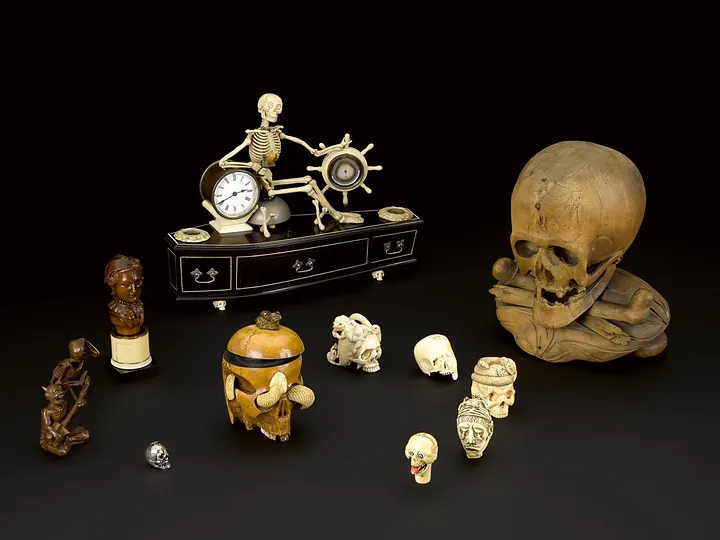
Clocks · 1840–1900
Alarm clock, mounted on model of coffin with skeleton, probably English, 1840–1900
Science Museum Group, London
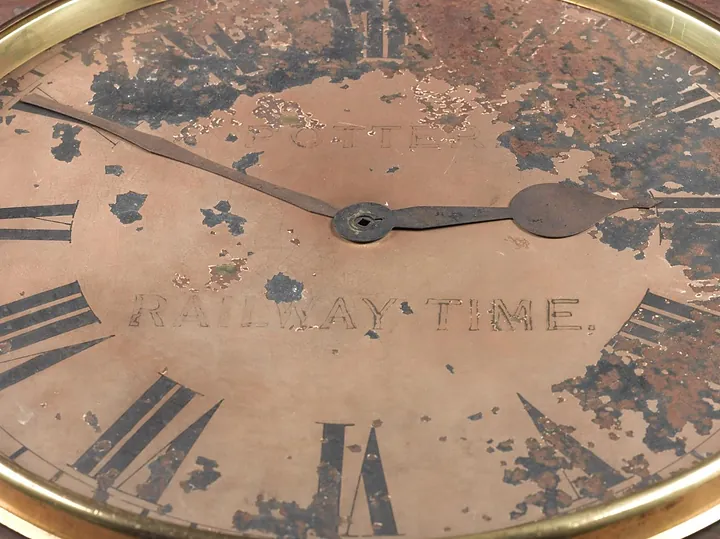
Clocks · 1840–1880
Clock dial marked "Potter, Railway Time" with two hands, unknown maker, British, 1840–1880
Science Museum Group, London
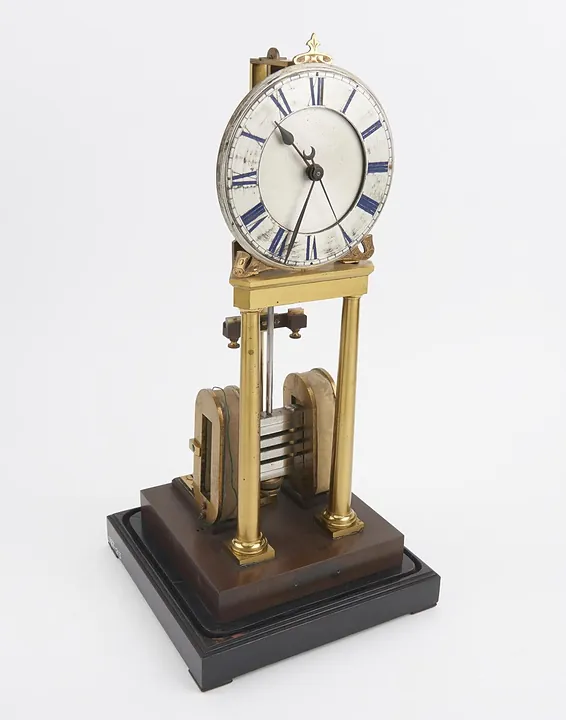
Clocks · 1840–1877
Electric clock of the Bain type
Science Museum Group, London
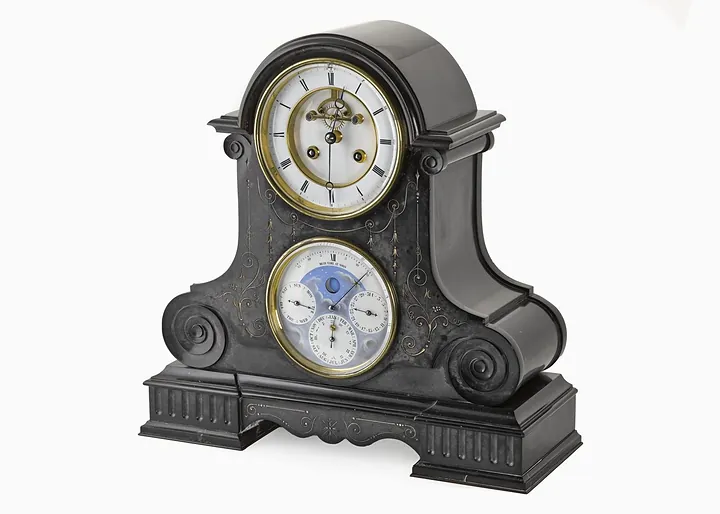
Clocks · 1840–1878
Mantel clock by A. Brocot, France, 1840–1878
Science Museum Group, London
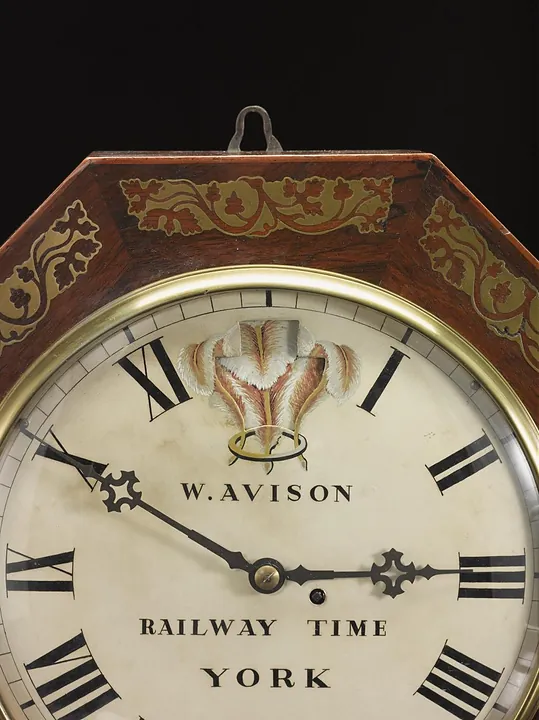
Clocks · 1840–1880
Wall Clock in octagonal case with Prince of Wales Feathers above makers name "W. Avison, Railway Time, York", made by William Avison, England, 1840–1880.
Science Museum Group, London
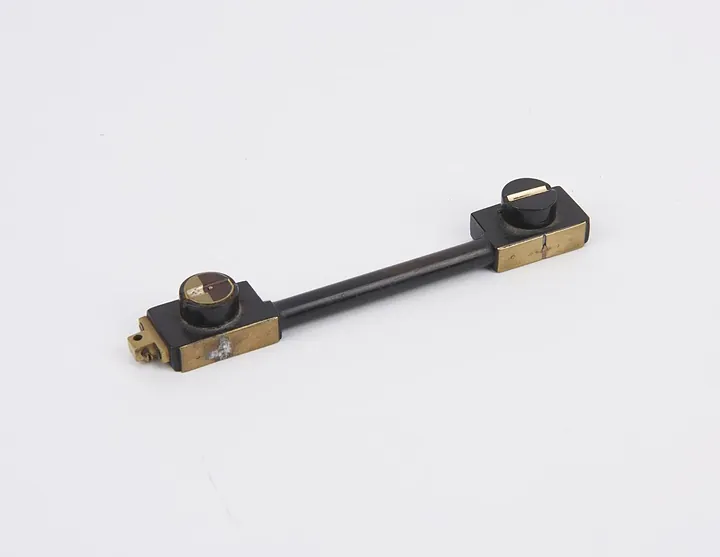
Clocks · 1841–1870
Contact bar from electric clock, unsigned, London, England, 1841–1870
Science Museum Group, London