
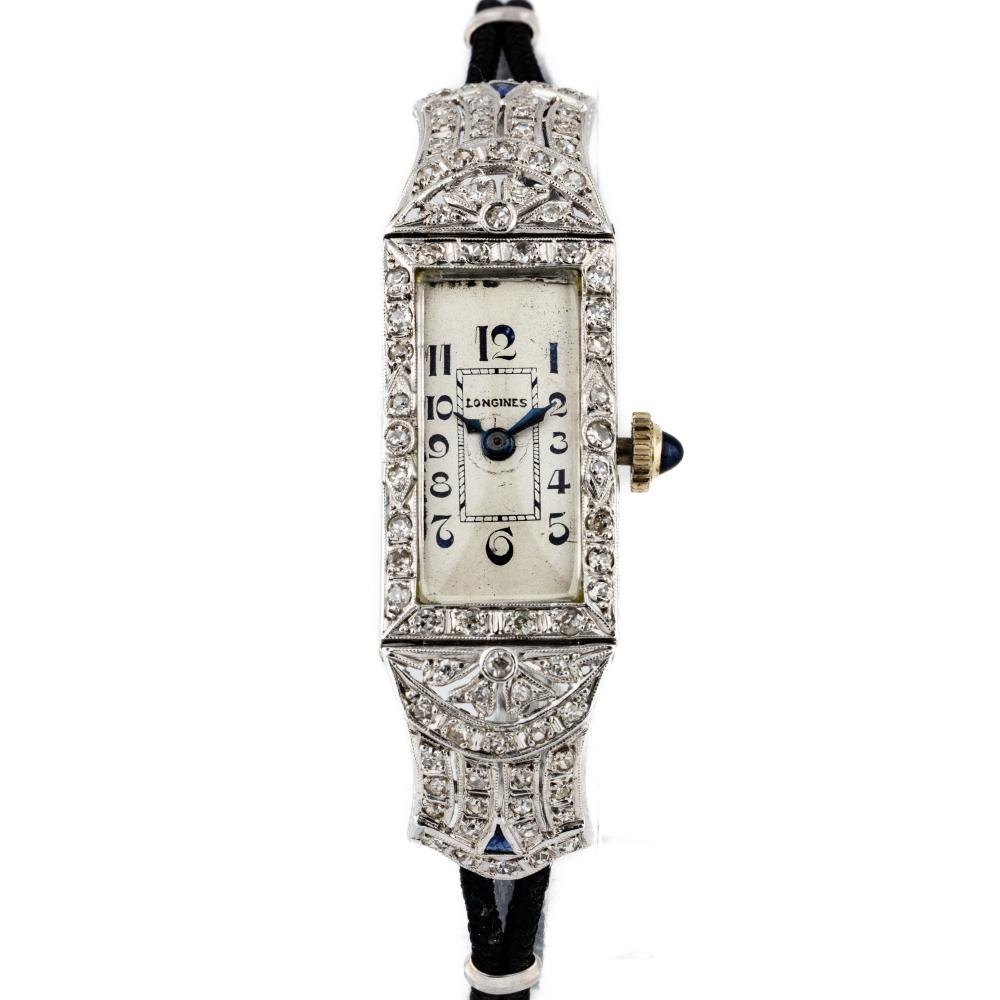
Wristwatches · Manual-wind rectangular wristwatch
Longines platinum rectangular manual-wind wristwatch
- Maker / attribution
- Longines (source attribution)
- Date
- early 1900s
- Historical period
- Golden Age of Mechanical Watchmaking (1900 – 1945)
- Country of origin
- Switzerland
- Object type
- Manual-wind rectangular wristwatch
- Materials / technique
- Platinum
- Auction house
- Hannosh's (via Invaluable)
- Lot
- 144
- Credit line
- Hannosh's (via Invaluable)
- Catalogue title (original)
- Antique Longines Platinum Art Deco Diamond & Sapphire Hooded Lugs Manual Wind Wrist Watch (English)
View the source record (auction lot) ↗ (opens another website in a new tab)Suggest a correction
Record summary
Catalogued by Hannosh's (via Invaluable) (lot 144), this is a manual-wind rectangular wristwatch attributed to Longines, made in Switzerland, dated early 1900s. The Atlas places it in the Golden Age of Mechanical Watchmaking period (1900 – 1945) of its Wristwatches collection. Materials and techniques recorded by the source: Platinum. The record is illustrated with 1 photograph.
Assembled from the source record's structured fields. Dates and attributions are given as the source states them; where a field is missing the Atlas leaves it blank rather than estimating.
Catalogue description
Original object description
Reputed to be handmade, this early-twentieth-century rectangular Longines wristwatch is crafted in platinum and closed by a hinged snap-back. Its upper surfaces, bezel, and hooded lugs are pavé-set with single-cut diamonds accented with blue sapphires, paired with a sapphire cabochon crown. The silver-toned dial features an analog layout with Arabic numerals. Timekeeping is provided by an early Swiss 17-jewel manual-wind mechanism that remains operational, although maintenance is recommended for reliable functioning. Measuring 14.1 mm wide by 45 mm long, the piece is mounted on a black cord bracelet with a 1/20 12kt white gold-filled clasp, bringing the total weight to 18.9 grams.
Case and Dial Design
The rectangular platinum case measures 14.1 mm in width and 45 mm in length, embellished with pavé-set single-cut diamonds across the bezel and prominent hooded lugs. Blue sapphires are integrated into the platinum mounts, coordinated with a cabochon blue sapphire set atop the winding crown. A silvered dial with Arabic numerals completes the exterior, and the reverse is secured with a hinged snap-on case back.
Movement and Functionality
An early Swiss hand-wound movement with 17 jewels operates the analog display. Catalogued as running, the mechanism requires regular servicing to preserve accurate timekeeping given its age. The cataloguing does not confirm whether this caliber originally accompanied the case.
Components and Condition
A black cord strap secures the watch, fitted with a Hadley-manufactured clasp of 1/20 12kt white gold-filled composition. The entire assembly weighs 18.9 grams and is catalogued by the auctioneer as a pre-owned vintage item.
Historical context
Golden Age of Mechanical Watchmaking (1900 – 1945)
The wristwatch displaces the pocket watch; waterproof cases, self-winding and grand complications.
The wristwatch overtook the pocket watch. Military use in the First World War, aviation, water-resistant cases (1926), automatic winding (1923–31), rectangular Art Deco designs and early chronographs and calendars defined the period.
Read the period in the timelineMore wristwatches from this periodEarlier: Industrial Revolution
Atlas type guide
Wristwatches
Bracelet watches were worn by women from the early nineteenth century — Breguet made one for Caroline Murat, Queen of Naples, in 1810–12 — but the wristwatch only became a man's instrument with military use and aviation in the early twentieth century. Between the World Wars it overtook the pocket watch; the 1920s and 1930s brought rectangular Art Deco cases, water-resistant cases and the first automatic winding systems.
After 1945 the wristwatch became a carrier of identity — dress watches, sports and dive watches, chronographs, calendars — produced by Swiss, American, Japanese, German, Soviet and Chinese industries. The quartz revolution after 1969 and the mechanical renaissance since the 1990s, including the rise of independent watchmakers, complete the story.
What to look for
- The reference number (between the lugs or inside the case back) and serial number, the starting point for dating.
- The calibre: its maker and number are often stamped under the dial or on the bridge.
- Originality of dial, hands and crown — refinished ('redial') dials are common.
- Case material marks: 18K/750, 14K/585, stainless steel, gold-filled, plated.
Dating clues
- Wire-lug cases: before c. 1925.
- Water-resistant screw-down cases: from 1926.
- Quartz movements: from 1969; sapphire crystals widespread after c. 1980.
General guidance written by the Atlas editors about this kind of object. It is not a statement about this particular piece; for that, rely on the source record above and on physical examination.
Related records
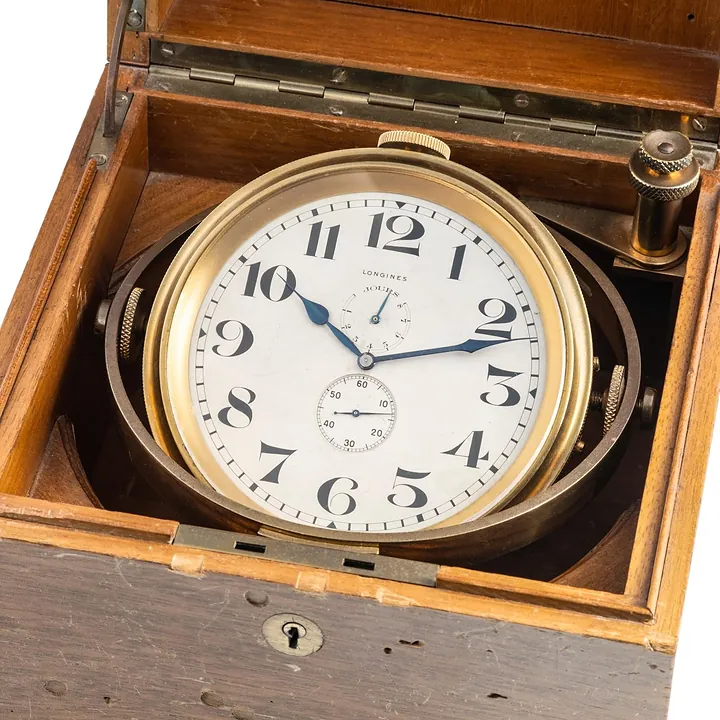
Instruments · c. 1940
Longines marine chronometer, c. 1940
Antiquorum auction archive, Geneva
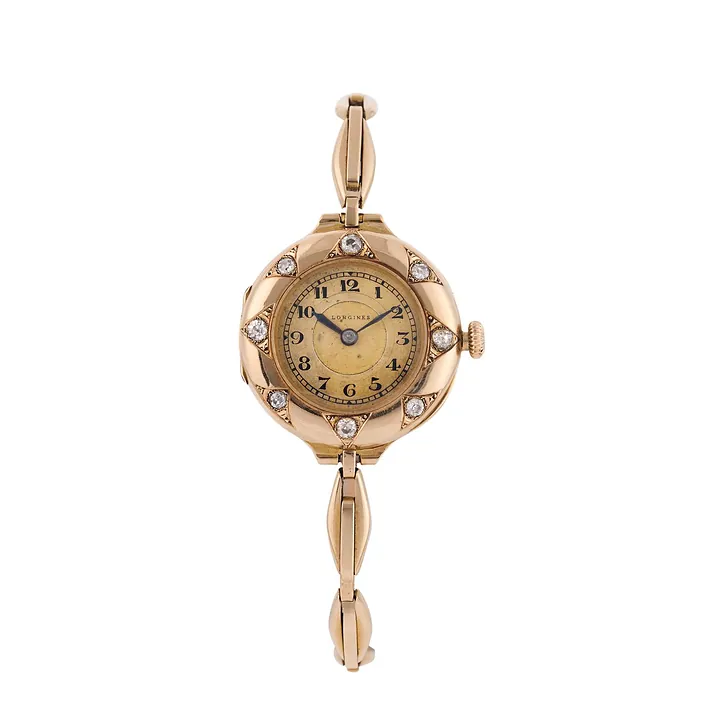
Pocket Watches · c. 1910-1920s
Longines watch, c. 1910-1920s
Antiquorum auction archive, Geneva
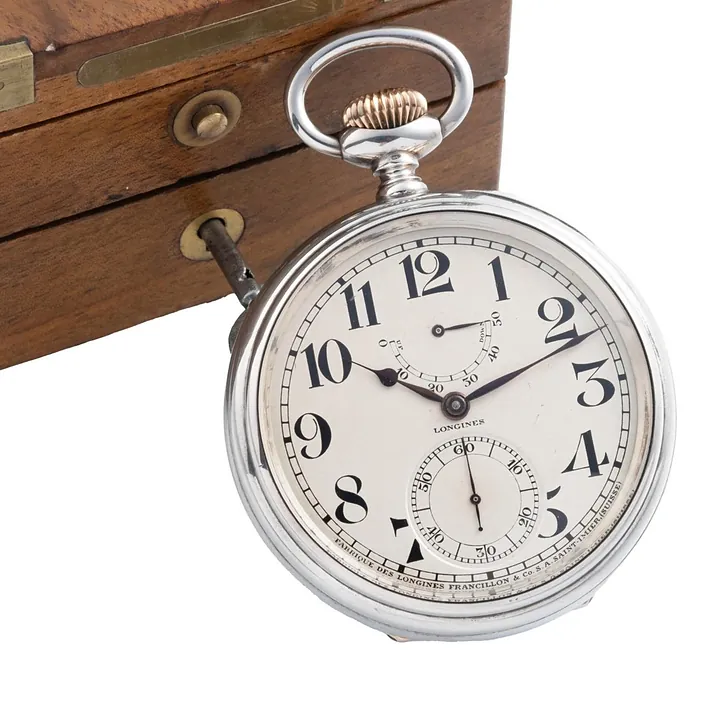
Pocket Watches · c. 1915
Longines ''torpedo-Boat Watch'', c. 1915
Antiquorum auction archive, Geneva
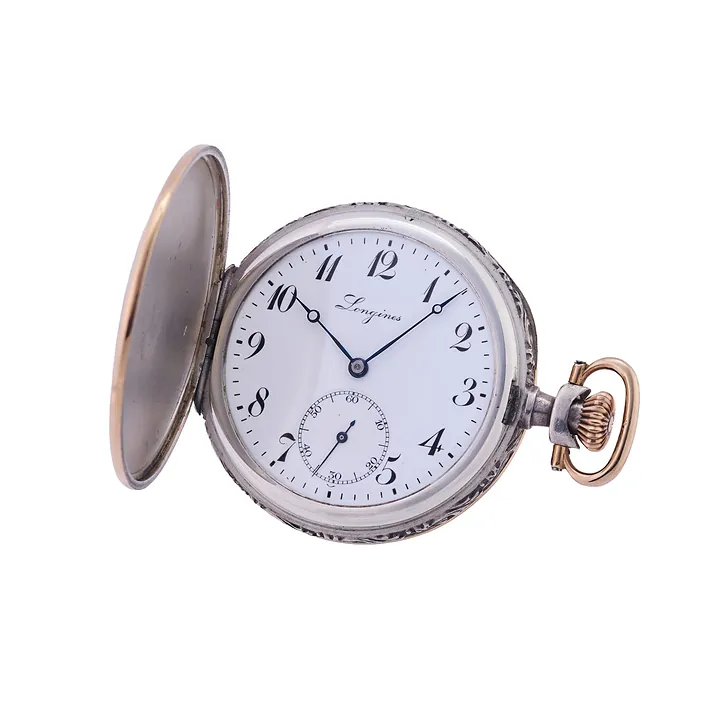
Pocket Watches · c. 1920s
Longines pocket watch, c. 1920s (Antiquorum Lot 389-59)
Antiquorum auction archive, Geneva

Wristwatches · 1931
Rolex 'Oyster Perpetual' rotor self-winding wrist-watch, lever escapement, in steel case with glass in back, Montres Rolex SA, Geneva, Switzerland, 1931
Science Museum Group, London

Wristwatches · 1900–1999
Wristwatch by Certina, Switzerland, 1900–1999
Nordic Museum Foundation

Wristwatches · 1900–1999
Wristwatch by Omega, Västerås, 1900–1999
Nordic Museum Foundation

Wristwatches · 1900–1999
Wristwatch by Universal, Switzerland, 1900–1999
Nordic Museum Foundation