
Wristwatches · Wristwatch
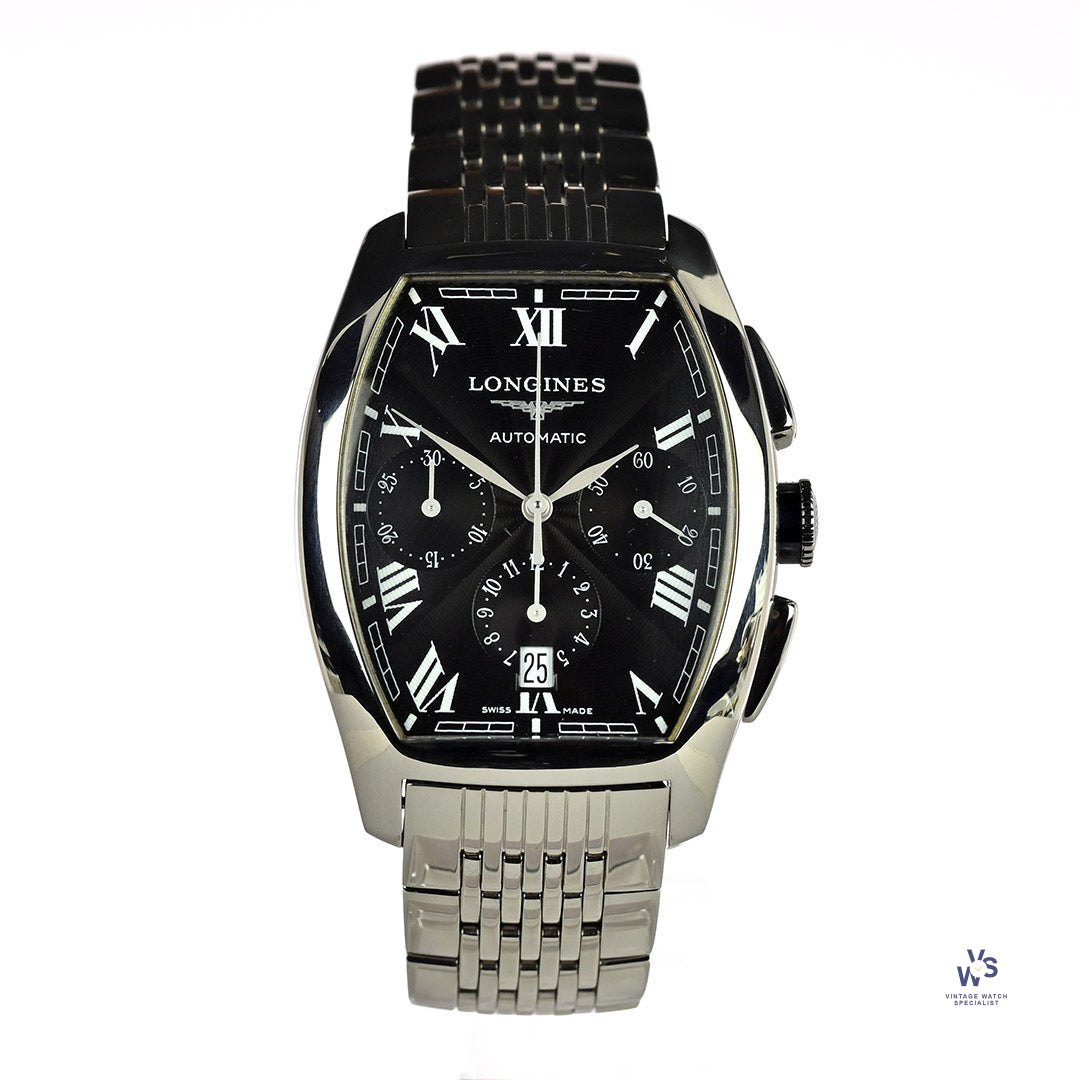
Longines Evidenza, Automatic, ref. L2.643.4, circa 2015
- Maker / attribution
- Longines (maker)
- Date
- c. 2015
- Historical period
- Contemporary Horology (2010 – Present)
- Country of origin
- Switzerland
- Object type
- Wristwatch
- Stock no.
- vws3532
- Credit line
- Dealer listing, Vintage Watch Specialist (vws3532)
- Catalogue title (original)
- Longines Evidenza - Automatic - Model Reference: L2.643.4 - C.2015 (English)
View the source record (dealer listing) ↗ (opens another website in a new tab)Suggest a correction
Record summary
Catalogued by Vintage Watch Specialist (dealer), United Kingdom (stock number vws3532), this is a wristwatch by Longines, made in Switzerland, dated c. 2015. The Atlas places it in the Contemporary Horology period (2010 – Present) of its Wristwatches collection. The record is illustrated with 6 photographs.
Assembled from the source record's structured fields. Dates and attributions are given as the source states them; where a field is missing the Atlas leaves it blank rather than estimating.
Catalogue description
Dealer description — Vintage Watch Specialist
A Stunning 2015 Longines Evidenza Model Reference: L2.643.4 in Fantastic Condition with a Beautiful Black Guilloché Dial The Longines Evidenza watch, introduced in 2003, signifies a beautiful bridge between heritage and modern aesthetics. Drawing inspiration from the Art Deco period of the 1920s and 1930s, the Evidenza collection showcases a distinctive tonneau-shaped case, a departure from the traditional round cases. This elegant design was first imagined by Longines in 1925, emphasizing the brand’s willingness to innovate while respecting tradition. The Evidenza line is celebrated for its classic yet contemporary appeal, featuring beautifully crafted dials with intricate details such as guilloché patterns, Roman numerals, and Breguet-style hands. Over the years, Longines has introduced various iterations, incorporating complications like chronographs and date displays while ensuring that the elegant essence remains unaltered. Embodying both sophistication and precision, the Longines Evidenza remains a testament to Longines' enduring commitment to fine craftsmanship and timeless design, making it a cherished piece among collectors and watch enthusiasts alike. What's on Offer Enclosed in a polished stainless steel tonneau-shaped case, this exquisite timepiece boasts a sophisticated appeal, merging classic design with contemporary flair. The watch features a rich black guilloché dial with white accents including Roman numerals, an outer seconds track and a small date aperture at 6 o'clock. The chronograph complication adds functionality with a 12-hour counter, 30-minute counter and a continuous seconds counter, powered by an automatic movement. This watch is in superb pre-owned condition with barely a sign of any wear, it has clearly been very well looked after. Longines Evidenza encapsulates both classic beauty and advanced watchmaking, making it a perfect accessory for any discerning collector with its meaty proportions ensuring a bold presence on the wrist. Blink and you will miss this one!
Historical context
Contemporary Horology (2010 – Present)
Silicon components, connected watches, optical-lattice research clocks and a thriving independent scene.
Smartwatches became the world's best-selling watches, while mechanical watchmaking focuses on craft, innovation (silicon components, new escapements) and independent makers.
Read the period in the timelineMore wristwatches from this periodEarlier: Mechanical Renaissance
Atlas type guide
Automatic (self-winding) watches
Self-winding watches use the wearer's motion to wind the mainspring. Abraham-Louis Perrelet and Breguet made 'perpétuelle' pocket watches with oscillating weights in the late eighteenth century, but the principle only became practical in the wristwatch. John Harwood patented a bumper automatic in 1923; Rolex's Perpetual rotor (1931) winding in one direction, and later bidirectional rotors (Eterna, Felsa Bidynator), established the modern form. Micro-rotors (Universal Genève, Buren) and peripheral rotors made automatic watches thinner.
What to look for
- A semicircular rotor turning 360° over the movement, or a 'bumper' weight that rebounds between springs.
- 'Automatic', 'Perpetual' or 'Self-winding' on the dial.
- A sealed screw-back case, since automatic watches are wound less often by the crown.
Dating clues
- Bumper automatics: 1923–c. 1955.
- Full rotors: from 1931 (Rolex); widespread after c. 1950.
- Micro-rotors: from 1954–1958.
General guidance written by the Atlas editors about this kind of object. It is not a statement about this particular piece; for that, rely on the source record above and on physical examination.
Related records
Instruments · c. 1940
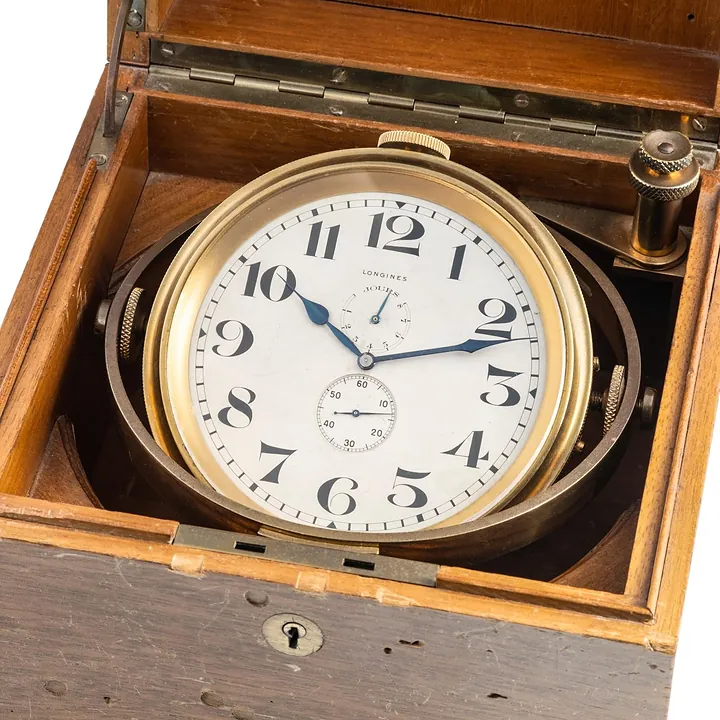
Longines marine chronometer, c. 1940
Antiquorum auction archive, Geneva
Pocket Watches · c. 1910-1920s
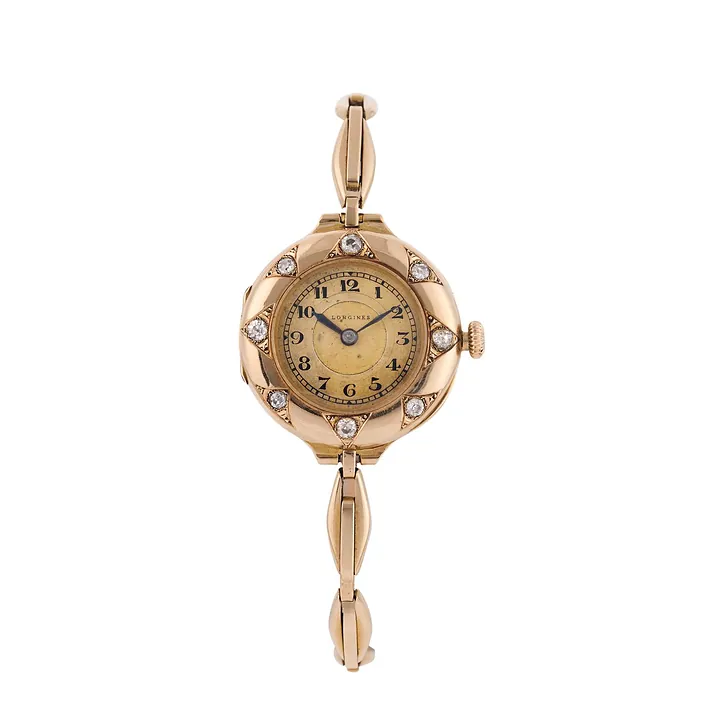
Longines watch, c. 1910-1920s
Antiquorum auction archive, Geneva
Pocket Watches · c. 1915
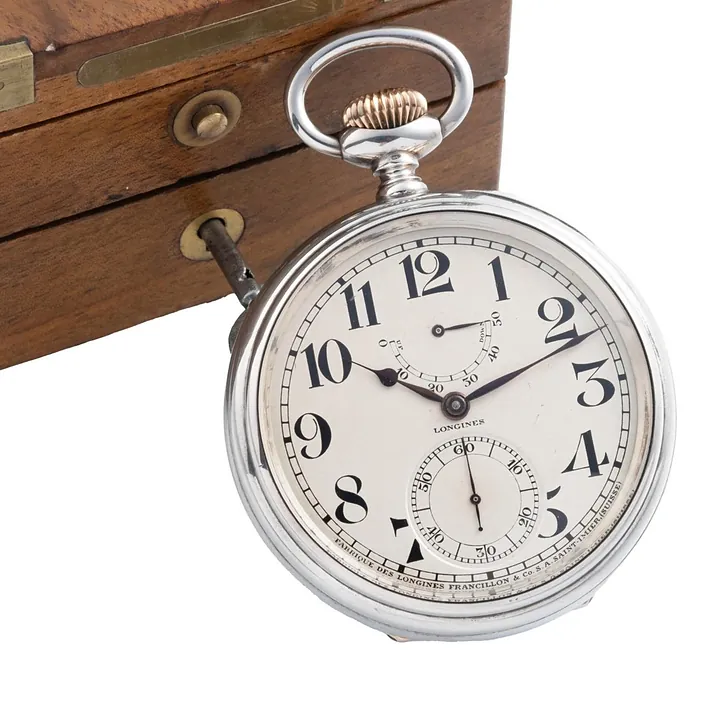
Longines ''torpedo-Boat Watch'', c. 1915
Antiquorum auction archive, Geneva
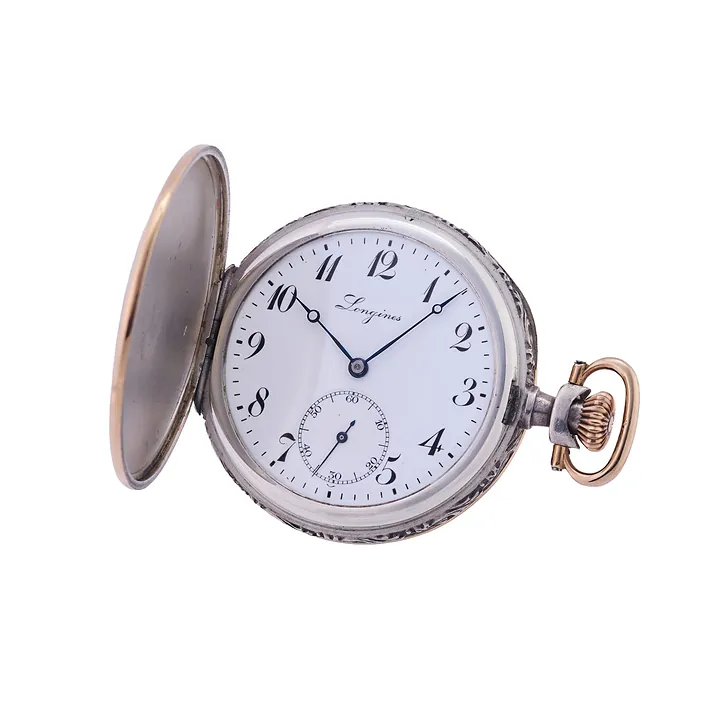
Pocket Watches · c. 1920s
Longines pocket watch, c. 1920s (Antiquorum Lot 389-59)
Antiquorum auction archive, Geneva

Wristwatches · c. 2010s
Breguet Type XXI, ref. 3810, c. 2010s (Antiquorum Lot 381-24)
Antiquorum auction archive, Geneva

Wristwatches · c. 2010s
Breguet Type XXI, ref. 3810, c. 2010s (Antiquorum Lot 386-229)
Antiquorum auction archive, Geneva

Wristwatches · Sold in September 2010
Breitling Cosmonaute, ref. A 22322, Sold in September 2010
Antiquorum auction archive, Geneva

Wristwatches · c. 2010
Corum Bubble Chrono, ref. 396.150.20, c. 2010
Antiquorum auction archive, Geneva