
Wristwatches · Wristwatch
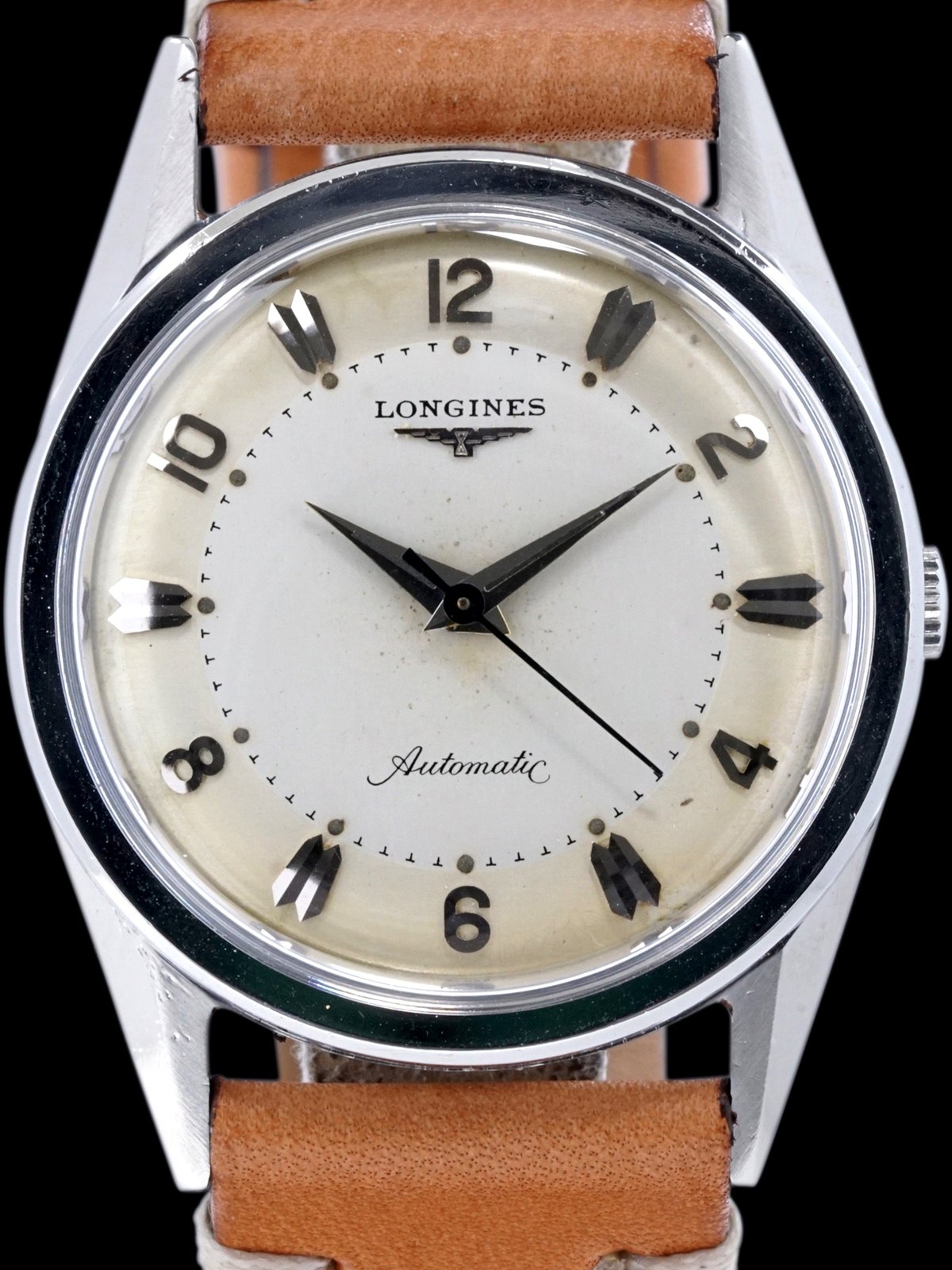
Longines Automatic (Ref. 2305 SW), 1956
- Maker / attribution
- Longines (maker)
- Date
- 1956
- Historical period
- Modern Mechanical Horology (1945 – 1969)
- Country of origin
- Switzerland
- Object type
- Wristwatch
- Dimensions
- Case 33 mm
- Stock no.
- LNGS2305
- Credit line
- Dealer listing, Craft & Tailored (LNGS2305)
- Catalogue title (original)
- 1956 Longines Automatic (Ref. 2305 SW) (English)
View the source record (dealer listing) ↗ (opens another website in a new tab)Suggest a correction
Record summary
Catalogued by Craft & Tailored (dealer), Los Angeles (stock number LNGS2305), this is a wristwatch by Longines, made in Switzerland, dated 1956. The Atlas places it in the Modern Mechanical Horology period (1945 – 1969) of its Wristwatches collection. Recorded dimensions: Case 33 mm. The record is illustrated with 6 photographs.
Assembled from the source record's structured fields. Dates and attributions are given as the source states them; where a field is missing the Atlas leaves it blank rather than estimating.
Catalogue description
Dealer description — Craft & Tailored
For decades Longines created some of the most beautiful and versatile watches in the world. Year after year pumping out beauty and reliability, seemingly in competition with only themselves. This Ref. 2305 SW is a fantastic example of this trend with its gorgeous blend of sharp lines and curved steel. SPECS Stock # LNGS2305 Brand Longines Style Automatic Model 2305 SW Serial 99XXXXX Size Men's Material Stainless Steel Dial Silver Millimeters 33 Bracelet 2pc Handmade Leather Strap CASE & BRACELET The 33mm stainless steel case is in fantastic condition with beautiful and long three-faced lugs. The length of the lugs creates a more imposing presence on the wrist than the 32mm size would suggest. The watch also features a screw-down, stainless steel case back and comes supplied 2pc handmade leather strap. DIAL & HANDS The goergeous dial is characteristic of this era, having aged to a fantastic two-tone aesthetic. The inner dial is silver with patina spots fanning out from the center, while the outer dial has aged slightly and taken on some tan and brown colors. Layed over this outer track is a mix of Arabic numerals and long dual chevron-shaped markers, all in raised stainless steel. The original radium lume plots have taken on a dark patina, and exhibit no major degradation when inspected under U.V. light. The original radium dauphine hands match the dial perfectly with no degradation present when inspected under U.V. light. ACCESSORIES None. The watch is keeping time, previous service history is unknown.
Historical context
Modern Mechanical Horology (1945 – 1969)
Tool watches for divers, pilots and astronauts; electric watches anticipate the electronic age.
The classic era of the mechanical wristwatch: dive watches, chronographs for motor racing and space flight, GMT watches for jet travel, slim dress watches, automatic calendars, and the rise of Japanese manufacturers alongside Swiss, American, German and Soviet industries.
Read the period in the timelineMore wristwatches from this periodEarlier: Golden Age of Mechanical Watchmaking
Atlas type guide
Automatic (self-winding) watches
Self-winding watches use the wearer's motion to wind the mainspring. Abraham-Louis Perrelet and Breguet made 'perpétuelle' pocket watches with oscillating weights in the late eighteenth century, but the principle only became practical in the wristwatch. John Harwood patented a bumper automatic in 1923; Rolex's Perpetual rotor (1931) winding in one direction, and later bidirectional rotors (Eterna, Felsa Bidynator), established the modern form. Micro-rotors (Universal Genève, Buren) and peripheral rotors made automatic watches thinner.
What to look for
- A semicircular rotor turning 360° over the movement, or a 'bumper' weight that rebounds between springs.
- 'Automatic', 'Perpetual' or 'Self-winding' on the dial.
- A sealed screw-back case, since automatic watches are wound less often by the crown.
Dating clues
- Bumper automatics: 1923–c. 1955.
- Full rotors: from 1931 (Rolex); widespread after c. 1950.
- Micro-rotors: from 1954–1958.
General guidance written by the Atlas editors about this kind of object. It is not a statement about this particular piece; for that, rely on the source record above and on physical examination.
Related records
Instruments · c. 1940
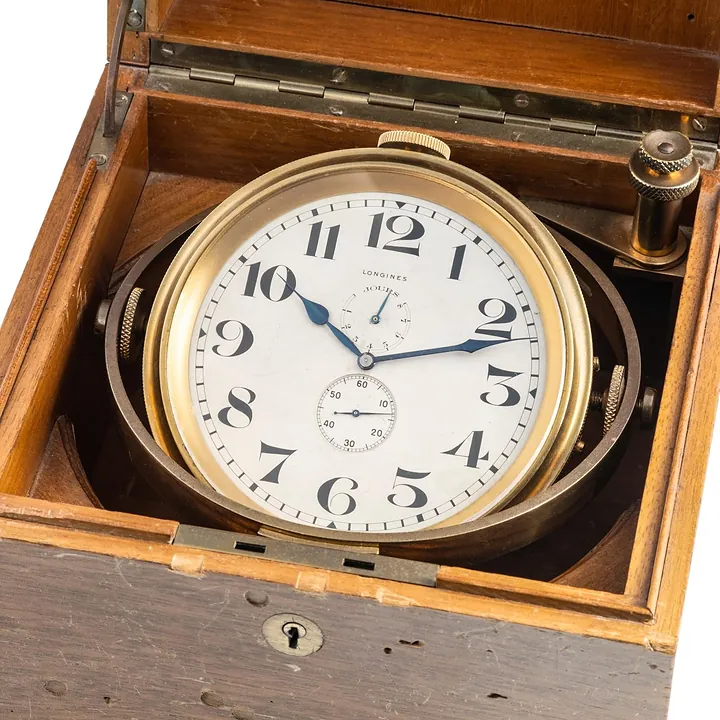
Longines marine chronometer, c. 1940
Antiquorum auction archive, Geneva
Pocket Watches · c. 1910-1920s
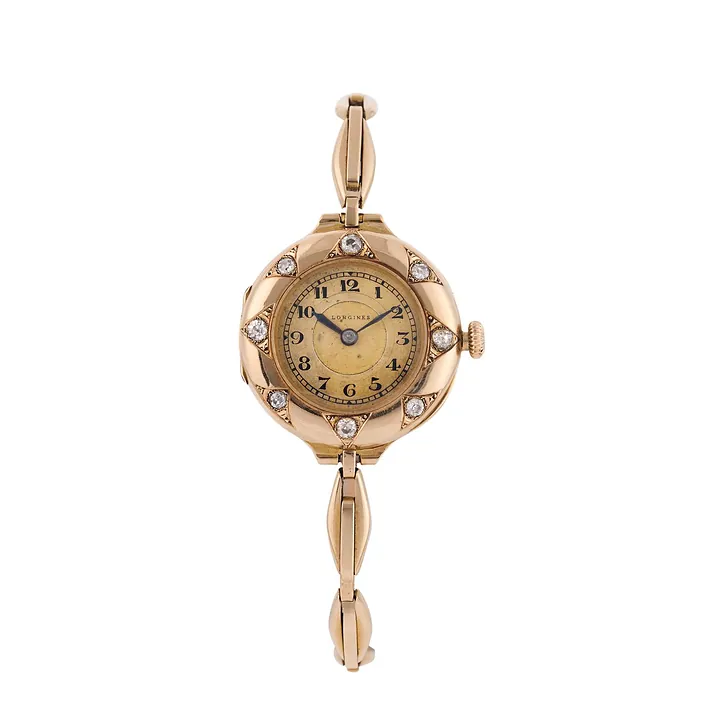
Longines watch, c. 1910-1920s
Antiquorum auction archive, Geneva
Pocket Watches · c. 1915
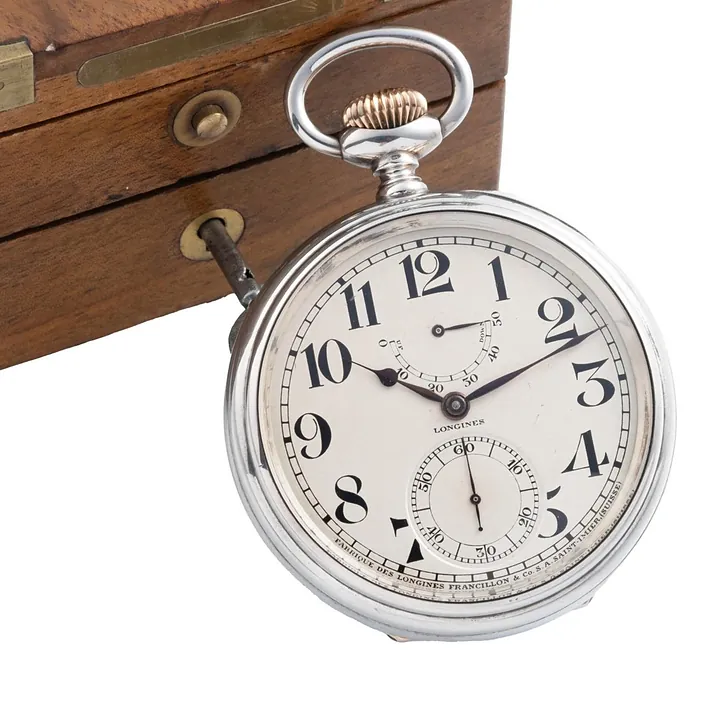
Longines ''torpedo-Boat Watch'', c. 1915
Antiquorum auction archive, Geneva
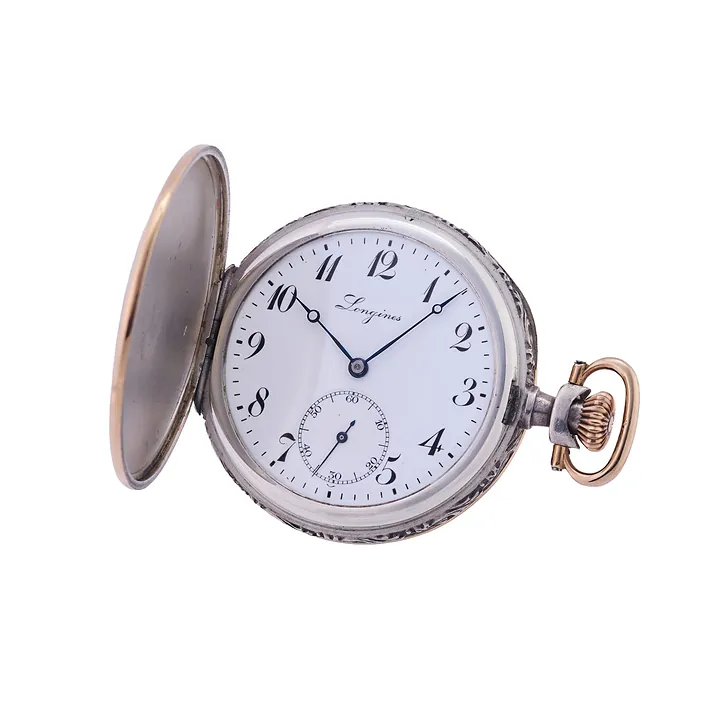
Pocket Watches · c. 1920s
Longines pocket watch, c. 1920s (Antiquorum Lot 389-59)
Antiquorum auction archive, Geneva

Wristwatches · 1945
Wristwatch by Eterna, 1945
Museum Rotterdam

Wristwatches · c. 1945
Breitling Premier, ref. 790, c. 1945
Antiquorum auction archive, Geneva

Wristwatches · c. 1945
Universal Genève Uni-Compax, ref. 22492, c. 1945
Antiquorum auction archive, Geneva

Wristwatches · c. 1950s
Baume & Mercier wristwatch, c. 1950s
Antiquorum auction archive, Geneva