
Clocks · Longcase clock
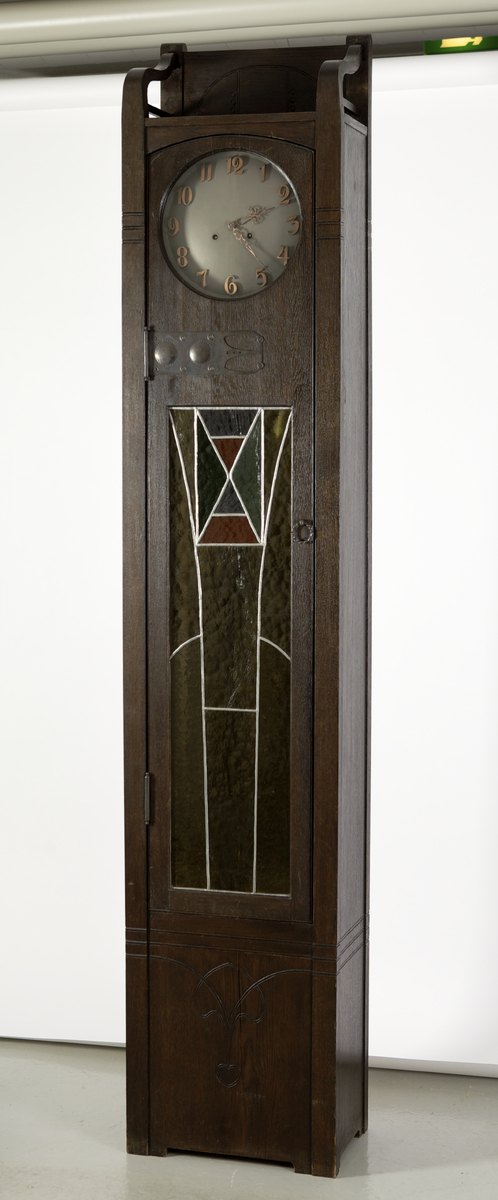
Longcase clock by Aktiebolaget Iris, Finland, c. 1901-1905
- Maker / attribution
- Aktiebolaget Iris (maker); Louis Sparren puusepänliike (maker); Salomo Wuorio Oy (maker)
- Date
- c. 1901-1905
- Historical period
- Golden Age of Mechanical Watchmaking (1900 – 1945)
- Country of origin
- Finland
- Place
- Finland, Uusimaa, Porvoo
- Object type
- Longcase clock
- Materials / technique
- oak, skogsek, taustalevy, metsämänty, männyt, mäntykasvit, pine, tall, art, helat, iron
- Dimensions
- depth: 27.2 cm; height: 222.5 cm; width: 43.8 cm
- Holding institution
- Porvoon museo
- Accession / object no.
- BM1964251:1; 64-251:1
- Credit line
- Porvoon museo (via Finna)
- Catalogue title (original)
- kello; kaappikello (Finnish)
View the source record ↗ (opens another website in a new tab)Suggest a correction
Record summary
Held and catalogued by Porvoon museo (object number BM1964251:1; 64-251:1), this is a longcase clock by Aktiebolaget Iris, made in Finland, Uusimaa, Porvoo, dated c. 1901-1905. The Atlas places it in the Golden Age of Mechanical Watchmaking period (1900 – 1945) of its Clocks collection. Materials and techniques recorded by the source: oak, skogsek, taustalevy, metsämänty, männyt, mäntykasvit, pine, tall, art, helat, iron. Recorded dimensions: depth: 27.2 cm; height: 222.5 cm; width: 43.8 cm. The record is illustrated with 1 photograph.
Assembled from the source record's structured fields. Dates and attributions are given as the source states them; where a field is missing the Atlas leaves it blank rather than estimating.
Catalogue description
Description — Porvoon museo
fyysinen kuvaus: Kaappikello, joka on suorakaiteen muotoinen korkea ja kapea, petsattu ruskeanmustaksi petsattu ja lakattu. Edestä avautuu lyijykehysteinen lasinen korkea ja kapea ovi. Rautahelat.
Shown in the original language of the source catalogue. An editor-reviewed English translation has not yet been published; we do not publish machine translations as authoritative text.
Historical context
Golden Age of Mechanical Watchmaking (1900 – 1945)
The wristwatch displaces the pocket watch; waterproof cases, self-winding and grand complications.
Between 1900 and 1945 clocks were electrified: master-clock systems ran factories and offices, synchronous mains clocks entered homes, and the Shortt free-pendulum clock set new standards of accuracy before the first quartz clocks (1927). Art Deco design reshaped mantel and table clocks.
Read the period in the timelineMore clocks from this periodEarlier: Industrial Revolution
Atlas type guide
Longcase (tall-case or grandfather) clocks
The longcase clock was born from two seventeenth-century innovations: Christiaan Huygens's pendulum (1656–57) and the anchor escapement (c. 1670). A long seconds pendulum, nearly a metre long, swings with a small arc, and enclosing it together with the driving weights in a tall wooden case protected the mechanism and created a new piece of furniture. London makers such as Ahasuerus Fromanteel, Thomas Tompion and Joseph Knibb set the pattern.
By the eighteenth century longcase clocks were made throughout Britain, the Netherlands, Scandinavia (the Swedish Mora clock), France (the Comtoise from the Franche-Comté), Germany and colonial America. Eight-day movements with two weights became standard in better clocks; thirty-hour clocks with one weight and a rope or chain were cheaper alternatives.
What to look for
- Winding holes in the dial: two (eight-day, going and striking) or none (thirty-hour, pulled up by a chain).
- Brass dials with applied chapter rings (earlier) versus painted iron 'white' dials (after c. 1770 in Britain).
- Moon-phase arches, date apertures, seconds dials and maker's name on the dial.
- Case woods and style: ebonised, walnut marquetry, lacquer, oak or mahogany; regional styles from London, Lancashire, Scotland or America.
- Whether the movement and dial match the case — 'marriages' are common.
Dating clues
- Square brass dials suggest c. 1670–1720; arched brass dials c. 1715–1790.
- Painted (white) dials were made by Birmingham dial-makers from about 1772.
- Comtoise clocks with repoussé pendulums are mostly nineteenth century.
General guidance written by the Atlas editors about this kind of object. It is not a statement about this particular piece; for that, rely on the source record above and on physical examination.
Read next:Anchor (recoil) escapementDeadbeat escapementAnchor escapement
Related records
Clocks · 1929
Wall clock from Vänö, Finland, 1929
Society of Swedish Literature in Finland
Clocks · 1926 (at the latest) , 2004
Clock, Finland, 1926 (at the latest) , 2004
Suomen Urheilumuseo
Clocks · 20.1.1943
Wall clock by K. Kallion Kulta ja Kello Oy, Finland, 20.1.1943
Vantaan kaupunginmuseo
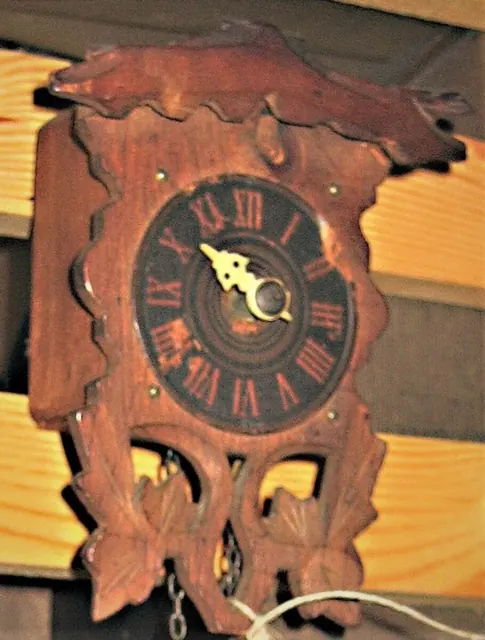
Clocks · 1908–1911
Wall clock by H. Stenius, Finland, 1908–1911
HKM / Kulttuurihistoriallinen
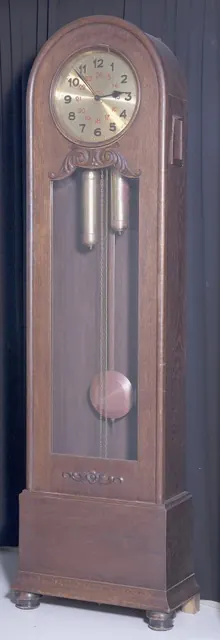
Clocks · 1927
Longcase clock by Ajantieto Oy, Finland, 1927
Lahden museot
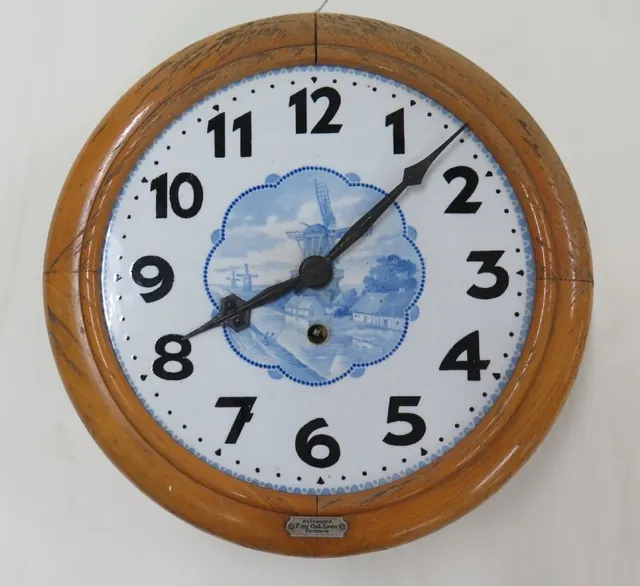
Clocks · 1930–1940
Wall clock by T:mi Kelloseppä Oskar Sirén, Finland, 1930–1940
Museokeskus Vapriikki
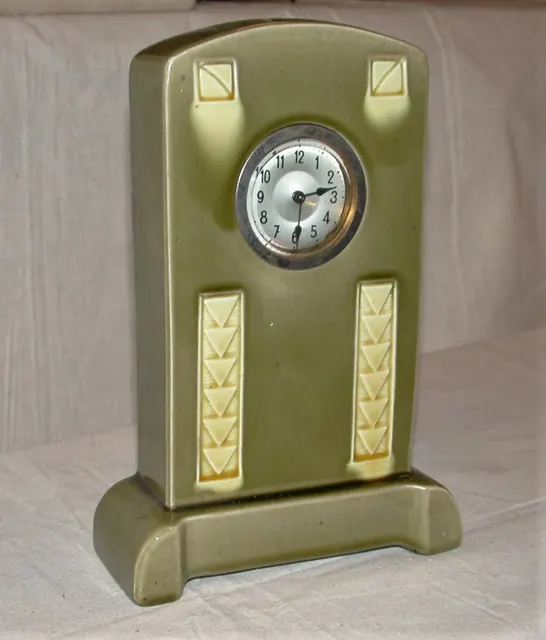
Clocks · c. 1900 - 1910
Table clock by Arabia, Finland, c. 1900 - 1910
HKM / Kulttuurihistoriallinen
Clocks · 1890–1930
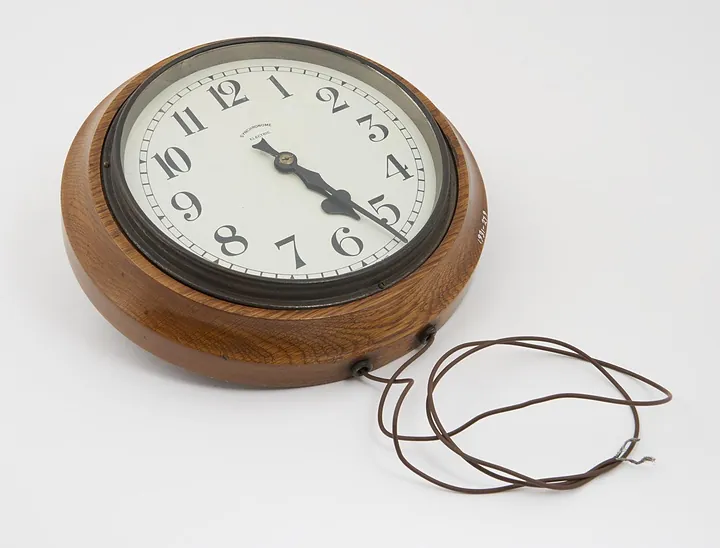
Clock with 8-inch impulse dial, by the Synchronome Company Limited, England, 1890–1930.
Science Museum Group, London