
Clocks · Clock
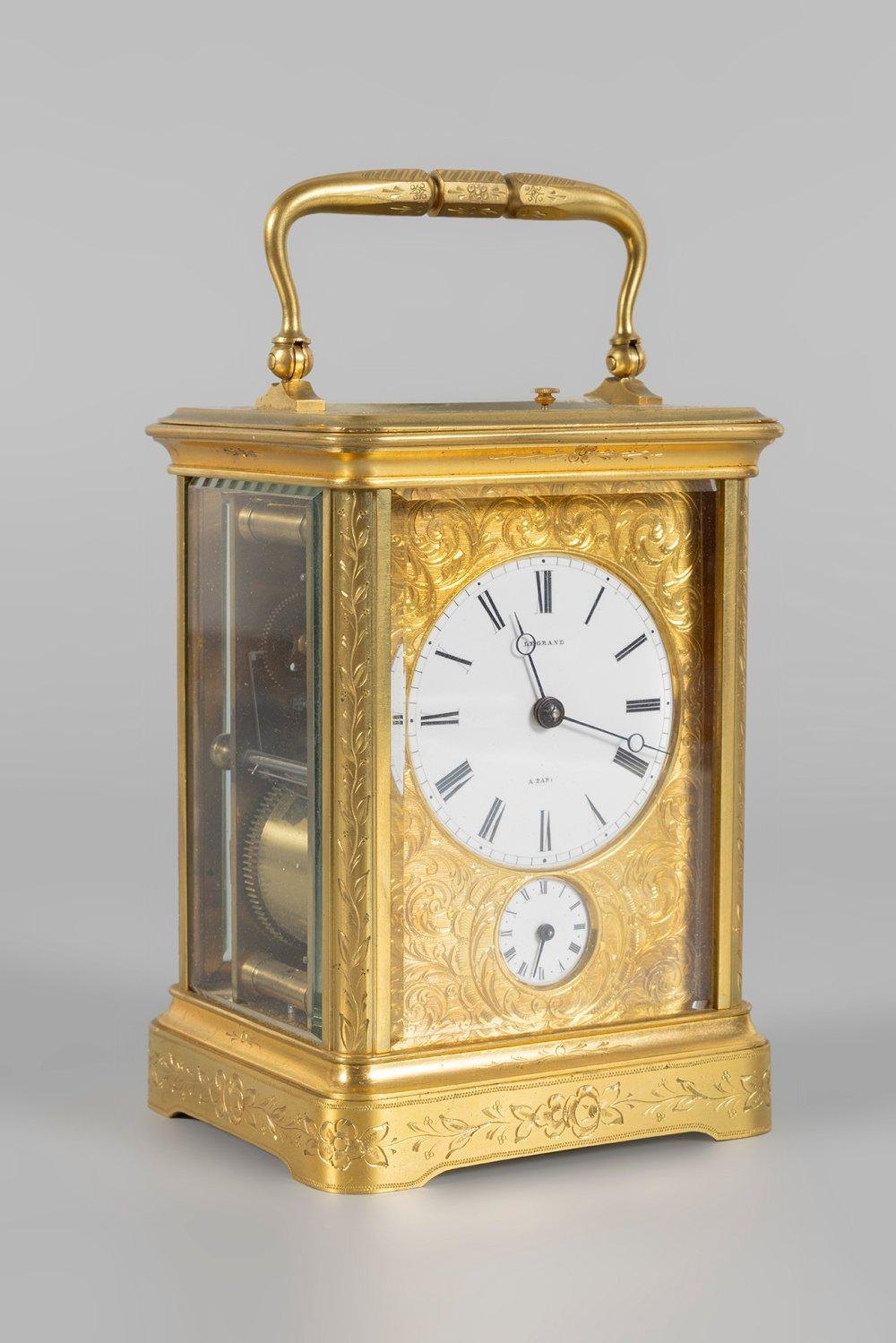
Carriage clock by Legrand, Paris, c. 1900
- Maker / attribution
- Unrecorded in source
- Date
- c. 1900
- Historical period
- Golden Age of Mechanical Watchmaking (1900 – 1945)
- Country of origin
- France
- Object type
- Clock
- Materials / technique
- bronze, glass
- Auction house
- Invaluable auction listings
- Lot
- Lot 634B4C32AF
- Credit line
- Auction lot record: lot 107, 23rd November - Decorative & Oriental Art, Setdart Auction House (2026), via Invaluable
- Catalogue title (original)
- Legrand in Paris. Carriage clock, c. 1900. Gilded bronze. Signed on the dial. (English)
Editor's note
Title rewritten in English from the auction house's own lot title (Dutch, German or run into the description); facts unchanged.View the source record (auction lot) ↗ (opens another website in a new tab)Suggest a correction
Record summary
Catalogued by Invaluable auction listings (lot Lot 634B4C32AF), this is a clock, made in France, dated c. 1900. The Atlas places it in the Golden Age of Mechanical Watchmaking period (1900 – 1945) of its Clocks collection. Materials and techniques recorded by the source: bronze, glass. The record is illustrated with 4 photographs.
Assembled from the source record's structured fields. Dates and attributions are given as the source states them; where a field is missing the Atlas leaves it blank rather than estimating.
Catalogue description
Lot description — Setdart Auction House
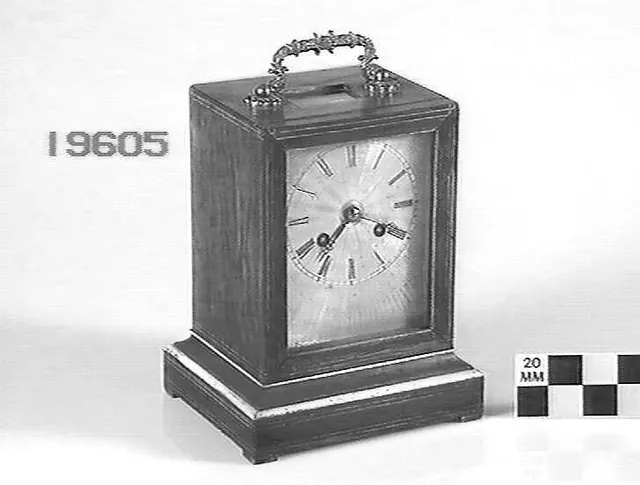
Measurements: 17.5 x 9.5 x 8 cm. Rectangular-case carriage clock in gilded bronze, with a molded cornice and a scalloped base resting on corbel feet. Folding handle with a sinuous profile, engraved with floral motifs. The side uprights are engraved with a stem of leaves, and the base features a frieze of flowers and branches. The carriage clock originated in France in the early 19th century and is associated with Abraham-Louis Breguet, who, around 1812, made travel clocks for Napoleon. Its metal case with glass sides and an upper handle made it possible to transport an accurate clock on journeys without damaging the mechanism, hence its name, derived from the horse-drawn carriages in which people traveled. Production reached its peak in the second half of the 19th century, particularly in Paris and the French Jura region, with firms such as Drocourt, Margaine, Duverdrey & Bloquel, and Paul Garnier. High-quality models featured gilded bronze cases and complications such as hour and half-hour chimes, hour repeaters, or alarm functions. Parisian watchmakers often signed the dial with their name, even if the movement came from specialized workshops—a very common practice
Historical context
Golden Age of Mechanical Watchmaking (1900 – 1945)
The wristwatch displaces the pocket watch; waterproof cases, self-winding and grand complications.
Between 1900 and 1945 clocks were electrified: master-clock systems ran factories and offices, synchronous mains clocks entered homes, and the Shortt free-pendulum clock set new standards of accuracy before the first quartz clocks (1927). Art Deco design reshaped mantel and table clocks.
Read the period in the timelineMore clocks from this periodEarlier: Industrial Revolution
Atlas type guide
Carriage and travel clocks
The carriage clock is a portable spring clock with a balance-wheel escapement and a brass case with glass panels and a carrying handle. Abraham-Louis Breguet made early examples around 1800, and from the 1830s Paul Garnier and other French makers industrialised production, with the small towns of Saint-Nicolas-d'Aliermont and the Franche-Comté supplying movements for retailers worldwide.
Typical features include a platform escapement mounted horizontally on top of the movement (usually a lever, sometimes cylinder or Garnier's chaff-cutter), striking or repeating work, and alarms. English carriage clocks, generally larger and with fusees, were made by firms such as Frodsham and Dent. Travel clocks in folding leather cases became popular in the twentieth century.
What to look for
- A platform escapement visible through the top glass.
- Case styles: corniche, gorge, anglaise, obis or engraved cases.
- Repeat buttons on top and strike/silent levers.
- Stamps of movement makers (e.g. Drocourt, Jacot, Margaine, Richard & Co.) on the backplate.
Dating clues
- Early carriage clocks with Breguet or Garnier features: c. 1800–1850.
- Mass-produced French carriage clocks: c. 1850–1914.
- Folding travel clocks and alarm travel clocks: mostly 1920–1970.
General guidance written by the Atlas editors about this kind of object. It is not a statement about this particular piece; for that, rely on the source record above and on physical examination.
Read next:Detached lever escapement
Related records
Clocks · 1902–1912
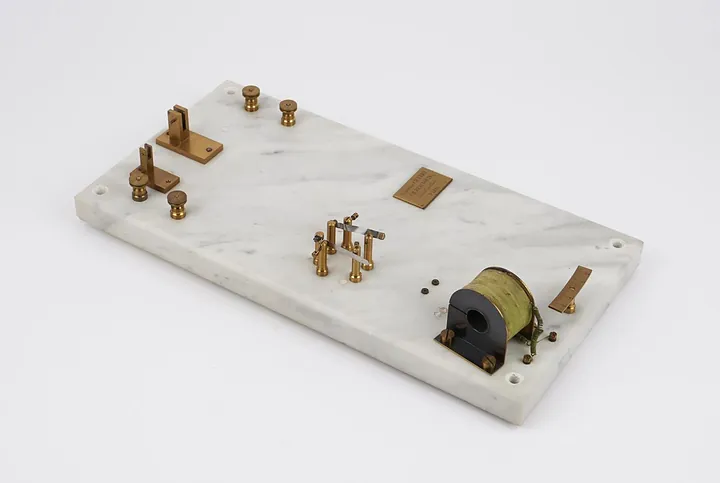
Fery's selfwound clock, with subsidiary pendulum for making contact, by Prof. Charles Fery and C. Beaudouin, Paris, France, 1902–1912.
Science Museum Group, London
Clocks · 1915–1925
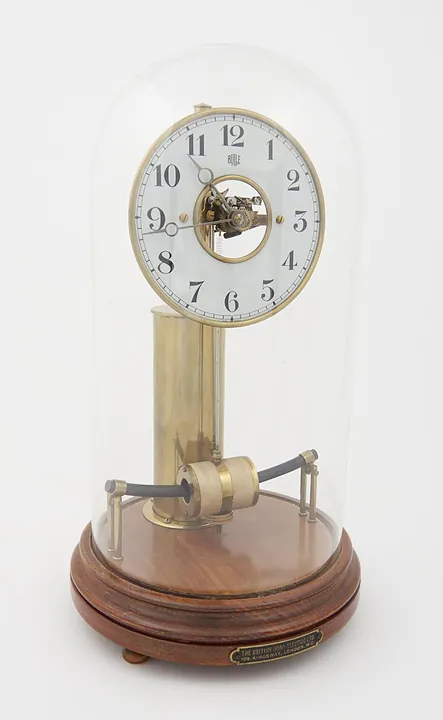
Type A 'Bulle' electric clock, no.6160, with glass shade, made in France but sold by British Horo-Electric Ltd., 109 Kingsway, London, WC, England, 1915–1925.
Science Museum Group, London
Clocks · c. 1921
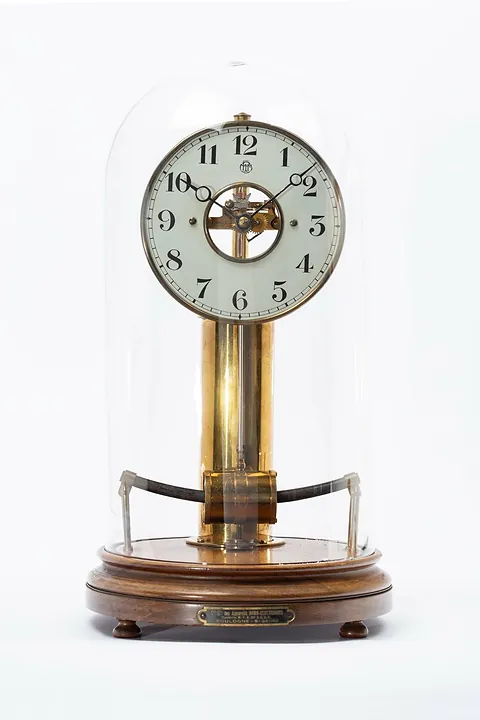
Table clock by Compagnie Générale des Appareils Horo-Electriques, France, c. 1921
German Clock Museum
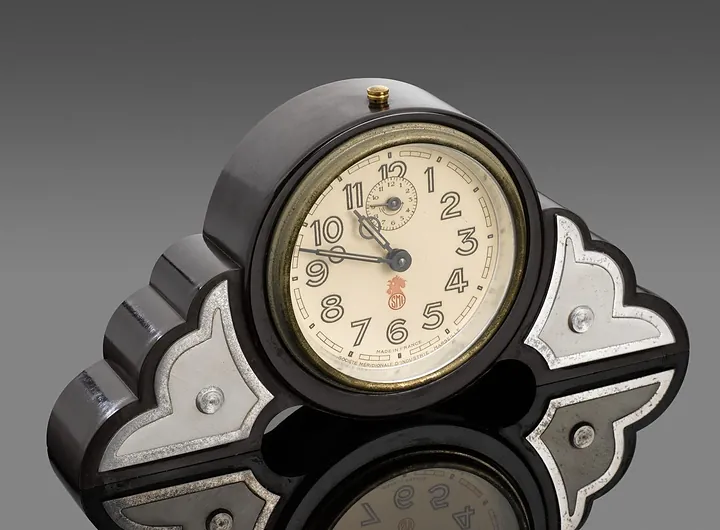
Clocks · 1930–1939
Clock by Societe Meridionale D'Industrie, France, 1930–1939
Science Museum Group, London
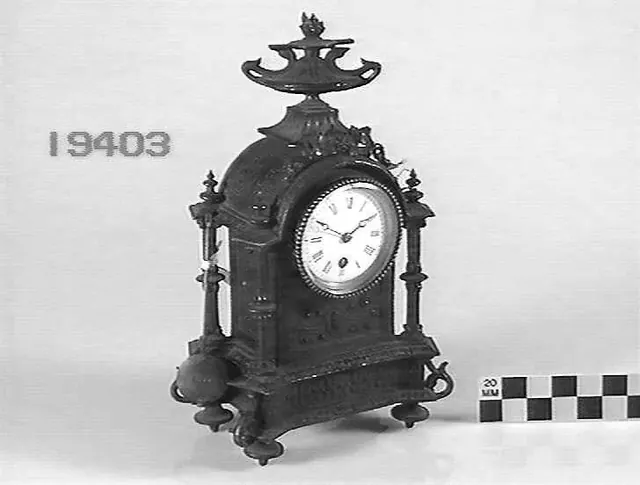
Clocks · c. 1900
Mantel Clock - France, c. 1900
Museums Victoria, Melbourne
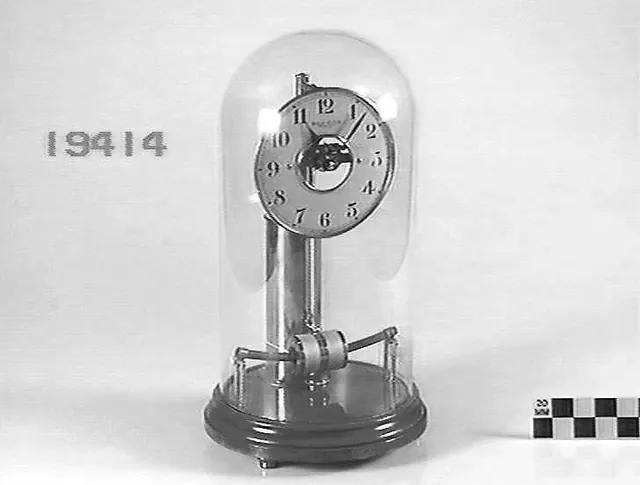
Clocks · c. 1925
Electric Clock - Bulle, France, c. 1925
Museums Victoria, Melbourne
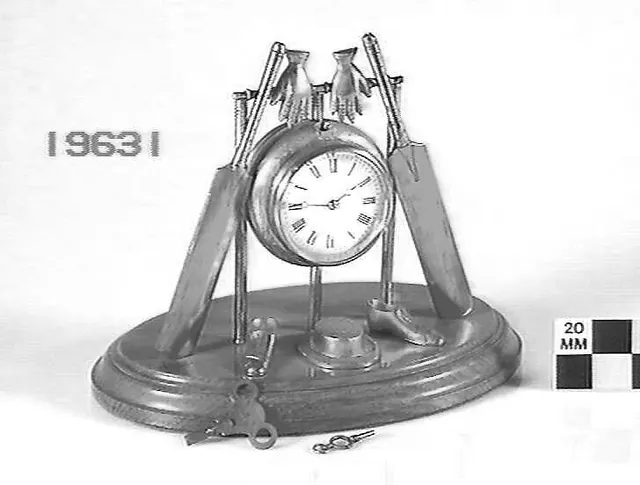
Clocks · c. 1900
Mantel Clock - France, c. 1900
Museums Victoria, Melbourne
Clocks · c. 1900
Mantel Clock - Le Roi, Paris, c. 1900
Museums Victoria, Melbourne