
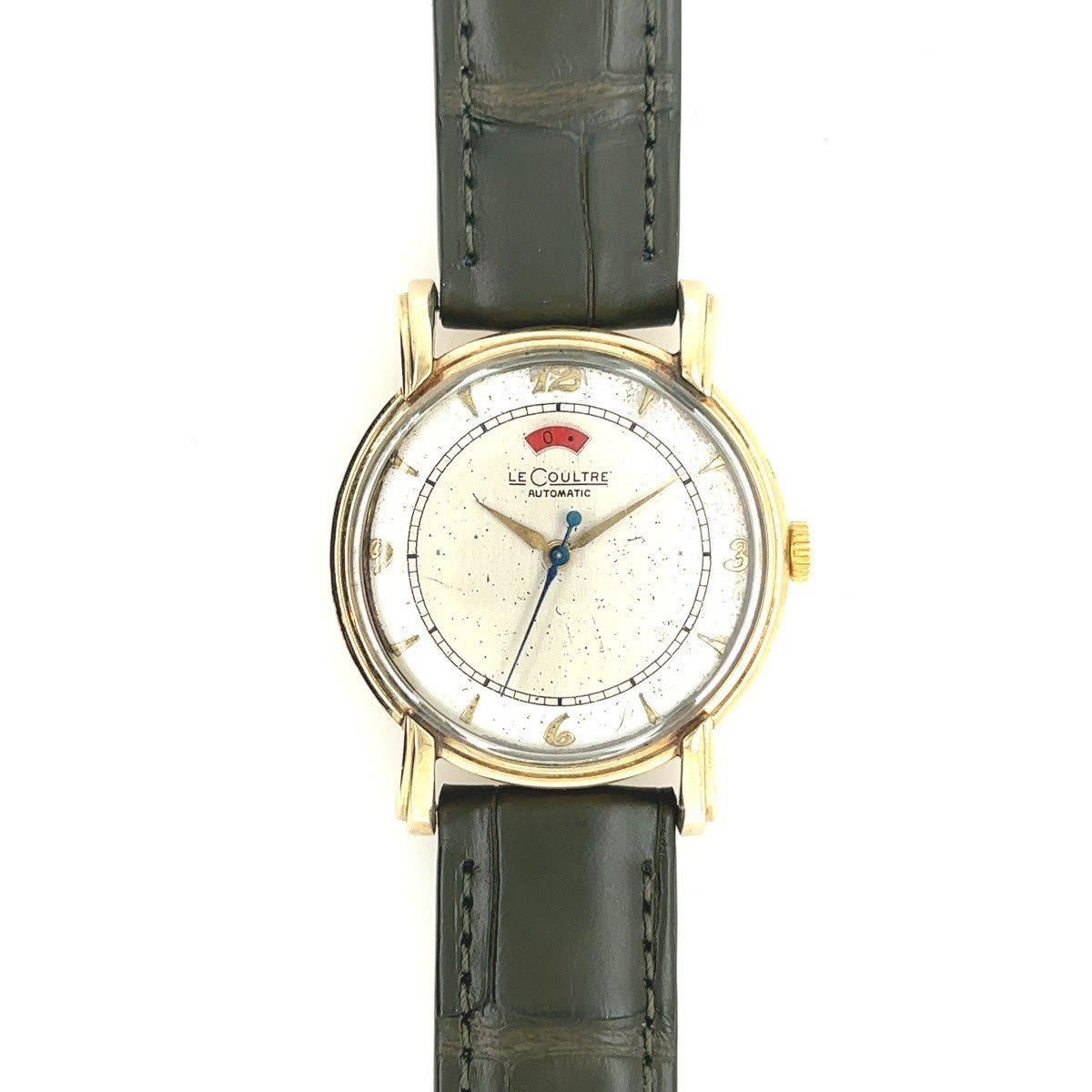
Wristwatches · Automatic wristwatch
LeCoultre & Cie Vintage Watch Power Reserve
- Maker / attribution
- LeCoultre & Cie (source attribution)
- Date
- 20th century
- Historical period
- Golden Age of Mechanical Watchmaking (1900 – 1945)
- Country of origin
- Switzerland
- Object type
- Automatic wristwatch
- Materials / technique
- 10 carat yellow gold plated
- Holding institution
- Mesure et Art du Temps
- Accession / object no.
- 1141443
- Credit line
- Mesure et Art du Temps
- Catalogue title (original)
- Proantic: Lecoultre & Cie Vintage Watch Power Reserve White Dial Gold (English)
View the source record ↗ (opens another website in a new tab)Suggest a correction
Record summary
Held and catalogued by Mesure et Art du Temps (object number 1141443), this is an automatic wristwatch attributed to LeCoultre & Cie, made in Switzerland, dated 20th century. The Atlas places it in the Golden Age of Mechanical Watchmaking period (1900 – 1945) of its Wristwatches collection. Materials and techniques recorded by the source: 10 carat yellow gold plated. The record is illustrated with 1 photograph.
Assembled from the source record's structured fields. Dates and attributions are given as the source states them; where a field is missing the Atlas leaves it blank rather than estimating.
Catalogue description
Original object description
Dating to the mid-20th century, this men's automatic wristwatch is attributed to LeCoultre & Cie and features a circular case described by the vendor as 10-carat yellow gold plate, mounted with grooved or notched fancy lugs and paired with a dark leather band marked as produced in France. The pale dial shows patina and localized spotting, encircled by an inner minute ring, dart markers, and Arabic numerals marking the 3, 6, 9, and 12 o'clock hours. Centrally fitted gold-colored hour and minute indicators are paired with a blued steel seconds hand, while a semi-circular window just beneath 12 o'clock reveals a red numbered disc indicating the power reserve. The face is marked "LE COULTRE AUTOMATIC". Vendor materials alternate between calling the brand LeCoultre and Jaeger LeCoultre, supply an unusual dial dimension of "cadran : 22 mm x 33 mm" despite its round shape, list the timepiece "En l'etat" (as is), and omit any movement caliber designations, internal case stamps, inspection photographs, or mechanical maintenance records.
Historical context
Golden Age of Mechanical Watchmaking (1900 – 1945)
The wristwatch displaces the pocket watch; waterproof cases, self-winding and grand complications.
The wristwatch overtook the pocket watch. Military use in the First World War, aviation, water-resistant cases (1926), automatic winding (1923–31), rectangular Art Deco designs and early chronographs and calendars defined the period.
Read the period in the timelineMore wristwatches from this periodEarlier: Industrial Revolution
Atlas type guide
Automatic (self-winding) watches
Self-winding watches use the wearer's motion to wind the mainspring. Abraham-Louis Perrelet and Breguet made 'perpétuelle' pocket watches with oscillating weights in the late eighteenth century, but the principle only became practical in the wristwatch. John Harwood patented a bumper automatic in 1923; Rolex's Perpetual rotor (1931) winding in one direction, and later bidirectional rotors (Eterna, Felsa Bidynator), established the modern form. Micro-rotors (Universal Genève, Buren) and peripheral rotors made automatic watches thinner.
What to look for
- A semicircular rotor turning 360° over the movement, or a 'bumper' weight that rebounds between springs.
- 'Automatic', 'Perpetual' or 'Self-winding' on the dial.
- A sealed screw-back case, since automatic watches are wound less often by the crown.
Dating clues
- Bumper automatics: 1923–c. 1955.
- Full rotors: from 1931 (Rolex); widespread after c. 1950.
- Micro-rotors: from 1954–1958.
General guidance written by the Atlas editors about this kind of object. It is not a statement about this particular piece; for that, rely on the source record above and on physical examination.
Related records

Wristwatches · 1931
Rolex 'Oyster Perpetual' rotor self-winding wrist-watch, lever escapement, in steel case with glass in back, Montres Rolex SA, Geneva, Switzerland, 1931
Science Museum Group, London

Wristwatches · 1900–1999
Wristwatch by Certina, Switzerland, 1900–1999
Nordic Museum Foundation
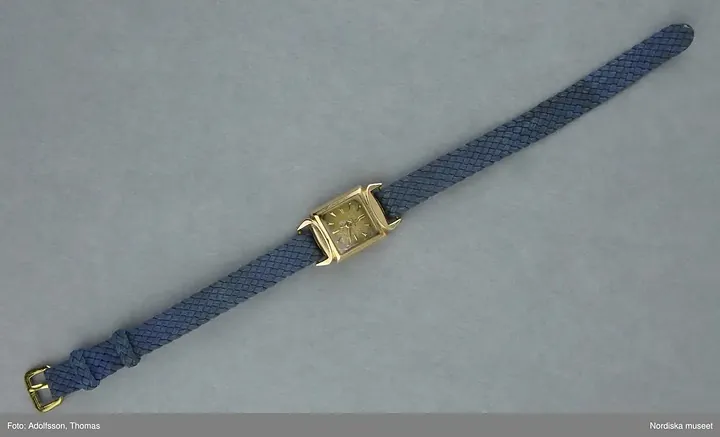
Wristwatches · 1900–1999
Wristwatch by Omega, Västerås, 1900–1999
Nordic Museum Foundation
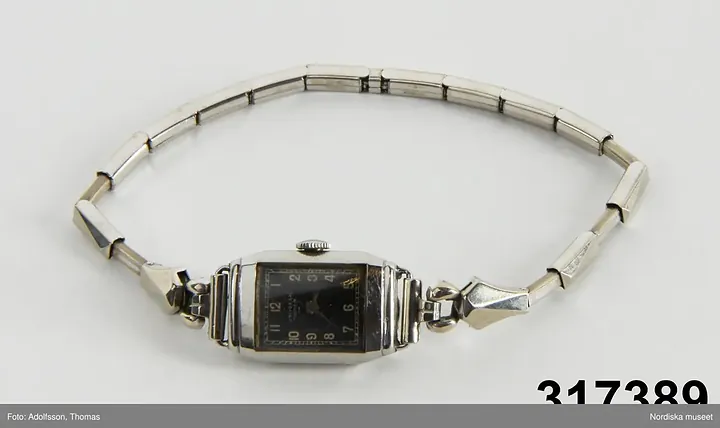
Wristwatches · 1900–1999
Wristwatch by Universal, Switzerland, 1900–1999
Nordic Museum Foundation
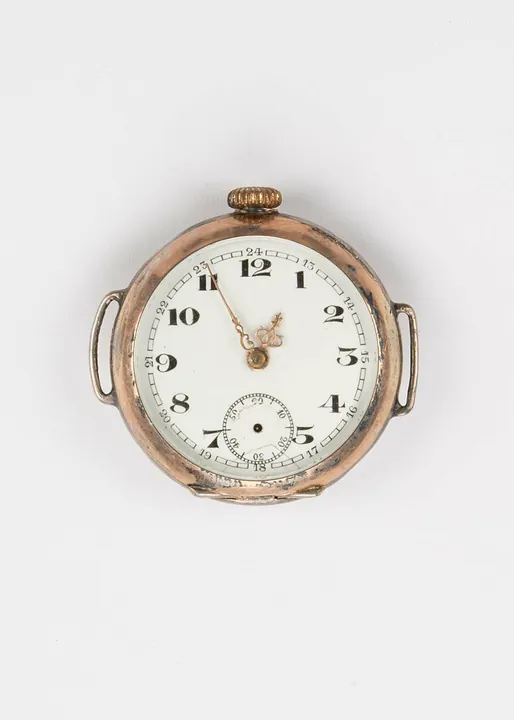
Wristwatches · c. 1900
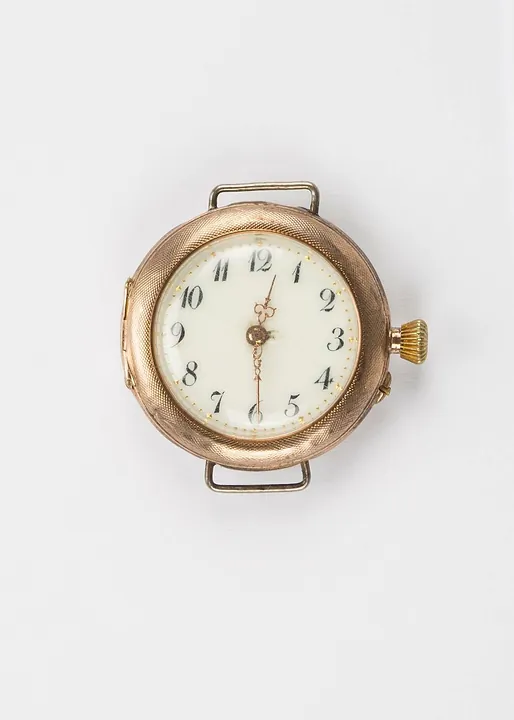
Wristwatch, probably Switzerland, c. 1900 (no. 57124)
German Clock Museum
Wristwatches · c. 1900
Wristwatch, probably Switzerland, c. 1900 (no. 57216)
German Clock Museum
Wristwatches · c. 1915
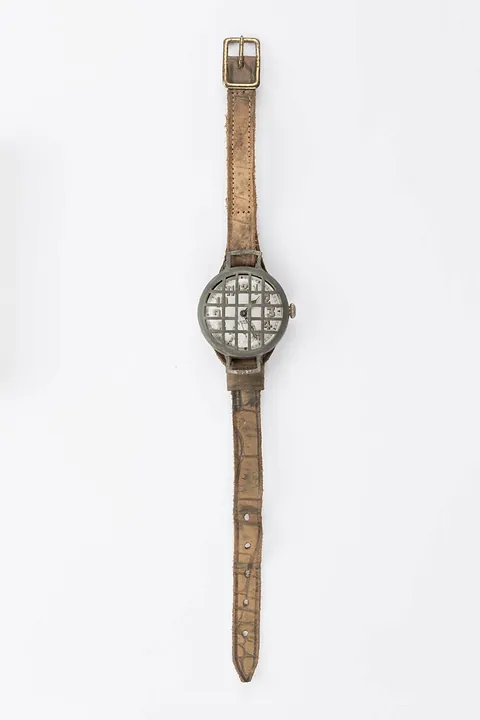
Wristwatch by S.S.und Co., Stauffer, Son und Co., Switzerland, c. 1915
German Clock Museum
Wristwatches · c. 1920s
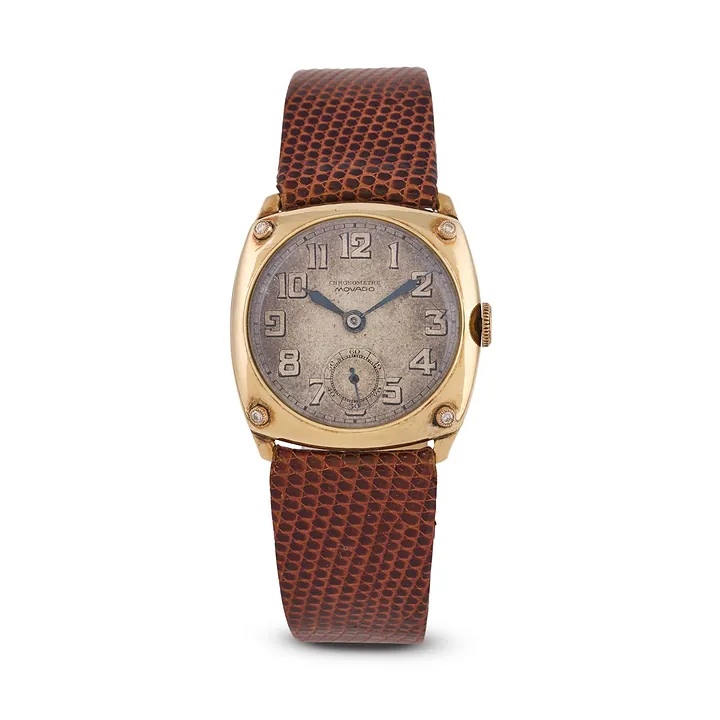
Movado Chronometre, ref. 41536, c. 1920s
Antiquorum auction archive, Geneva