
Pocket Watches · Pocket watch
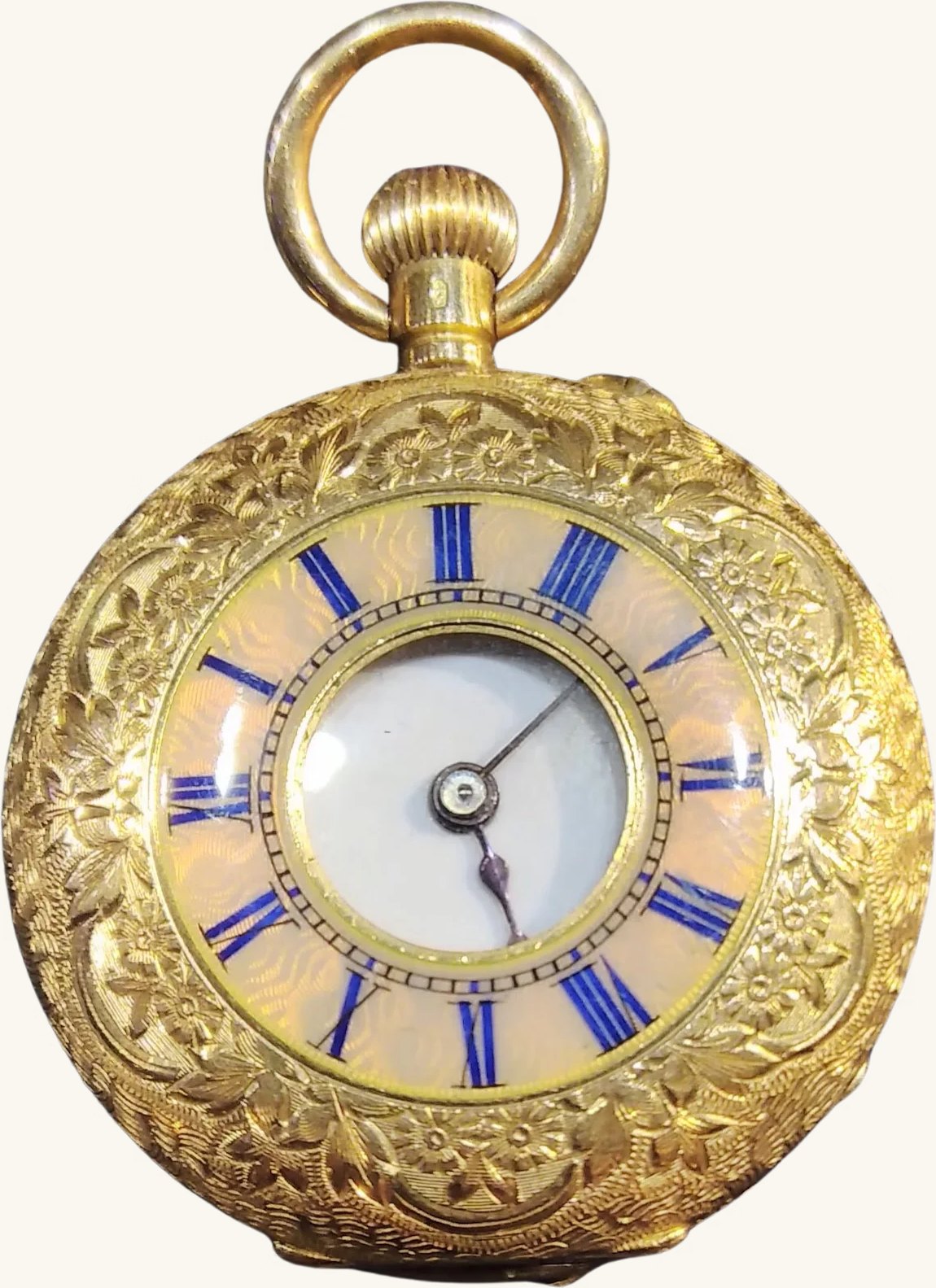
Lady’s Half Hunter Pocket Watch
- Maker / attribution
- Jay's (retailer)
- Date
- c. 1900
- Historical period
- Golden Age of Mechanical Watchmaking (1900 – 1945)
- Country of origin
- Unrecorded in source
- Object type
- Pocket watch
- Materials / technique
- gold
- Dealer
- WatchMuseum.org shop
- Stock no.
- Product 1357
- Credit line
- Dealer listing, WatchMuseum.org shop (product 1357)
- Catalogue title (original)
- Lady’s Half Hunter Pocket Watch (English)
View the source record (dealer listing) ↗ (opens another website in a new tab)Suggest a correction
Record summary
Catalogued by WatchMuseum.org shop (stock number Product 1357), this is a pocket watch by Jay's, dated c. 1900. The Atlas places it in the Golden Age of Mechanical Watchmaking period (1900 – 1945) of its Pocket Watches collection. Materials and techniques recorded by the source: gold. The record is illustrated with 5 photographs.
Assembled from the source record's structured fields. Dates and attributions are given as the source states them; where a field is missing the Atlas leaves it blank rather than estimating.
Catalogue description
Dealer description — WatchMuseum.org shop
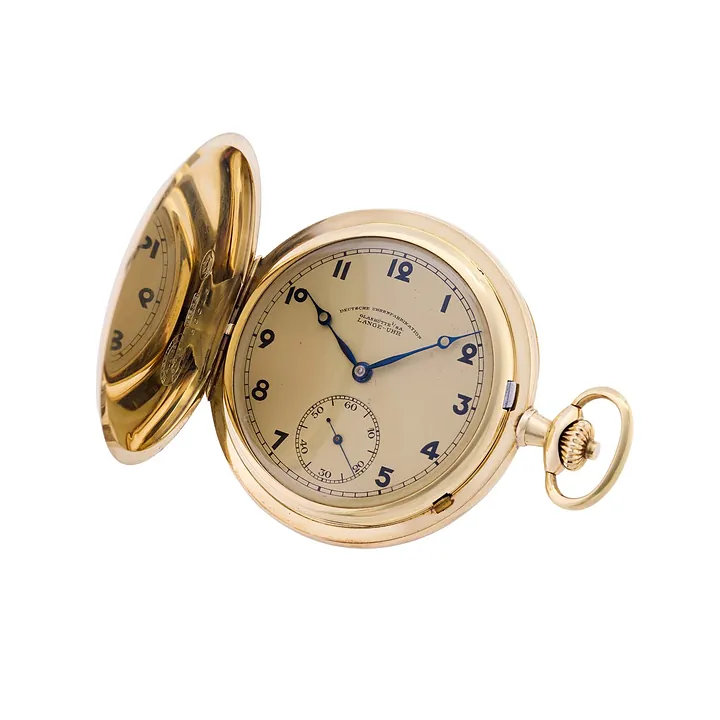
Step back in time with the exquisite Lady’s Half Hunter Pocket Watch from circa 1900, a true testament to the elegance and craftsmanship of the early 20th century. This stunning timepiece, crafted from 18ct gold, features a unique half hunter design that allows the user to read the time through a small opening on the front cover without fully opening the case. Created by Jay’s 366 Essex Road, Islington, a renowned watchmaker celebrated for producing timepieces for the Admiralty, this pocket watch is not only a marvel of horological artistry but also a piece of history. In perfect working order and meticulously preserved, this antique watch embodies timeless beauty and enduring value. Whether you are a collector or someone who appreciates the charm of historical artifacts, this lady’s half hunter pocket watch offers both functionality and a tangible connection to the past, making it a cherished addition to any collection. Here is a detailed description of an antique pocket watch from the early 1900s. This beautiful timepiece is a lady’s half hunter pocket watch made of 18ct gold. The front cover of the watch has a small opening which allows the user to read the time without fully opening the case. The watch was created by Jay’s 366 Essex Road, Islington, a prominent watchmaker who was known for producing timepieces for the Admiralty. The pocket watch is in perfect working order and has been well-preserved, showcasing its timeless beauty and value. Owning an antique pocket watch like this is not only a touchstone to the past and a work of art, but also a functional timepiece that can be used every day. If you are a collector or simply looking for a piece of history, this lady’s half hunter pocket watch is an excellent choice that you will cherish for years to come.
Historical context
Golden Age of Mechanical Watchmaking (1900 – 1945)
The wristwatch displaces the pocket watch; waterproof cases, self-winding and grand complications.
The pocket watch reached technical maturity and then began to give way to the wristwatch after the First World War. Complicated watches for collectors such as Henry Graves Jr. and James Ward Packard, railroad watches, and slim Art Deco dress watches are characteristic.
Read the period in the timelineMore pocket watches from this periodEarlier: Industrial Revolution
Atlas type guide
Hunter, half-hunter and open-face watches
In the nineteenth century the pocket watch case settled into a few standard forms. The hunter (French savonnette) has a hinged front lid protecting the crystal — reputedly for riders who could not risk broken glass — and is opened by pressing the crown or a push-piece. The half-hunter has a small window in the lid so the hands can be read when closed. The open-face (lépine) watch has no front cover, with the crown at 12; hunters normally carry the crown at 3.
Case types also changed with winding: key-wound watches gave way to keyless (stem-wound) mechanisms after Adrien Philippe's and others' designs of the 1840s, with pendant setting or lever setting.
What to look for
- Crown position relative to the seconds dial: at 3 for hunters, at 12 for open-face watches.
- Spring-loaded front cover with a push-piece in the pendant.
- Half-hunter chapter ring enamelled on the lid.
- Key holes in the inner dome (cuvette) versus keyless winding.
Dating clues
- Keyless winding spread after c. 1850 and became standard by c. 1890.
- English hallmarks inside gold and silver cases give the year of assay.
General guidance written by the Atlas editors about this kind of object. It is not a statement about this particular piece; for that, rely on the source record above and on physical examination.
Read next:Detached lever escapement
Related records
Pocket Watches · 1900–1999
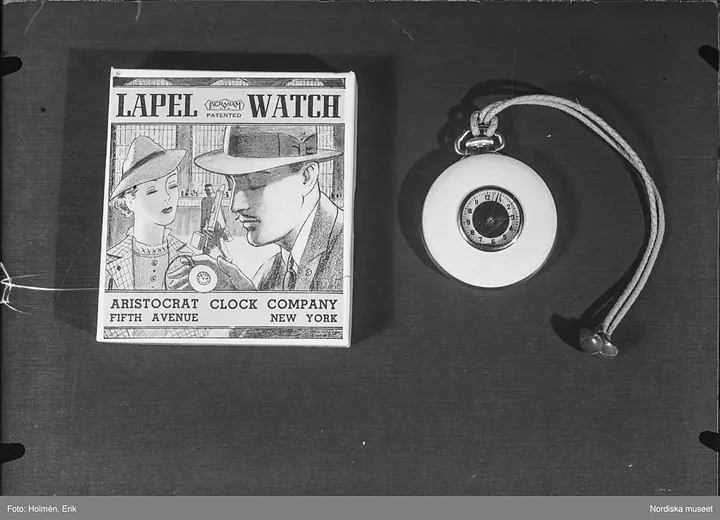
Lapel watch by Erik Holmén, 1900–1999
Nordic Museum Foundation
Pocket Watches · 1873–1930
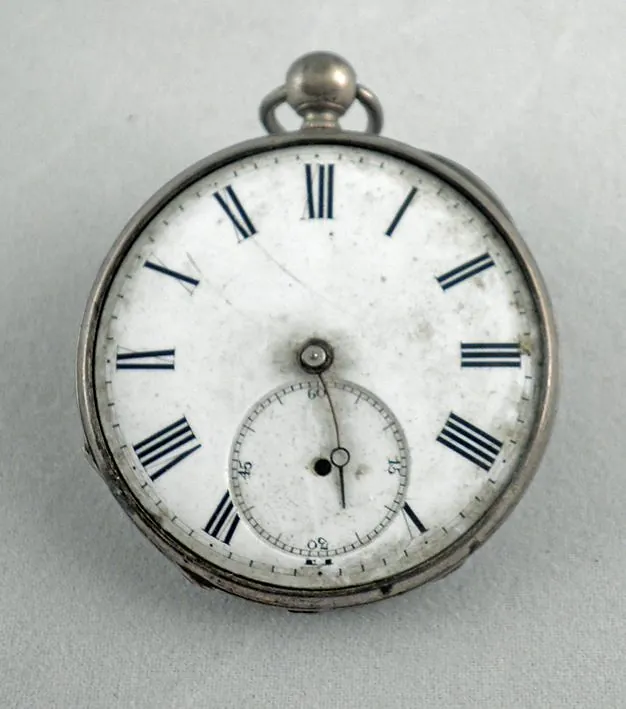
Pocket watch, Lilla Malma socken, 1873–1930
Sörmland Museum
Pocket Watches · 1880–1920
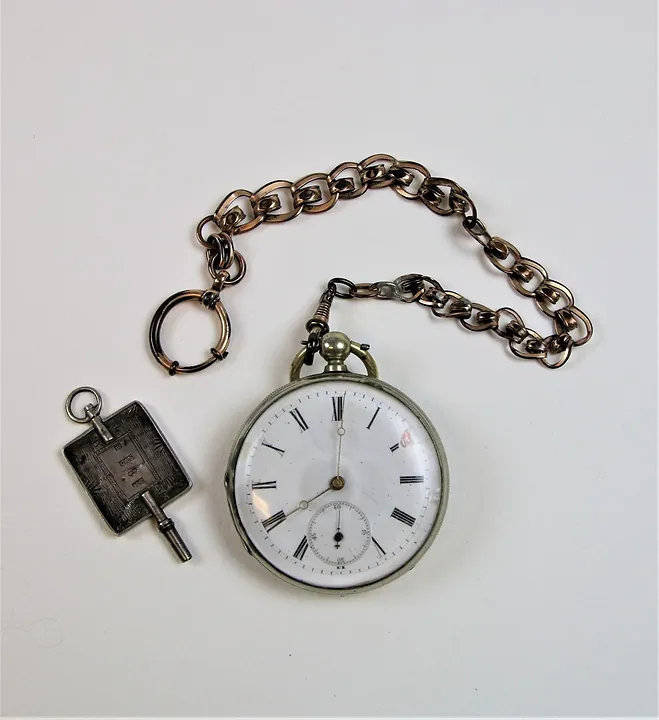
Pocket watch, Sweden, 1880–1920
Sörmland Museum
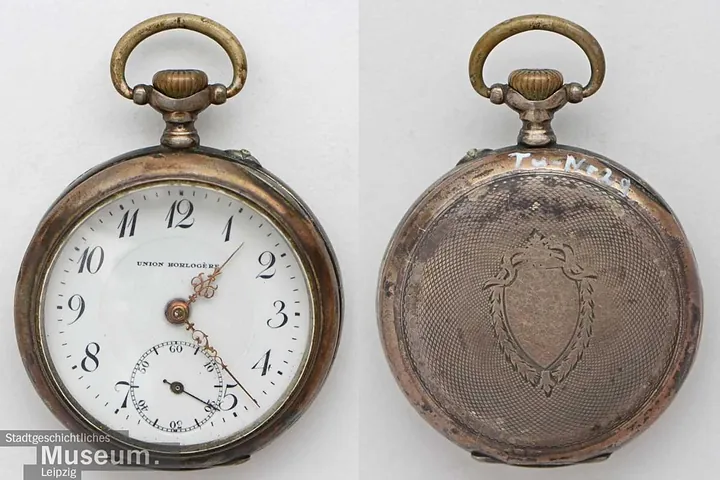
Pocket Watches · 1890–1910
Pocket watch by Union Horlogère, France, 1890–1910
Museum of City History Leipzig
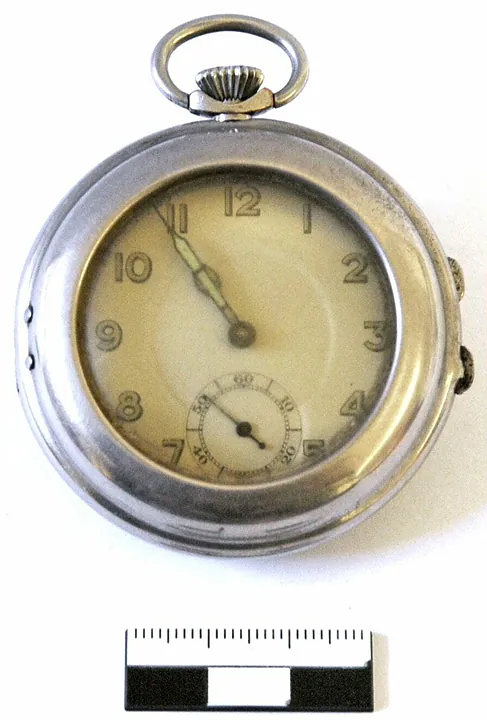
Pocket Watches · 1891–1945
Pocket watch, Germany, 1891–1945
Montanhistorisches Dokumentationszentrum
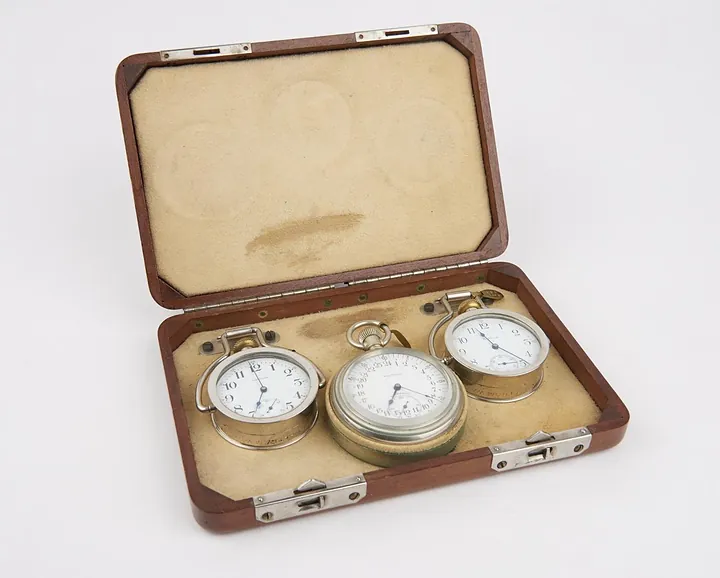
Pocket Watches · c. 1900
Pocket watch by American Waltham Watch Company, United States, c. 1900
Science Museum Group, London
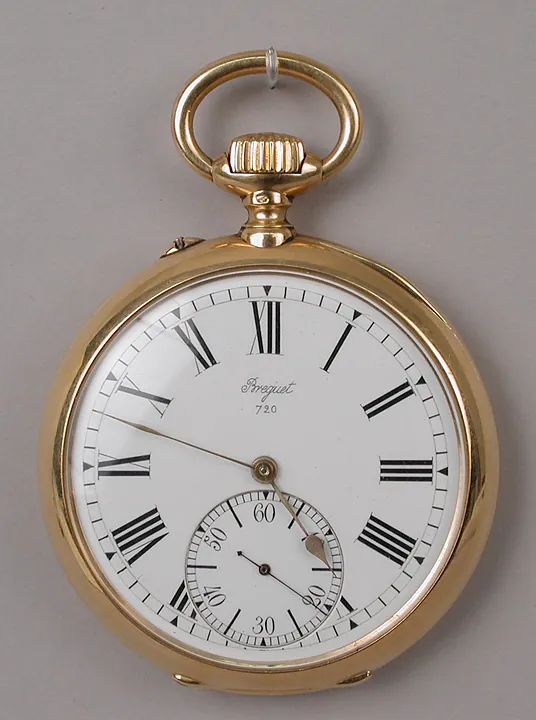
Pocket Watches · c. 1900
Pocket watch by Firm of Breguet et Fils, France, c. 1900
The Metropolitan Museum of Art, New York
Pocket Watches · c. 1900
A.Lange & Söhne pocket watch, c. 1900
Antiquorum auction archive, Geneva