
Wristwatches · Wristwatch
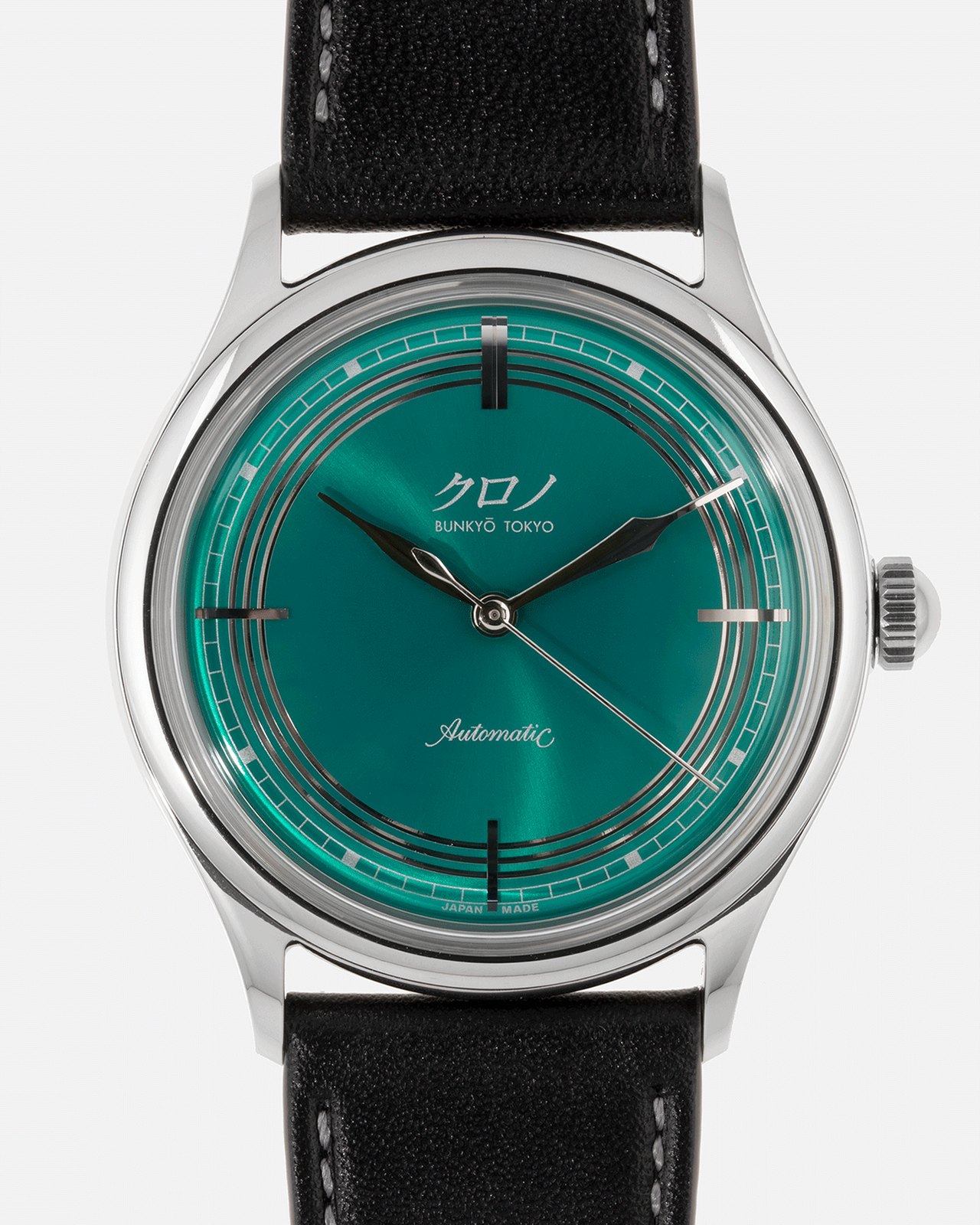
Kurono Mori Hajime Asaoka, 2020
- Maker / attribution
- Kurono (maker)
- Date
- 2020
- Historical period
- Contemporary Horology (2010 – Present)
- Country of origin
- Unrecorded in source
- Object type
- Wristwatch
- Dimensions
- Case 37 mm
- Stock no.
- Product 6554986643543
- Credit line
- Dealer listing, S.Song Watches (product 6554986643543)
- Catalogue title (original)
- Kurono Mori Hajime Asaoka (English)
View the source record (dealer listing) ↗ (opens another website in a new tab)Suggest a correction
Record summary
Catalogued by S.Song Watches (dealer), Seattle (stock number Product 6554986643543), this is a wristwatch by Kurono, dated 2020. The Atlas places it in the Contemporary Horology period (2010 – Present) of its Wristwatches collection. Recorded dimensions: Case 37 mm. The record is illustrated with 6 photographs.
Assembled from the source record's structured fields. Dates and attributions are given as the source states them; where a field is missing the Atlas leaves it blank rather than estimating.
Catalogue description
Dealer description — S.Song Watches
Founded in 2018 as a way for legendary Japanese watchmaker Hajime Asaoka to create serial production pieces, Kurono Tokyo stands as one of the most exciting microbrands in the market today. With his reputation as an exceptional watchmaker, Hajime Asaoka was famed for designing one-off timepieces in close collaboration with his clients. With demand growing, he decided to launch his own brand and create timepieces that would cater to those that wanted affordable watches that shared design language with his other once-off pieces. Rarity aside, the Mori was a sell-out thanks to the gorgeous design language it employs. Featuring a stunning metallic green sunburst dial that Hajime Asaoka picked himself, the Mori bounces between shades of viridian and emerald, to pine and forest green. Decorated with the immediately distinctive Kurono logo, applied indices at 3, 6, 9, and 12, and concentric engravings, the Mori’s dial is left uncluttered, to be enjoyed by the wearer uninterrupted. Returning the brand to “a state of contemplation and restfulness”, as the brand says, the Mori avoids complexities and takes refuge in its stunningly understated dial. Furthermore, it features a 37mm high-polished case and domed sapphire crystal, mimicking vintage design and adding another layer of dimension to the dial. Existing as a wonderfully unique and rare timepiece, the Mori is not a watch that appears for sale often and one that I am incredibly proud to have for sale.
Historical context
Contemporary Horology (2010 – Present)
Silicon components, connected watches, optical-lattice research clocks and a thriving independent scene.
Smartwatches became the world's best-selling watches, while mechanical watchmaking focuses on craft, innovation (silicon components, new escapements) and independent makers.
Read the period in the timelineMore wristwatches from this periodEarlier: Mechanical Renaissance
Atlas type guide
Wristwatches
Bracelet watches were worn by women from the early nineteenth century — Breguet made one for Caroline Murat, Queen of Naples, in 1810–12 — but the wristwatch only became a man's instrument with military use and aviation in the early twentieth century. Between the World Wars it overtook the pocket watch; the 1920s and 1930s brought rectangular Art Deco cases, water-resistant cases and the first automatic winding systems.
After 1945 the wristwatch became a carrier of identity — dress watches, sports and dive watches, chronographs, calendars — produced by Swiss, American, Japanese, German, Soviet and Chinese industries. The quartz revolution after 1969 and the mechanical renaissance since the 1990s, including the rise of independent watchmakers, complete the story.
What to look for
- The reference number (between the lugs or inside the case back) and serial number, the starting point for dating.
- The calibre: its maker and number are often stamped under the dial or on the bridge.
- Originality of dial, hands and crown — refinished ('redial') dials are common.
- Case material marks: 18K/750, 14K/585, stainless steel, gold-filled, plated.
Dating clues
- Wire-lug cases: before c. 1925.
- Water-resistant screw-down cases: from 1926.
- Quartz movements: from 1969; sapphire crystals widespread after c. 1980.
General guidance written by the Atlas editors about this kind of object. It is not a statement about this particular piece; for that, rely on the source record above and on physical examination.
Related records
Wristwatches · 2022
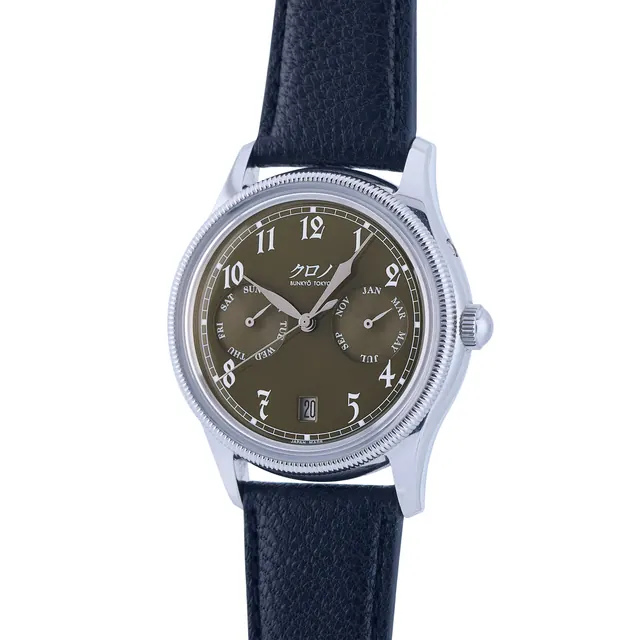
Kurono wristwatch, Calendrier, 2022
Antiquorum auction archive, Geneva
Wristwatches · c. 2020
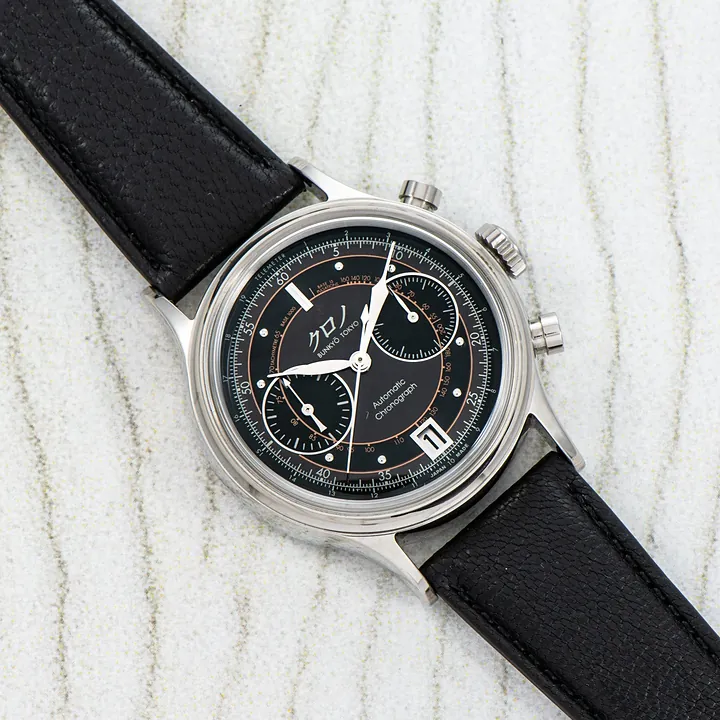
Kurono Chronograph 2, c. 2020
Analog/Shift (dealer), New York
Wristwatches · c. 2020
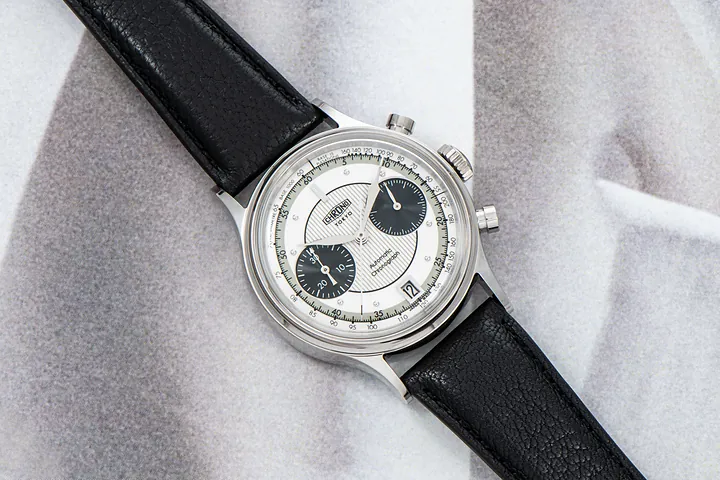
Kurono Chronograph 1, c. 2020
Analog/Shift (dealer), New York
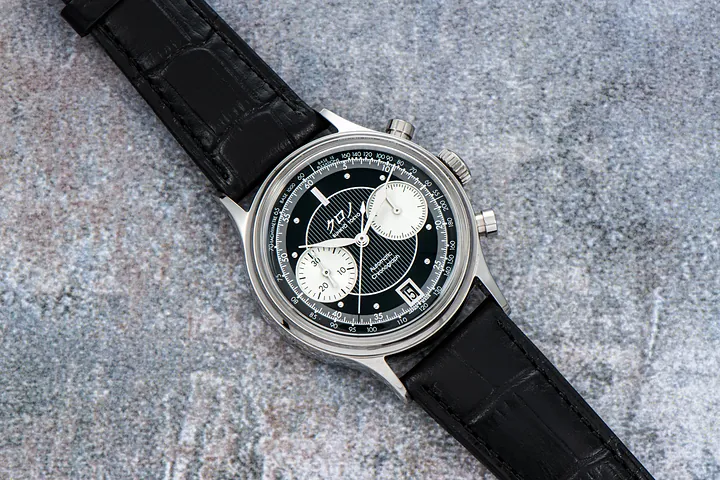
Wristwatches · c. 2020
Kurono Chronograph 1, c. 2020
Analog/Shift (dealer), New York
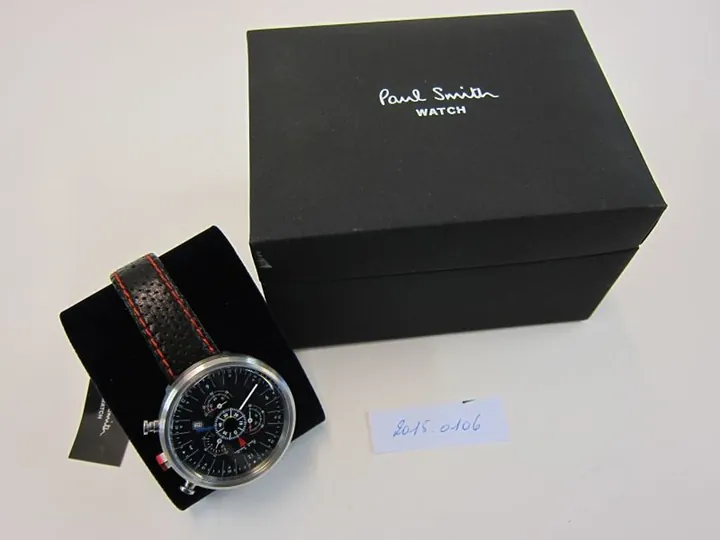
Wristwatches · 2010
Wristwatch, 2010
Modemuseum Hasselt
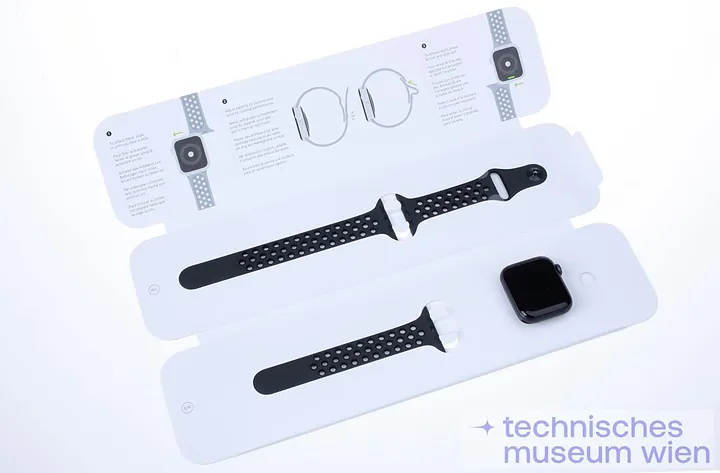
Wristwatches · 2018 (Series 4 released in September 2018; '1977' in the source is the model number A1977)
Apple Watch Series 4 (GPS, 40 mm, model A1977), 2018
Vienna Museum of Science and Technology
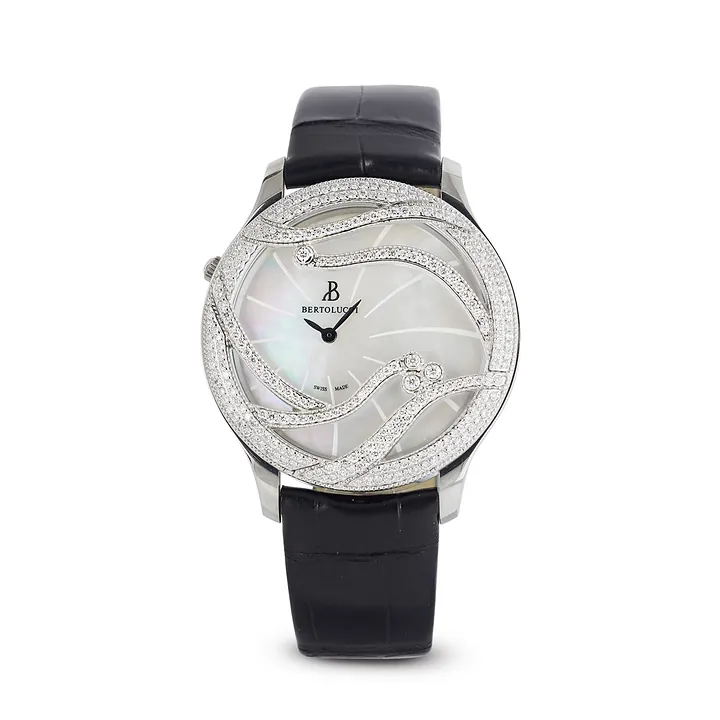
Wristwatches · c. 2010s
Bertolucci Stria III, ref. 11513.50.45.B88.6C1.501, c. 2010s
Antiquorum auction archive, Geneva
Wristwatches · c. 2010s
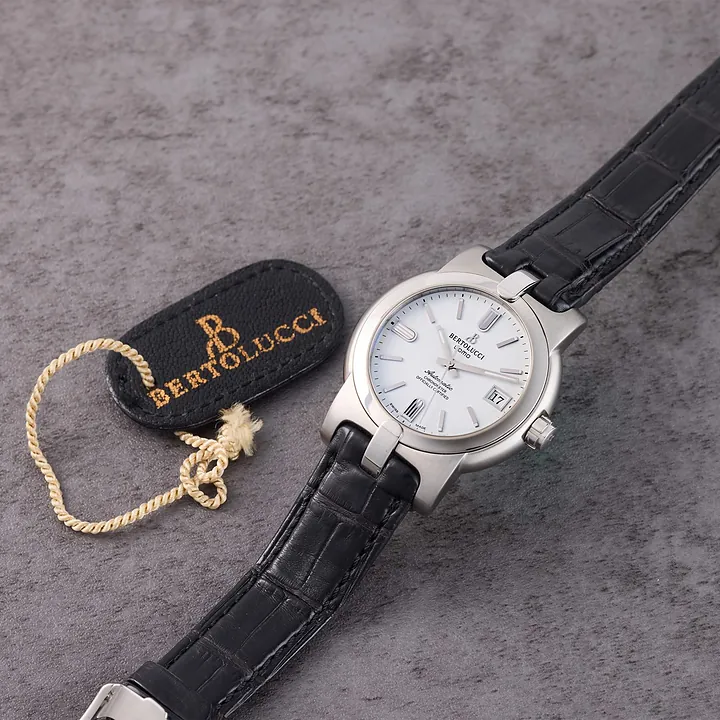
Bertolucci Uoma, ref. 824.51.41.10B, c. 2010s
Antiquorum auction archive, Geneva