
Wristwatches · Wristwatch
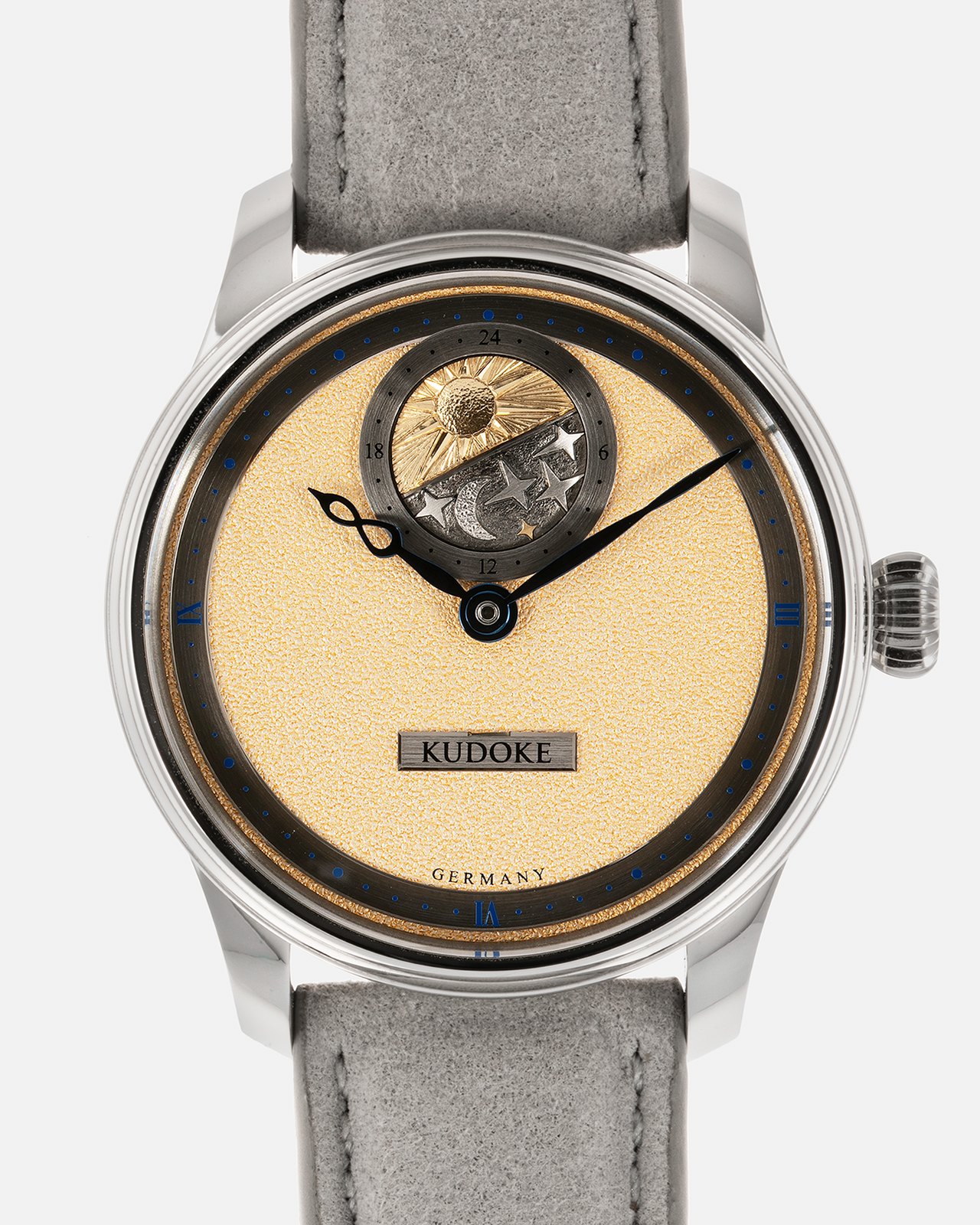
Kudoke K2 The Limited Edition 'British Heritage', 2022
- Maker / attribution
- Kudoke (maker)
- Date
- 2022
- Historical period
- Contemporary Horology (2010 – Present)
- Country of origin
- England
- Object type
- Wristwatch
- Dimensions
- Case 39 mm
- Stock no.
- Product 6978718859351
- Credit line
- Dealer listing, S.Song Watches (product 6978718859351)
- Catalogue title (original)
- Kudoke K2 The Limited Edition 'British Heritage' (English)
View the source record (dealer listing) ↗ (opens another website in a new tab)Suggest a correction
Record summary
Catalogued by S.Song Watches (dealer), Seattle (stock number Product 6978718859351), this is a wristwatch by Kudoke, made in England, dated 2022. The Atlas places it in the Contemporary Horology period (2010 – Present) of its Wristwatches collection. Recorded dimensions: Case 39 mm. The record is illustrated with 6 photographs.
Assembled from the source record's structured fields. Dates and attributions are given as the source states them; where a field is missing the Atlas leaves it blank rather than estimating.
Catalogue description
Dealer description — S.Song Watches
Hailing from the capital city of Dresden, the German watchmaker Stefan Kudoke began his watchmaking journey at a very young age. Before setting up his eponymous brand in 2008, he had several stints at Glashütte Original, Blancpain, Omega, Jaquet Droz, and Breguet. During the early days of Kudoke, Stefan greatly emphasized the brand’s German heritage and origin despite using only Unitas calibres at the time. In the years that followed, Stefan eventually went on and produced its very own first in-house calibre — the Kaliber 1, which is the beating heart of the timepiece that we have on offer here today — the Kudoke 2. Today, what lies before us is no mere Kudoke 2. This is the Kudoke 2 ‘British Heritage’ — a 30-piece limited edition variant made in collaboration with The Limited Edition UK, a prominent online retailer that carries some of the most exclusive independent brands the horological world has to offer. According to Kudoke, this limited edition seeks to pay deliberate homage to the enduring legacy of one of horology's trailblazers — Thomas Mudge, whose profound contributions to the advancement of chronometry found endorsement and support from famous German astronomer Hans Moritz von Brühl. As a testament to this historical connection, the watch is meticulously adorned with period finishing techniques and hands that draw inspiration from the distinctive style of Thomas Mudge himself, which we will discuss in detail below. When I first held this Kudoke 2 in my hands, I could not get over how gorgeous and charming the watch was in the metal. A closer look at its golden beige dial would reveal a masterful exercise of technical sophistication, design flourishes, and artistic expression. Particularly in this variant, the dial showcases an intricate grenage -style finish reminiscent of the frosted effect favoured by many English watchmakers in the mid-18th century. From certain angles, there is a certain hypnotic quality to it which allows it to interact subtly with different shades of lighting. The execution on all levels shown here on the dial is nothing short of exceptional. That said, the focal point here is the beautiful domed disc located at the 12 o ‘clock position. It is hand engraved, galvanized in gold, black, and white rhodium, and rotates in a 24-hour cycle that poetically depicts the sun, the moon, and stars as well as the day or the night. A discreet golden star, subtly reminiscent of The Limited Edition's logo, serves as an unobtrusive indicator of the current time of day. The surrounding chapter ring, satin-brushed and rhodiumised, showcases deep blue lacquered Roman numerals and a minute track, providing a nice little visual contrast. The steel hour and minute hands here are thermally blued and feature a Kudoke Handwerk signature ‘infinity’ motif, which is a very nice touch to such a simple yet elegant dial. As far as case size goes, the stainless-steel case of the Kudoke 2 measures 39mm in diameter by 10.7mm in thickness, which I find quite appropriate for modern wrist sizes given its unimposing stature. Turn the watch over and you will find the magnificent hand-wound Kaliber 1-24H greeting you in all of its glory beneath the exhibition case back. What makes this movement interesting is that it was inspired by 17 th -century horologist and clockmaker Thomas Mudge (who invented the lever escapement), which explains the elaborate hand-engraved floral flourishes found on the flat surfaces of the plates and the meticulous engraving on the balance cock and the gilt bridge. An absolute visual treat, if you ask me. It also showcases a nice fluted onion crown. Regarding technical performance, the Kaliber 1-24 runs a power reserve of approximately 46 hours when fully wound. All things considered, the Kudoke 2 is the type of watch that requires you to, in the words of John Mayer, “look closer, look closer still”. Only by looking closer will this understated work of art reveal to you its true beauty. To me, this is why watches from independent watchmakers are so special and exciting — the amount of attention given to the tiniest little details makes the watch a real pleasure to wear and experience. Limited to just 30 pieces worldwide, the Kudoke 2 'British Heritage' is a rare gem deserving of considerable attention from collectors. Needless to say, every element found on the watch, from the finishing to the overall design is executed to a very high level. Undeniably, this is a truly special timepiece that reverently honors the profound horological connection between Saxony and Great Britain.
Historical context
Contemporary Horology (2010 – Present)
Silicon components, connected watches, optical-lattice research clocks and a thriving independent scene.
Smartwatches became the world's best-selling watches, while mechanical watchmaking focuses on craft, innovation (silicon components, new escapements) and independent makers.
Read the period in the timelineMore wristwatches from this periodEarlier: Mechanical Renaissance
Atlas type guide
Wristwatches
Bracelet watches were worn by women from the early nineteenth century — Breguet made one for Caroline Murat, Queen of Naples, in 1810–12 — but the wristwatch only became a man's instrument with military use and aviation in the early twentieth century. Between the World Wars it overtook the pocket watch; the 1920s and 1930s brought rectangular Art Deco cases, water-resistant cases and the first automatic winding systems.
After 1945 the wristwatch became a carrier of identity — dress watches, sports and dive watches, chronographs, calendars — produced by Swiss, American, Japanese, German, Soviet and Chinese industries. The quartz revolution after 1969 and the mechanical renaissance since the 1990s, including the rise of independent watchmakers, complete the story.
What to look for
- The reference number (between the lugs or inside the case back) and serial number, the starting point for dating.
- The calibre: its maker and number are often stamped under the dial or on the bridge.
- Originality of dial, hands and crown — refinished ('redial') dials are common.
- Case material marks: 18K/750, 14K/585, stainless steel, gold-filled, plated.
Dating clues
- Wire-lug cases: before c. 1925.
- Water-resistant screw-down cases: from 1926.
- Quartz movements: from 1969; sapphire crystals widespread after c. 1980.
General guidance written by the Atlas editors about this kind of object. It is not a statement about this particular piece; for that, rely on the source record above and on physical examination.
Read next:Identification Centre
Related records
Wristwatches · 2021
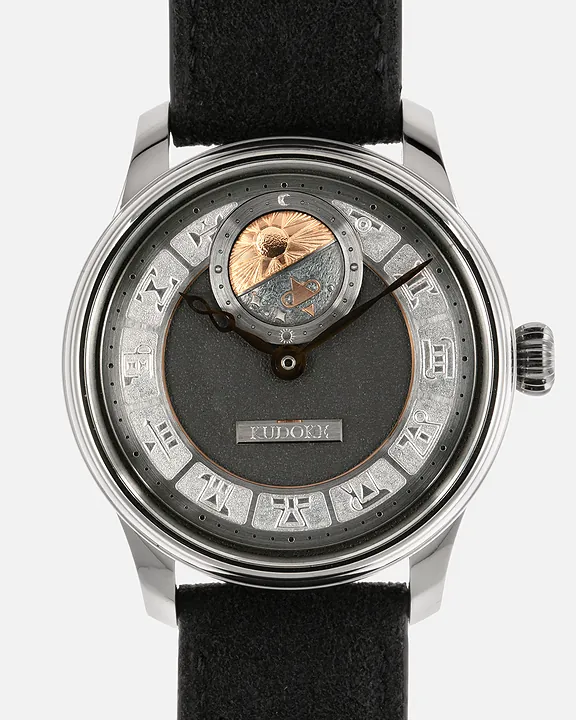
Kudoke K2 Zodiac SJX, 2021
S.Song Watches (dealer), Seattle
Wristwatches · 2023
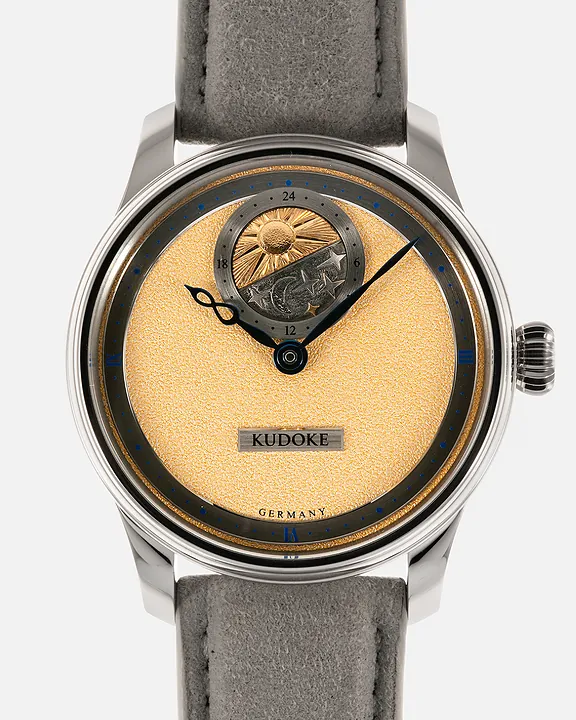
Kudoke K2 The Limited Edition 'British Heritage', 2023
S.Song Watches (dealer), Seattle
Wristwatches · 2022
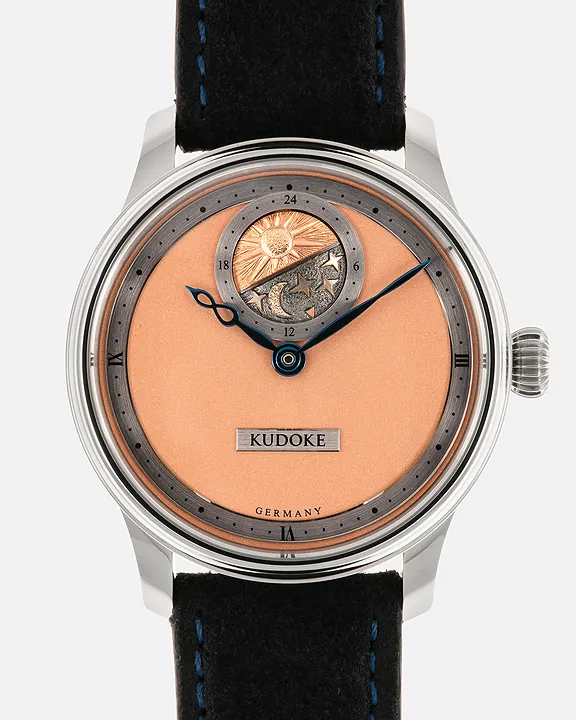
Kudoke K2 Salmon Engraved Movement, 2022
S.Song Watches (dealer), Seattle
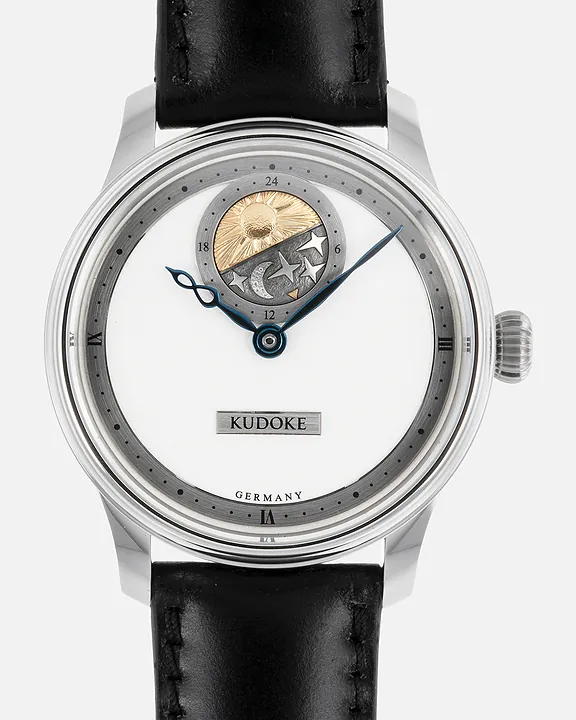
Wristwatches · 2022
Kudoke K2, 2022
S.Song Watches (dealer), Seattle
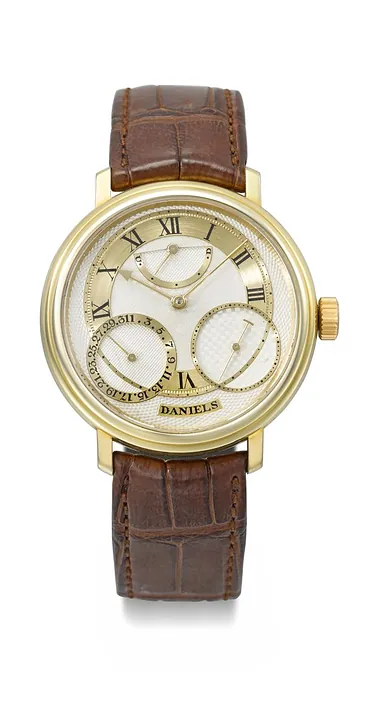
Wristwatches · 2010
Wristwatch by Roger W Smith and George Daniels, 2010
Science Museum Group, London
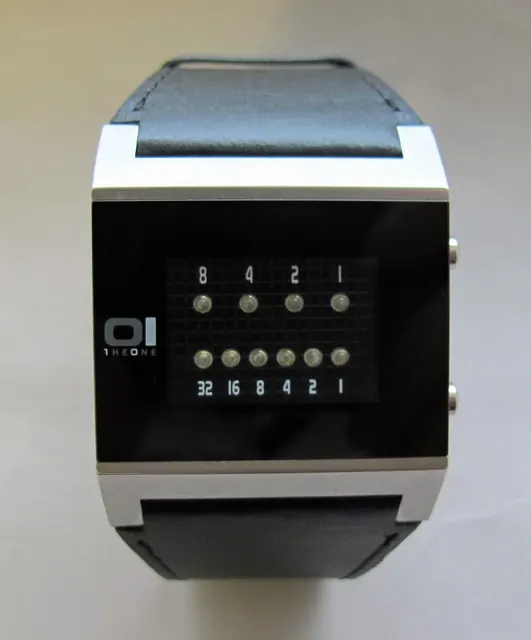
Wristwatches · c. 2010 (uncertain)
Quartz Wristwatch with LED binary display
British Museum
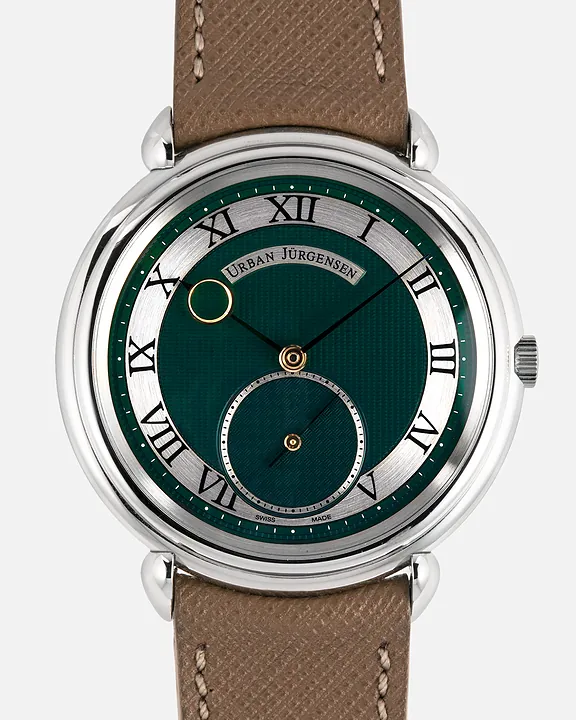
Wristwatches · 2020
Urban Jurgensen Big 8 London Edition, 2020
S.Song Watches (dealer), Seattle
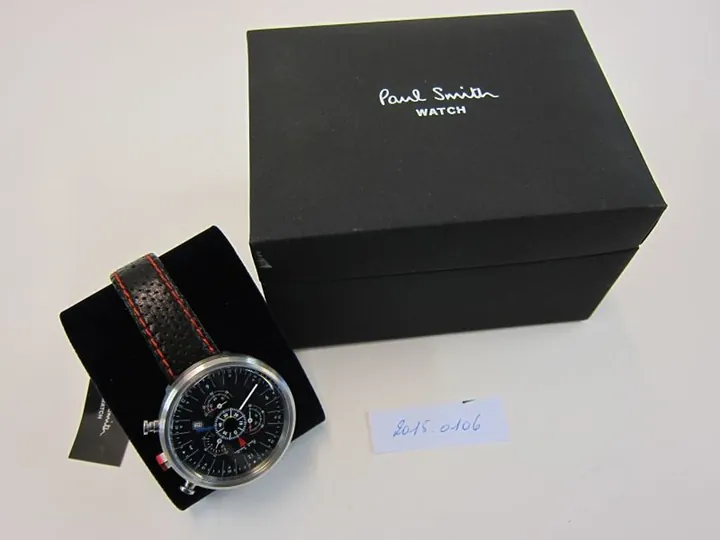
Wristwatches · 2010
Wristwatch, 2010
Modemuseum Hasselt