
Clocks · Aircraft clock
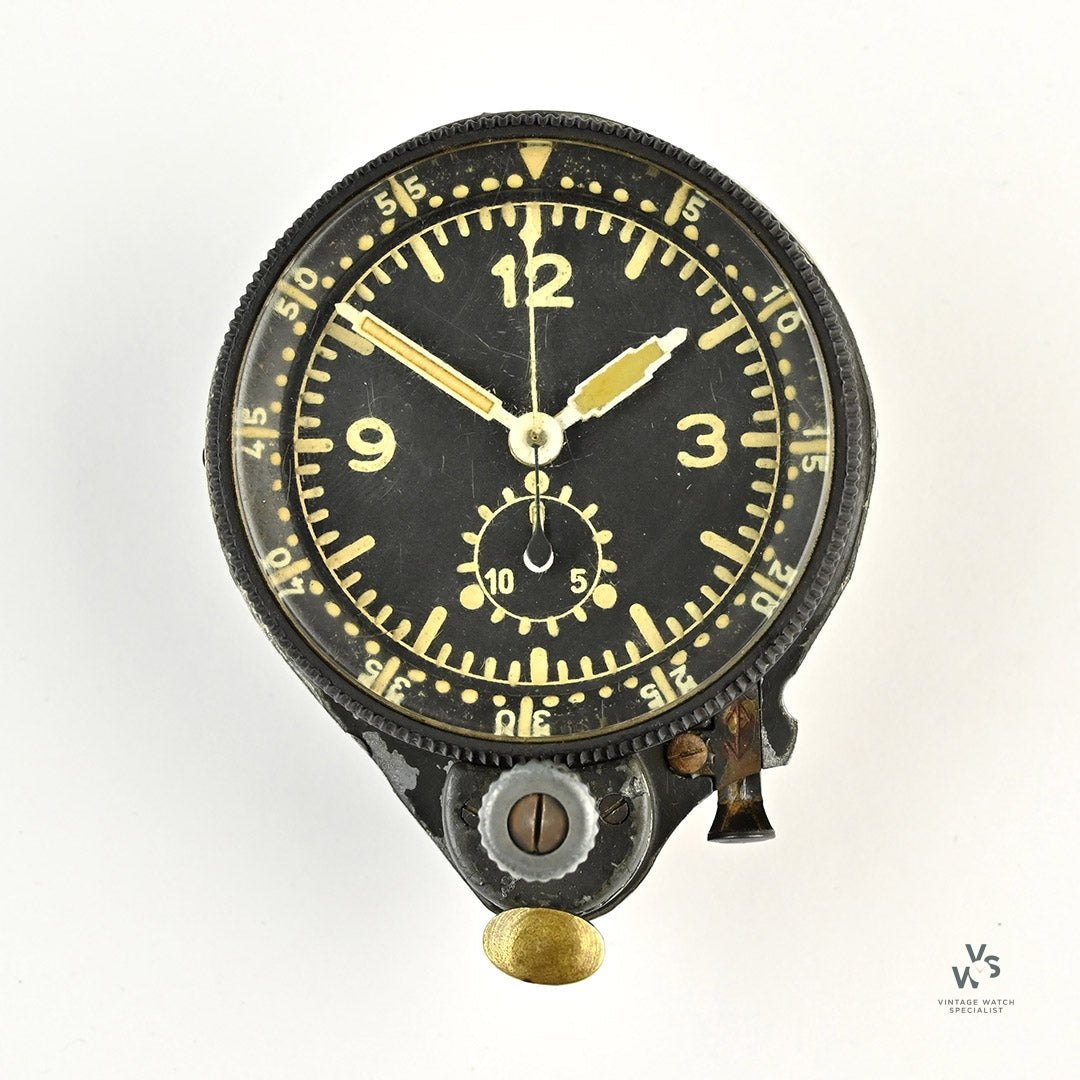
Junghans 30 BZ WW2 Luftwaffe Military Aircraft Clock, circa 1940s
- Maker / attribution
- Junghans (maker)
- Date
- c. 1940s
- Historical period
- Golden Age of Mechanical Watchmaking (1900 – 1945)
- Country of origin
- Germany
- Object type
- Aircraft clock
- Dimensions
- Case 58 mm
- Stock no.
- vws2055
- Credit line
- Dealer listing, Vintage Watch Specialist (vws2055)
- Catalogue title (original)
- Junghans 30 BZ WW2 Luftwaffe Military Aircraft Clock - c.1940s (English)
View the source record (dealer listing) ↗ (opens another website in a new tab)Suggest a correction
Record summary
Catalogued by Vintage Watch Specialist (dealer), United Kingdom (stock number vws2055), this is an aircraft clock by Junghans, made in Germany, dated c. 1940s. The Atlas places it in the Golden Age of Mechanical Watchmaking period (1900 – 1945) of its Clocks collection. Recorded dimensions: Case 58 mm. The record is illustrated with 6 photographs.
Assembled from the source record's structured fields. Dates and attributions are given as the source states them; where a field is missing the Atlas leaves it blank rather than estimating.
Catalogue description
Dealer description — Vintage Watch Specialist
A Fantastically Preserved WW2 Junghans 30 BZ WW2 Luftwaffe Aircraft Clock, Recently Serviced By Our Specialist Military Watchmaker. German watch and clock manufacturer Junghans has a rich and deep history that spans 160 years. Founded in 1861 by Erhard Junghans and his brother-in-law, the company was first a manufacturer of clock parts before becoming the clock and watchmaker it's known as today. It wasn't until 1866 that Junghans produced its first complete timepiece, from there growing into a horological powerhouse. Junghans have a long history with the German airforce, creating military timepieces known for their precision and durability. What’s On Offer Here we have a fantastic WWII German aircraft clock by Junghans - world-renowned clockmakers, with a 58mm circular black dial boasting luminous Arabic numerals, hands and subsidiary seconds dial. It is in remarkably good order given its age and intended use - these types of dashboard clocks were p robably used by a pilot of a Heinkel HE 111 bomber. There has been some deterioration of the paintwork on the case, however, this is only to be expected from such an antique item and takes nothing away from its charm and functionality which includes a 60-second, operated by the brass pusher below the counter, and a 15-minute sub counter. There is also a serial number - 642634, engraved on the rear of the case. This clock has just returned from our master clock and watchmaker having had a complete overhaul and a new balance staff fitted, so you should have no issues with it for the foreseeable years! This would make a wonderful desk or dashboard clock for any military or classic car enthusiast.
Historical context
Golden Age of Mechanical Watchmaking (1900 – 1945)
The wristwatch displaces the pocket watch; waterproof cases, self-winding and grand complications.
Between 1900 and 1945 clocks were electrified: master-clock systems ran factories and offices, synchronous mains clocks entered homes, and the Shortt free-pendulum clock set new standards of accuracy before the first quartz clocks (1927). Art Deco design reshaped mantel and table clocks.
Read the period in the timelineMore clocks from this periodEarlier: Industrial Revolution
Atlas type guide
Domestic clocks
A clock combines four systems: a source of power (falling weight, coiled spring, or later electricity), a gear train that divides time, an escapement and oscillator that regulate it (foliot, pendulum or balance), and an indicating system of dial and hands or a bell. Its history runs from the large iron weight-driven clocks of the late thirteenth century to Renaissance spring-driven table clocks, the pendulum revolution of 1656, the factory clocks of the nineteenth century and electric and quartz clocks of the twentieth.
Domestic clocks also reflect regional furniture and decorative traditions — English longcase and bracket clocks, French pendules, Viennese regulators, Black Forest and American shelf clocks — and therefore record changing tastes as much as technical progress.
What to look for
- How the clock is powered: weights, spring barrel, fusee, electric coil.
- The oscillator: foliot, short pendulum, long seconds pendulum or balance.
- Whether it strikes: hour only (count wheel) or hours and quarters (rack striking).
- The maker or retailer's name on dial and movement, and any factory trademarks.
- Signs of alteration — replaced dials, converted escapements, 'married' cases.
Dating clues
- Before 1656 clocks used foliots or balances; after, most domestic clocks have pendulums.
- Anchor escapements spread after c. 1670; minute hands became common at the same time.
- Factory production in America and Germany transformed prices after c. 1840.
General guidance written by the Atlas editors about this kind of object. It is not a statement about this particular piece; for that, rely on the source record above and on physical examination.
Related records
Clocks · c. 1955
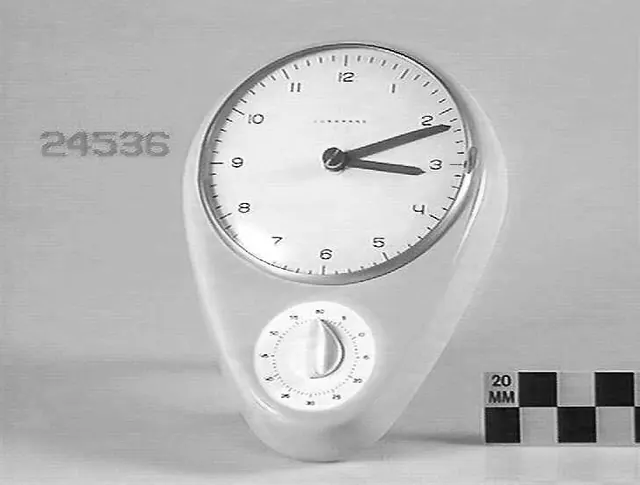
Electric Clock - Junghans, 'Electora', c. 1955
Museums Victoria, Melbourne
Clocks · 1956
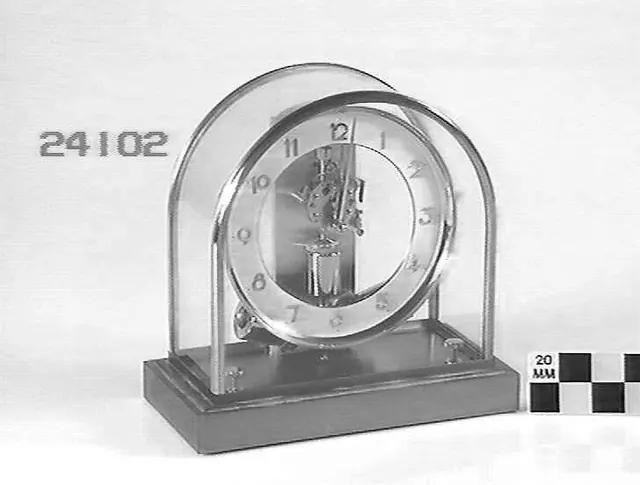
Electric Clock - Junghans, 'ATO, Germany, 1956
Museums Victoria, Melbourne
Clocks · 1888–1900
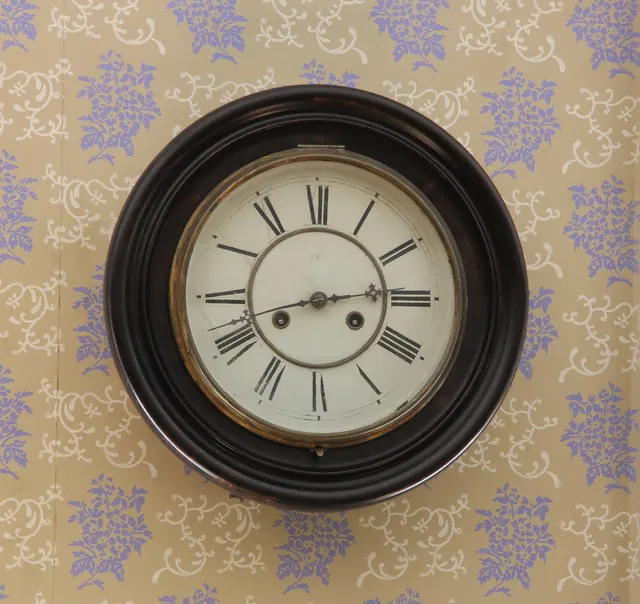
Clock by Junghans, Sweden, 1888–1900
Skansen
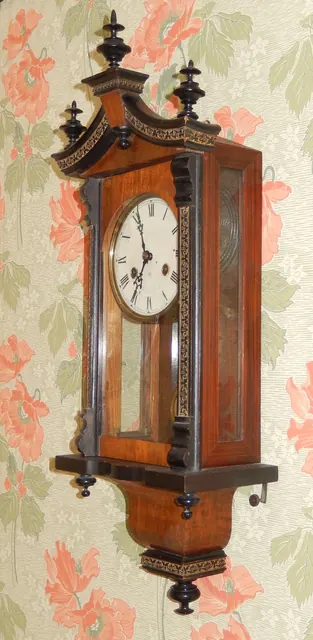
Clocks · 1890–1910
Clock by Junghans, Sweden, 1890–1910
Skansen
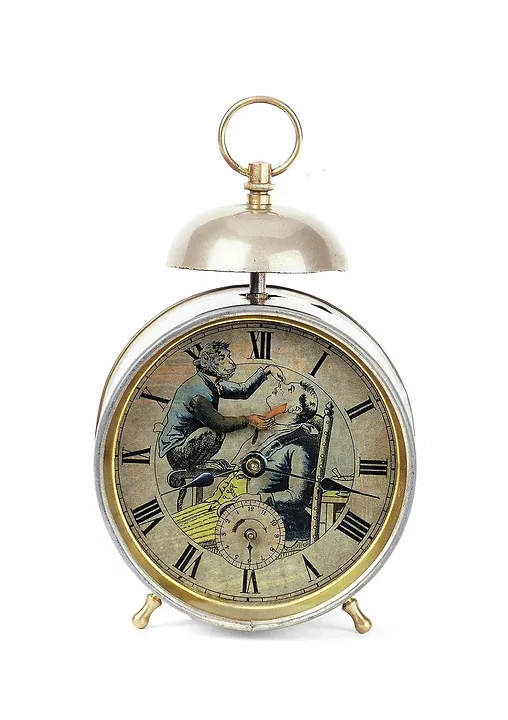
Clocks · c. 1900
Alarm clock by Union Clock Company, Germany, c. 1900
German Clock Museum
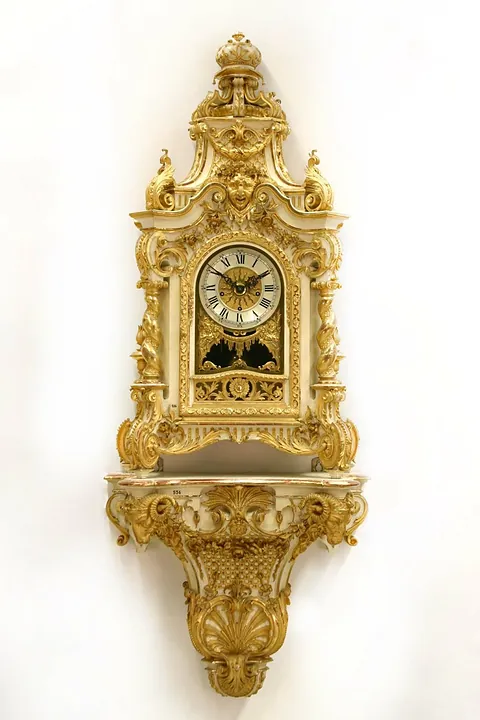
Clocks · 1900
Clock by Josef Münzer, Germany, 1900
German Clock Museum
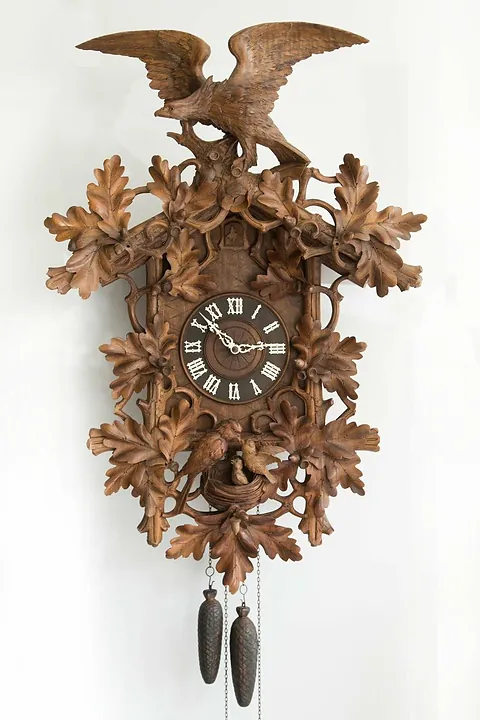
Clocks · c. 1900
Cuckoo / black forest clock by Gebr. Lehnis, Germany, c. 1900
German Clock Museum
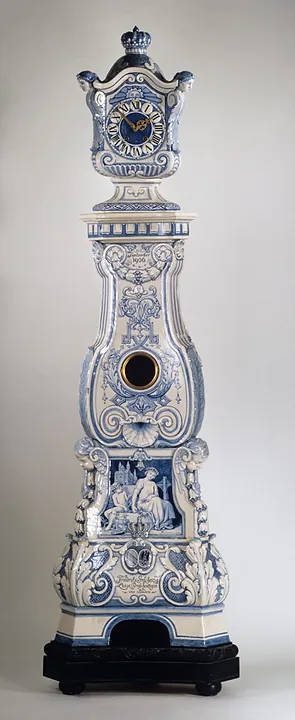
Clocks · 1900–1999
Longcase clock by Staatliche Majolika-Manufaktur Karlsruhe, Germany, 1900–1999
Badisches Landesmuseum Karlsruhe