
Pocket Watches · Pendant watch
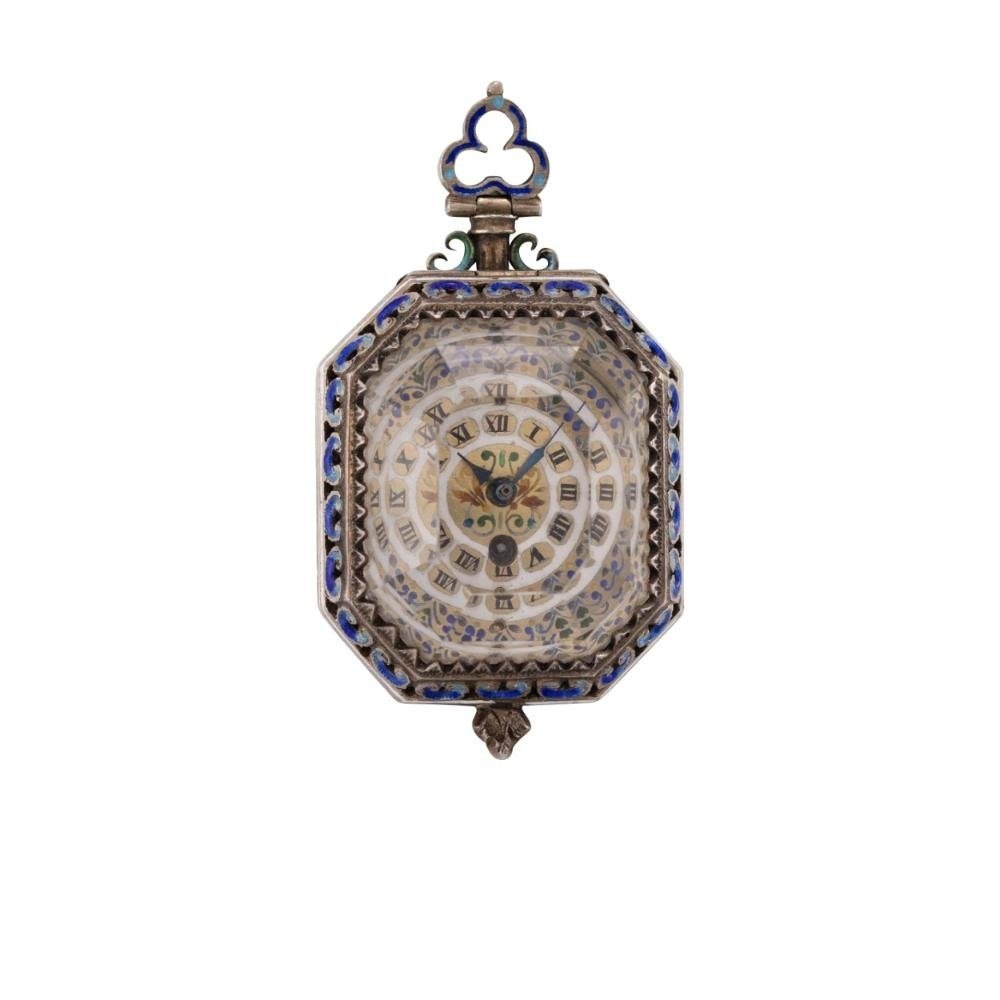
Johann Holtzmann Neo-Renaissance Pendant Watch
- Maker / attribution
- Johann Holtzmann (source attribution)
- Date
- c. 1870
- Historical period
- Industrial Revolution (1850 – 1900)
- Country of origin
- Vienna
- Object type
- Pendant watch
- Dimensions
- 33 x 38 mm
- Holding institution
- Auktionen Dr. Crott / Invaluable
- Accession / object no.
- 6289a78d79
- Credit line
- Auktionen Dr. Crott / Invaluable
- Catalogue title (original)
- Johann Holtzmann - Neo-Renaissance (English)
View the source record ↗ (opens another website in a new tab)Suggest a correction
Record summary
Held and catalogued by Auktionen Dr. Crott / Invaluable (object number 6289a78d79), this is a pendant watch attributed to Johann Holtzmann, made in Vienna, dated c. 1870. The Atlas places it in the Industrial Revolution period (1850 – 1900) of its Pocket Watches collection. Recorded dimensions: 33 x 38 mm. The record is illustrated with 1 photograph.
Assembled from the source record's structured fields. Dates and attributions are given as the source states them; where a field is missing the Atlas leaves it blank rather than estimating.
Catalogue description
Original object description
Catalogued under lot 6289a78d79, this decorative pendant watch (measuring roughly 33 x 38 mm) is tentatively attributed to Johann Holtzmann and assigned to circa 1870 as a Viennese Neo-Renaissance creation, though scholarly confirmation and formal documentation remain lacking. Its octagonal case is constructed from faceted rock crystal serving as both cup and protective lid, enclosed within silver framing decorated with polychrome cloisonné enamel. Polychrome cloisonné enamel also covers the dial, where Roman numerals appear inside individual cartouches beneath blued arrow-shaped hands. In contrast to the revivalist casing, curatorial assessments identify the underlying circular full-plate movement as an early nineteenth-century mechanism. It operates with a chain and fusee, a verge escapement, and an oscillating three-arm brass balance, reflecting the historicist convention of fitting older movements into newly designed historicist enclosures.
Historical context
Industrial Revolution (1850 – 1900)
American interchangeable-parts manufacture; railroad time standards; Swiss and German factory systems.
Machine production with interchangeable parts, pioneered by Waltham (1850s) and adopted by Elgin, Longines, Omega and others, made reliable lever watches widely affordable. Keyless winding became standard, railroad watch standards were introduced (1890s), and Swiss and American industries competed globally.
Read the period in the timelineMore pocket watches from this periodEarlier: Precision & Scientific Horology
Atlas type guide
Early spring-driven watches
Portable spring-driven timepieces appeared in southern Germany, France and Italy in the early sixteenth century; Peter Henlein of Nuremberg is traditionally credited, although the historical record is complex. These early watches were worn as pendants or carried, had iron or brass movements with a verge escapement and a foliot or small balance, and used a stackfreed or fusee to equalise spring force. They indicated hours only and were notoriously inaccurate.
From the later sixteenth century watches were made in Blois, Paris, Geneva, London and Augsburg in oval, octagonal, cruciform, skull and other 'form' cases of rock crystal, gilt brass, silver and enamel. They were jewellery and status objects as much as timekeepers.
What to look for
- A single hour hand and often a touch-pin hour ring for feeling the time.
- Stackfreed (a cam and spring) instead of a fusee on German watches.
- Pierced and engraved cocks over the balance, fine gut fusee lines.
- Rock-crystal, enamelled or engraved form cases.
Dating clues
- Drum-shaped German watches: c. 1530–1580.
- Oval and form watches: c. 1580–1650.
- Before c. 1675 there is no balance spring; watches can vary by many minutes a day.
General guidance written by the Atlas editors about this kind of object. It is not a statement about this particular piece; for that, rely on the source record above and on physical examination.
Read next:FoliotThe Melanchthon watch
Related records
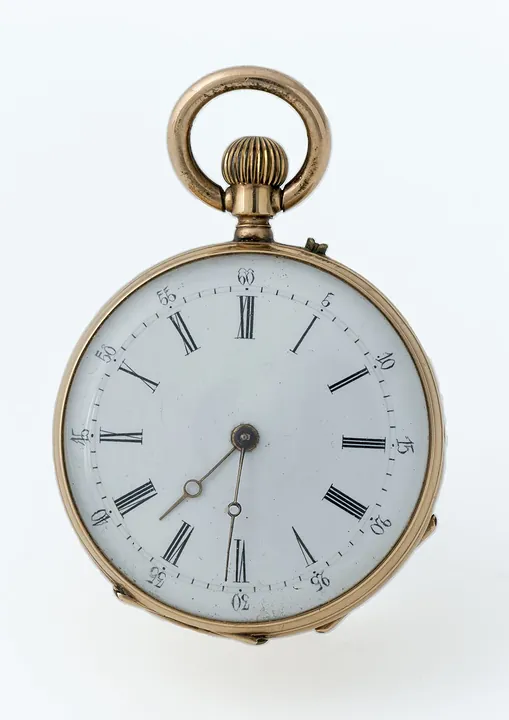
Pocket Watches · 1880
Pocket watch, 1880
Museum Rotterdam
Pocket Watches · mid 19th century
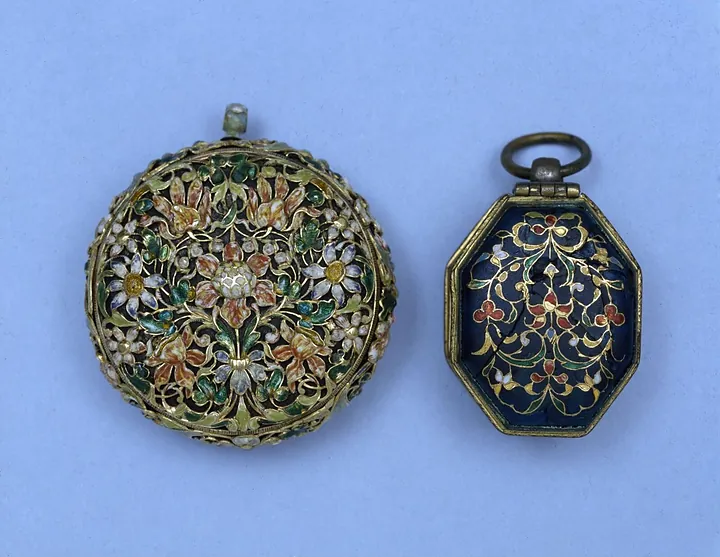
Watch, enamelled gilt brass of floral design, signed 'A Bloys.', France, in an early 17th century style but possibly mid 19th century
Victoria and Albert Museum, London
Pocket Watches · 1835–1875
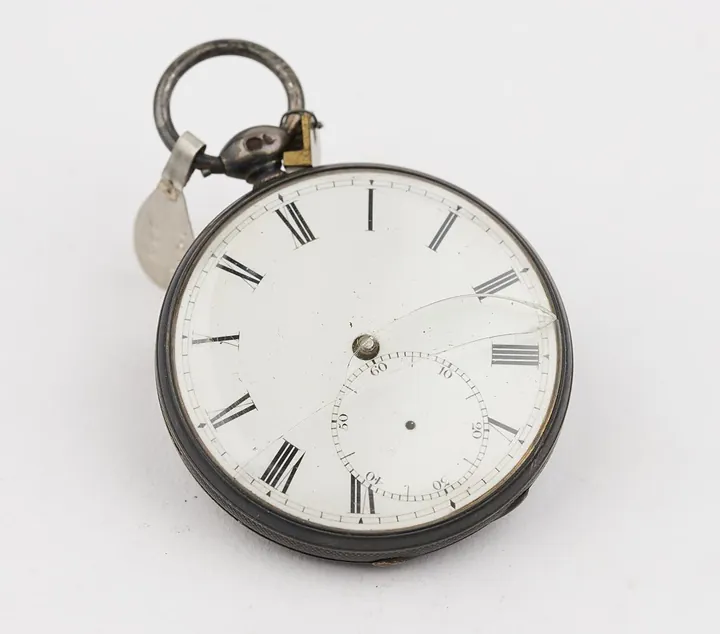
Pocket watch by Cornelius Brooks Holliday, England, 1835–1875
Science Museum Group, London
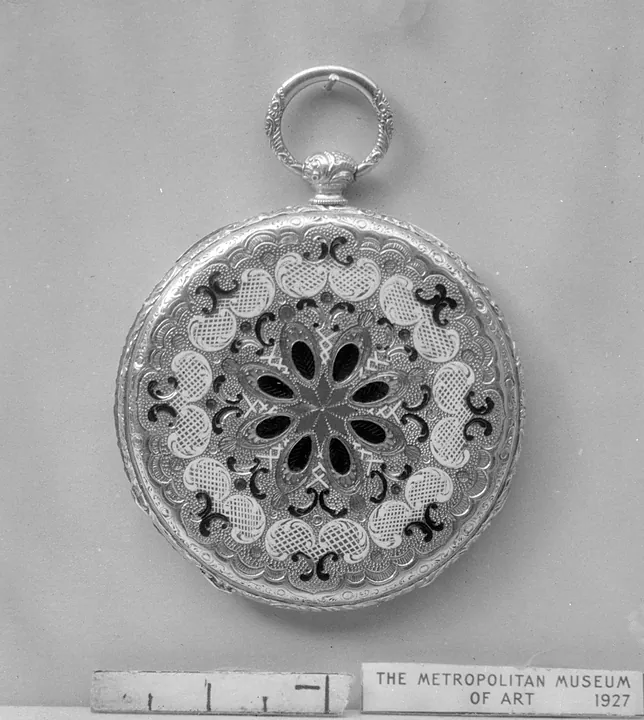
Pocket Watches · c. 1840–60
Watch by Callaud, c. 1840–60
The Metropolitan Museum of Art, New York
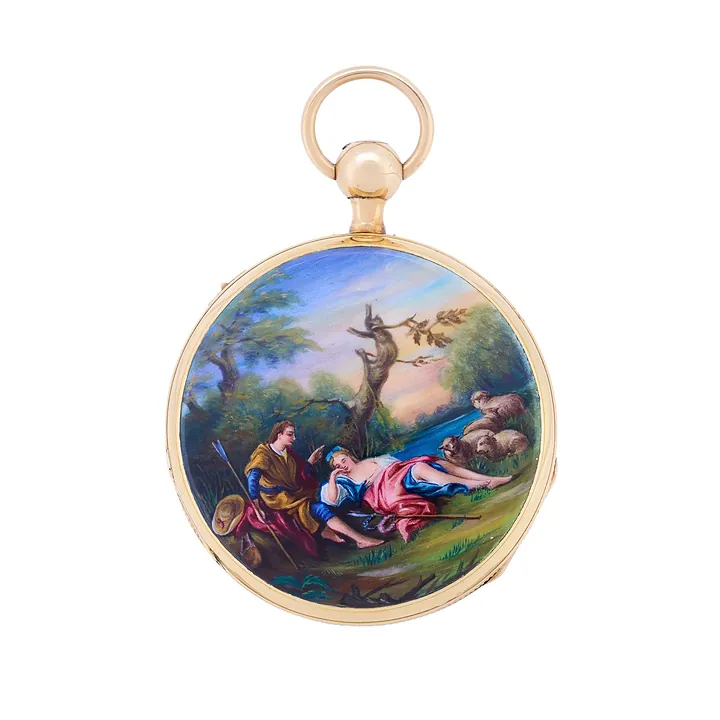
Pocket Watches · c. 1840-1860s
G.H. Berblinger pocket watch, c. 1840-1860s
Antiquorum auction archive, Geneva
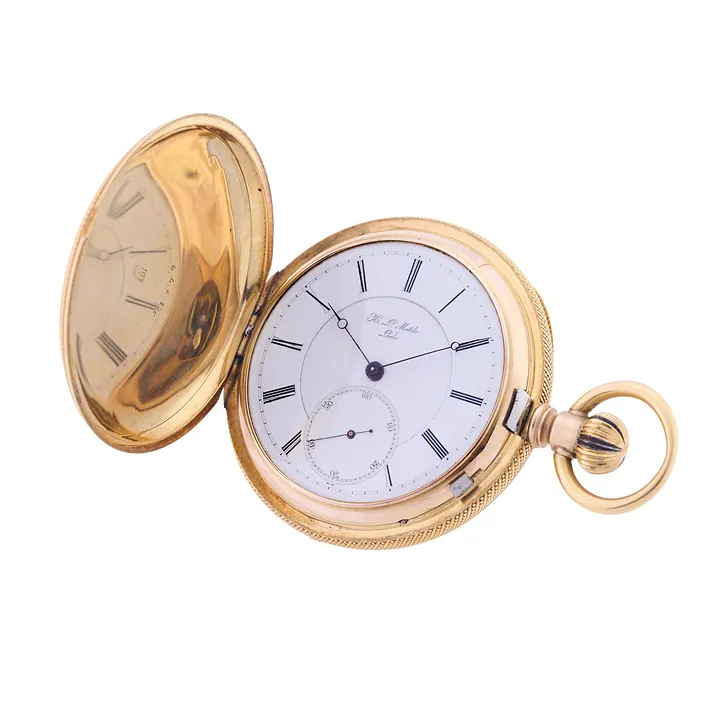
Pocket Watches · c. 1840-1860s
H.L Matile Locle pocket watch, c. 1840-1860s
Antiquorum auction archive, Geneva
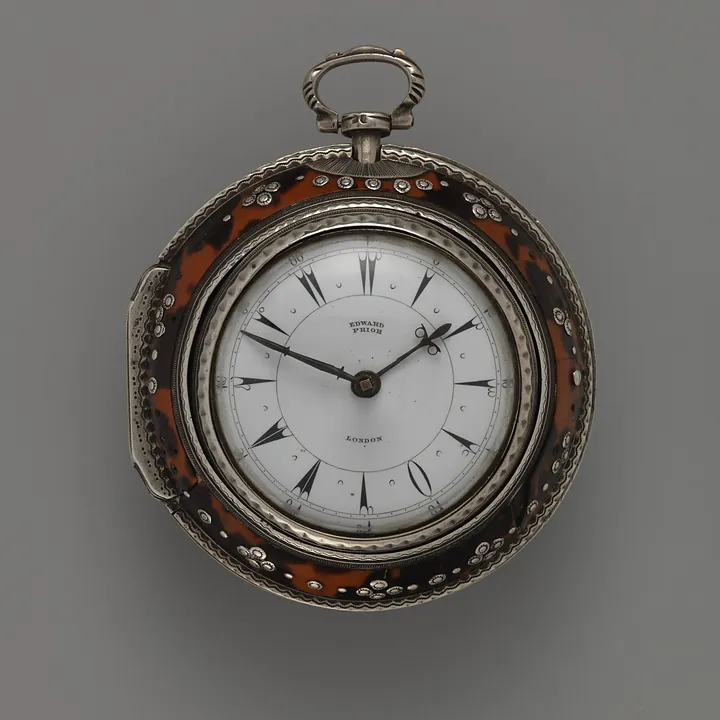
Pocket Watches · c. 1849–50
Watch by Edward Prior, England, c. 1849–50
The Metropolitan Museum of Art, New York
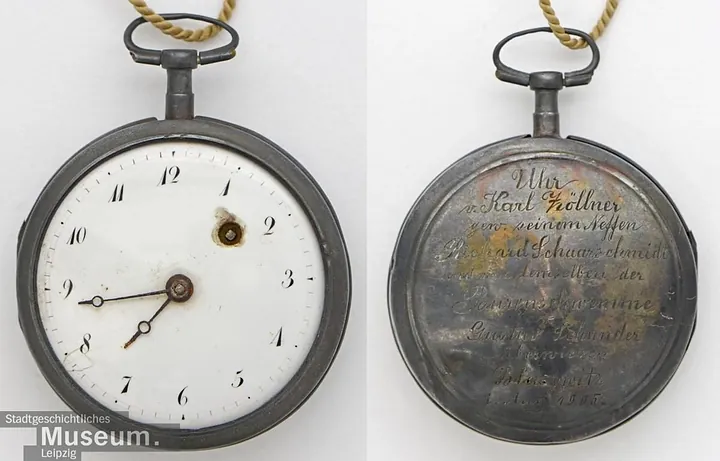
Pocket Watches · 1845–1855
Pocket watch, 1845–1855
Museum of City History Leipzig