
Wristwatches · Wristwatch
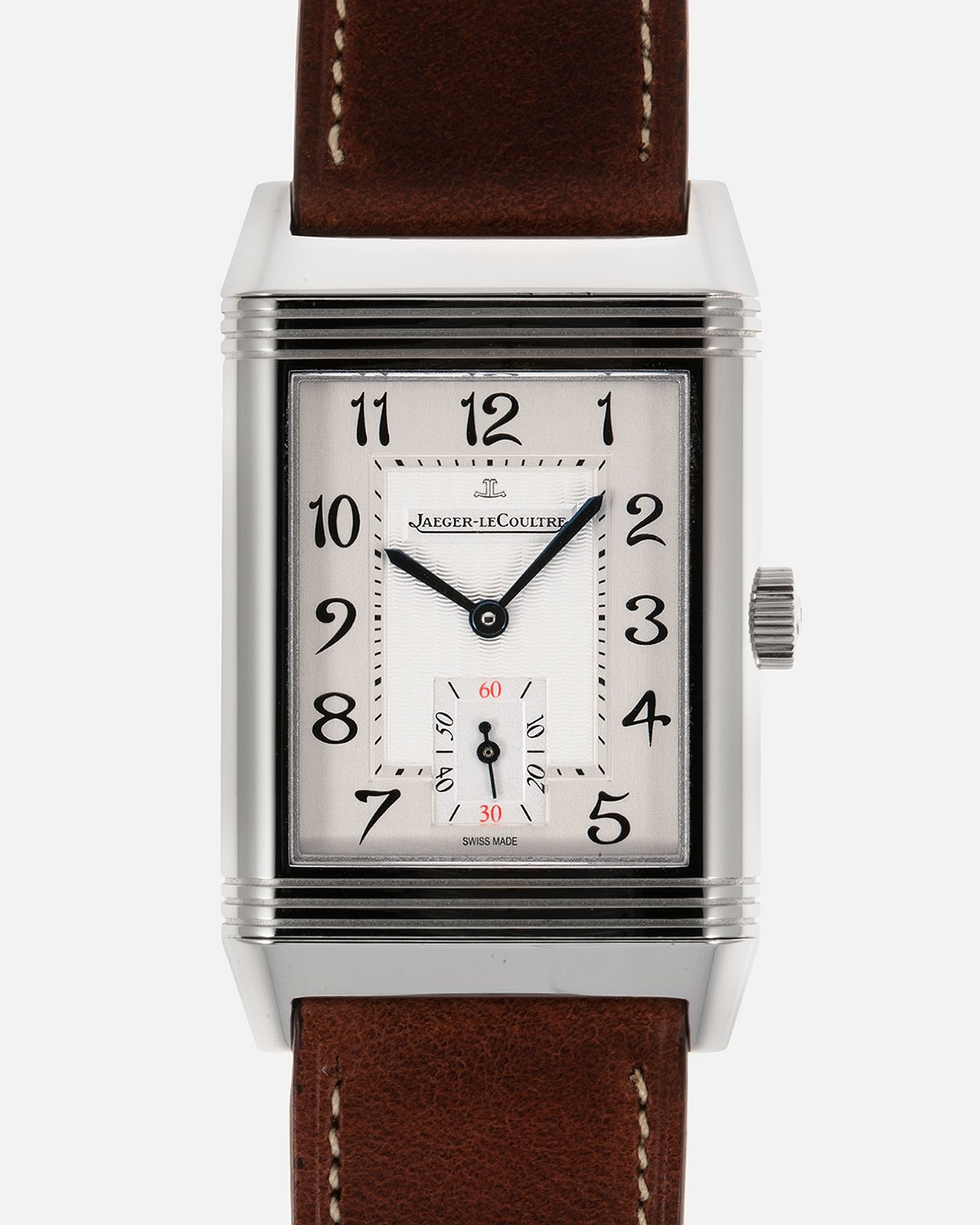
Jaeger-LeCoultre Reverso Grand Taille 270.8.62 “Anshindo” Japan Edition, 2012
- Maker / attribution
- Jaeger-LeCoultre (maker)
- Date
- 2012
- Historical period
- Contemporary Horology (2010 – Present)
- Country of origin
- Japan
- Object type
- Wristwatch
- Dimensions
- Case 42 mm
- Stock no.
- Product 6894284800087
- Credit line
- Dealer listing, S.Song Watches (product 6894284800087)
- Catalogue title (original)
- Jaeger-LeCoultre Reverso Grand Taille 270.8.62 “Anshindo” Japan Edition (English)
View the source record (dealer listing) ↗ (opens another website in a new tab)Suggest a correction
Record summary
Catalogued by S.Song Watches (dealer), Seattle (stock number Product 6894284800087), this is a wristwatch by Jaeger-LeCoultre, made in Japan, dated 2012. The Atlas places it in the Contemporary Horology period (2010 – Present) of its Wristwatches collection. Recorded dimensions: Case 42 mm. The record is illustrated with 6 photographs.
Assembled from the source record's structured fields. Dates and attributions are given as the source states them; where a field is missing the Atlas leaves it blank rather than estimating.
Catalogue description
Dealer description — S.Song Watches
Created by Jacques-David LeCoultre in 1931, the Reverso was initially conceived to withstand the harsh beating a watch would endure during a game of polo. With the need for the watch to be more durable, the Reverso's genius reveals itself through its eponymous design – a reversible case. With its case able to be turned around on itself, the Reverso's dial can be protected while playing sports and returned to its natural position with a quick flick and slide. Thanks to its iconic heritage, the Reverso has evolved into one of Jaeger LeCoultre's most important design vehicles to date, with a healthy number of contemporary variations to suit the palate of modern enthusiasts and connoisseurs alike. Offered here today is no ordinary Reverso though, in fact, this is quite a rare variant – the Limited Japan Anshindo Edition, which was released exclusively in 2012 to celebrate the 100th anniversary of Anshindo, Jaeger LeCoultre's authorized retail partner in Japan. With only 50 units ever produced, this Ref. 270.8.62 is an extremely scarce reference with some intriguing design elements. Now, let's delve into the specifics. Just like the regular Ref. 270.8.62, this example sports a signature ‘Grand Taille’ style stainless steel case that measures 42mm (including lugs) x 26mm and is based on the golden ratio, which is a ratio between two dimensions that equals 1.618. Also known mathematically as the divine proportion, it is, in general terms, a ratio that is known to be pleasing to the human eye. Accentuating this, the case features highly polished surfaces coupled with engraved lines running horizontally across the top and bottom of the case. The dial of this reference is undoubtedly its most distinctive and appealing design element. While it maintains the usual and simple aesthetic features we see in the regular Ref. 270.8.62, there are a few notable exceptions. The dial showcases a silver satin vertical-grain outer section, which encompasses elegantly printed black Floral Arabic numerals instead of the customary Gothic Arabic font typically seen on this reference. Moreover, it features a guilloched inner dial at the centre portion bordered by a rectangular minute track. Positioned at 6 o'clock is another rectangular small-seconds sub-dial accentuated with red details marking the 30th and 60th seconds. Powering this stunning work of art from within is Jaeger LeCoultre’s very own manual-wind Cal. 822 at just 2.94mm in thickness, which features 21 jewels, beats at 21,600 vph and carries a power reserve of 45 hours. Overall, this is a stunning reference that beautifully encapsulates Jaeger LeCoultre’s objective of showcasing true craftsmanship, as well as its desire to celebrate a momentous occasion with a long-time retail partner in Japan. While any limited-edition Reverso’s can be considered rare, I do believe that finding a Japan edition of any watch is even more challenging due to their limited availability outside of the domestic market. Moreover, this specific model was never promoted outside of Japan and is unknown to most making it a true connoisseurs reference.
Historical context
Contemporary Horology (2010 – Present)
Silicon components, connected watches, optical-lattice research clocks and a thriving independent scene.
Smartwatches became the world's best-selling watches, while mechanical watchmaking focuses on craft, innovation (silicon components, new escapements) and independent makers.
Read the period in the timelineMore wristwatches from this periodEarlier: Mechanical Renaissance
Atlas type guide
Wristwatches
Bracelet watches were worn by women from the early nineteenth century — Breguet made one for Caroline Murat, Queen of Naples, in 1810–12 — but the wristwatch only became a man's instrument with military use and aviation in the early twentieth century. Between the World Wars it overtook the pocket watch; the 1920s and 1930s brought rectangular Art Deco cases, water-resistant cases and the first automatic winding systems.
After 1945 the wristwatch became a carrier of identity — dress watches, sports and dive watches, chronographs, calendars — produced by Swiss, American, Japanese, German, Soviet and Chinese industries. The quartz revolution after 1969 and the mechanical renaissance since the 1990s, including the rise of independent watchmakers, complete the story.
What to look for
- The reference number (between the lugs or inside the case back) and serial number, the starting point for dating.
- The calibre: its maker and number are often stamped under the dial or on the bridge.
- Originality of dial, hands and crown — refinished ('redial') dials are common.
- Case material marks: 18K/750, 14K/585, stainless steel, gold-filled, plated.
Dating clues
- Wire-lug cases: before c. 1925.
- Water-resistant screw-down cases: from 1926.
- Quartz movements: from 1969; sapphire crystals widespread after c. 1980.
General guidance written by the Atlas editors about this kind of object. It is not a statement about this particular piece; for that, rely on the source record above and on physical examination.
Related records
Clocks · 1937–1938
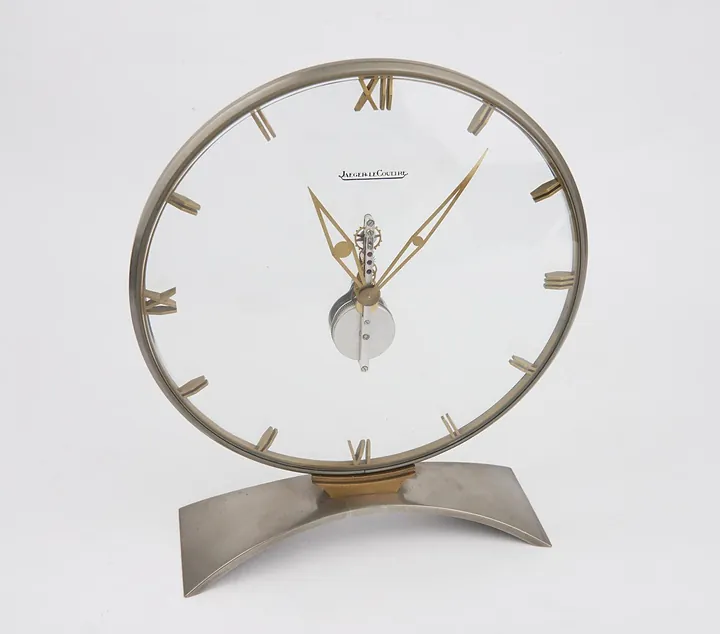
Skeleton clock by Jaeger-LeCoultre, Switzerland, 1937–1938
Science Museum Group, London
Movements & Components · 1953
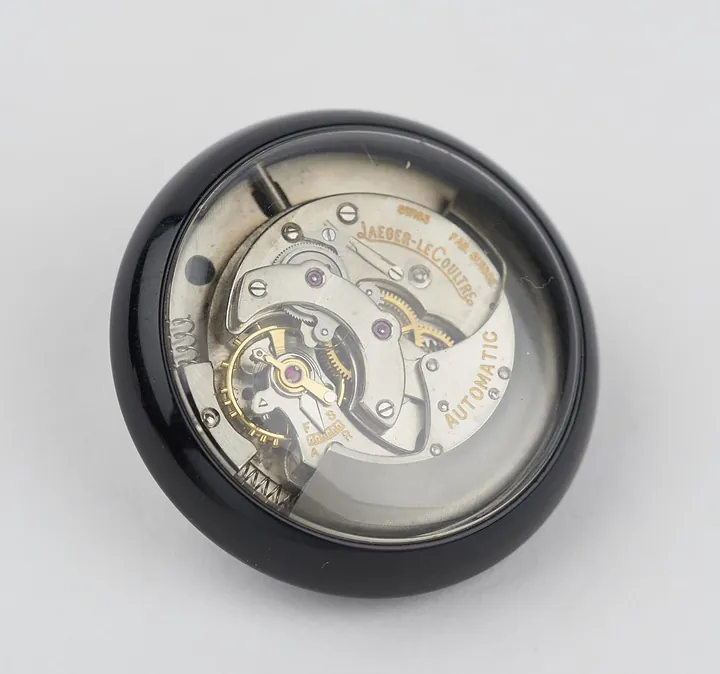
Automatic watch movement, Jaeger-LeCoultre, 1953, Geneva, Switzerland, showing self-winding mechanism
Science Museum Group, London
Wristwatches · 1953
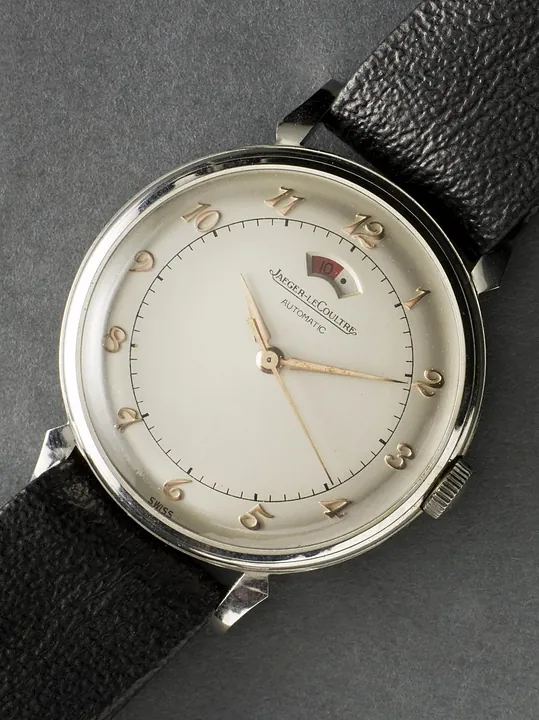
Automatic Wrist-watch, Jaeger-LeCoultre, Geneva, Switzerland, with reserve power indicator complete in steel case, 1953. Back numbered 564556.
Science Museum Group, London
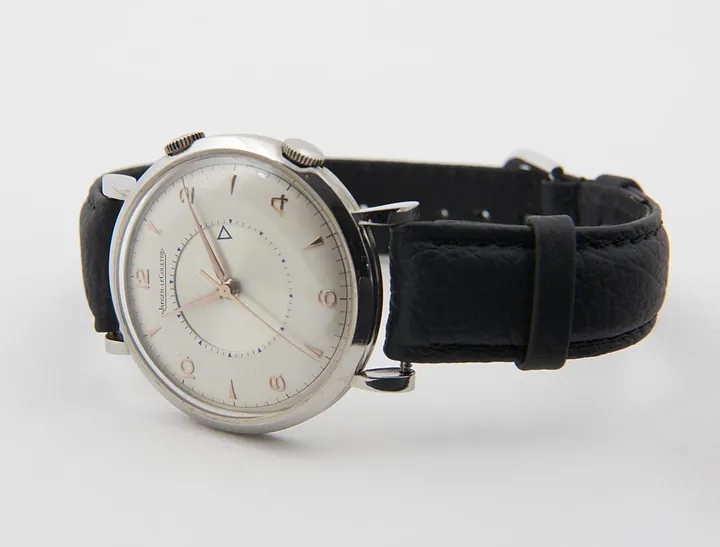
Wristwatches · 1953
Wrist-watch, 'Memovox' alarm, Jaeger-LeCoultre, Geneva, Switzerland, complete in steel case, 1953.
Science Museum Group, London
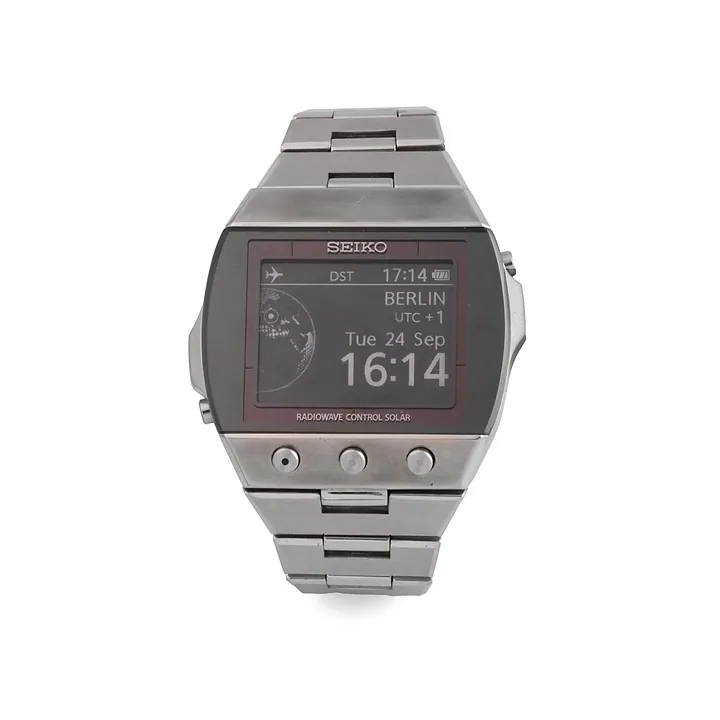
Wristwatches · Sold in 2011
Seiko Brights Spirit, ref. S770, Sold in 2011
Antiquorum auction archive, Geneva
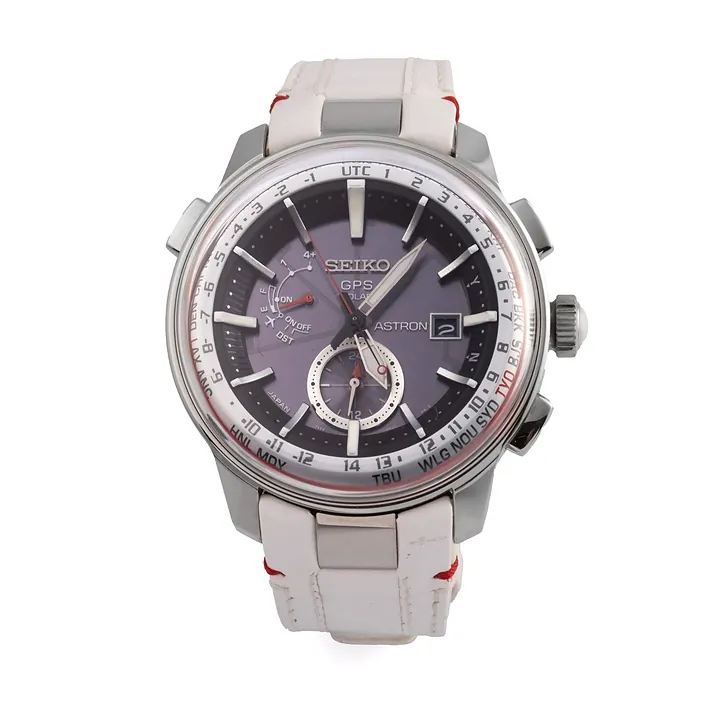
Wristwatches · originally sold in 2014 (per the lot record)
Seiko Astron GPS Solar, ref. SBXA045, originally sold in 2014
Antiquorum auction archive, Geneva
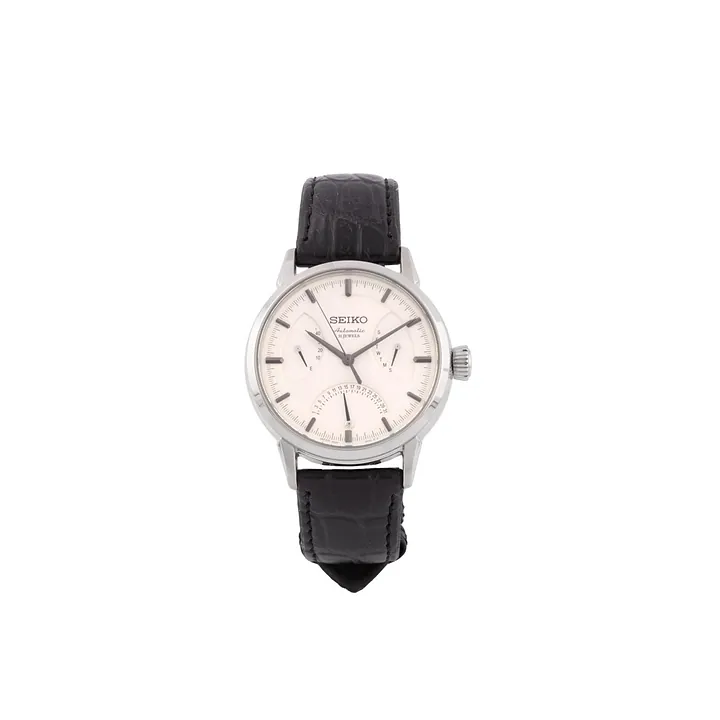
Wristwatches · c. 2015
Seiko Presage, c. 2015
Antiquorum auction archive, Geneva
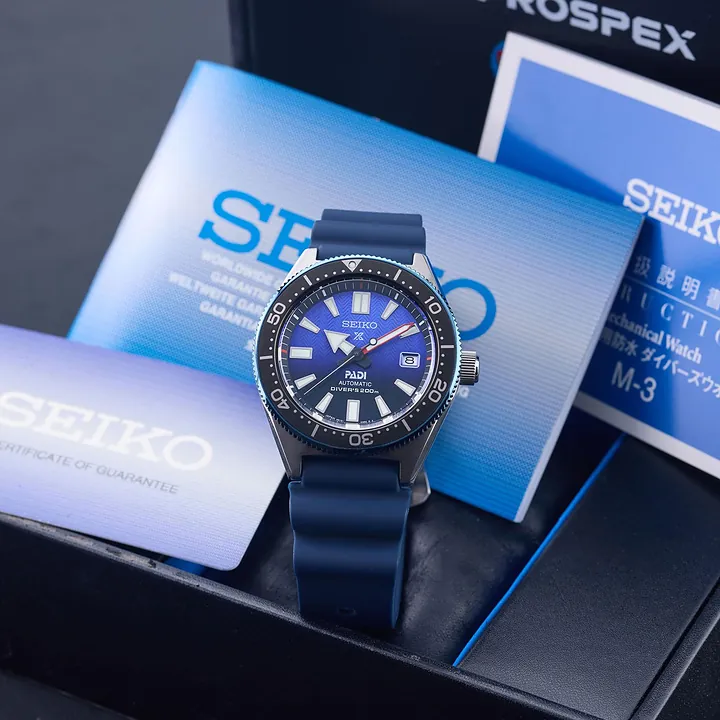
Wristwatches · originally sold in 2018 (per the lot record)
Seiko Prospex Padi Special Edition, ref. SBDC055, originally sold in 2018
Antiquorum auction archive, Geneva