
Clocks · Torsion pendulum clock
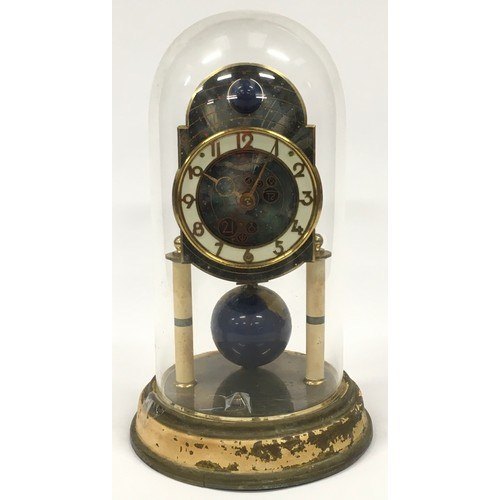
J. Kaiser G.m.b.H. Universe 400-day astral torsion clock
- Maker / attribution
- J. Kaiser G.m.b.H (source attribution)
- Date
- 1950s
- Historical period
- Modern Mechanical Horology (1945 – 1969)
- Country of origin
- Germany
- Object type
- Torsion pendulum clock
- Holding institution
- Cottees Auctions
- Accession / object no.
- 455
- Credit line
- Cottees Auctions
- Catalogue title (original)
- J. Kaiser G.m.b.H Germany vintage 1950's Universe 400 day astral torsion clock in glass dome require (English)
View the source record ↗ (opens another website in a new tab)Suggest a correction
Record summary
Held and catalogued by Cottees Auctions (object number 455), this is a torsion pendulum clock attributed to J. Kaiser G.m.b.H, made in Germany, dated 1950s. The Atlas places it in the Modern Mechanical Horology period (1945 – 1969) of its Clocks collection. The record is illustrated with 1 photograph.
Assembled from the source record's structured fields. Dates and attributions are given as the source states them; where a field is missing the Atlas leaves it blank rather than estimating.
Catalogue description
Original object description
Assigned in auction records to the German manufacturer J. Kaiser G.m.b.H. as an example from their 1950s "Universe" series, this 400-day astral torsion clock is covered by an arched glass dome supported by two upright light-toned columns fixed to a round plinth. Its face is arranged with an outer Arabic numeral chapter ring framing a star-patterned central disk, topped by an arched accent displaying a planetary motif, while a blue orb symbolizing the Earth serves as the revolving pendulum beneath. The circular base displays noticeable surface deterioration, peeling, and lost paint. The classification of the piece as a 1950s "Universe" 400-day torsion clock relies entirely on the sale catalogue's attribution to J. Kaiser G.m.b.H. The physical clock presents twin pillars on a stepped circular base with compromised finish, an arched planetary crest above a white chapter ring, and a suspended blue terrestrial globe mechanism. The auction listing specifies that the movement requires mechanical servicing, leaving the working order of both the drive train and the suspension spring untested and unverified.
Historical context
Modern Mechanical Horology (1945 – 1969)
Tool watches for divers, pilots and astronauts; electric watches anticipate the electronic age.
Post-war clocks combined new materials and industrial design: plastic and metal cases, battery-powered transistor movements from the late 1950s, and design classics by George Nelson, Max Bill and others. The first caesium atomic clock (1955) moved the definition of time from astronomy to physics.
Read the period in the timelineMore clocks from this periodEarlier: Golden Age of Mechanical Watchmaking
Atlas type guide
Domestic clocks
A clock combines four systems: a source of power (falling weight, coiled spring, or later electricity), a gear train that divides time, an escapement and oscillator that regulate it (foliot, pendulum or balance), and an indicating system of dial and hands or a bell. Its history runs from the large iron weight-driven clocks of the late thirteenth century to Renaissance spring-driven table clocks, the pendulum revolution of 1656, the factory clocks of the nineteenth century and electric and quartz clocks of the twentieth.
Domestic clocks also reflect regional furniture and decorative traditions — English longcase and bracket clocks, French pendules, Viennese regulators, Black Forest and American shelf clocks — and therefore record changing tastes as much as technical progress.
What to look for
- How the clock is powered: weights, spring barrel, fusee, electric coil.
- The oscillator: foliot, short pendulum, long seconds pendulum or balance.
- Whether it strikes: hour only (count wheel) or hours and quarters (rack striking).
- The maker or retailer's name on dial and movement, and any factory trademarks.
- Signs of alteration — replaced dials, converted escapements, 'married' cases.
Dating clues
- Before 1656 clocks used foliots or balances; after, most domestic clocks have pendulums.
- Anchor escapements spread after c. 1670; minute hands became common at the same time.
- Factory production in America and Germany transformed prices after c. 1840.
General guidance written by the Atlas editors about this kind of object. It is not a statement about this particular piece; for that, rely on the source record above and on physical examination.
Related records
Clocks · c. 1960
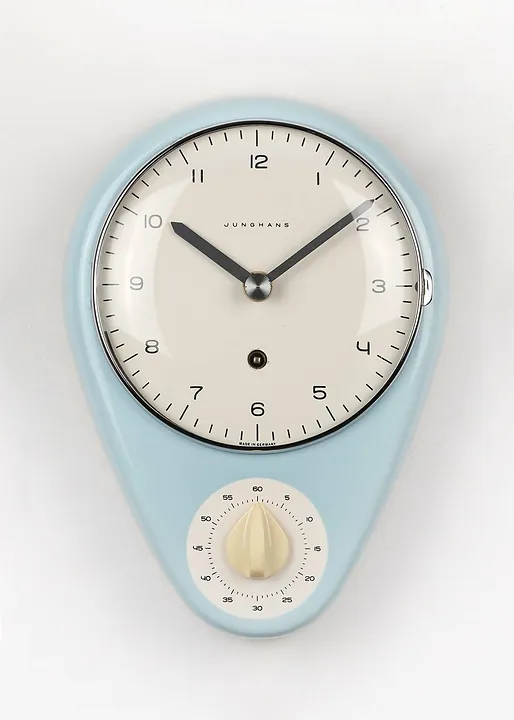
Clock, Germany, c. 1960 (no. 58196)
German Clock Museum
Clocks · 1945
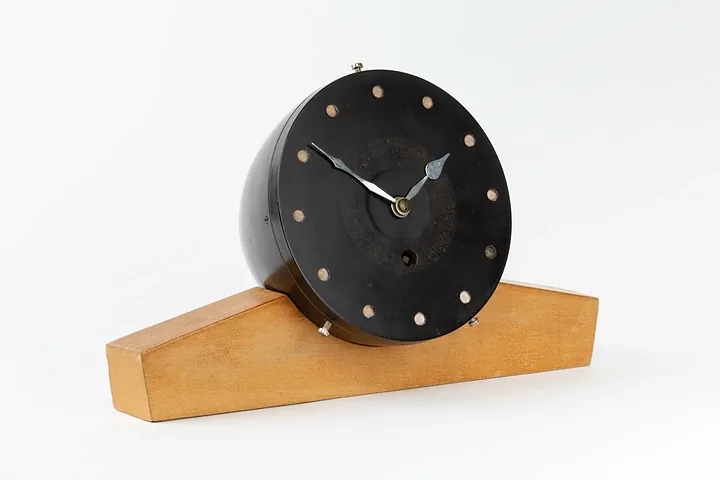
Table clock, Germany, 1945
German Clock Museum
Clocks · c. 1945
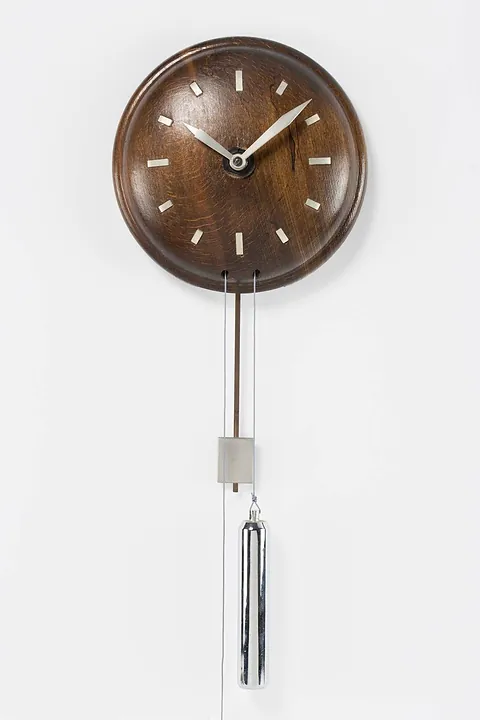
Wall clock, Germany, c. 1945 (no. 59680)
German Clock Museum
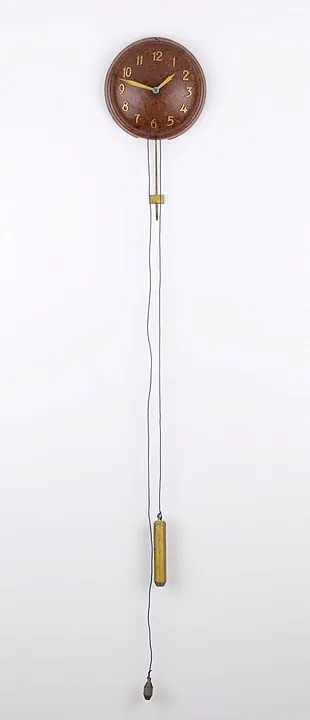
Clocks · c. 1945
Wall clock, Germany, c. 1945 (no. 59700)
German Clock Museum
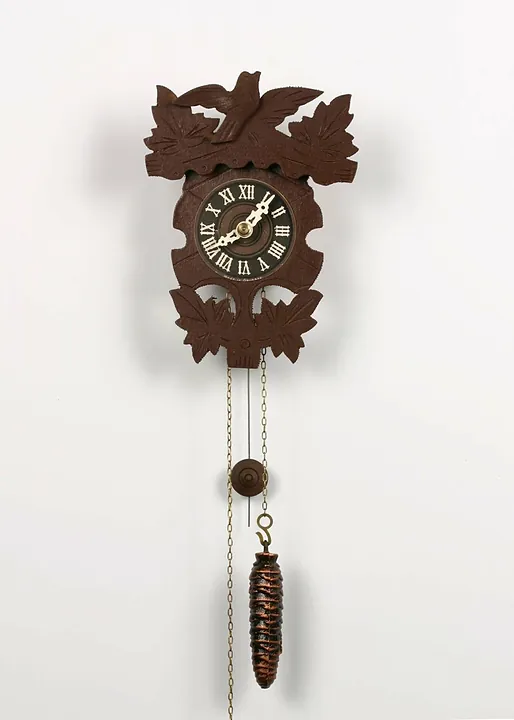
Clocks · c. 1948
Wall clock, Germany, c. 1948
German Clock Museum
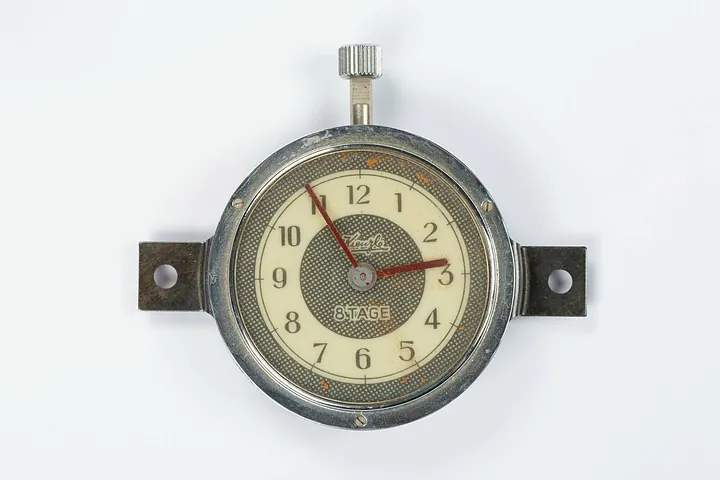
Clocks · c. 1950
Clock by Kienzle - Uhrenfabrik, Germany, c. 1950
German Clock Museum
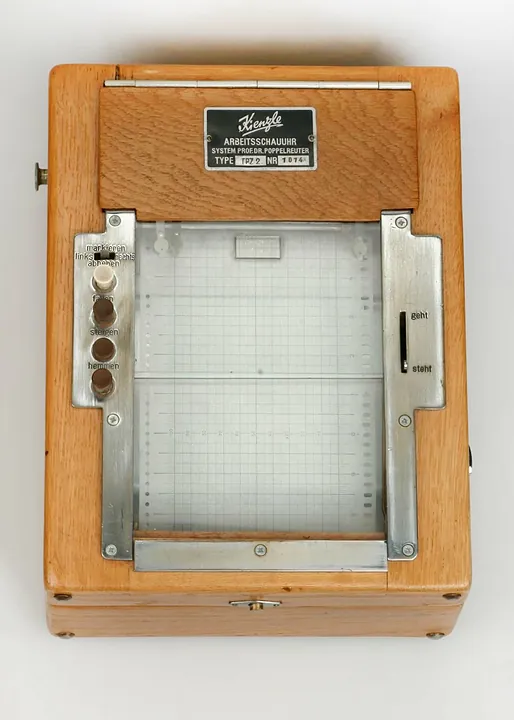
Clocks · c. 1950
Clock by Kienzle Apparate GmbH, Germany, c. 1950
German Clock Museum
Clocks · c. 1950
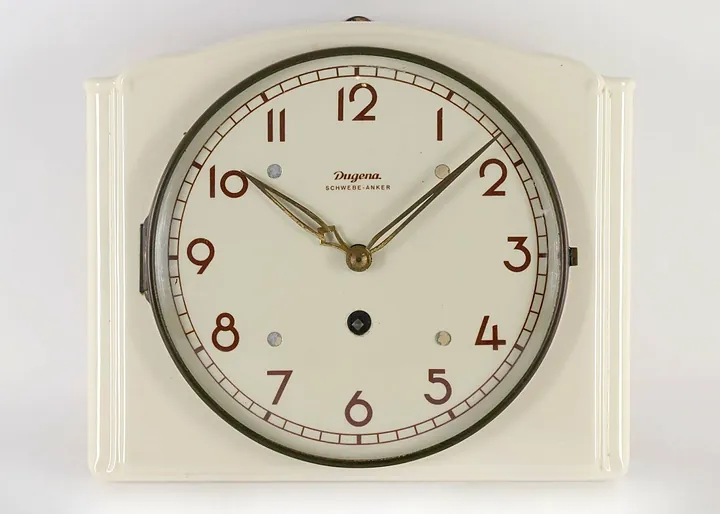
Clock, Germany, c. 1950
German Clock Museum