
Instruments · Deck watch
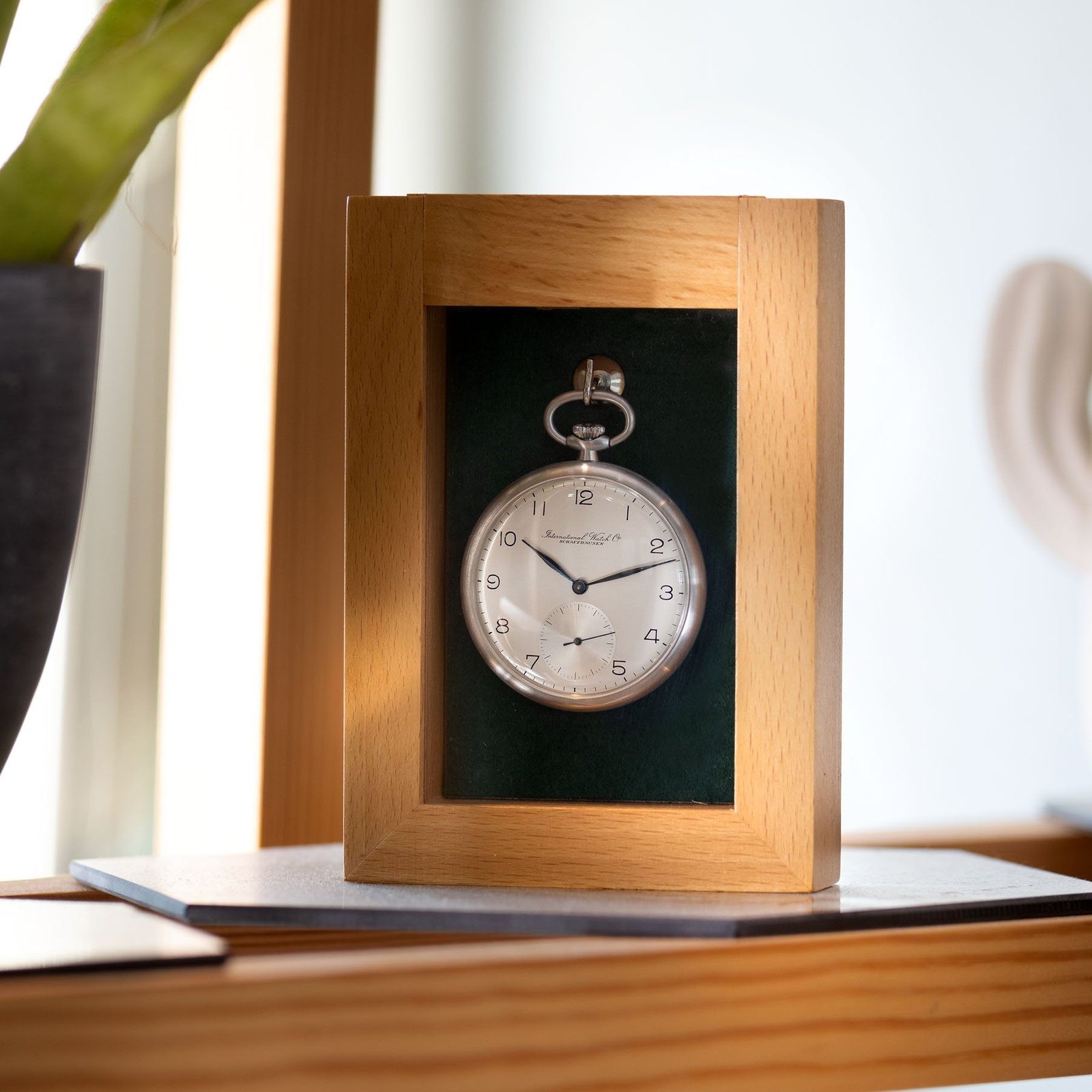
IWC Navy-Issued Deck Watch in Case, 1980s
- Maker / attribution
- IWC (maker)
- Date
- 1980s
- Historical period
- Quartz Revolution (1969 – 1990)
- Country of origin
- Switzerland
- Object type
- Deck watch
- Dimensions
- Case 47 mm
- Stock no.
- W-1543
- Credit line
- Dealer listing, Bulang & Sons (W-1543)
- Catalogue title (original)
- IWC Navy-Issued Deck Watch in Case (English)
View the source record (dealer listing) ↗ (opens another website in a new tab)Suggest a correction
Record summary
Catalogued by Bulang & Sons (dealer), Copenhagen (stock number W-1543), this is a deck watch by IWC, made in Switzerland, dated 1980s. The Atlas places it in the Quartz Revolution period (1969 – 1990) of its Instruments collection. Recorded dimensions: Case 47 mm. The record is illustrated with 6 photographs.
Assembled from the source record's structured fields. Dates and attributions are given as the source states them; where a field is missing the Atlas leaves it blank rather than estimating.
Catalogue description
Dealer description — Bulang & Sons
The ultimate back up... This is the first time we have offered a pocket watch on Bulang and Sons and, as you might guess, it’s something a little bit special! This IWC was delivered to the German navy as a deck watch, meant to be the final back up in case of failure of modern safety equipment such as atomic clocks and GPS. Qualified sailors can navigate with a clock and a compass and so these watches were kept on the bridge of a naval ship and wound once per day by the officer on duty. The watches were kept in wooden boxes, built to exacting military specifications with sliding plexi glass fronts, lined with felt with a hanging hook in the top. The box remains in excellent condition. It is very rare to see these complete watch and box sets sold on the market. In 1966 a total of 125 pocket watches of the reference 135 with the cal. 67 were ordered, later there was a second series based on the ref. 5301 (cal. 972), of which a total of 54 were delivered by 1987. So these watches are extremely rare - and even more rarely available on the open market, as they often went as souvenirs to deserving commanders (especially when the ship was decommissioned)!! The movement has been fully checked and regulated by our watchmaker. Specifications: - IWC Pocket watch - Ref 5301 - Case measures 47 mm - Large silver face with Arabic numerals - Blued hands - Cal. 972 - Dates to the 1980s - Original military spec wooden box with plexi front - Fully checked by our watchmaker
Historical context
Quartz Revolution (1969 – 1990)
Seiko's Astron begins mass quartz timekeeping; traditional industries contract sharply.
Electronic timing replaced mechanical instruments in sport, industry and navigation.
Read the period in the timelineMore instruments from this periodEarlier: Modern Mechanical Horology
Atlas type guide
Marine chronometers
A marine chronometer is a precision timekeeper carried at sea to find longitude: the navigator compares local noon, observed with a sextant, with the time at a reference meridian kept by the chronometer. Each hour of difference corresponds to fifteen degrees of longitude. John Harrison proved the method in the 1760s; Pierre Le Roy, Ferdinand Berthoud, John Arnold and Thomas Earnshaw then developed the detent escapement and the compensation balance that made chronometers practical to manufacture.
By the nineteenth century London, Liverpool, Le Locle and Glashütte supplied navies and merchant fleets. A typical box chronometer has a spring-detent escapement, a fusee to equalise mainspring torque, a bimetallic compensation balance with a helical balance spring, and is mounted in gimbals inside a wooden box so that it stays level.
What to look for
- Gimbals and a three-tier wooden box with a glazed inner lid.
- A power-reserve ('up and down') indicator on the dial, usually showing 56 hours on two-day instruments.
- Spring-detent escapement and a cylindrical (helical) balance spring visible through the movement.
- Admiralty or navy marks (broad arrow), and rating certificates from observatories.
- The maker's number on the dial and movement; many makers' registers survive, allowing dating.
Dating clues
- Earnshaw-type spring-detent chronometers became standard after about 1800.
- Auxiliary compensation devices on the balance appear from the mid-nineteenth century.
- Quartz and radio time signals ended routine use of mechanical chronometers in the 1970s and 1980s.
General guidance written by the Atlas editors about this kind of object. It is not a statement about this particular piece; for that, rely on the source record above and on physical examination.
Read next:Spring detent (chronometer) escapementFuseeBalance spring (hairspring)Detent escapement
Related records
Pocket Watches · c. 1950
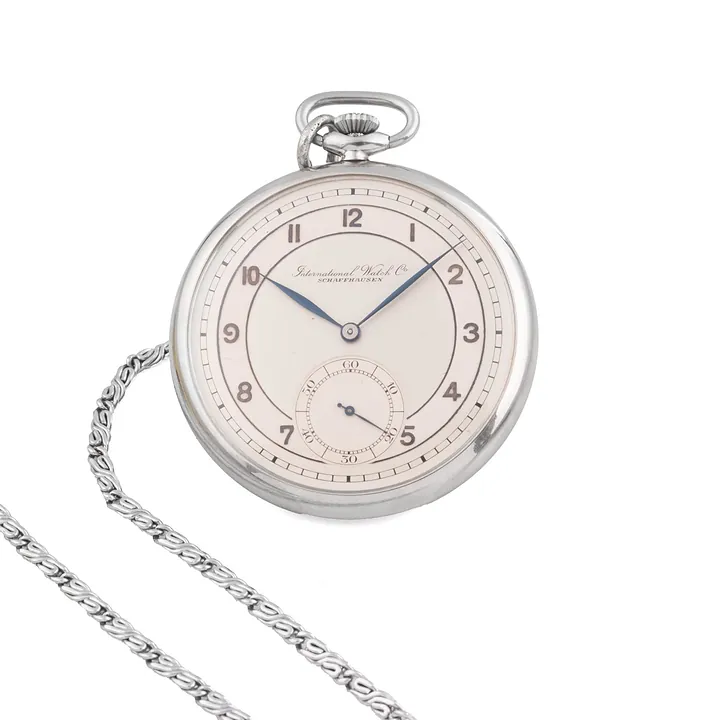
IWC Pocket Watch, c. 1950
Antiquorum auction archive, Geneva
Pocket Watches · c. 1980
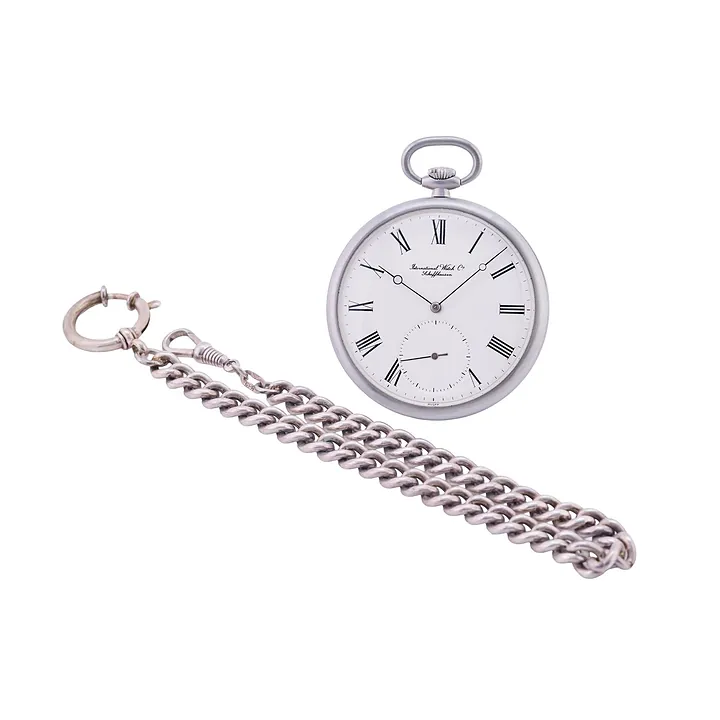
IWC pocket watch, ref. 5301, c. 1980
Antiquorum auction archive, Geneva
Wristwatches · originally sold in April 2016 (per the lot record)
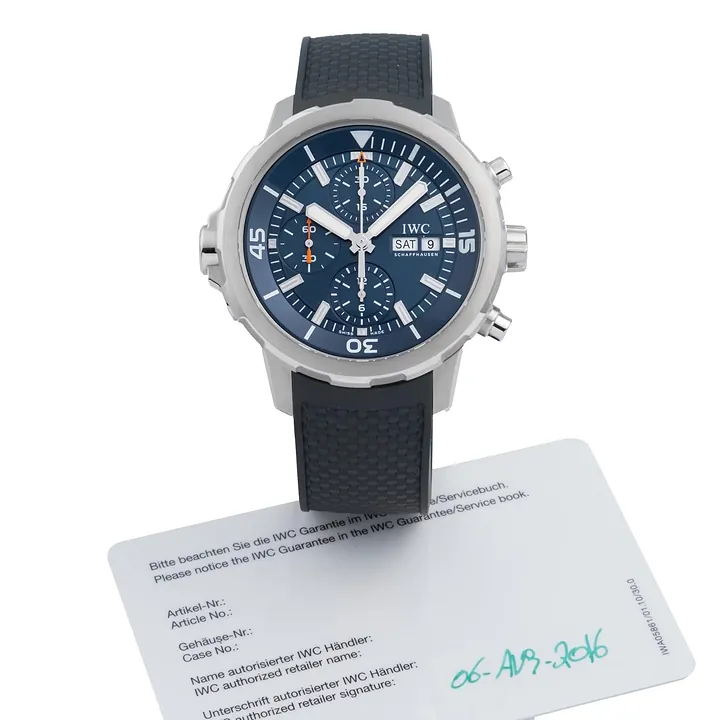
IWC Aquatimer Chronograph Cousteau, ref. IW3768, originally sold in April 2016
Antiquorum auction archive, Geneva
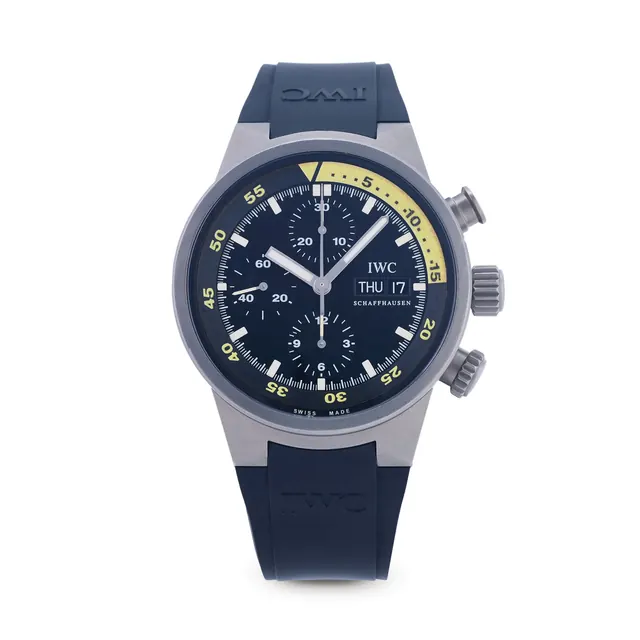
Wristwatches · c. 2010s
IWC wristwatch, ref. IW371918, Aquatimer, circa 2010s
Antiquorum auction archive, Geneva

Instruments · 1960–1979
Stopwatch / timer by Omega, 1960–1979
Science Museum Group, London

Instruments · 1960–1979
Stopwatch / timer by Omega, Switzerland, 1960–1979
Science Museum Group, London

Instruments · 1960–1979
Stopwatch by Omega, Swiss made, single-button type reading 0 - 60 seconds in fifths and 0 - 5 minutes in minutes on subsidiary dial, 1960-79.
Science Museum Group, London
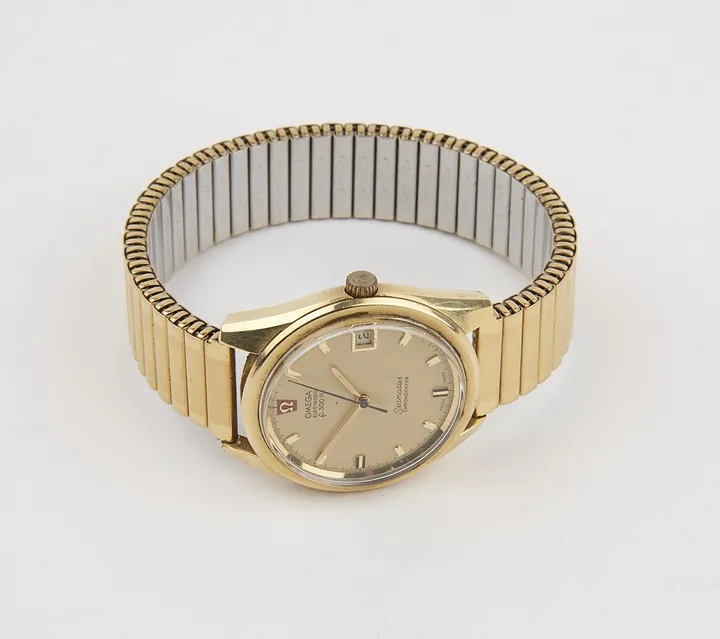
Instruments · 1972
Chronometer by Omega, Switzerland, 1972
Science Museum Group, London