
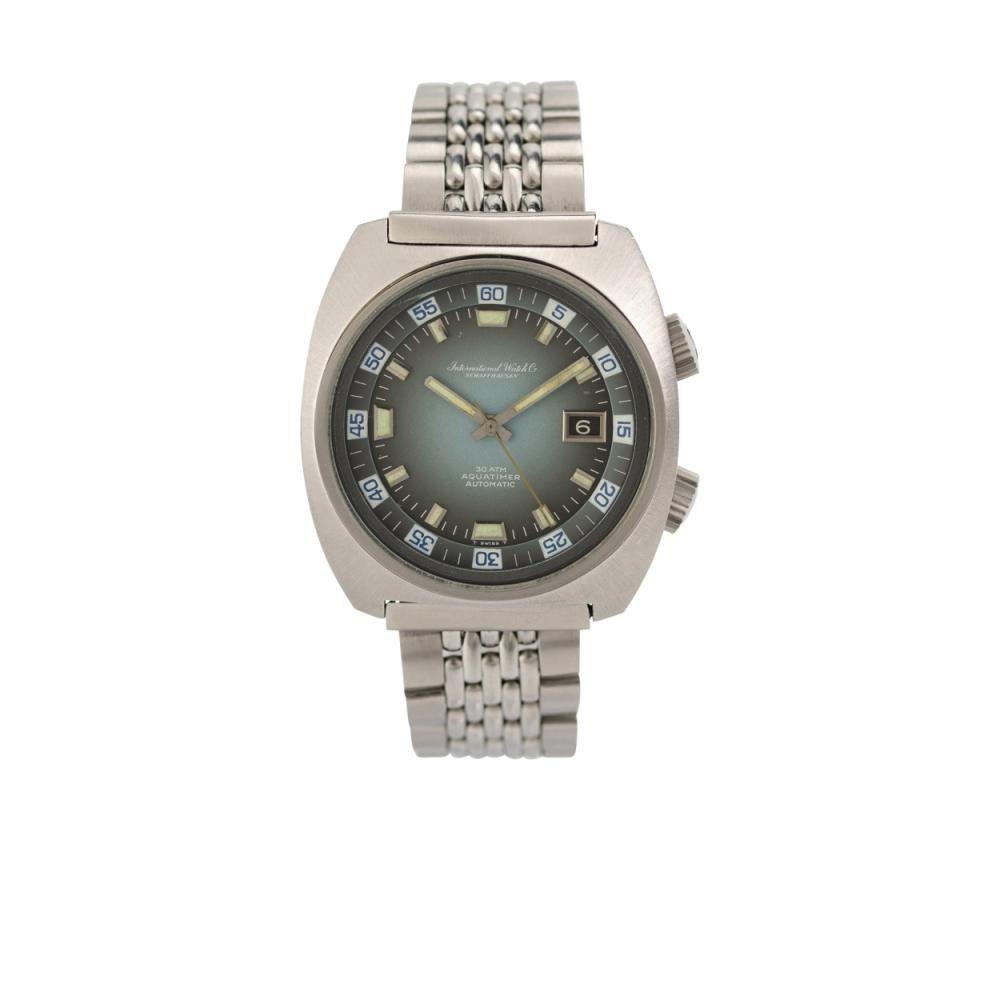
Wristwatches · Diver's watch
IWC Aquatimer Reference 816 AD
- Maker / attribution
- IWC (source attribution)
- Date
- c. 1970
- Historical period
- Quartz Revolution (1969 – 1990)
- Country of origin
- Schweiz
- Object type
- Diver's watch
- Dimensions
- 40 x 42 mm
- Auction house
- Auktionen Dr. Crott
- Lot
- 289
- Credit line
- Auktionen Dr. Crott
- Catalogue title (original)
- IWC / Intern. Watch Co. - Turquoise Aquatimer (English)
View the source record (auction lot) ↗ (opens another website in a new tab)Suggest a correction
Record summary
Catalogued by Auktionen Dr. Crott (lot 289), this is a diver's watch attributed to IWC, made in Schweiz, dated c. 1970. The Atlas places it in the Quartz Revolution period (1969 – 1990) of its Wristwatches collection. Recorded dimensions: 40 x 42 mm. The record is illustrated with 1 photograph.
Assembled from the source record's structured fields. Dates and attributions are given as the source states them; where a field is missing the Atlas leaves it blank rather than estimating.
Catalogue description
Original object description
Originating circa 1970, this vintage IWC Aquatimer reference 816 AD is an automatic diving model in stainless steel, featuring a 40 x 42 mm compressor-type case and a dial shading from turquoise to grey. Two crowns carrying the IWC fish emblem control the functions: one sets the movement, while the second manipulates the inner rotating bezel. A threaded caseback is decorated with an embossed submarine. Driven by the IWC calibre 8541 with its Pellaton automatic winding system, the watch is fitted to an authentic folded-link steel Gay Frères bracelet. The hands and hour indexes carry tritium luminous material that has aged to a lemon-yellow hue; although the fish insignia traditionally indicated water resistance, present-day watertight integrity has not been tested.
Case and Configuration
Measuring 40 x 42 mm, the stainless steel case is built with two crowns: the higher one turns the internal elapsed-time bezel, and the lower adjusts the time. Its screw-down back is struck with a submarine emblem. Built on the super compressor principle intended to seal more firmly as external pressure rises, the case originally carried a 300-meter depth rating. Both crowns display the IWC fish motif used to denote water-resistant cases.
Dial and Luminous Material
The dial displays a subtle gradient transition, moving from an outer grey-green band inward to a pale turquoise central field. Surrounding it under the crystal is an internal rotating bezel. The tritium luminous material applied to the hands and hour batons has patinated to a pronounced lemon-yellow tone.
Movement and Bracelet
The watch contains the self-winding IWC calibre 8541, which utilizes the proprietary Pellaton winding design also employed in the Ingenieur models of the era. Completing the assembly is a genuine folded stainless steel Gay Frères bracelet with an overall length of 185 mm.
Inscriptions & marks
2014527
Historical context
Quartz Revolution (1969 – 1990)
Seiko's Astron begins mass quartz timekeeping; traditional industries contract sharply.
Quartz and digital watches transformed the market after 1969. Swiss employment collapsed, Japanese and Hong Kong production soared, and the Swatch (1983) helped the Swiss industry recover; mechanical watches survived as luxury goods.
Read the period in the timelineMore wristwatches from this periodEarlier: Modern Mechanical Horology
Atlas type guide
Dive and water-resistant watches
Keeping water and dust out of a wristwatch was a long-standing challenge. Rolex's screw-down Oyster case (1926) and Omega's Marine (1932) were landmarks; in the early 1950s Blancpain's Fifty Fathoms and Rolex's Submariner defined the professional dive watch with rotating bezels for timing dives, luminous dials and high water resistance. The ISO 6425 standard (1982) later codified what a 'diver's watch' must do.
Dive watches became icons of post-war design and exploration, and their evolution — helium escape valves, ceramic bezels, saturation-diving depth ratings — records the history of underwater work.
What to look for
- Unidirectional or bidirectional rotating bezel with minute markings.
- Screw-down crown and case back; depth rating printed on the dial.
- Luminous hands and markers (radium before c. 1960, tritium c. 1960–1998, then Super-LumiNova).
- Reference numbers on the case between the lugs or inside the back.
Dating clues
- Screw-down Oyster cases: from 1926.
- Professional dive watches: from 1953.
- Tritium 'T' marks on dials: c. 1960–1998.
General guidance written by the Atlas editors about this kind of object. It is not a statement about this particular piece; for that, rely on the source record above and on physical examination.
Related records
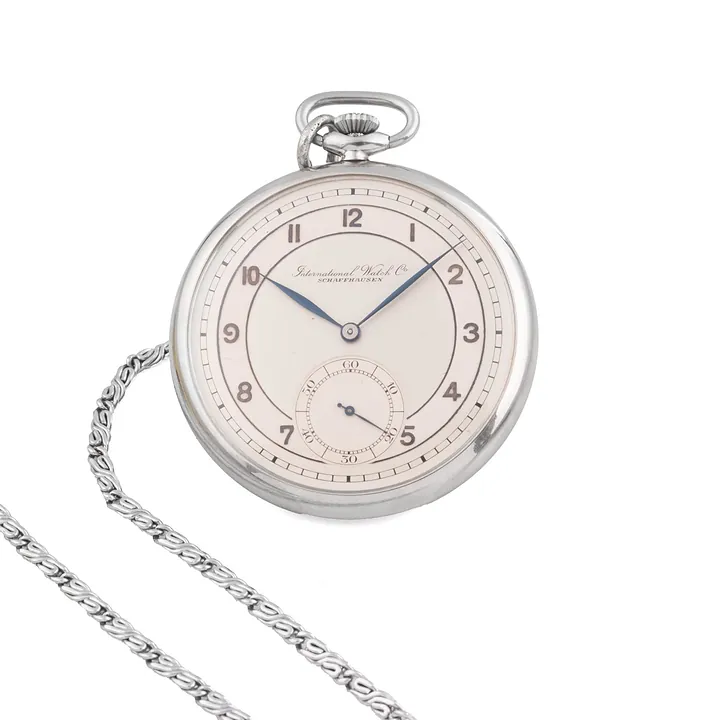
Pocket Watches · c. 1950
IWC Pocket Watch, c. 1950
Antiquorum auction archive, Geneva
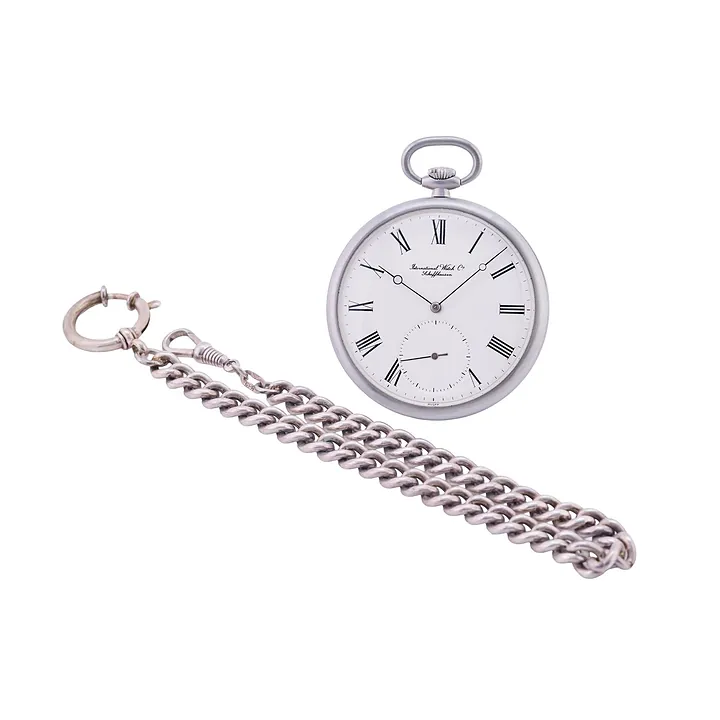
Pocket Watches · c. 1980
IWC pocket watch, ref. 5301, c. 1980
Antiquorum auction archive, Geneva
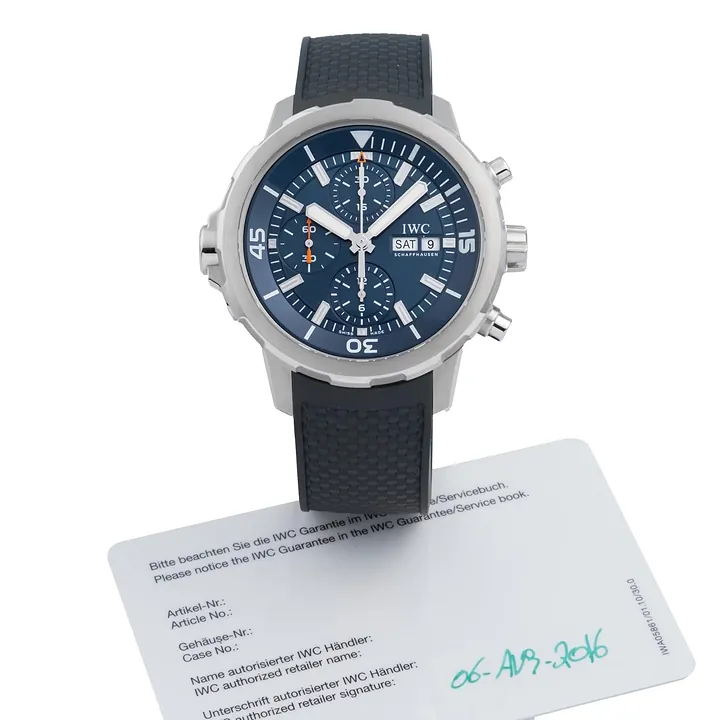
Wristwatches · originally sold in April 2016 (per the lot record)
IWC Aquatimer Chronograph Cousteau, ref. IW3768, originally sold in April 2016
Antiquorum auction archive, Geneva
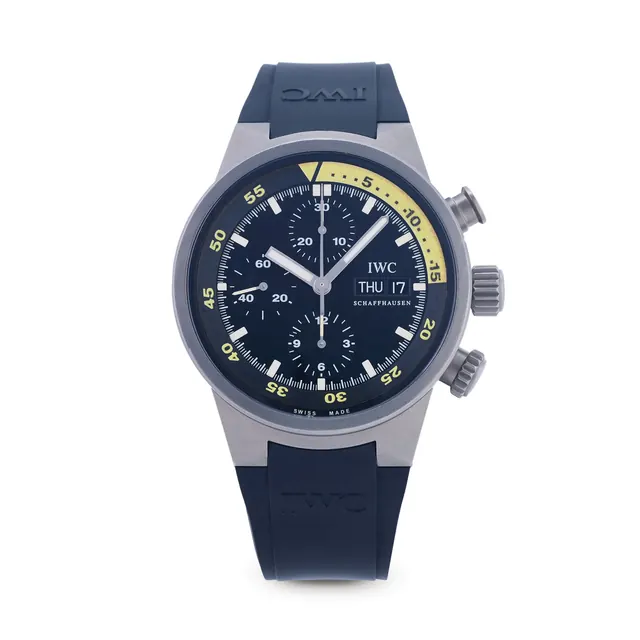
Wristwatches · c. 2010s
IWC wristwatch, ref. IW371918, Aquatimer, circa 2010s
Antiquorum auction archive, Geneva

Wristwatches · 1970
Wristwatch by Heno, Switzerland, 1970
Museum Rotterdam
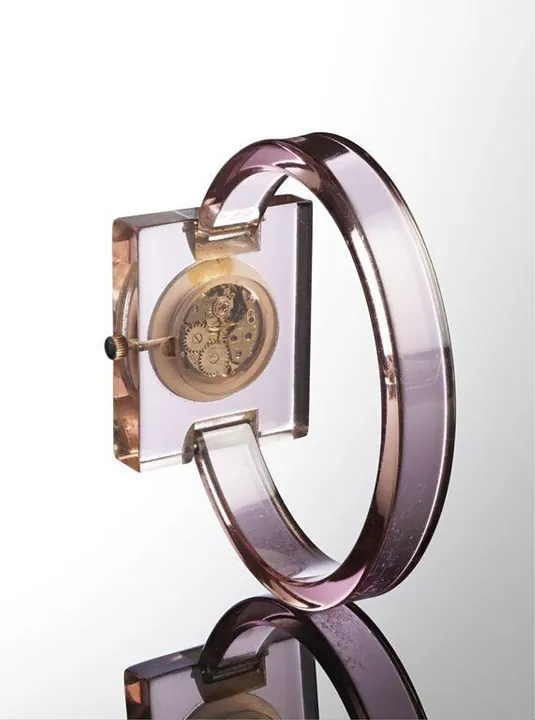
Wristwatches · 1970s
Wristwatch, plastic, by Gucci; Italy, 1970s.
Victoria and Albert Museum, London
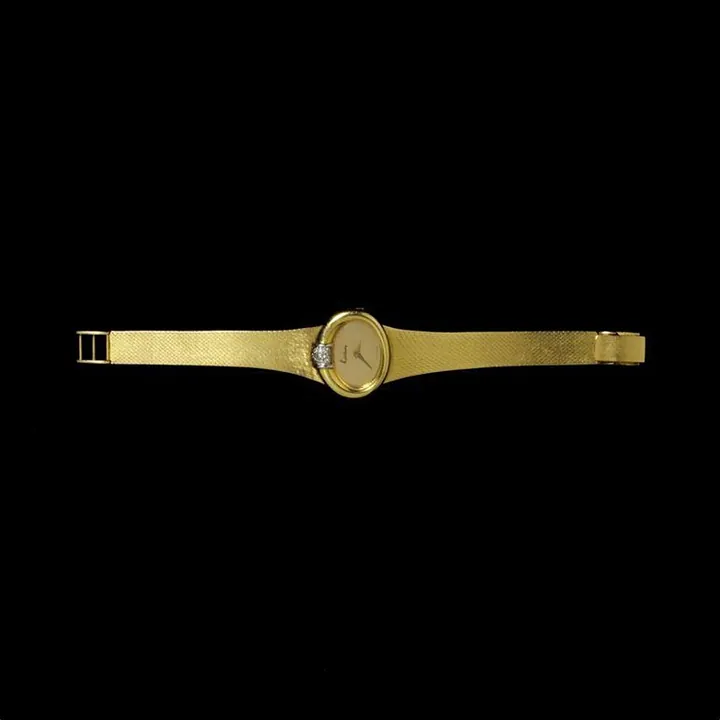
Wristwatches · 1973
Woman's watch, gold with diamonds set in platinum. Made for Kutchinsky, London by Chopard et Cie. Switzerland, 1973
Victoria and Albert Museum, London
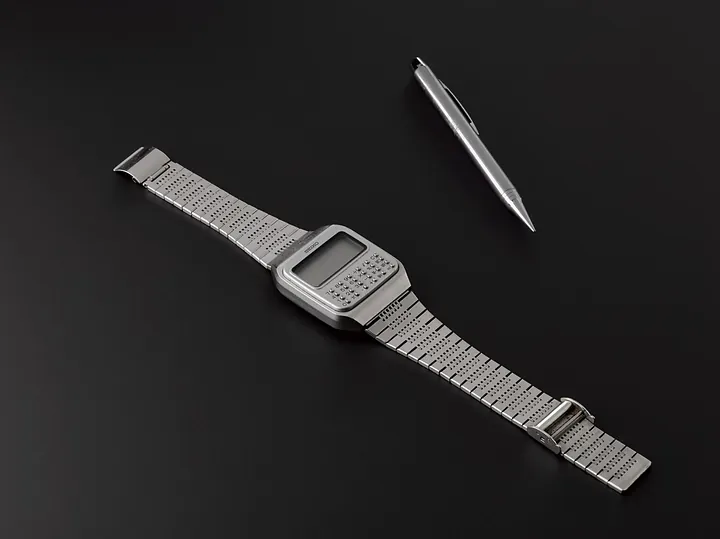
Wristwatches · 1978
Calculator wristwatch by Suwa Seikosha Co. Limited, Japan, 1978
Science Museum Group, London