
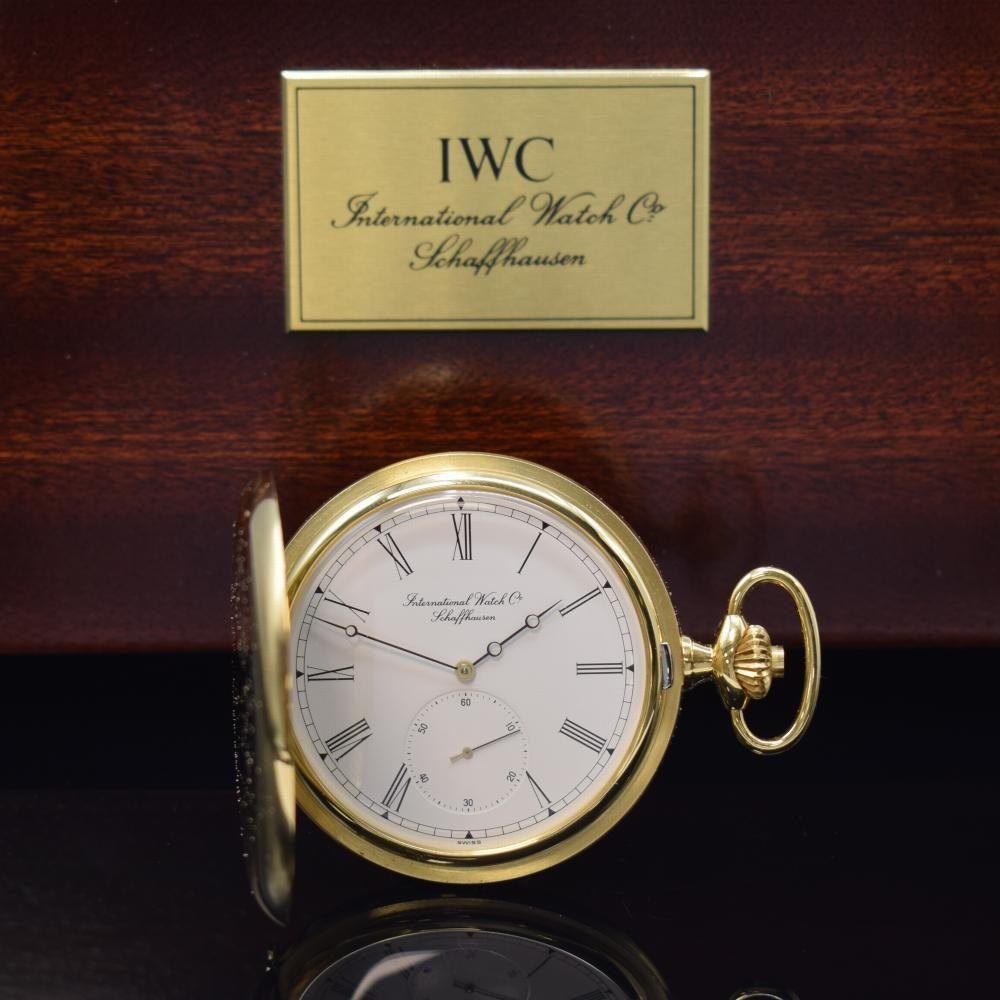
Pocket Watches · Hunting-cased pocket watch
IWC 18k Gold Hunting Cased Pocket Watch
- Maker / attribution
- IWC (source attribution)
- Date
- c. 1975
- Historical period
- Quartz Revolution (1969 – 1990)
- Country of origin
- Switzerland
- Object type
- Hunting-cased pocket watch
- Materials / technique
- 18k yellow gold
- Auction house
- Henry's Auktionshaus (via Invaluable)
- Lot
- 3318
- Credit line
- Henry's Auktionshaus (via Invaluable)
- Catalogue title (original)
- IWC fine and very rare, nearly mint 18k gold pocket watch (English)
View the source record (auction lot) ↗ (opens another website in a new tab)Suggest a correction
Record summary
Catalogued by Henry's Auktionshaus (via Invaluable) (lot 3318), this is a hunting-cased pocket watch attributed to IWC, made in Switzerland, dated c. 1975. The Atlas places it in the Quartz Revolution period (1969 – 1990) of its Pocket Watches collection. Materials and techniques recorded by the source: 18k yellow gold. The record is illustrated with 1 photograph.
Assembled from the source record's structured fields. Dates and attributions are given as the source states them; where a field is missing the Atlas leaves it blank rather than estimating.
Catalogue description
Original object description
Circa 1975, this Swiss hunting-cased pocket watch (reference 5409) by IWC is executed in polished 18k yellow gold. The savonette case measures 55 mm in diameter, features a total weight of around 130 grams, and is designed with an unadorned, smooth exterior incorporating a spring-loaded front lid alongside a back cover. Underneath, the enamel-toned dial is laid out with Roman numeral hour markers and a subsidiary seconds subdial located at the 6 o'clock position. The timepiece is driven by a hand-wound, 19-jewel calibre 982V lever movement characterized by gilded and engraved bar architecture, blued screws, and pressed chatons. Precision regulation relies on a swan's neck regulator, while oscillation is governed by a screw-Glucydur balance paired with a Breguet overcoil hairspring. Sourced from the estate of a collector, the watch is accompanied by an original wooden presentation box marked with the manufacturer's name and factory location. It is catalogued in condition 1-2, indicating a nearly mint state of preservation.
Historical context
Quartz Revolution (1969 – 1990)
Seiko's Astron begins mass quartz timekeeping; traditional industries contract sharply.
Quartz pocket watches and inexpensive novelty watches appeared, while traditional mechanical pocket watches survived mainly as collectibles and gifts.
Read the period in the timelineMore pocket watches from this periodEarlier: Modern Mechanical Horology
Atlas type guide
Hunter, half-hunter and open-face watches
In the nineteenth century the pocket watch case settled into a few standard forms. The hunter (French savonnette) has a hinged front lid protecting the crystal — reputedly for riders who could not risk broken glass — and is opened by pressing the crown or a push-piece. The half-hunter has a small window in the lid so the hands can be read when closed. The open-face (lépine) watch has no front cover, with the crown at 12; hunters normally carry the crown at 3.
Case types also changed with winding: key-wound watches gave way to keyless (stem-wound) mechanisms after Adrien Philippe's and others' designs of the 1840s, with pendant setting or lever setting.
What to look for
- Crown position relative to the seconds dial: at 3 for hunters, at 12 for open-face watches.
- Spring-loaded front cover with a push-piece in the pendant.
- Half-hunter chapter ring enamelled on the lid.
- Key holes in the inner dome (cuvette) versus keyless winding.
Dating clues
- Keyless winding spread after c. 1850 and became standard by c. 1890.
- English hallmarks inside gold and silver cases give the year of assay.
General guidance written by the Atlas editors about this kind of object. It is not a statement about this particular piece; for that, rely on the source record above and on physical examination.
Read next:Detached lever escapement
Related records
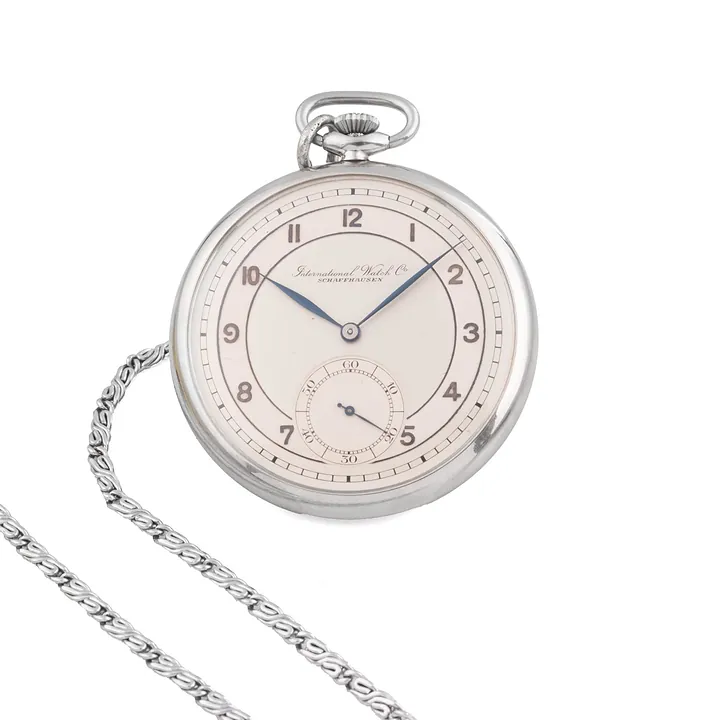
Pocket Watches · c. 1950
IWC Pocket Watch, c. 1950
Antiquorum auction archive, Geneva
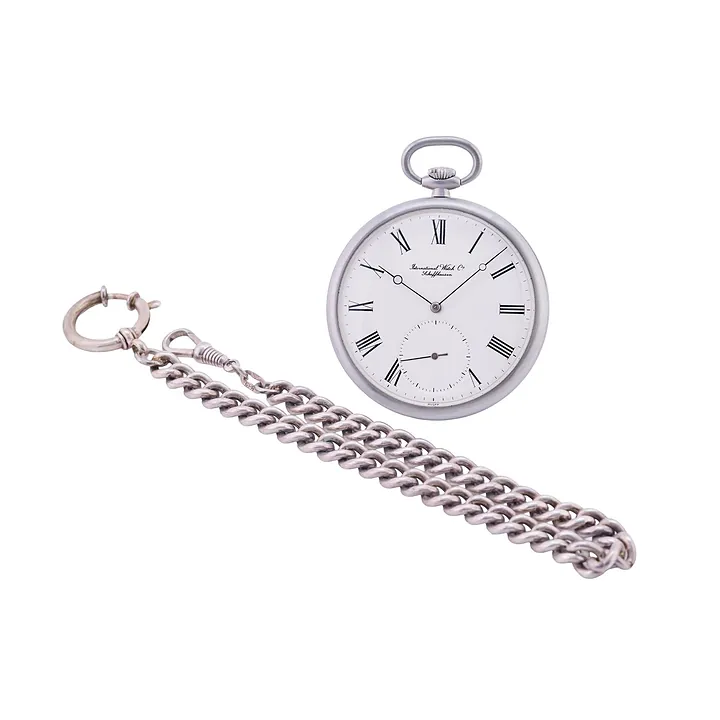
Pocket Watches · c. 1980
IWC pocket watch, ref. 5301, c. 1980
Antiquorum auction archive, Geneva
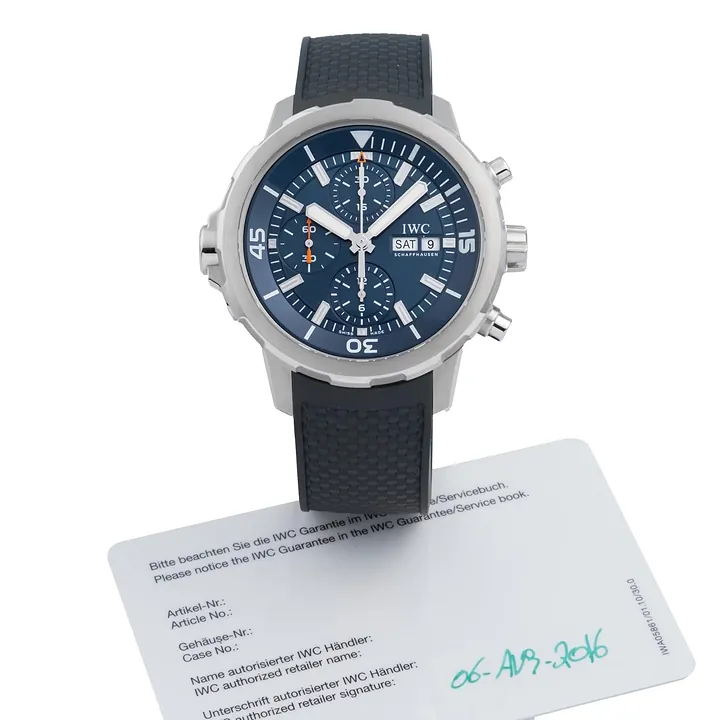
Wristwatches · originally sold in April 2016 (per the lot record)
IWC Aquatimer Chronograph Cousteau, ref. IW3768, originally sold in April 2016
Antiquorum auction archive, Geneva
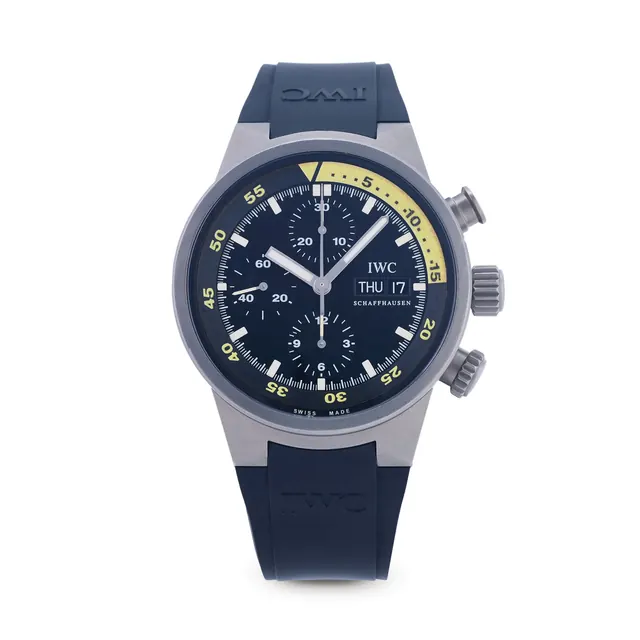
Wristwatches · c. 2010s
IWC wristwatch, ref. IW371918, Aquatimer, circa 2010s
Antiquorum auction archive, Geneva
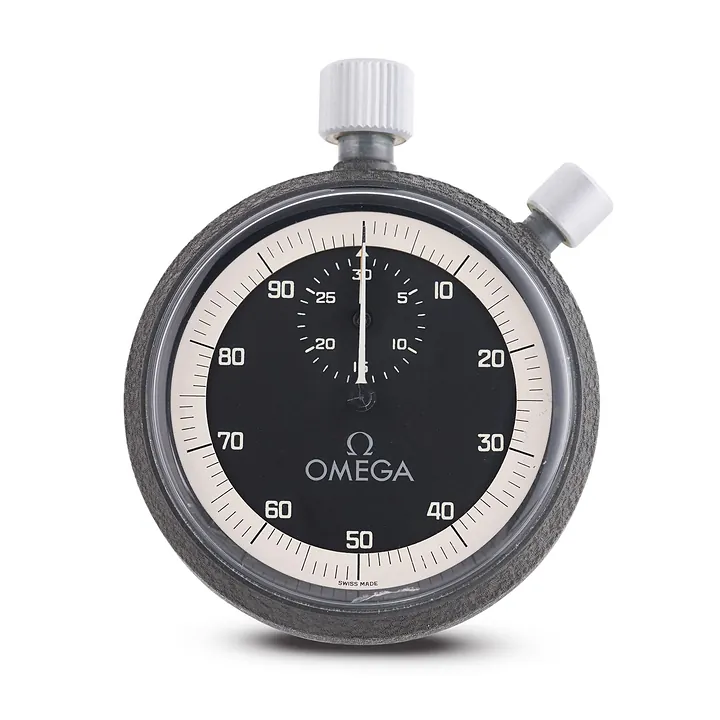
Pocket Watches · c. 1970s
Omega Stop Watch, c. 1970s
Antiquorum auction archive, Geneva
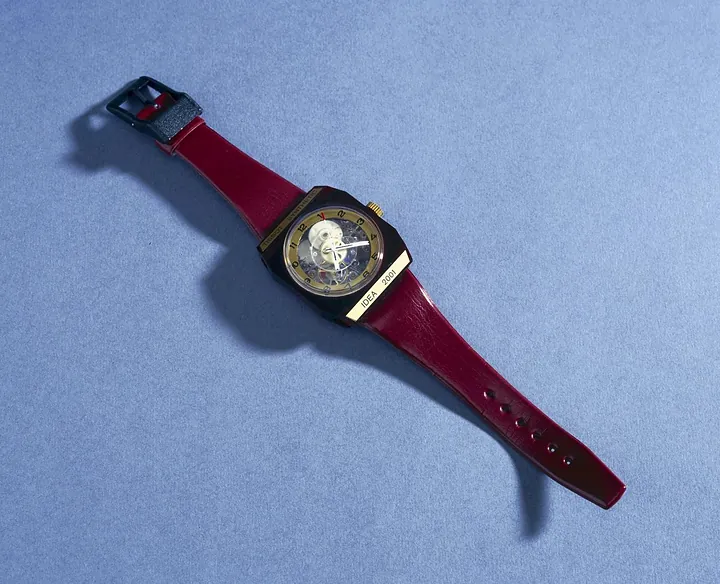
Pocket Watches · 1971–2001
"Tissot synthetic idea 2001" the first plastic watch, introduced in 1971
Science Museum Group, London

Pocket Watches · c. 1980
Audemars Piguet pocket watch, c. 1980
Antiquorum auction archive, Geneva
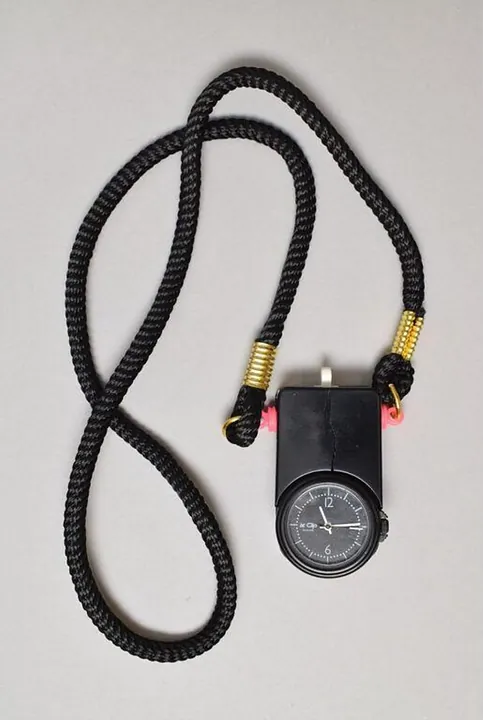
Pocket Watches · 1980s
Clip-on plastic watch with cord, made in Switzerland, 1980s
Victoria and Albert Museum, London