
Wristwatches · Wristwatch
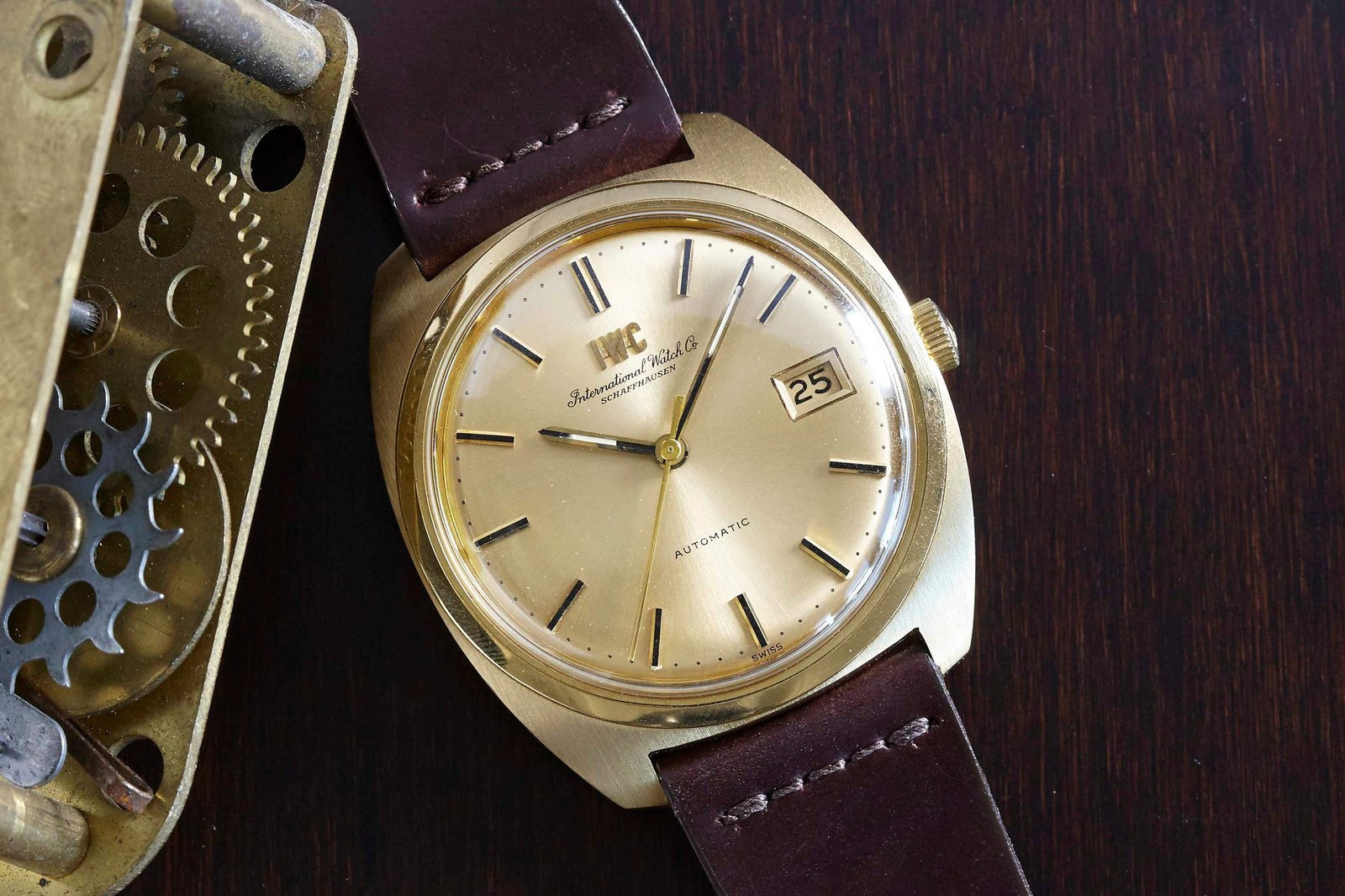
IWC 18K Automatic, 1970s
- Maker / attribution
- IWC (maker)
- Date
- 1970s
- Historical period
- Quartz Revolution (1969 – 1990)
- Country of origin
- Switzerland
- Object type
- Wristwatch
- Dimensions
- Case 11.2 mm
- Stock no.
- Product 2416882625
- Credit line
- Dealer listing, Analog/Shift (product 2416882625)
- Catalogue title (original)
- IWC 18K Automatic (English)
View the source record (dealer listing) ↗ (opens another website in a new tab)Suggest a correction
Record summary
Catalogued by Analog/Shift (dealer), New York (stock number Product 2416882625), this is a wristwatch by IWC, made in Switzerland, dated 1970s. The Atlas places it in the Quartz Revolution period (1969 – 1990) of its Wristwatches collection. Recorded dimensions: Case 11.2 mm. The record is illustrated with 6 photographs.
Assembled from the source record's structured fields. Dates and attributions are given as the source states them; where a field is missing the Atlas leaves it blank rather than estimating.
Catalogue description
Dealer description — Analog/Shift
Simple. Refined. Understated. When choosing a good dress watch, one should be conscious of it's role: A dress watch should not leap from the wrist, declaring its presence obnoxiously to onlookers. It should be a subtle companion that accents the wearer and his outfit. Ideally a precious metal, a dress watch should also be simple and clean, without the noise of chronograph or other functions. While the International Watch Company is often associated with their lovely Portuguese chronographs, sturdy Aquatimer divers, Big Pilot aviators, or their 70's inspired Ingenieur SLs, it has also been a longstanding manufacture of some of the most beautiful dress watches we can think of. With a solid 18K yellow gold cushion case, this IWC Schaffhausen fits the bill for wrist attire in any setting where a little class goes a long way. As with many of IWC's watches, the true beauty of the timepiece is on the inside. In this case, the mechanical genius comes in the form of the Calibre 8541B automatic movement, long considered one of IWC's best engineered movements. Easy to service and incredibly accurate, it is also compact enough to make this a relatively slim-wearing watch for the era, measuring in at only 11.2mm from case back to crystal. This particular example dates to the 1970s and is in remarkable original condition. The 36mm cushion case retains crisp lines and brushing and is perfectly accented by the clean gold tone sunburst dial and hands. Paired with a Horween Shell Cordovan strap with matching gold hardware, this IWC is ready for formal wear. And, with the added benefit of a date function, this piece would make an extraordinary everyday dress or business piece. Whatever the use, there is no denying that this IWC's classic stylings and robust movement make it a lovely and desirable piece.
Historical context
Quartz Revolution (1969 – 1990)
Seiko's Astron begins mass quartz timekeeping; traditional industries contract sharply.
Quartz and digital watches transformed the market after 1969. Swiss employment collapsed, Japanese and Hong Kong production soared, and the Swatch (1983) helped the Swiss industry recover; mechanical watches survived as luxury goods.
Read the period in the timelineMore wristwatches from this periodEarlier: Modern Mechanical Horology
Atlas type guide
Automatic (self-winding) watches
Self-winding watches use the wearer's motion to wind the mainspring. Abraham-Louis Perrelet and Breguet made 'perpétuelle' pocket watches with oscillating weights in the late eighteenth century, but the principle only became practical in the wristwatch. John Harwood patented a bumper automatic in 1923; Rolex's Perpetual rotor (1931) winding in one direction, and later bidirectional rotors (Eterna, Felsa Bidynator), established the modern form. Micro-rotors (Universal Genève, Buren) and peripheral rotors made automatic watches thinner.
What to look for
- A semicircular rotor turning 360° over the movement, or a 'bumper' weight that rebounds between springs.
- 'Automatic', 'Perpetual' or 'Self-winding' on the dial.
- A sealed screw-back case, since automatic watches are wound less often by the crown.
Dating clues
- Bumper automatics: 1923–c. 1955.
- Full rotors: from 1931 (Rolex); widespread after c. 1950.
- Micro-rotors: from 1954–1958.
General guidance written by the Atlas editors about this kind of object. It is not a statement about this particular piece; for that, rely on the source record above and on physical examination.
Related records
Pocket Watches · c. 1950
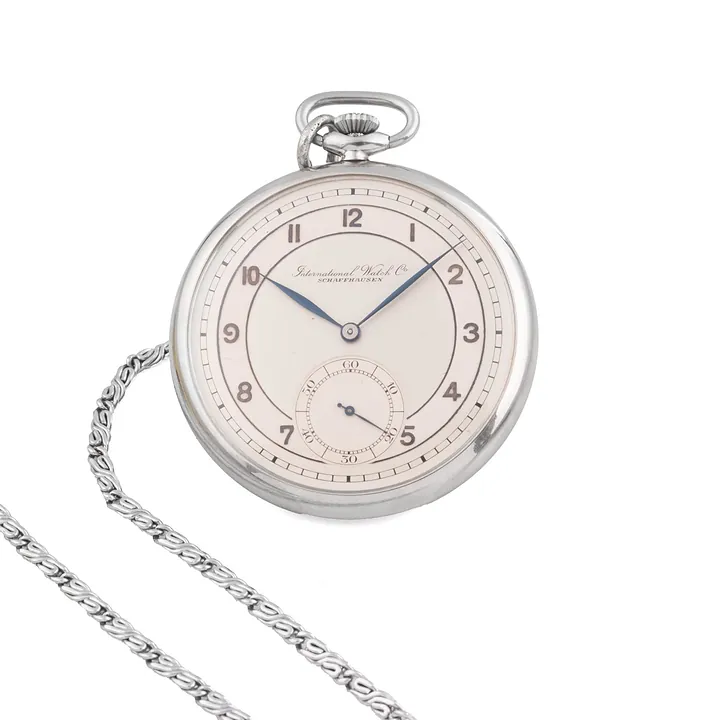
IWC Pocket Watch, c. 1950
Antiquorum auction archive, Geneva
Pocket Watches · c. 1980
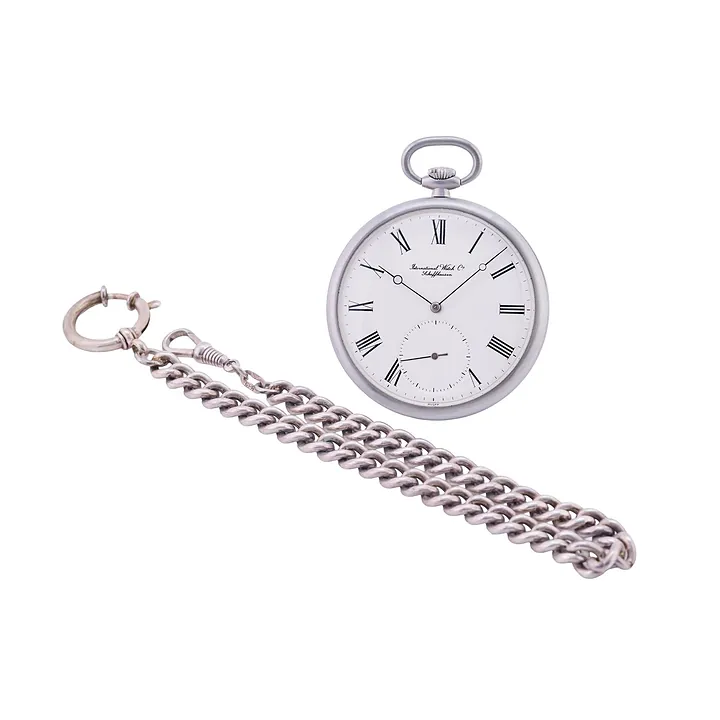
IWC pocket watch, ref. 5301, c. 1980
Antiquorum auction archive, Geneva
Wristwatches · originally sold in April 2016 (per the lot record)
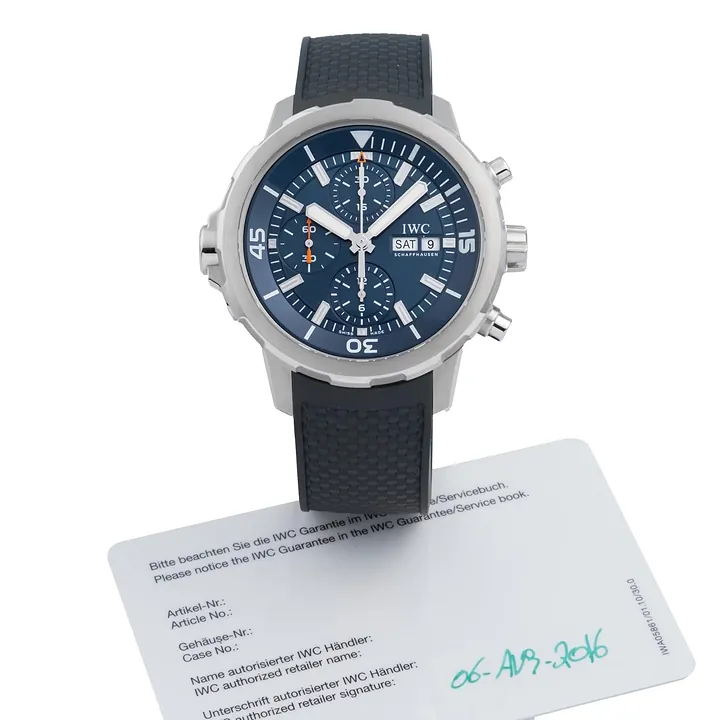
IWC Aquatimer Chronograph Cousteau, ref. IW3768, originally sold in April 2016
Antiquorum auction archive, Geneva
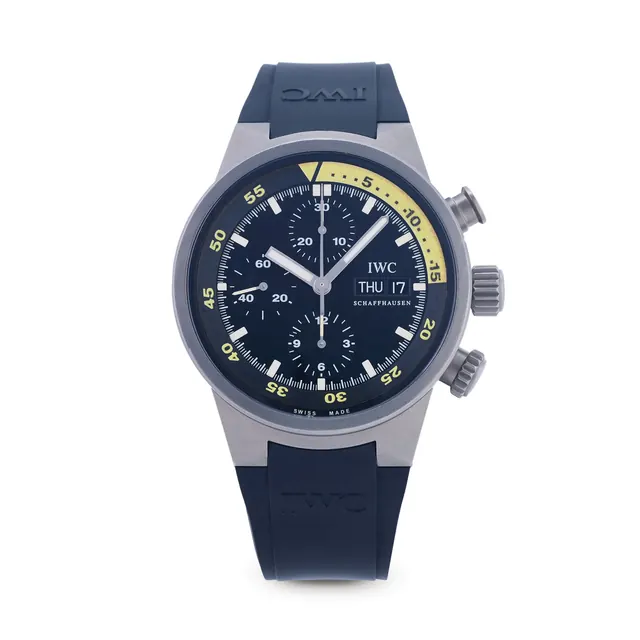
Wristwatches · c. 2010s
IWC wristwatch, ref. IW371918, Aquatimer, circa 2010s
Antiquorum auction archive, Geneva

Wristwatches · 1970
Wristwatch by Heno, Switzerland, 1970
Museum Rotterdam

Wristwatches · 1960–1986
'Tri-Compax' calendar chronograph wristwatch in gold case, by Universal, Geneva, Switzerland, 1960–1986.
Science Museum Group, London

Wristwatches · 1969–1970
Beta 21 Quartz wristwatch movement, made in Switzerland, 1970.
Science Museum Group, London

Wristwatches · c. 1969
Omega Speedmaster Moonwatch, ref. 145022-69st, c. 1969
Antiquorum auction archive, Geneva