
Pocket Watches · Pocket watch
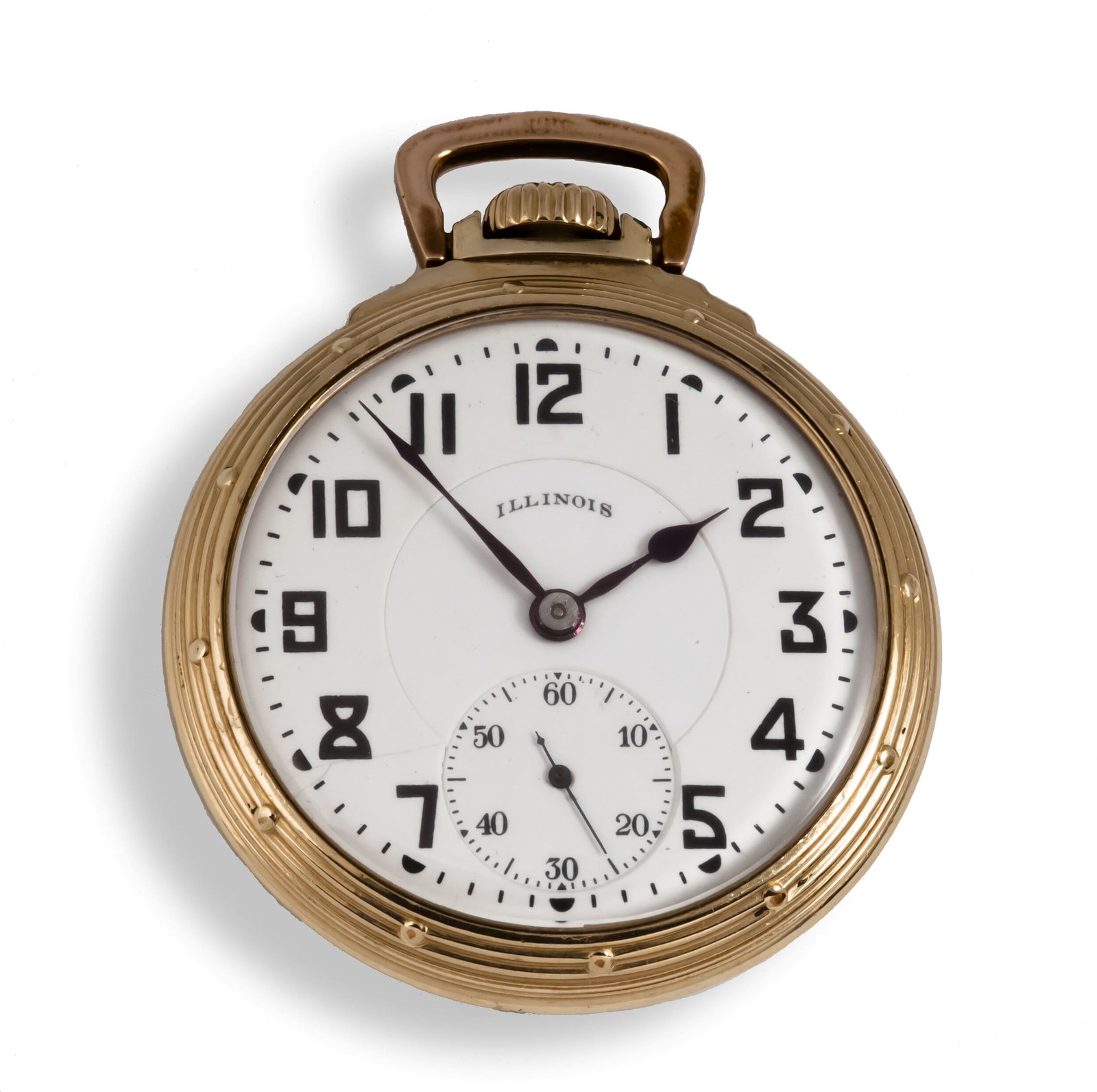
Illinois Bunn Special Railroad Watch, 1923
- Maker / attribution
- Unrecorded in source
- Date
- 1923
- Historical period
- Golden Age of Mechanical Watchmaking (1900 – 1945)
- Country of origin
- United States
- Object type
- Pocket watch
- Dealer
- WatchMuseum.org shop
- Stock no.
- Product 378
- Credit line
- Dealer listing, WatchMuseum.org shop (product 378)
- Catalogue title (original)
- Illinois Bunn Special Railroad Watch (English)
View the source record (dealer listing) ↗ (opens another website in a new tab)Suggest a correction
Record summary
Catalogued by WatchMuseum.org shop (stock number Product 378), this is a pocket watch, made in United States, dated 1923. The Atlas places it in the Golden Age of Mechanical Watchmaking period (1900 – 1945) of its Pocket Watches collection. The record is illustrated with 5 photographs.
Assembled from the source record's structured fields. Dates and attributions are given as the source states them; where a field is missing the Atlas leaves it blank rather than estimating.
Catalogue description
Dealer description — WatchMuseum.org shop
The Illinois Bunn Special Railroad Watch, crafted in 1923, stands as a testament to the rich heritage and meticulous craftsmanship of the Illinois Watch Co., a company that evolved through several iterations since its inception in 1869. Known for producing a relatively modest number of watches—around 5 million between 1872 and 1927—the Illinois Watch Co. carved out a niche for itself in the horological world, particularly with its Bunn Special model, often hailed as the King of Railroad watches. Collectors are drawn to Illinois watches not only for their historical significance but also for the complexity and variety of their models, which often feature the distinctive “Springfield Illinois” marking on the bottom plate. The Bunn Special was designed to meet the stringent standards required for American Railroad Watches, including a minimum of 17 jewels, double rollers, Arabic numerals with minute markers, and adjustments for at least five positions. These watches were also engineered to maintain accuracy within six seconds per month across a temperature range of -5°C to +30°C. The intricate damaskeening patterns on the plates and wheels further enhance their appeal, making the Illinois Bunn Special Railroad Watch a prized possession for collectors and horology enthusiasts alike. The Illinois Watch Co., started life in 1869 as the Illinois Springfield Watch Co which soon became the Springfield Illinois Watch Co in 1879 and subsequently the Illinois Watch Co in 1885. The company was sold to the Hamilton Watch Co in 1927. Despite the fact that Illinois only produced about 5 million watches between 1872 and 1927 (a very small number when compared to Elgin and Waltham), the Bunn Special is considered by many to be the King of the Railroad watches. Collecting Illinois watches is extremely complicated because they used a seemingly endless variety of models, with obscure initials to identify them and understanding this requires a great deal of study, especially as some are considerably more valuable than others. One important identifying feature is that almost all Illinois watches have “Springfield Illinois” on the bottom plate. American Railroad Watches had to conform to very exacting specifications; originally 17 jewels minimum. Double roller. Arabic numerals with minutes marked. Adjusted to at least 5 positions. Accurate from -5c to +30c and to 6 seconds a month. They had to have screw on back and front both for the cleanliness of the movement and to prevent the time being changed too easily. Many Railroad (and other American) watches have intricate patterns and designs on the plates and the wheels. This is called Damaskeening and was brought to America by Swiss emigres who came to work in the booming American Pocket watch industry in the last three decades of the 19th century. Rival companies like Waltham, Hamilton and Elgin etc all competed to get the various different Railroad contracts to supply watches and as a result each watch company kept on making their watches to higher and higher specifications. From the early 1880s until the mid 1920s, American Railroad Watches were arguably the best and highest quality, mass produced watches in the world. This is an outstanding watch in all ways in fantastic condition. ILLINOIS BUNN SPECIAL RAILROAD POCKET WATCH. 1923.. OVERALL CONDITION: The watch is working well and in generally good condition. SIZE OVERALL: 51.1mm (excluding bow and crown) SIZE MOVEMENT: 42.4mm. US size 16 MANUFACTURED IN: Springfield, Illinois, USA YEAR OF MANUFACTURE: 1923 JEWELS: 21 MOVEMENT TYPE: Three quarter plate. Model 15. This watch has a 60 hour barrel but the spring in a standard one. Gold jewel cups and centre wheel. MOVEMENT CONDITION: Excellent. Stripped and ultra sound cleaned within the last 12 months. MOVEMENT ACCURACY: +/- 5 minutes in 24 hours RUN TIME: 24 – 36 hours approx. on one full wind. ESCAPEMENT: Lever DIAL: Arabic numerals. Good condition with Illinois trade mark. Feint hairline below 8. CRYSTAL: Replacement Mineral glass bevel edge low dome crystal. WIND: Crown wind SET: Lever set (under dial bezel) CASE: 10K Gold filled case by the Hamilton Watch case Co.. Screw on/off back and front. Illinois Railroad Watch Case Model 181 CONDITION: Good for its age. KNOWN DEFECTS: No obvious faults.
Historical context
Golden Age of Mechanical Watchmaking (1900 – 1945)
The wristwatch displaces the pocket watch; waterproof cases, self-winding and grand complications.
The pocket watch reached technical maturity and then began to give way to the wristwatch after the First World War. Complicated watches for collectors such as Henry Graves Jr. and James Ward Packard, railroad watches, and slim Art Deco dress watches are characteristic.
Read the period in the timelineMore pocket watches from this periodEarlier: Industrial Revolution
Atlas type guide
Railroad and railway watches
Timetables made accurate timekeeping a matter of safety. After a fatal collision at Kipton, Ohio, in 1891, American railroads adopted strict standards: open-face watches, lever setting, at least 17 jewels, adjustment to temperature and five positions, and a performance within 30 seconds a week, inspected regularly by approved watch inspectors. Waltham, Elgin, Hamilton, Illinois and Ball made railroad-grade watches in large numbers.
European railways issued service watches to guards, drivers and station staff, often engraved with the railway's initials and a staff number. Such watches link industrial timekeeping with the standardisation of time zones (Greenwich Mean Time adopted by British railways in 1847; North American standard time in 1883).
What to look for
- Open-face cases with the crown at 12 and lever setting under the bezel.
- Montgomery dials with every minute numbered, or bold Arabic numerals.
- 'Railroad grade', '21 Jewels', 'Adjusted 5 positions' on the movement.
- Railway initials and issue numbers engraved on the case back.
Dating clues
- American railroad standards: from 1891–93, revised c. 1908.
- Serial numbers of American makers allow dating to within a year.
General guidance written by the Atlas editors about this kind of object. It is not a statement about this particular piece; for that, rely on the source record above and on physical examination.
Read next:Detached lever escapement
Related records
Pocket Watches · c. 1900
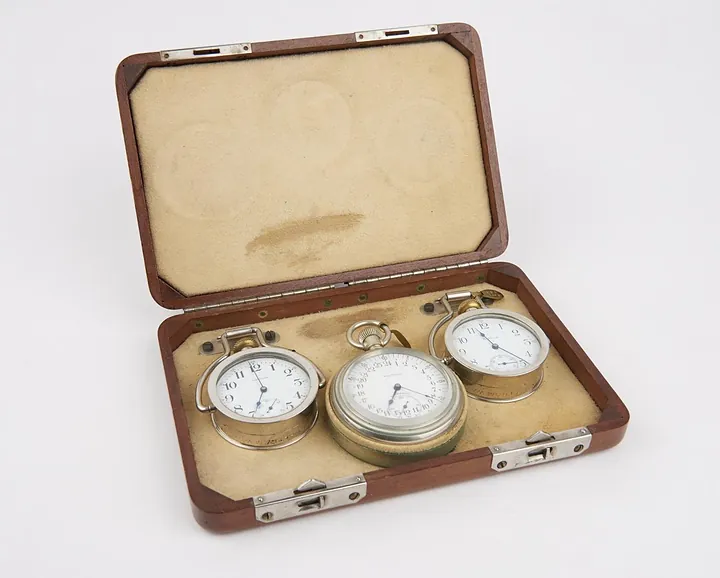
Pocket watch by American Waltham Watch Company, United States, c. 1900
Science Museum Group, London
Pocket Watches · c. 1900
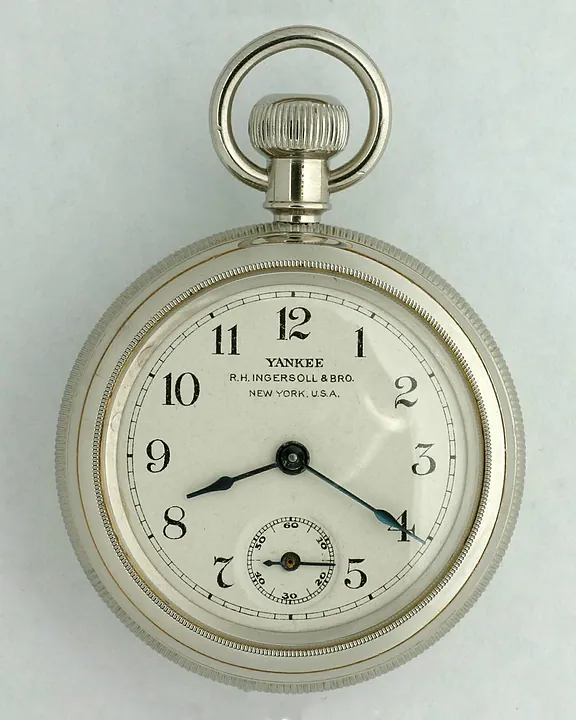
Pocket watch by Robt. H. und Bro. Ingersoll, United States, c. 1900
German Clock Museum
Pocket Watches · 1904
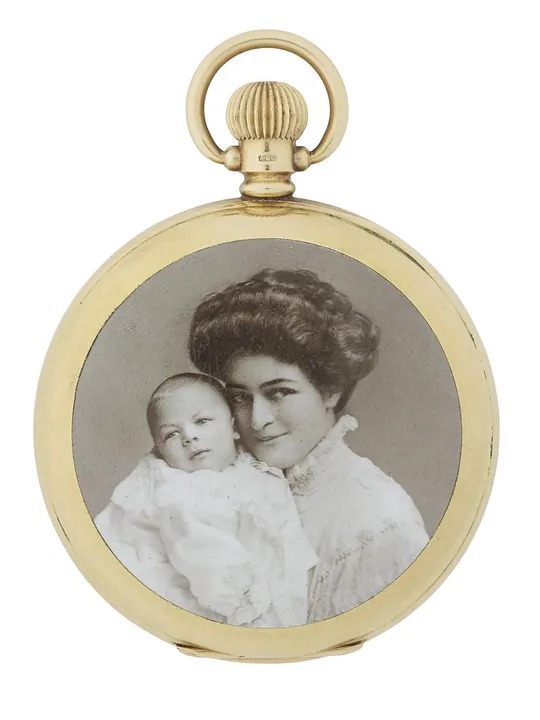
Pocket watch by American Waltham Watch Company and Dennison Watch Case Co, United States, 1904
Science Museum Group, London
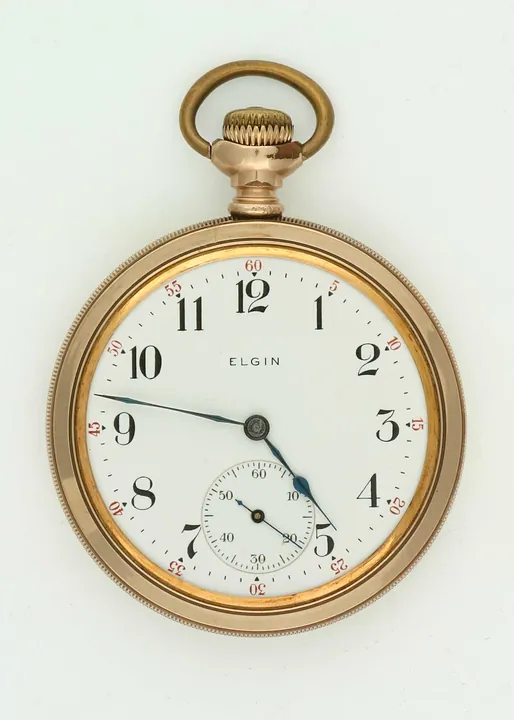
Pocket Watches · c. 1905
Pocket watch by Brooklyn Watch Case Co. B. W. C., United States, c. 1905
German Clock Museum
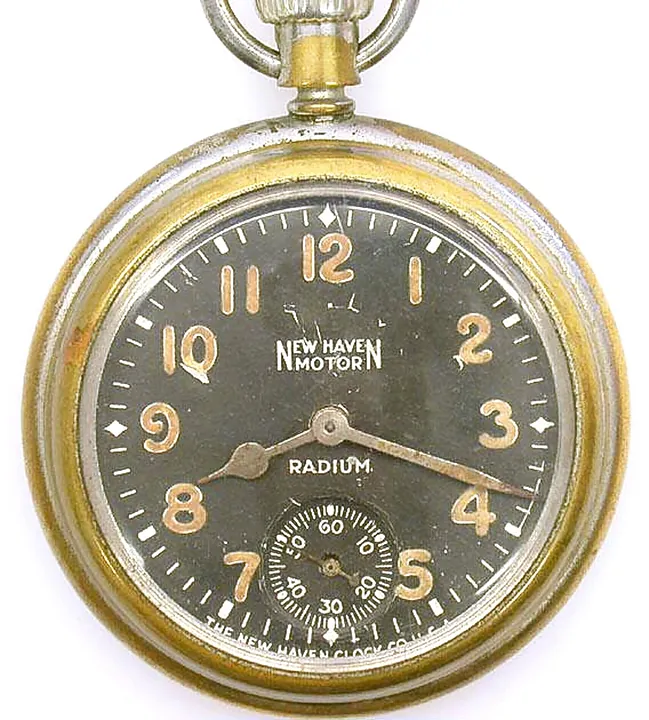
Pocket Watches · c. 1910
Pocket watch by New Haven Clock Co., United States, c. 1910
German Clock Museum
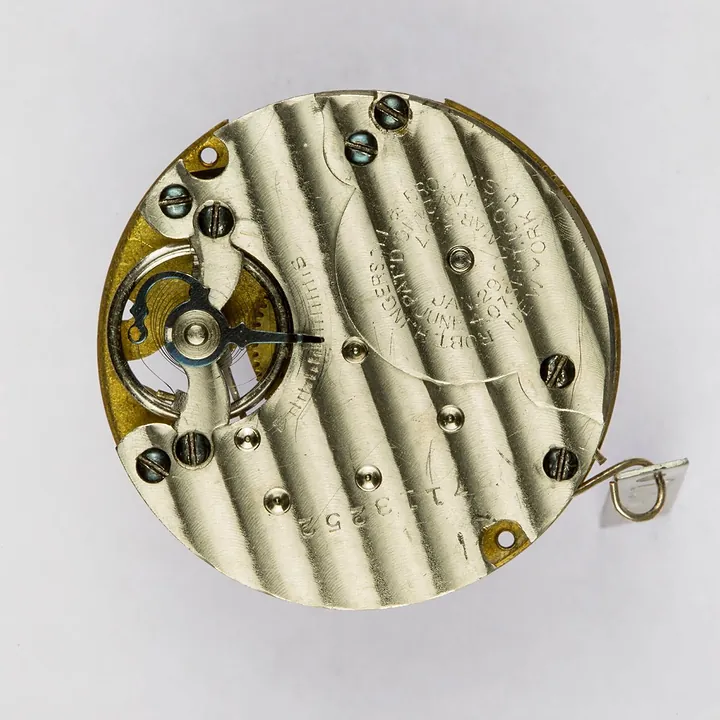
Pocket Watches · c. 1910
Pocket watch by Robt. H. und Bro. Ingersoll, United States, c. 1910
German Clock Museum
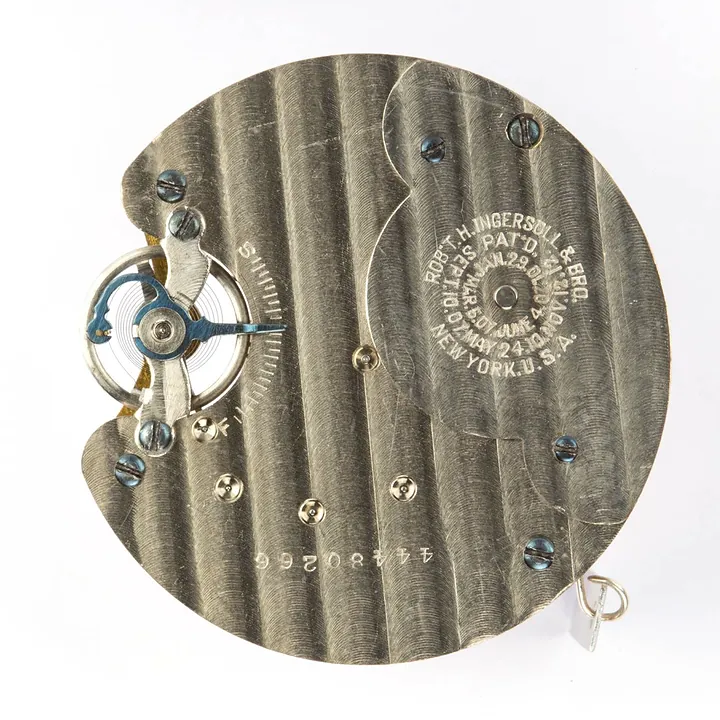
Pocket Watches · c. 1915
Pocket watch by Robt. H. und Bro. Ingersoll, United States, c. 1915
German Clock Museum
Pocket Watches · c. 1915
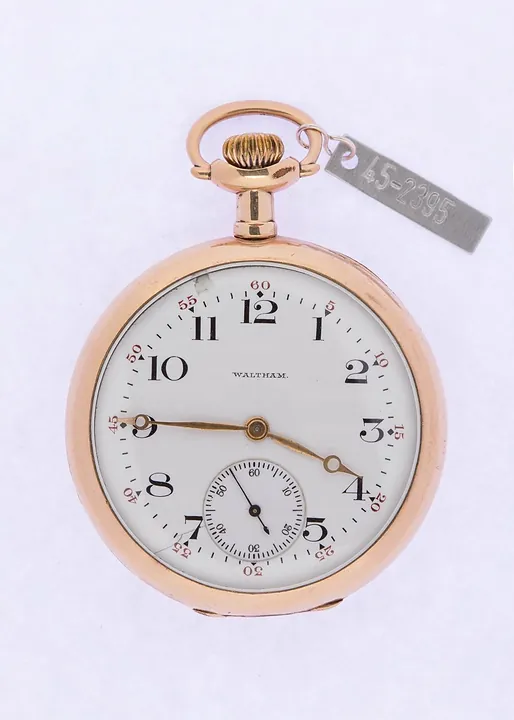
Pocket watch by Waltham A. W. W. Co., United States, c. 1915
German Clock Museum