
Clocks · Dashboard clock
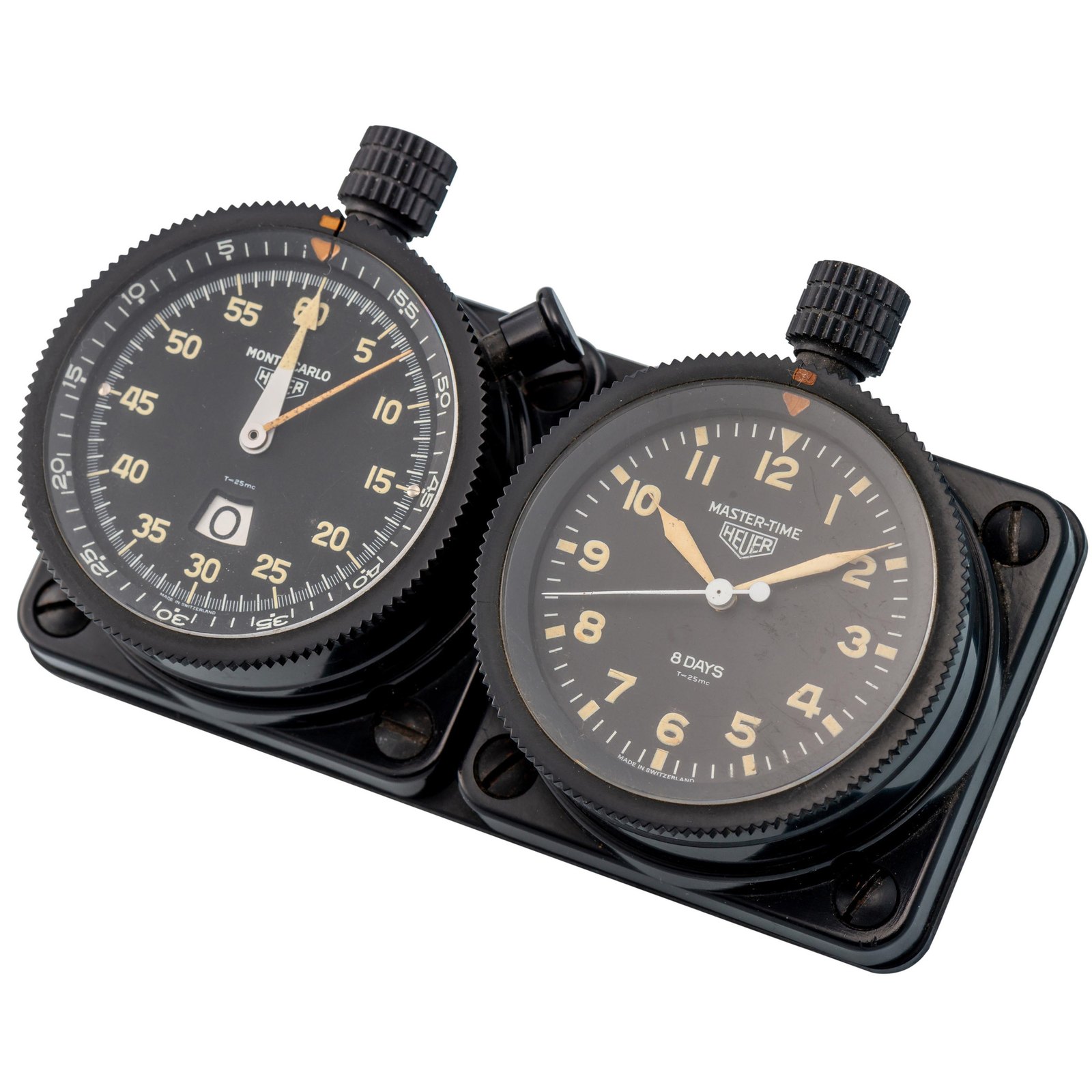
Heuer dashboard clock, 8-Day Going and Centre-Seconds Watch Seconds Timer with Minu, circa 1970
- Maker / attribution
- Heuer (brand / maker)
- Date
- c. 1970
- Historical period
- Quartz Revolution (1969 – 1990)
- Country of origin
- Switzerland
- Object type
- Dashboard clock
- Auction house
- Antiquorum auction archive, Geneva
- Lot
- Lot 358-20
- Credit line
- Auction lot record: LOT 20, Monaco Auction
- Catalogue title (original)
- HEUER RACING SET, 8-DAY GOING AND CENTRE-SECONDS WATCH, SECONDS TIMER WITH MINUTE AND HOUR COUNTERS; “MASTER-TIME” AND “MONTE-CARLO”; SYNTHETIC RESIN AD ANODISED METAL (English)
View the source record (auction lot) ↗ (opens another website in a new tab)Suggest a correction
Record summary
Catalogued by Antiquorum auction archive, Geneva (lot Lot 358-20), this is a dashboard clock by Heuer, made in Switzerland, dated c. 1970. The Atlas places it in the Quartz Revolution period (1969 – 1990) of its Clocks collection. The record is illustrated with 1 photograph.
Assembled from the source record's structured fields. Dates and attributions are given as the source states them; where a field is missing the Atlas leaves it blank rather than estimating.
Catalogue description
Antiquorum catalogue description
Synthetic resin and anodised metal, dashboard clocks racing set, with an 8-day going and centre-seconds watch for the meantime and a seconds timer with progressive 60-minute counter (central hand) and digital jumping 12-hour counter (chronograph function activated by the winding-crown); black dials with luminescent suspended Arabic numbers and indexes.
Lot specifications (Antiquorum)
Model: “Master-Time” and “Monte-Carlo”; Reference: 18.0736; Movement No.: unnumbered; Case No.: unnumbered; Material: synthetic resin and anodised metal; Caliber: 18’’’, unadjusted, 15 jewels / 7714, unadjusted, 7 jewels; Dimensions: Ø 58 mm. / Ø 58 mm. / 57 x 122 mm.; Weight: 268.1 gr. (approx.); Signature: dials and movements
Inscriptions & marks
dials and movements
Historical context
Quartz Revolution (1969 – 1990)
Seiko's Astron begins mass quartz timekeeping; traditional industries contract sharply.
Quartz movements and digital displays made accurate clocks cheap and ubiquitous after the early 1970s. LED and LCD clocks, clock radios and radio-controlled clocks appeared, while traditional mechanical clockmaking contracted sharply in Germany, France and Britain.
Read the period in the timelineMore clocks from this periodEarlier: Modern Mechanical Horology
Atlas type guide
Timers, stopwatches, chronoscopes and time recorders
Instruments for measuring short intervals or recording when something happened form a large and practical branch of horology. Sports stopwatches and split-seconds timers, laboratory chronoscopes (such as Hipp's, which measured thousandths of a second for psychology and ballistics experiments), metronomes for music, watchmen's clocks that recorded patrol rounds, and the time recorders that clocked factory workers in and out all derive from clock and watch technology.
These objects matter historically because they show timekeeping leaving the observatory and the drawing room and entering industry, science and sport. Many were mass-produced, and their dials, scales and patents chart the rise of electrification and industrial management.
What to look for
- Scales graduated in fifths, tenths or hundredths of a second, or decimal minutes for industrial use.
- Start, stop and reset push-pieces; a second hand that can be stopped independently (split seconds).
- Recording devices: paper discs or tapes, printing mechanisms, keys or punches.
- Patent numbers and dates on the dial or case, which give a terminus post quem.
Dating clues
- Hipp chronoscopes were made from the 1840s into the twentieth century.
- Employee time recorders spread from the 1890s (Bundy, IBM, International Time Recording Co.).
- Quartz and electronic timers replaced mechanical stopwatches in sport from the 1970s.
General guidance written by the Atlas editors about this kind of object. It is not a statement about this particular piece; for that, rely on the source record above and on physical examination.
Read next:Flyback chronograph
Related records
Pocket Watches · c. 1960
Heuer Racing SET, c. 1960
Antiquorum auction archive, Geneva
Wristwatches · c. 1980
Heuer Pasadena, ref. 750.501-3, c. 1980
Antiquorum auction archive, Geneva
Wristwatches · c. 1970s
Heuer wristwatch, ref. 110.633, Calculator, circa 1970s
Antiquorum auction archive, Geneva
Wristwatches · c. 1975
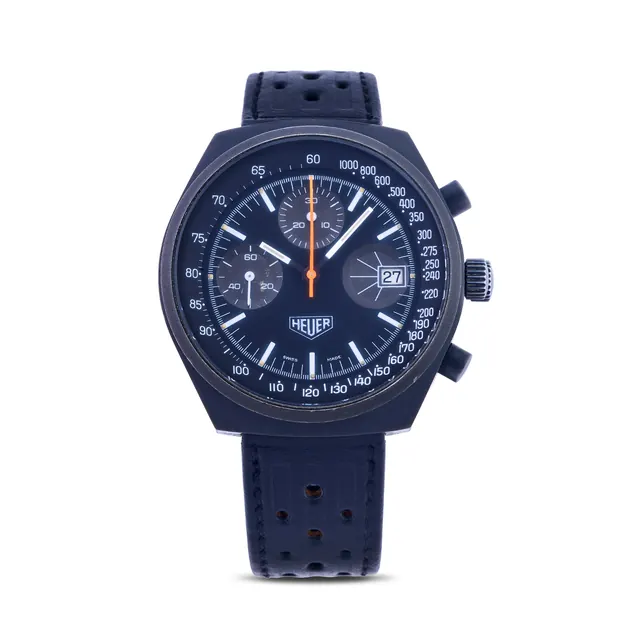
Heuer wristwatch, ref. 13/1, circa 1975
Antiquorum auction archive, Geneva
Clocks · c. 1960-1970s
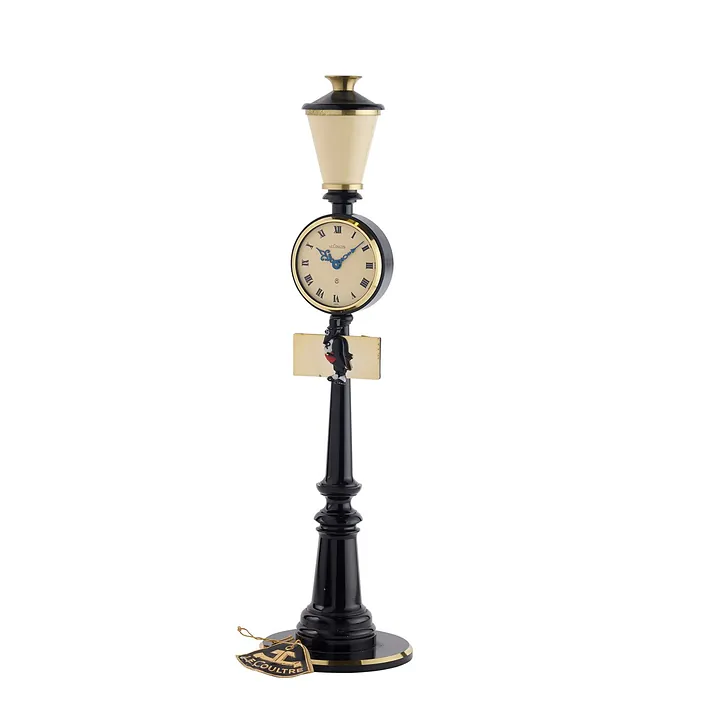
Lecoultre Street Light Lamp, ref. 397, c. 1960-1970s
Antiquorum auction archive, Geneva
Clocks · c. 1960-1970s
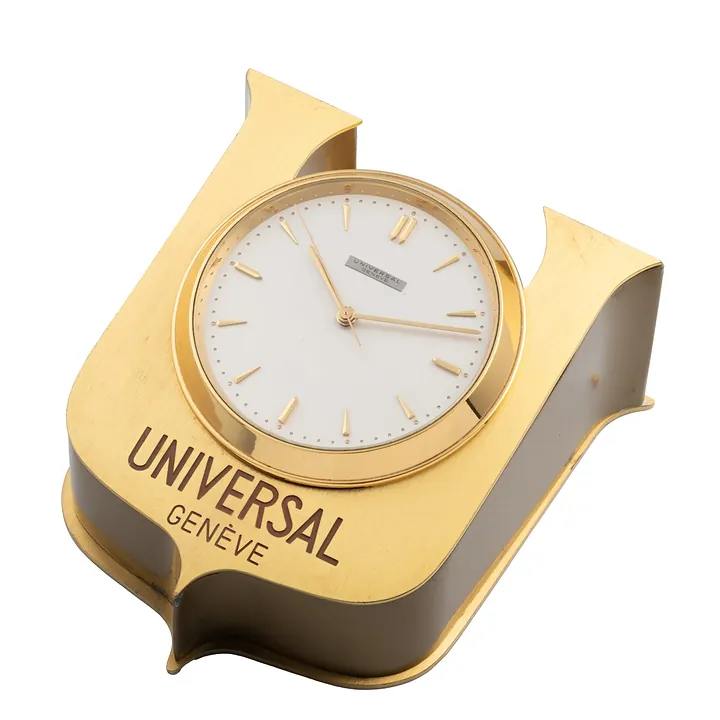
Universal Genève clock, ref. 999.116.01, c. 1960-1970s
Antiquorum auction archive, Geneva
Clocks · 1965–1975
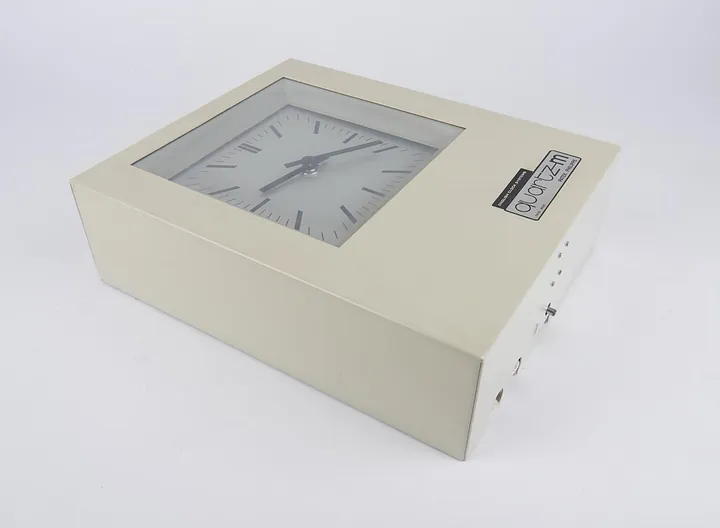
Quartz master clock QM 1, with movement by Patek Phillippe, Switzerland, 1965–1975. Supplied by English Clock Systems.
Science Museum Group, London
Clocks · c. 1970
Jaeger Lecoultre Table Clock, c. 1970
Antiquorum auction archive, Geneva