
Wristwatches · Wristwatch
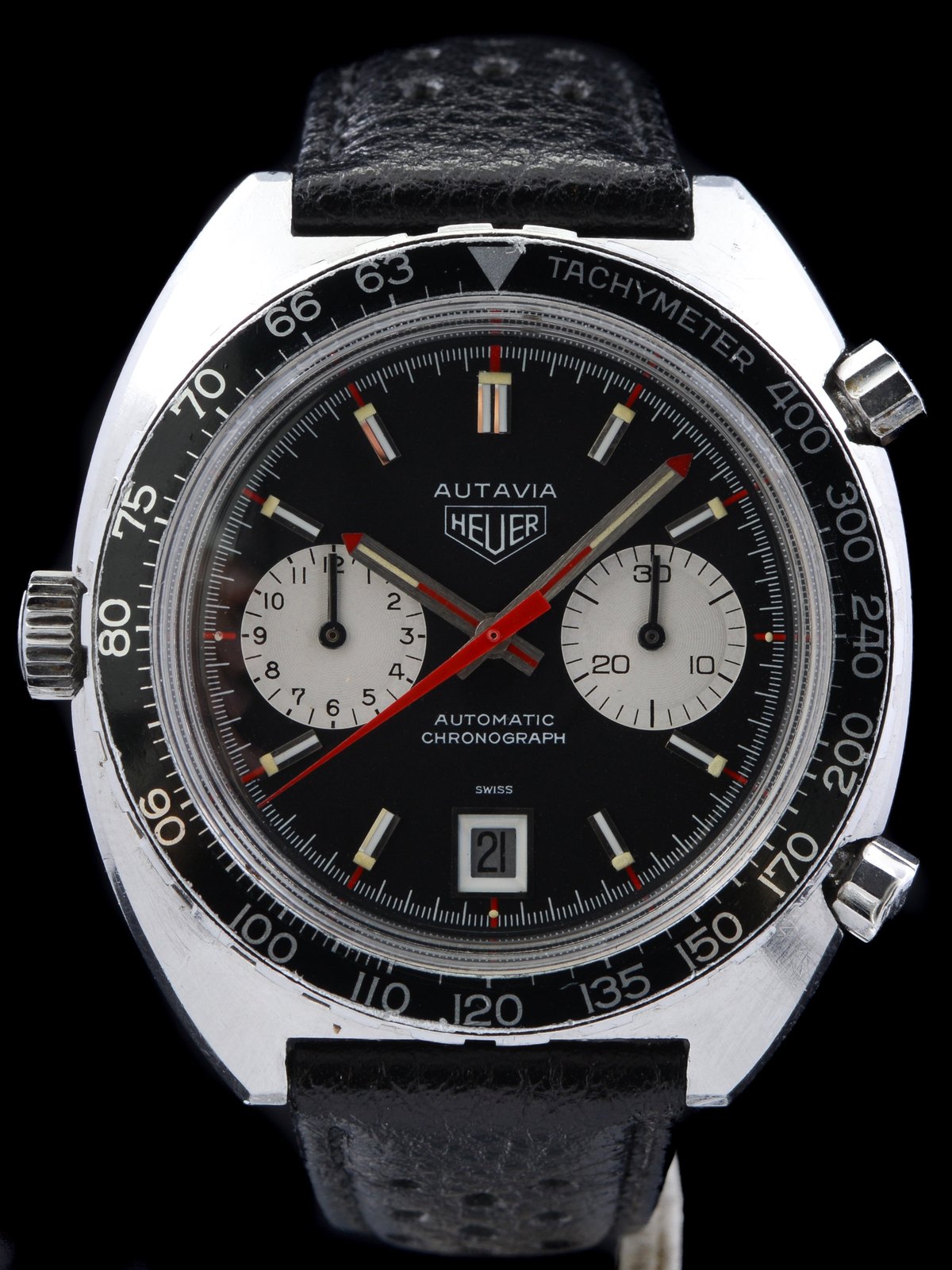
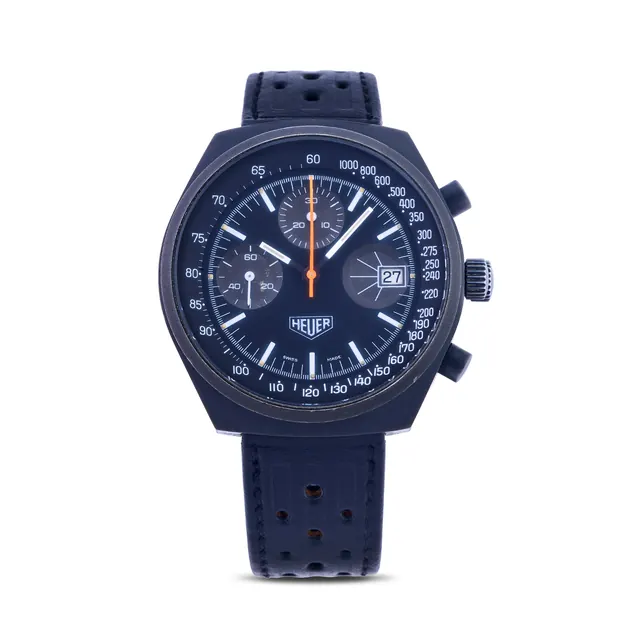
Heuer Autavia (Ref. 1163MH) "Pre-Viceroy", 1972
- Maker / attribution
- Heuer (maker)
- Date
- 1972
- Historical period
- Quartz Revolution (1969 – 1990)
- Country of origin
- Switzerland
- Object type
- Wristwatch
- Dimensions
- Case 42 mm
- Stock no.
- HURAUT1163MH
- Credit line
- Dealer listing, Craft & Tailored (HURAUT1163MH)
- Catalogue title (original)
- 1972 Heuer Autavia (Ref. 1163MH) "Pre-Viceroy" (English)
View the source record (dealer listing) ↗ (opens another website in a new tab)Suggest a correction
Record summary
Catalogued by Craft & Tailored (dealer), Los Angeles (stock number HURAUT1163MH), this is a wristwatch by Heuer, made in Switzerland, dated 1972. The Atlas places it in the Quartz Revolution period (1969 – 1990) of its Wristwatches collection. Recorded dimensions: Case 42 mm. The record is illustrated with 6 photographs.
Assembled from the source record's structured fields. Dates and attributions are given as the source states them; where a field is missing the Atlas leaves it blank rather than estimating.
Catalogue description
Dealer description — Craft & Tailored
The Heuer Time and Electronics Corp was seeing record growth for about 11 years through the 1960s and by 1970 the U.S. market had become they're largest. In 1971, however, the Heuer brand saw a tremendous 19% decline in U.S. based sales and they needed to come up with a solution to turn things around The Viceroy cigarettes company was experiencing troubles of their own after the U.S. Surgeon General released the report linking smoking to cancer and a subsequent creating a ban on advertising tobacco on television went into effect in January of 1971 which led them to quickly fall behind the more masculine advertising of the leading brands. To compete for market share Viceroy rebranded the company to cater to the automotive racing enthusiasts, thus creating the super team of Mario Andretti, Joe Leonard, and Al Unser for the Indianapolis 500 races. Through the 1960s, Heuer was the benchmark for timing technology in aviation and automotive racing. Its stopwatches, handheld chronographs, dashboard timers, and timing systems dominated the racing industry. However, they were willing to do anything to increase awareness around their wristwatches This collaborative advertisement campaign was a huge success and within the within the 7-month span of the promotion, approximately 5000 Viceroy Autavias were sold. This created huge awareness around the Heuer brand and subsequently boosted the sales of all the timepieces. Broadening the Heuer company as a whole from racetrack royalty to household name. Stock # HURAUT1163MH Brand Heuer Style Chronograph Model Autavia Serial 22XXXX Size Mens Material Stainless Dial Black w/ Red Millimeters 42mm Strap Black Rally Strap W/ Heuer Buckle CASE & BRACELET The case shows signs of a previous light polishing with the factory finishing still very prevalent and honest wear throughout. The Heuer signed crown and pushers remain original to the watch. The black tachymeter bezel remains dark black in colorations showing very little wear from use. The caseback has a small engraving. The watch will come on an era-correct rally strap with a Heuer signed buckle. DIAL & HANDS The excellent "Pre-Viceroy" dial with red accents is in absolutely stunning condition, showing no wear or blemishing. The lume plots have taken on a wonderful creamy patina and show no degradation under U.V. light inspection. The red Viceroy hands remain in excellent untouched condition with the original tritium lume matching the dial perfectly, showing no lume degradation under U.V. light inspection. ACCESSORIES None. The watch is running at spec, previous service history is unknown.
Historical context
Quartz Revolution (1969 – 1990)
Seiko's Astron begins mass quartz timekeeping; traditional industries contract sharply.
Quartz and digital watches transformed the market after 1969. Swiss employment collapsed, Japanese and Hong Kong production soared, and the Swatch (1983) helped the Swiss industry recover; mechanical watches survived as luxury goods.
Read the period in the timelineMore wristwatches from this periodEarlier: Modern Mechanical Horology
Atlas type guide
Wristwatches
Bracelet watches were worn by women from the early nineteenth century — Breguet made one for Caroline Murat, Queen of Naples, in 1810–12 — but the wristwatch only became a man's instrument with military use and aviation in the early twentieth century. Between the World Wars it overtook the pocket watch; the 1920s and 1930s brought rectangular Art Deco cases, water-resistant cases and the first automatic winding systems.
After 1945 the wristwatch became a carrier of identity — dress watches, sports and dive watches, chronographs, calendars — produced by Swiss, American, Japanese, German, Soviet and Chinese industries. The quartz revolution after 1969 and the mechanical renaissance since the 1990s, including the rise of independent watchmakers, complete the story.
What to look for
- The reference number (between the lugs or inside the case back) and serial number, the starting point for dating.
- The calibre: its maker and number are often stamped under the dial or on the bridge.
- Originality of dial, hands and crown — refinished ('redial') dials are common.
- Case material marks: 18K/750, 14K/585, stainless steel, gold-filled, plated.
Dating clues
- Wire-lug cases: before c. 1925.
- Water-resistant screw-down cases: from 1926.
- Quartz movements: from 1969; sapphire crystals widespread after c. 1980.
General guidance written by the Atlas editors about this kind of object. It is not a statement about this particular piece; for that, rely on the source record above and on physical examination.
Related records
Pocket Watches · c. 1960
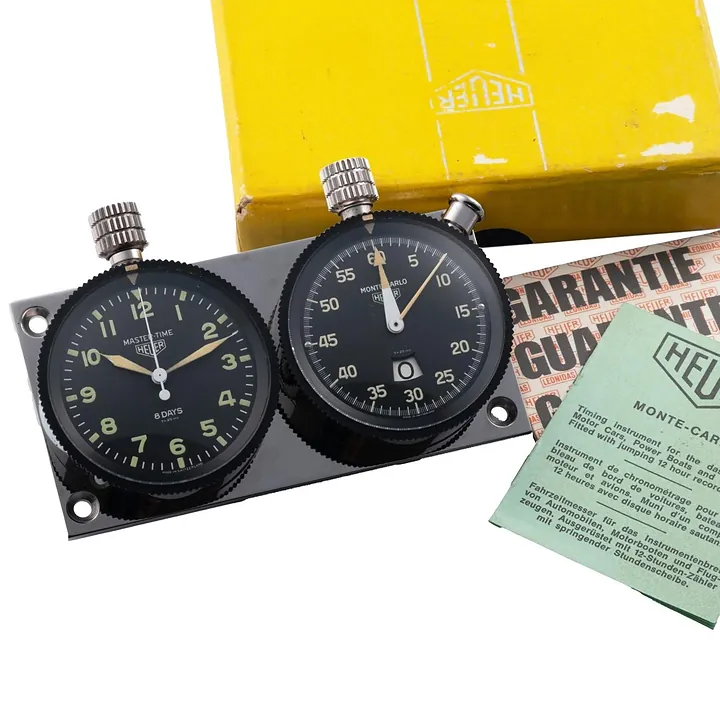
Heuer Racing SET, c. 1960
Antiquorum auction archive, Geneva
Wristwatches · c. 1980
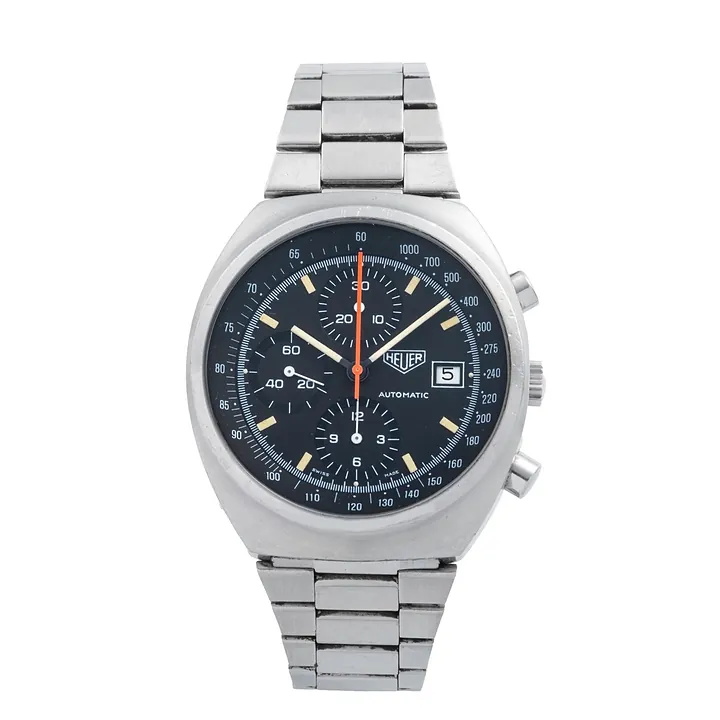
Heuer Pasadena, ref. 750.501-3, c. 1980
Antiquorum auction archive, Geneva
Wristwatches · c. 1970s
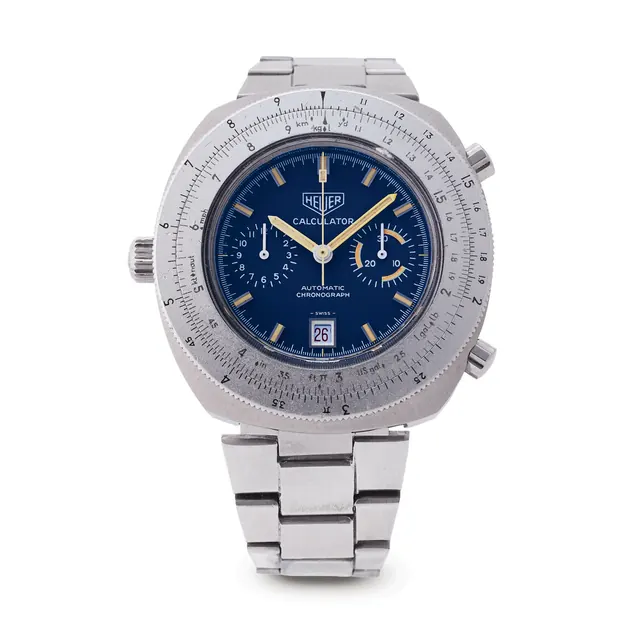
Heuer wristwatch, ref. 110.633, Calculator, circa 1970s
Antiquorum auction archive, Geneva
Wristwatches · c. 1975
Heuer wristwatch, ref. 13/1, circa 1975
Antiquorum auction archive, Geneva

Wristwatches · 1970
Wristwatch by Heno, Switzerland, 1970
Museum Rotterdam

Wristwatches · 1960–1986
'Tri-Compax' calendar chronograph wristwatch in gold case, by Universal, Geneva, Switzerland, 1960–1986.
Science Museum Group, London

Wristwatches · 1969–1970
Beta 21 Quartz wristwatch movement, made in Switzerland, 1970.
Science Museum Group, London

Wristwatches · c. 1969
Omega Speedmaster Moonwatch, ref. 145022-69st, c. 1969
Antiquorum auction archive, Geneva