
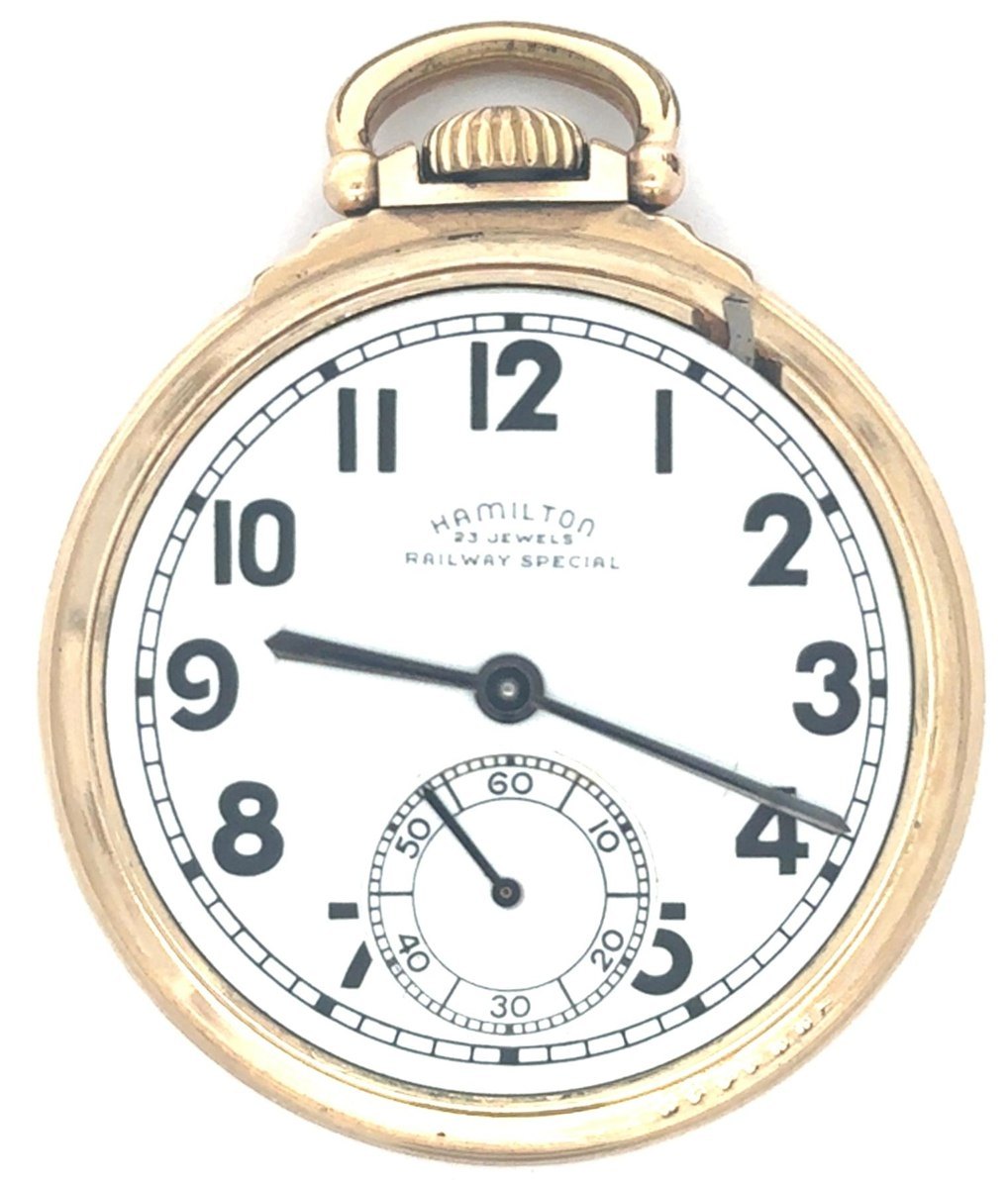
Pocket Watches · Open-face railroad pocket watch
Hamilton Grade 950B 23 Jewel Railway Special Pocket Watch
- Maker / attribution
- Hamilton Watch Co. (source attribution)
- Date
- c. 1942
- Historical period
- Golden Age of Mechanical Watchmaking (1900 – 1945)
- Country of origin
- United States
- Object type
- Open-face railroad pocket watch
- Materials / technique
- 10k gold filled
- Auction house
- Luxe Auctioneers
- Lot
- 184
- Credit line
- Luxe Auctioneers
- Catalogue title (original)
- Lot - HAMILTON GRADE 950B 23 JEWEL RAILWAY SPECIAL POCKET WATCH, CIRCA 1942 (English)
View the source record (auction lot) ↗ (opens another website in a new tab)Suggest a correction
Record summary
Catalogued by Luxe Auctioneers (lot 184), this is an open-face railroad pocket watch attributed to Hamilton Watch Co., made in United States, dated c. 1942. The Atlas places it in the Golden Age of Mechanical Watchmaking period (1900 – 1945) of its Pocket Watches collection. Materials and techniques recorded by the source: 10k gold filled. The record is illustrated with 1 photograph.
Assembled from the source record's structured fields. Dates and attributions are given as the source states them; where a field is missing the Atlas leaves it blank rather than estimating.
Catalogue description
Original object description
This open-face railroad pocket watch, catalogued as a 16-size Hamilton Grade 950B Railway Special from roughly 1942, weighs approximately 103 grams and measures around 51 mm across. The factory-signed 10k gold-filled Model A case features a grooved crown, an arched bow, and a setting-lever slot beside the 1 o'clock numeral; the auctioneer described the casing as being in very good condition with typical wear and light scratches. Beneath the crystal, an undamaged white double-sunk dial—characterized as Art Deco porcelain enamel—presents black Arabic hour figures, an outer railroad-style minute index, blued steel spade and baton hands, a subsidiary seconds circle at 6 o'clock, and the upper inscription 'HAMILTON 23 JEWELS RAILWAY SPECIAL'. According to auction records, the watch houses a signed, lever-set 23-jewel Grade 950B movement built with nickel bridges and a solid gold train. As the caliber is not depicted and lacks a cited serial number, mechanical details reflect cataloguer assertions, leaving the build date and original case pairing unverified; Luxe Auctioneers confirmed the watch ran during cataloguing but did not assess its timing accuracy or power reserve.
Historical context
Golden Age of Mechanical Watchmaking (1900 – 1945)
The wristwatch displaces the pocket watch; waterproof cases, self-winding and grand complications.
The pocket watch reached technical maturity and then began to give way to the wristwatch after the First World War. Complicated watches for collectors such as Henry Graves Jr. and James Ward Packard, railroad watches, and slim Art Deco dress watches are characteristic.
Read the period in the timelineMore pocket watches from this periodEarlier: Industrial Revolution
Atlas type guide
Railroad and railway watches
Timetables made accurate timekeeping a matter of safety. After a fatal collision at Kipton, Ohio, in 1891, American railroads adopted strict standards: open-face watches, lever setting, at least 17 jewels, adjustment to temperature and five positions, and a performance within 30 seconds a week, inspected regularly by approved watch inspectors. Waltham, Elgin, Hamilton, Illinois and Ball made railroad-grade watches in large numbers.
European railways issued service watches to guards, drivers and station staff, often engraved with the railway's initials and a staff number. Such watches link industrial timekeeping with the standardisation of time zones (Greenwich Mean Time adopted by British railways in 1847; North American standard time in 1883).
What to look for
- Open-face cases with the crown at 12 and lever setting under the bezel.
- Montgomery dials with every minute numbered, or bold Arabic numerals.
- 'Railroad grade', '21 Jewels', 'Adjusted 5 positions' on the movement.
- Railway initials and issue numbers engraved on the case back.
Dating clues
- American railroad standards: from 1891–93, revised c. 1908.
- Serial numbers of American makers allow dating to within a year.
General guidance written by the Atlas editors about this kind of object. It is not a statement about this particular piece; for that, rely on the source record above and on physical examination.
Read next:Detached lever escapement
Related records
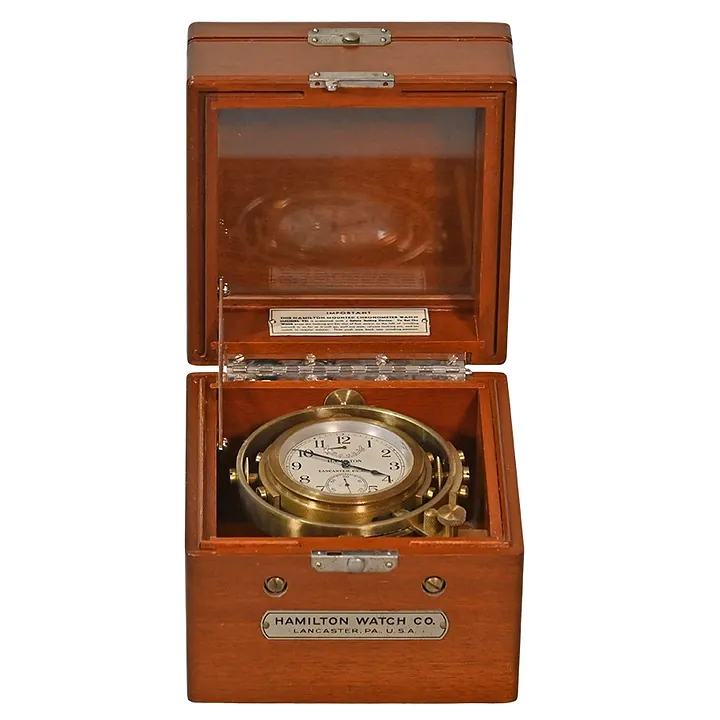
Instruments · c. 1942
American Hamilton Model 22 Chronometer Deck Watch
Renaissance Antiques
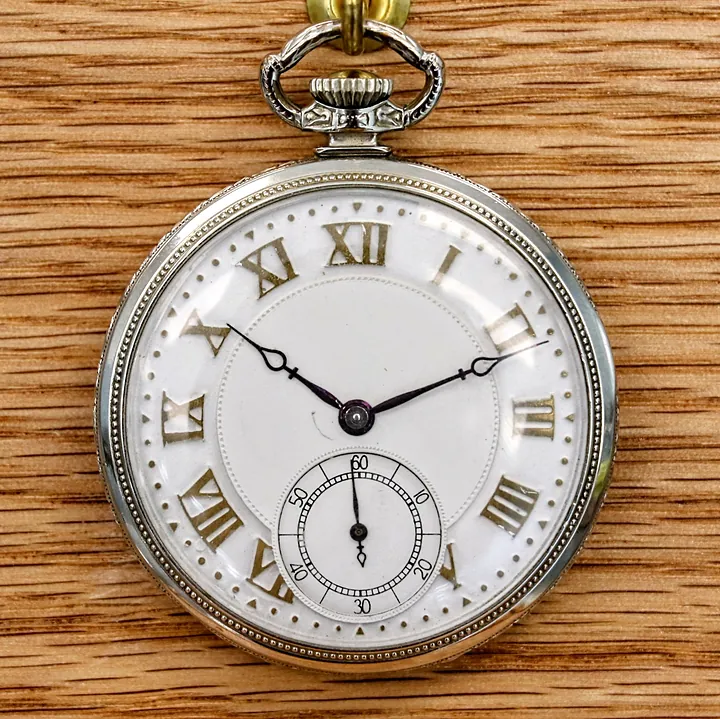
Pocket Watches · 1928
1928 Hamilton Grade 912 12s Pocket Watch
Secondhand Horology
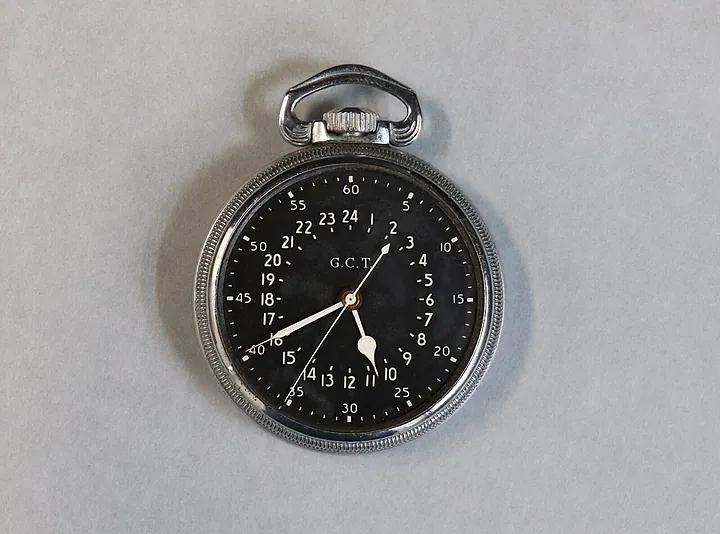
Pocket Watches · 1942
Hamilton 4992B Navigator's Watch
San Diego Air & Space Museum Archives
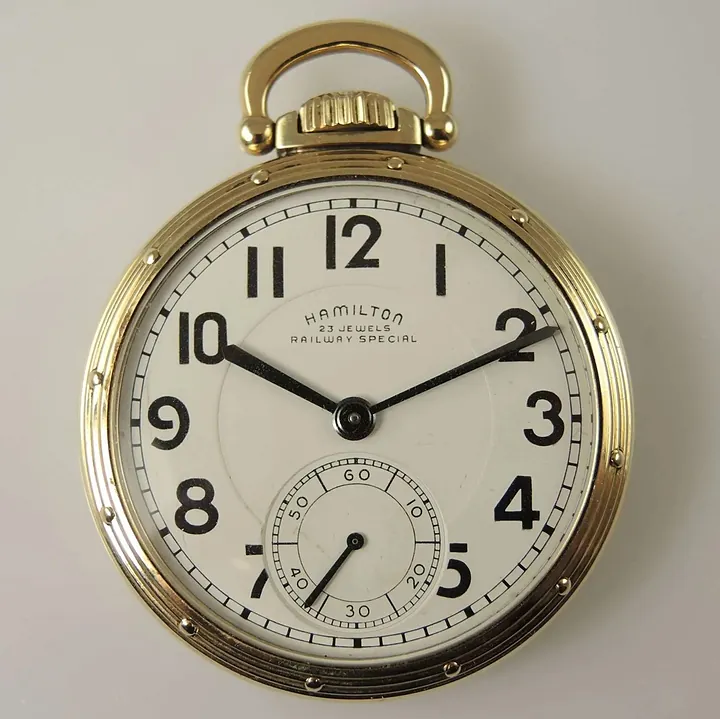
Pocket Watches · c. 1952
Hamilton 950B 16-size railroad pocket watch
Atlam Watches / Antiques Boutique
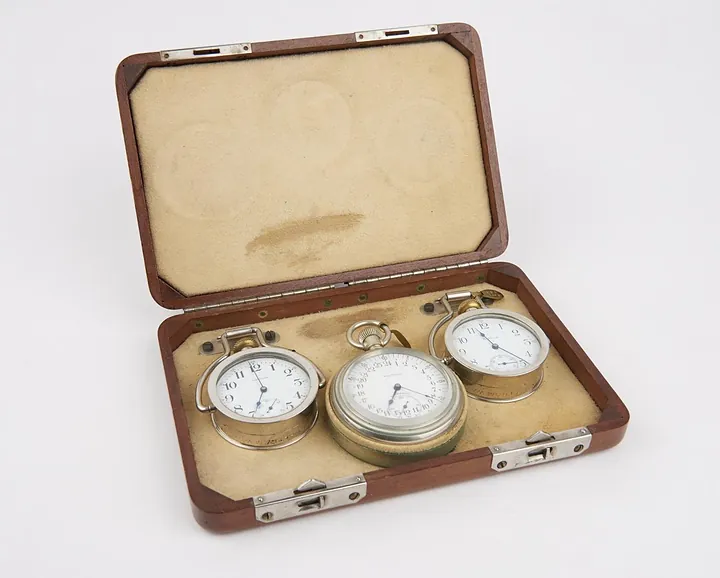
Pocket Watches · c. 1900
Pocket watch by American Waltham Watch Company, United States, c. 1900
Science Museum Group, London
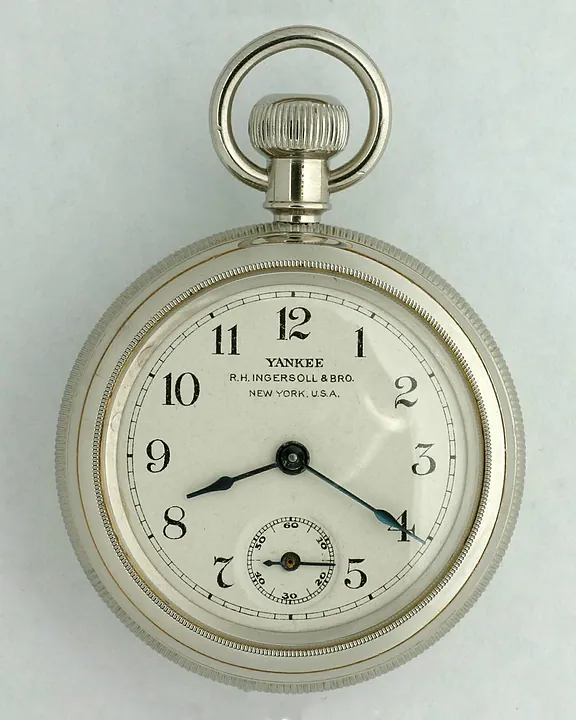
Pocket Watches · c. 1900
Pocket watch by Robt. H. und Bro. Ingersoll, United States, c. 1900
German Clock Museum
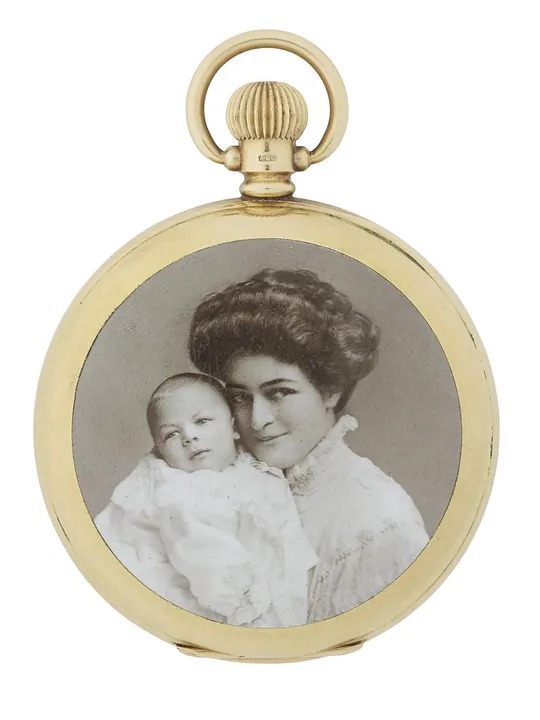
Pocket Watches · 1904
Pocket watch by American Waltham Watch Company and Dennison Watch Case Co, United States, 1904
Science Museum Group, London
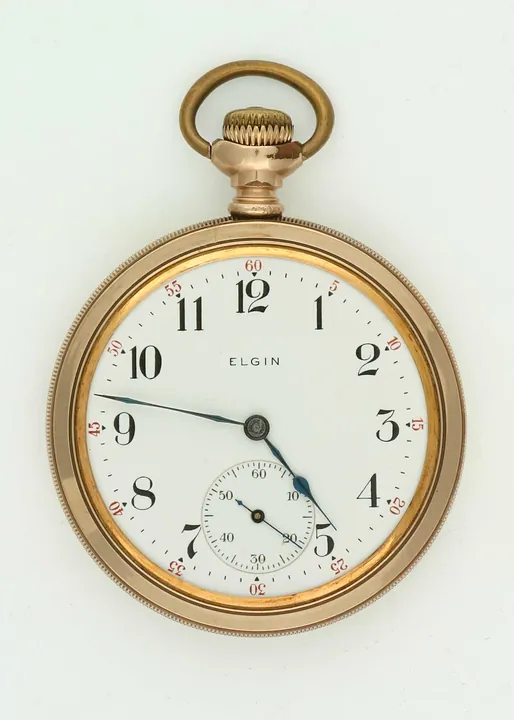
Pocket Watches · c. 1905
Pocket watch by Brooklyn Watch Case Co. B. W. C., United States, c. 1905
German Clock Museum