
Wristwatches · Wristwatch
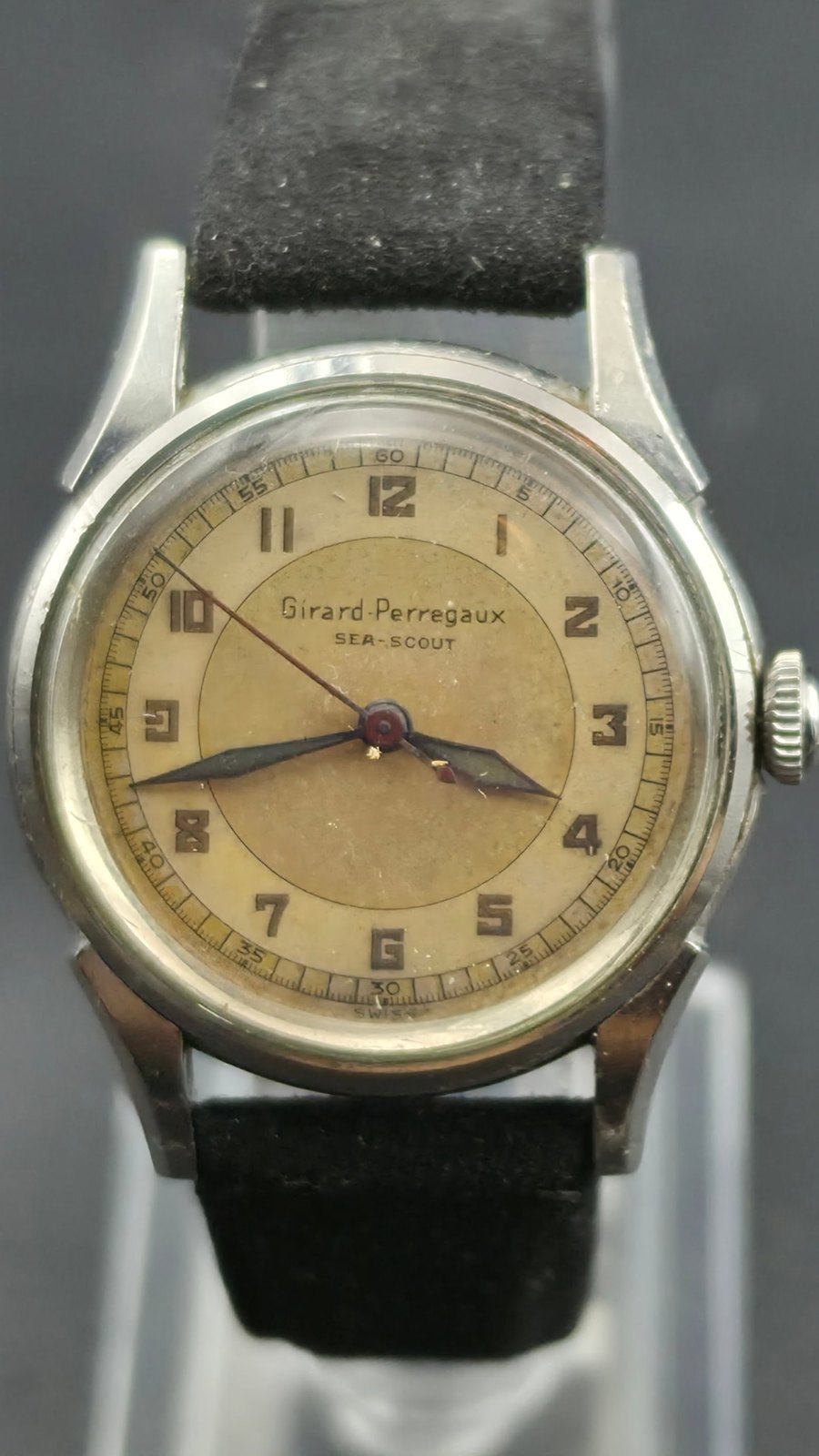
Girard-Perregaux Sea-Scout Gyromatic Bumper Automatic Wristwatch Case 5625 Cal 2084 17J circa 1940s-
- Maker / attribution
- Girard (maker)
- Date
- c. 1940s
- Historical period
- Golden Age of Mechanical Watchmaking (1900 – 1945)
- Country of origin
- Unrecorded in source
- Object type
- Wristwatch
- Auction house
- LiveAuctioneers auction archive
- Lot
- Item 236731697
- Credit line
- Auction lot record: lot 276, Vintage Omega,Rolex,LeCoultre Luxury Watches, Sphere Auctions LLC (2026), via LiveAuctioneers
- Catalogue title (original)
- Girard-Perregaux Sea-Scout Gyromatic Bumper Automatic Wristwatch Case 5625 Cal 2084 17J Circa 1940s- (English)
View the source record (auction lot) ↗ (opens another website in a new tab)Suggest a correction
Record summary
Catalogued by LiveAuctioneers auction archive (lot Item 236731697), this is a wristwatch by Girard, dated c. 1940s. The Atlas places it in the Golden Age of Mechanical Watchmaking period (1900 – 1945) of its Wristwatches collection. The record is illustrated with 4 photographs.
Assembled from the source record's structured fields. Dates and attributions are given as the source states them; where a field is missing the Atlas leaves it blank rather than estimating.
Catalogue description
Lot description — Sphere Auctions LLC
Notable variant: This is a Girard-Perregaux "Sea-Scout," an early Gyromatic bumper automatic — one of the pioneering self-winding calibers of its era (a pivoting-weight "bumper" mechanism rather than a full-rotor design), and a recognized vintage GP model line from the 1940s-50s. The case number (5625) matches a documented example of this exact model and caliber family.Case is round stainless steel, measuring approximately 32.3mm per direct caliper measurement in photos. Case back is stamped with the Girard-Perregaux eagle-and-anchor "G P" emblem, "Girard-Perregaux 1791, Swiss," "Brevet" (patent) with a cross mark, "Stainless Steel," and case number 5625.Dial is cream-toned with age patina, signed "Girard-Perregaux, SEA-SCOUT" and "SWISS" at the base, with a railway-style outer minute track numbered in fives (5 through 60), applied/painted Arabic numerals at each hour, dagger-style hour and minute hands, and a thin sweep center-seconds hand with a red tip.Movement is signed "GIRARD-PERREGAUX, SEVENTEEN 17 JEWELS, SWISS, UNADJUSTED," with caliber 2084 marked on the bridge, visible bumper-automatic weight and jeweling.Running; stem is missing, so the watch currently cannot be wound or set through the crown.This is a mechanical, automatic watch — timekeeping accuracy may vary, and the missing stem will need to be replaced before normal winding/setting function is restored
Historical context
Golden Age of Mechanical Watchmaking (1900 – 1945)
The wristwatch displaces the pocket watch; waterproof cases, self-winding and grand complications.
The wristwatch overtook the pocket watch. Military use in the First World War, aviation, water-resistant cases (1926), automatic winding (1923–31), rectangular Art Deco designs and early chronographs and calendars defined the period.
Read the period in the timelineMore wristwatches from this periodEarlier: Industrial Revolution
Atlas type guide
Automatic (self-winding) watches
Self-winding watches use the wearer's motion to wind the mainspring. Abraham-Louis Perrelet and Breguet made 'perpétuelle' pocket watches with oscillating weights in the late eighteenth century, but the principle only became practical in the wristwatch. John Harwood patented a bumper automatic in 1923; Rolex's Perpetual rotor (1931) winding in one direction, and later bidirectional rotors (Eterna, Felsa Bidynator), established the modern form. Micro-rotors (Universal Genève, Buren) and peripheral rotors made automatic watches thinner.
What to look for
- A semicircular rotor turning 360° over the movement, or a 'bumper' weight that rebounds between springs.
- 'Automatic', 'Perpetual' or 'Self-winding' on the dial.
- A sealed screw-back case, since automatic watches are wound less often by the crown.
Dating clues
- Bumper automatics: 1923–c. 1955.
- Full rotors: from 1931 (Rolex); widespread after c. 1950.
- Micro-rotors: from 1954–1958.
General guidance written by the Atlas editors about this kind of object. It is not a statement about this particular piece; for that, rely on the source record above and on physical examination.
Related records
Wristwatches · c. 2006
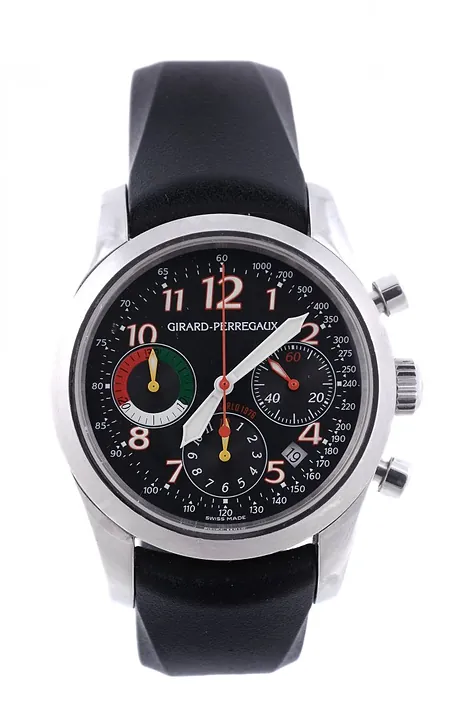
Girard Perregaux, Monte Carlo 1976, ref. 49541, a, c. 2006
LiveAuctioneers auction archive
Wristwatches · 1950s
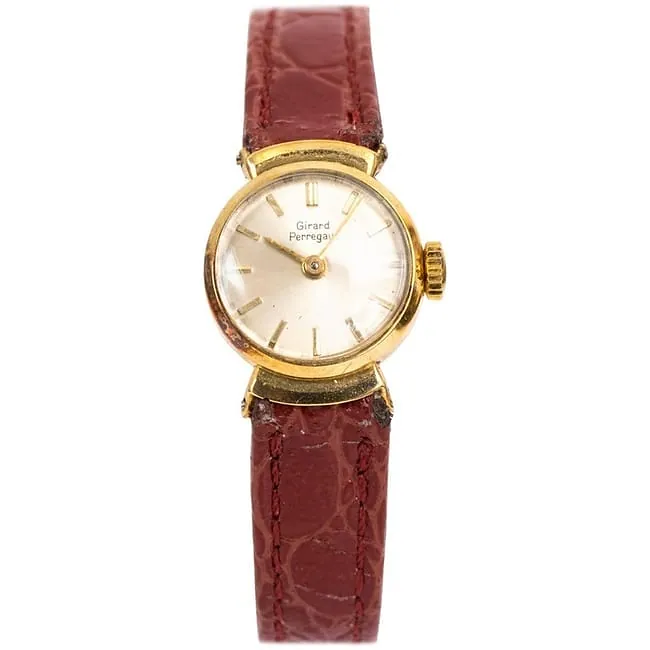
Girard Perregaux Ladies Yellow Gold Wristwatch, 1950s
LiveAuctioneers auction archive
Wristwatches · c. 1970
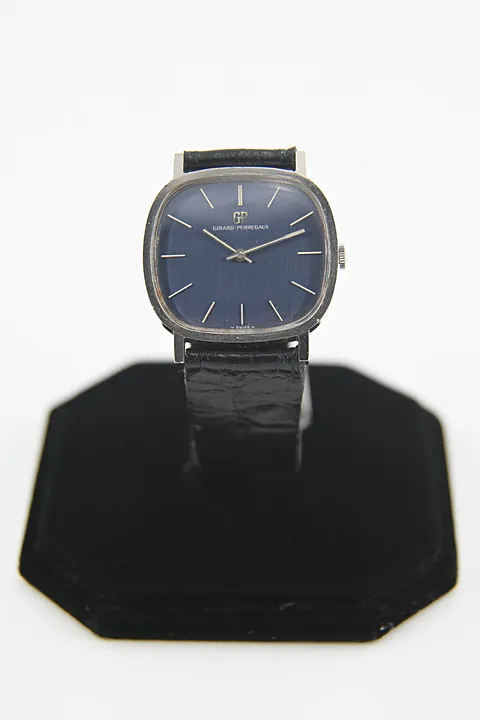
Girard Perregaux Mens Steel Manual Wind Wristwatch, Blue Dial, circa 1970
LiveAuctioneers auction archive
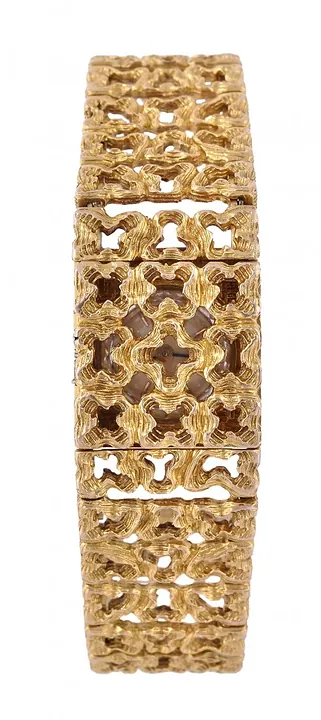
Wristwatches · c. 1970
Girard Perregaux, a lady's 18 carat gold bracelet, c. 1970
LiveAuctioneers auction archive
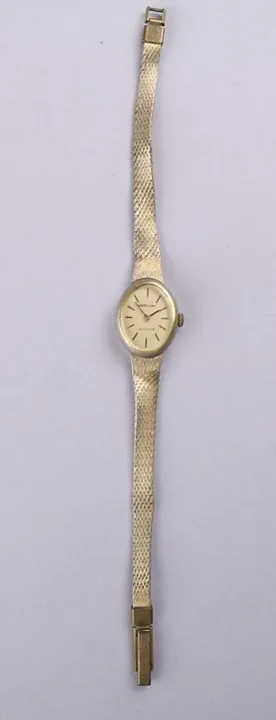
Wristwatches · 1900–1999
Wristwatch by Mercury, 1900–1999
Modemuseum Hasselt
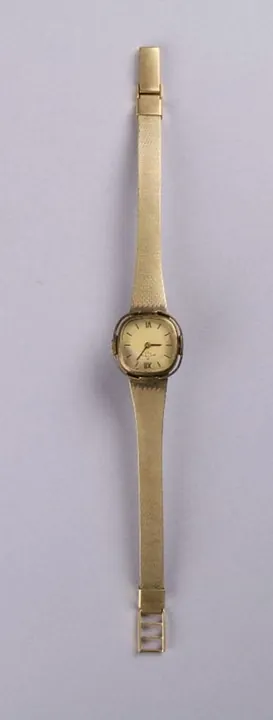
Wristwatches · 1900–1999
Wristwatch by Nutrix, 1900–1999
Modemuseum Hasselt
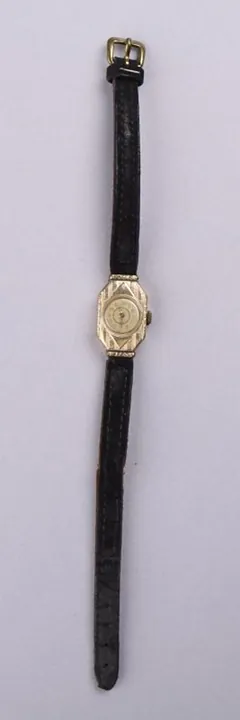
Wristwatches · 1920
Wristwatch, 1920
Modemuseum Hasselt

Wristwatches · 1931
Rolex 'Oyster Perpetual' rotor self-winding wrist-watch, lever escapement, in steel case with glass in back, Montres Rolex SA, Geneva, Switzerland, 1931
Science Museum Group, London