
Pocket Watches · Coach watch
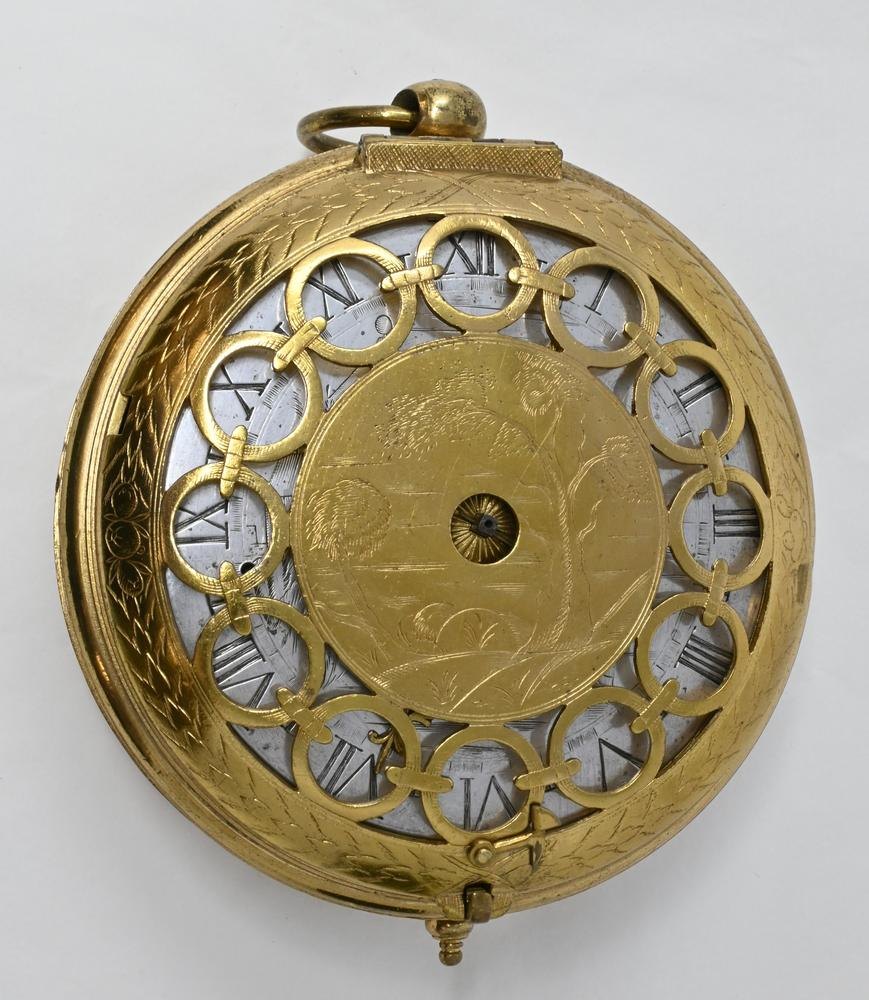
Gilt-brass cased verge coach watch with hour-striking
- Maker / attribution
- IS (Made by)
- Date
- 1590–1610
- Historical period
- Early Modern Horology (1600 – 1750)
- Country of origin
- Germany
- Place
- Germany
- Object type
- Coach watch
- Materials / technique
- brass, gold
- Dimensions
- Diameter: 152.40 millimetres (case)
- Holding institution
- British Museum
- Accession / object no.
- 1888,1201.182
- Credit line
- British Museum, London
- Catalogue title (original)
- Gilt-brass cased verge coach watch with hour-striking (English)
View the source record ↗ (opens another website in a new tab)Suggest a correction
Record summary
Held and catalogued by British Museum (object number 1888,1201.182), this is a coach watch by IS, made in Germany, dated 1590–1610. The Atlas places it in the Early Modern Horology period (1600 – 1750) of its Pocket Watches collection. Materials and techniques recorded by the source: brass, gold. Recorded dimensions: Diameter: 152.40 millimetres (case). The record is illustrated with 6 photographs.
Assembled from the source record's structured fields. Dates and attributions are given as the source states them; where a field is missing the Atlas leaves it blank rather than estimating.
Catalogue description
Description — British Museum
MOVEMENT Full-plate,; five baluster pillars one now missing; ratchet and click set-up; fusee with chain and English stop-work; four-wheel train. Verge escapement, steel 3-arm balance not original; later balance-spring. Originally with manually operated hog's bristle regulation but only the engraved scale on the plate remains. Striking train with nag's head release and count-wheel control. : DIAL Gilt-brass dial-plate with an engraved wheatear border. Applied silver dial with Roman hour numerals, I-XII, T-shaped half-hour marks and a quarter ring. In the centre an engraved scene depicting a castle? on a hill overlooking the sea with boats in the foreground and background. : Replacement gilt-brass hand. : CASE Massive gilt-brass case with a pierced colonnaded band. The back and lid with engraved wheat-ear borders and pierced with a series of 12 roundels linked by straps. The solid central panels are engraved with landscapes. Inside the case a very thick bell.
Curator's comments — British Museum
1. The movement of this watch has undergone some modification. The original bar-balance or wheel balance with hog's bristle regulation has been replaced by a steel 3-arm balance with spiral balance spring and geared regulation. : 2. The method of construction and the very stiff and stylised engraving suggest that the case is of 19th century manufacture. : 3. In common with the case, the dial also appears to be of 19th century date. : 4. No biographical details are known of a maker using the punched mark IS within four punched stars and no other pieces survive. : 5. See Jagger, Royal Clocks, p.242 for a watch IS in the Usher Collection Lincoln.
Inscriptions & marks
inscription; IS within four punched six-point stars [on the back-plate]
Provenance
Bequeathed by:, Octavius Morgan; Acquired 1888
Historical context
Early Modern Horology (1600 – 1750)
Huygens' pendulum and balance spring transform accuracy; English makers develop the anchor and deadbeat escapements.
The balance spring (c. 1675) improved watches dramatically and introduced the minute hand. English pair-cased verge watches with pierced balance cocks and French oignons were typical; enamel painting at Blois and Geneva, and the repeating watch (1680s), made watches objects of great refinement.
Read the period in the timelineMore pocket watches from this periodEarlier: Renaissance Horology
Atlas type guide
Verge and pair-cased watches
After Christiaan Huygens and Robert Hooke applied the balance spring around 1675, the verge watch became a reasonably reliable timekeeper and the minute hand became standard. Through the eighteenth century the typical English watch was a pair-cased verge: a fusee movement with a pierced, engraved balance cock, housed in an inner case and a separate protective outer case, often of repoussé gold, shagreen, tortoiseshell or enamel.
French watches of the same period were thicker 'oignons', later replaced by elegant thinner watches following Jean-Antoine Lépine's bar-bridge calibre of c. 1770. Dutch, Swiss and German makers supplied international markets, and verge watches were made until the mid-nineteenth century as cheaper alternatives to the cylinder and lever.
What to look for
- The pierced balance cock on the backplate: winged (continental) or with a foot (English); its style dates the watch.
- Fusee and chain visible through the movement; key winding through the dial (early) or case back.
- Hallmarks inside English silver or gold cases, which give a date letter.
- Maker's name and serial number engraved on the backplate; watch papers inside outer cases.
- Enamel dials (after c. 1720) versus earlier champlevé metal dials.
Dating clues
- Champlevé dials: c. 1680–1730; white enamel dials thereafter.
- English case hallmarks give the year of assay to within a year.
- Verge watches persisted in cheap production until c. 1850.
General guidance written by the Atlas editors about this kind of object. It is not a statement about this particular piece; for that, rely on the source record above and on physical examination.
Read next:Verge escapement
Related records
Pocket Watches · 1600–1699
Pocket watch by Georg Ernst, Germany, 1600–1699
Fine Arts Museum Vienna
Pocket Watches · 1600–1699
Pocket watch by Johan Etmiller, Germany, 1600–1699
Nordic Museum Foundation
Pocket Watches · early 17th century
Watch with gilt brass case, crystal and blue glass panels signed 'Conradt Kreizer', Germany, early 17th century
Victoria and Albert Museum, London
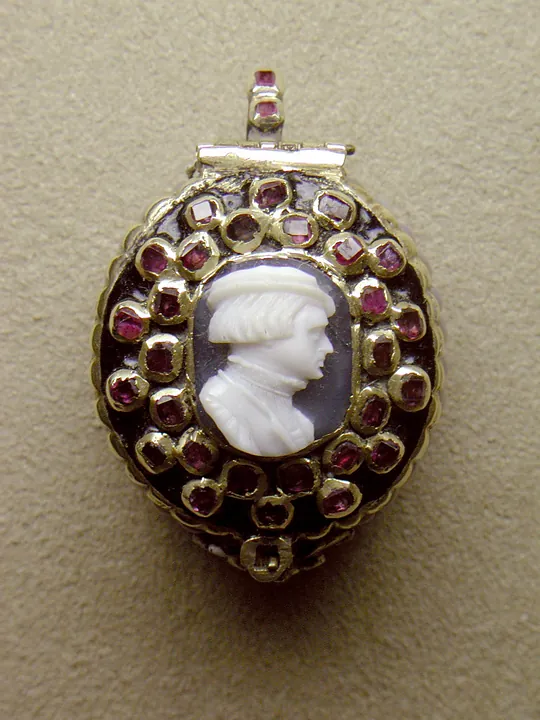
Pocket Watches · watch c. 1650, cameo 16th–17th century
Watch by Wilhelm Peffenhauser, Germany, watch c. 1650, cameo 16th–17th century
The Metropolitan Museum of Art, New York
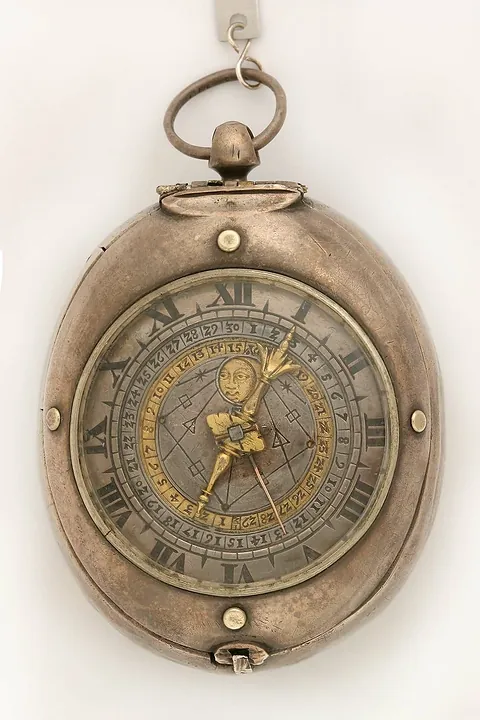
Pocket Watches · c. 1650
Pocket watch by Johann Sayller, Germany, c. 1650
German Clock Museum
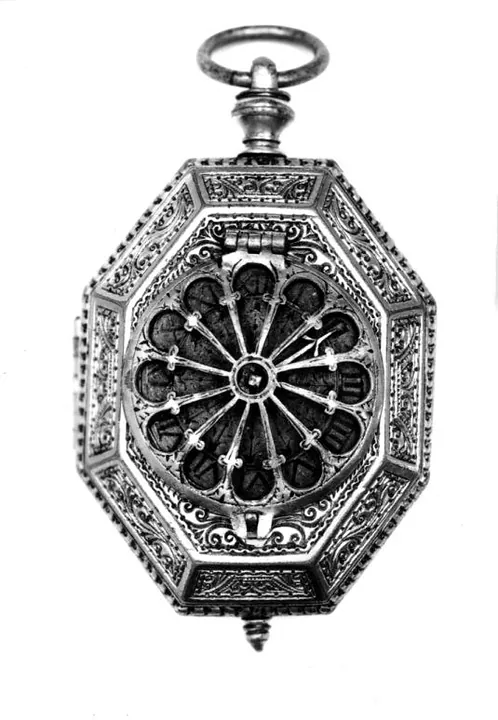
Pocket Watches · 1650–1699
Pocket watch, Germany, 1650–1699
Badisches Landesmuseum Karlsruhe
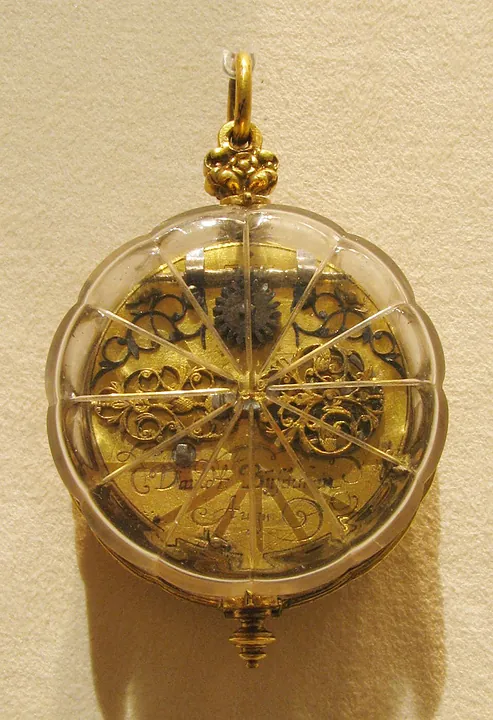
Pocket Watches · probably after 1657
Watch by David Buschman, Germany, probably after 1657
The Metropolitan Museum of Art, New York
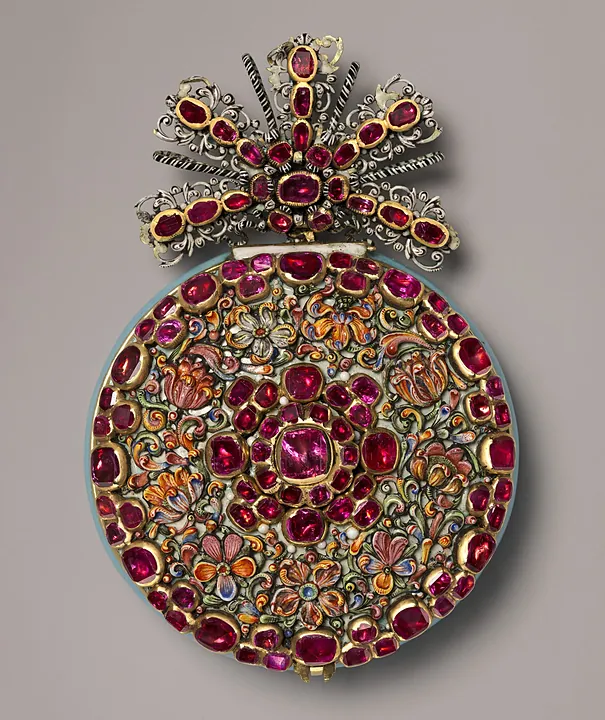
Pocket Watches · c. 1670
Watch by Nicolaus Rugendas the Younger, Germany, c. 1670
The Metropolitan Museum of Art, New York