
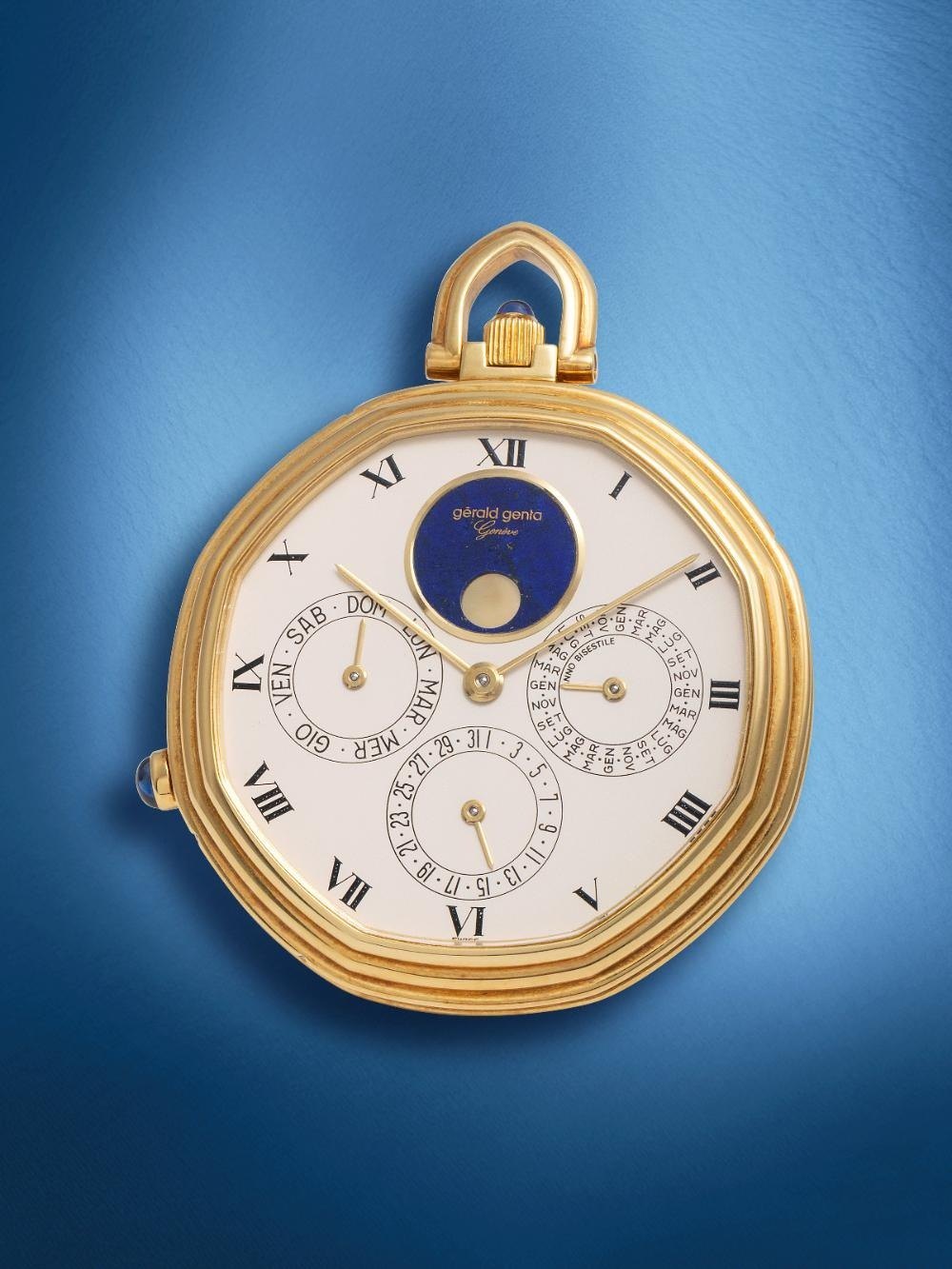
Pocket Watches · Minute repeating perpetual calendar pocket watch
Gérald Genta Octagonal Pocket Watch
- Maker / attribution
- Gérald Genta (source attribution)
- Date
- c. 1980s
- Historical period
- Quartz Revolution (1969 – 1990)
- Country of origin
- Switzerland
- Object type
- Minute repeating perpetual calendar pocket watch
- Materials / technique
- 18K yellow gold
- Holding institution
- Monaco Legend Group / Invaluable
- Accession / object no.
- 206855860
- Credit line
- Monaco Legend Group / Invaluable
- Catalogue title (original)
- Gerald Genta Octagonal pocket watch (English)
View the source record ↗ (opens another website in a new tab)Suggest a correction
Record summary
Held and catalogued by Monaco Legend Group / Invaluable (object number 206855860), this is a minute repeating perpetual calendar pocket watch attributed to Gérald Genta, made in Switzerland, dated c. 1980s. The Atlas places it in the Quartz Revolution period (1969 – 1990) of its Pocket Watches collection. Materials and techniques recorded by the source: 18K yellow gold. The record is illustrated with 1 photograph.
Assembled from the source record's structured fields. Dates and attributions are given as the source states them; where a field is missing the Atlas leaves it blank rather than estimating.
Catalogue description
Original object description
Housed in an eight-sided, 18K yellow gold case spanning 49 mm with a stepped bezel, this pocket watch is attributed by auction documentation to Gérald Genta, with production assigned to around 1990. Formal confirmation of its precise movement architecture is still subject to ongoing investigation. The hand-wound mechanism features a minute repeater capable of chiming hours, quarter-hours, and minutes on demand, integrated with a perpetual calendar indicating the month, day, and date. These calendar functions are distributed across sub-dials over a silvered dial with black Roman numerals, while a lapis lazuli disc displays the lunar phases through an aperture in the upper portion.
Historical context
Quartz Revolution (1969 – 1990)
Seiko's Astron begins mass quartz timekeeping; traditional industries contract sharply.
Quartz pocket watches and inexpensive novelty watches appeared, while traditional mechanical pocket watches survived mainly as collectibles and gifts.
Read the period in the timelineMore pocket watches from this periodEarlier: Modern Mechanical Horology
Atlas type guide
Repeating watches
Before electric light, telling the time in the dark was a real problem. Repeating watches strike the time on demand when a slide or push-piece is operated: quarter repeaters sound hours and quarters, minute repeaters hours, quarters and minutes. Edward Barlow and Daniel Quare disputed the invention in London in the 1680s. Early repeaters struck on a bell inside the case; Abraham-Louis Breguet introduced the gong (a coiled steel wire) around 1780, allowing thinner watches.
Repeaters require a separate train with racks, snails and a governor to control the striking speed, and are among the most demanding complications to make and adjust. Swiss makers of the Vallée de Joux specialised in repeating ébauches in the nineteenth century.
What to look for
- A slide on the case band or a push-piece through the pendant.
- Gongs encircling the movement (after c. 1780) or a bell in the case (earlier); pierced case for sound.
- The racks, snails and governor visible under the dial or on the movement.
- Terms such as 'Minutes', 'Quarts' or 'Répétition' on the dial or cuvette.
Dating clues
- Bell-striking quarter repeaters: c. 1690–1800.
- Gong repeaters and dumb repeaters (striking on the case): after c. 1780.
- Minute repeaters became more common after c. 1830 with Vallée de Joux ébauches.
General guidance written by the Atlas editors about this kind of object. It is not a statement about this particular piece; for that, rely on the source record above and on physical examination.
Read next:Minute repeater
Related records
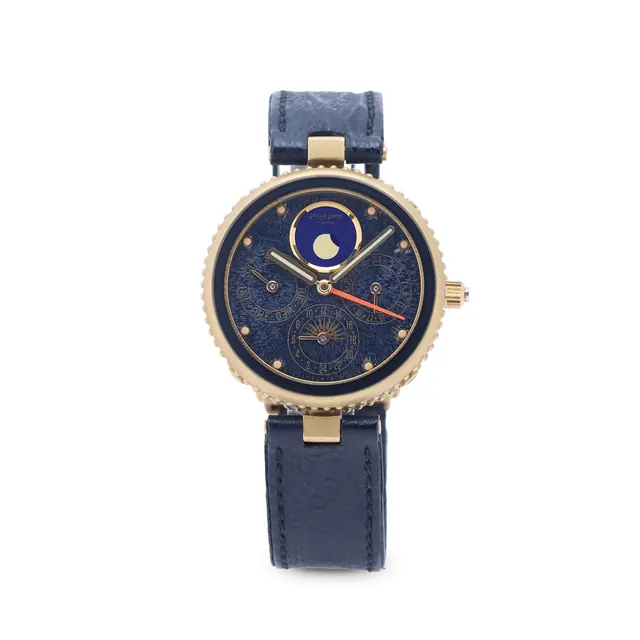
Wristwatches · c. 1980s
Gérald Genta wristwatch, ref. G2796, Gefica Safari Day and Date, circa 1980s
Antiquorum auction archive, Geneva
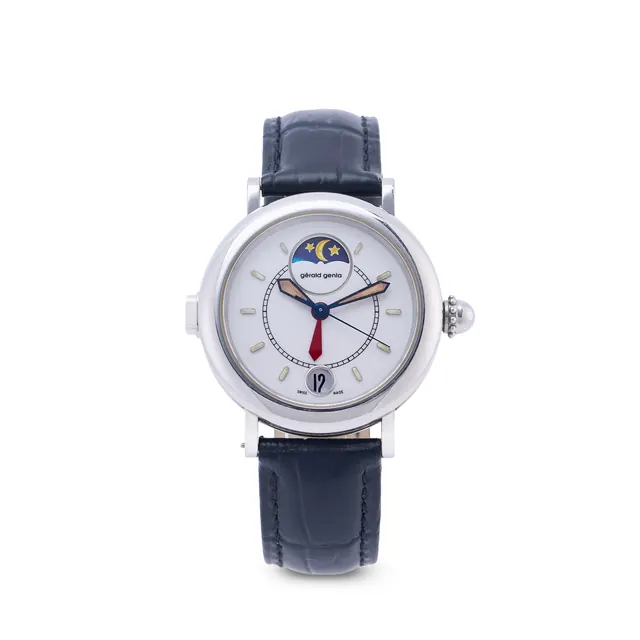
Wristwatches · c. 1990s
Gérald Genta wristwatch, ref. G.3706, Night and Day, circa 1990s
Antiquorum auction archive, Geneva
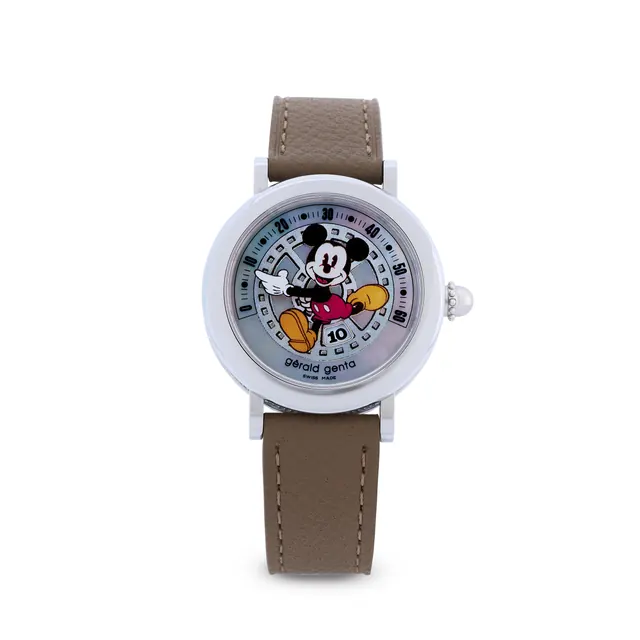
Wristwatches · c. 1988
Gérald Genta wristwatch, ref. G.3712, Fantasy 70th Anniversary Limited Edition No.4, circa 1988
Antiquorum auction archive, Geneva
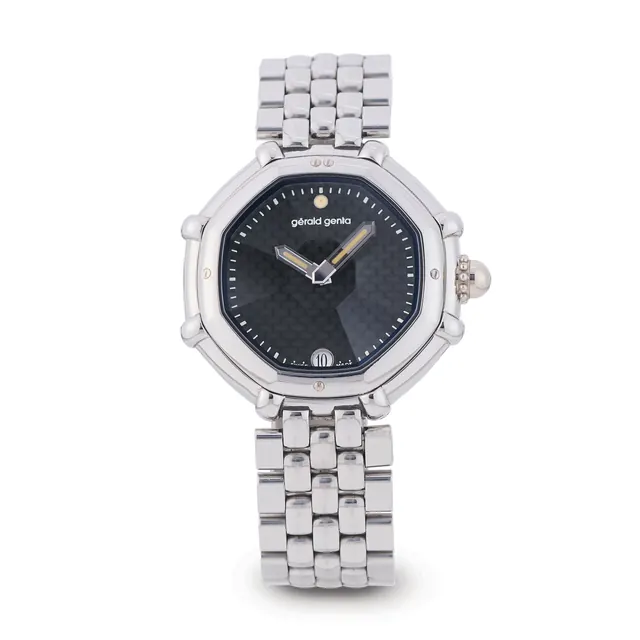
Wristwatches · c. 1997
Gérald Genta wristwatch, ref. G3386.7, Success Carbon Fibre Dial, circa 1997
Antiquorum auction archive, Geneva
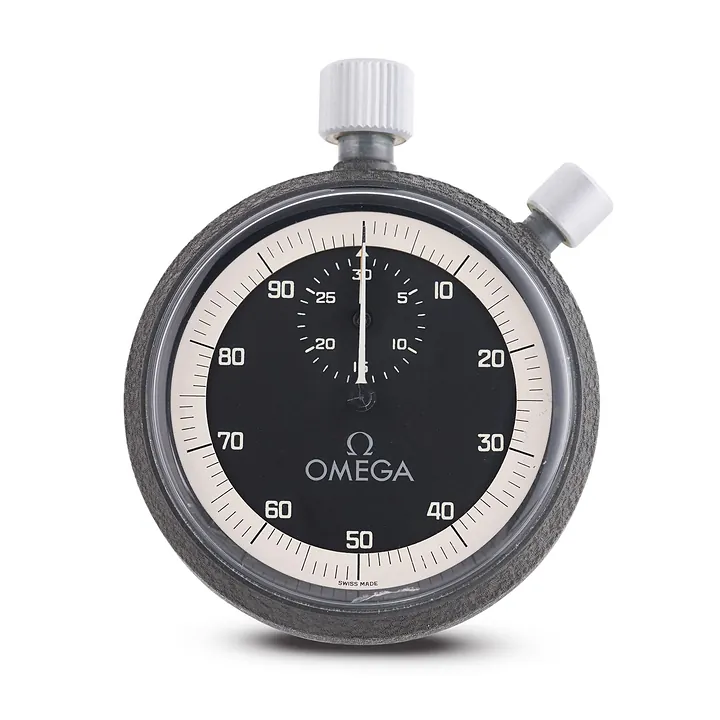
Pocket Watches · c. 1970s
Omega Stop Watch, c. 1970s
Antiquorum auction archive, Geneva
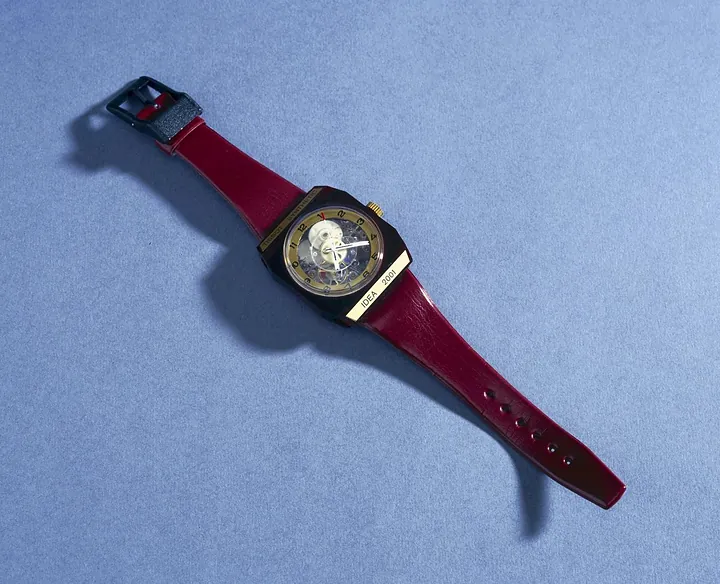
Pocket Watches · 1971–2001
"Tissot synthetic idea 2001" the first plastic watch, introduced in 1971
Science Museum Group, London

Pocket Watches · c. 1980
Audemars Piguet pocket watch, c. 1980
Antiquorum auction archive, Geneva
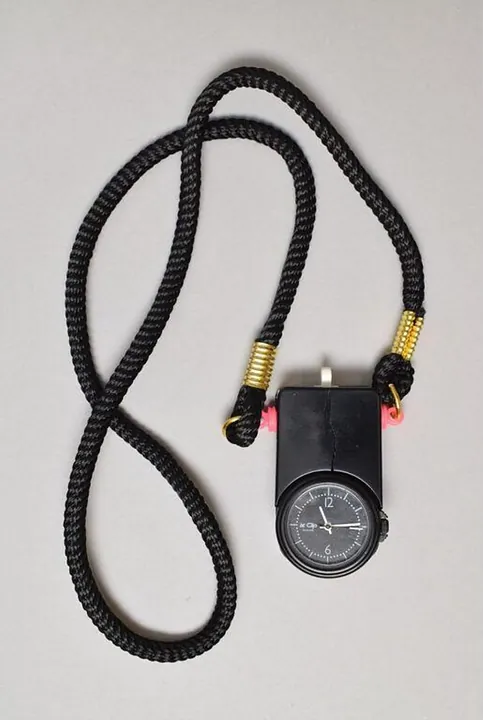
Pocket Watches · 1980s
Clip-on plastic watch with cord, made in Switzerland, 1980s
Victoria and Albert Museum, London