
Clocks · Clock
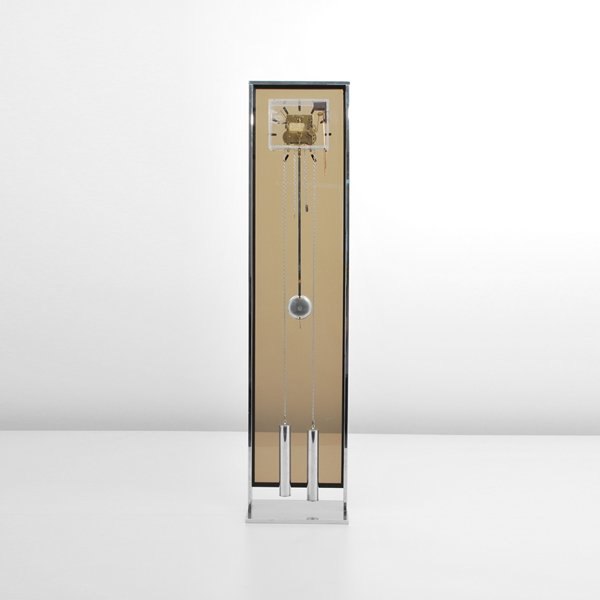
George Nelson & Associates Floor Clock, c. 1970
- Maker / attribution
- George Nelson (maker)
- Date
- c. 1970
- Historical period
- Quartz Revolution (1969 – 1990)
- Country of origin
- Unrecorded in source
- Object type
- Clock
- Materials / technique
- acrylic
- Auction house
- LiveAuctioneers auction archive
- Lot
- Item 13037561
- Credit line
- Auction lot record: lot 304, Fine Art, Decorative Arts & Modern Design, Palm Beach Modern Auctions (2012), via LiveAuctioneers
- Catalogue title (original)
- George Nelson & Associates Floor Clock (English)
View the source record (auction lot) ↗ (opens another website in a new tab)Suggest a correction
Record summary
Catalogued by LiveAuctioneers auction archive (lot Item 13037561), this is a clock by George Nelson, dated c. 1970. The Atlas places it in the Quartz Revolution period (1969 – 1990) of its Clocks collection. Materials and techniques recorded by the source: acrylic. The record is illustrated with 4 photographs.
Assembled from the source record's structured fields. Dates and attributions are given as the source states them; where a field is missing the Atlas leaves it blank rather than estimating.
Catalogue description
Lot description — Palm Beach Modern Auctions
Designer & Manufacturer: George Nelson & Associates; Howard Miller Clock Co. Markings: marked Country of Origin & Materials: USA; smoked acrylic, chrome, other Additional Information & Circa: Modernist grandfather clock by George Nelson & Associates; c. 1970 (Key Word Search: Herman Miller, Knoll, Charles & Ray Eames) Dimensions: 56"h, 13"w, 10"d
Historical context
Quartz Revolution (1969 – 1990)
Seiko's Astron begins mass quartz timekeeping; traditional industries contract sharply.
Quartz movements and digital displays made accurate clocks cheap and ubiquitous after the early 1970s. LED and LCD clocks, clock radios and radio-controlled clocks appeared, while traditional mechanical clockmaking contracted sharply in Germany, France and Britain.
Read the period in the timelineMore clocks from this periodEarlier: Modern Mechanical Horology
Atlas type guide
Longcase (tall-case or grandfather) clocks
The longcase clock was born from two seventeenth-century innovations: Christiaan Huygens's pendulum (1656–57) and the anchor escapement (c. 1670). A long seconds pendulum, nearly a metre long, swings with a small arc, and enclosing it together with the driving weights in a tall wooden case protected the mechanism and created a new piece of furniture. London makers such as Ahasuerus Fromanteel, Thomas Tompion and Joseph Knibb set the pattern.
By the eighteenth century longcase clocks were made throughout Britain, the Netherlands, Scandinavia (the Swedish Mora clock), France (the Comtoise from the Franche-Comté), Germany and colonial America. Eight-day movements with two weights became standard in better clocks; thirty-hour clocks with one weight and a rope or chain were cheaper alternatives.
What to look for
- Winding holes in the dial: two (eight-day, going and striking) or none (thirty-hour, pulled up by a chain).
- Brass dials with applied chapter rings (earlier) versus painted iron 'white' dials (after c. 1770 in Britain).
- Moon-phase arches, date apertures, seconds dials and maker's name on the dial.
- Case woods and style: ebonised, walnut marquetry, lacquer, oak or mahogany; regional styles from London, Lancashire, Scotland or America.
- Whether the movement and dial match the case — 'marriages' are common.
Dating clues
- Square brass dials suggest c. 1670–1720; arched brass dials c. 1715–1790.
- Painted (white) dials were made by Birmingham dial-makers from about 1772.
- Comtoise clocks with repoussé pendulums are mostly nineteenth century.
General guidance written by the Atlas editors about this kind of object. It is not a statement about this particular piece; for that, rely on the source record above and on physical examination.
Read next:Anchor (recoil) escapementDeadbeat escapementAnchor escapement
Related records
Clocks · c. 1960
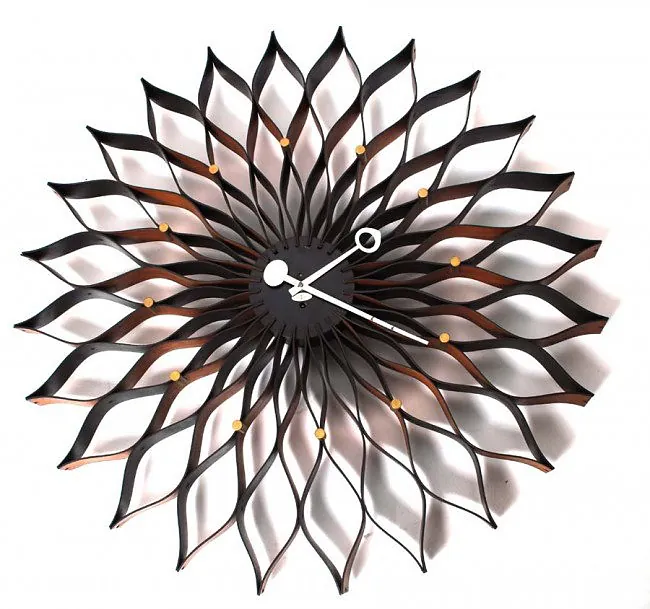
George Nelson Sunflower Clock, c. 1960
LiveAuctioneers auction archive
Clocks · late 20th century
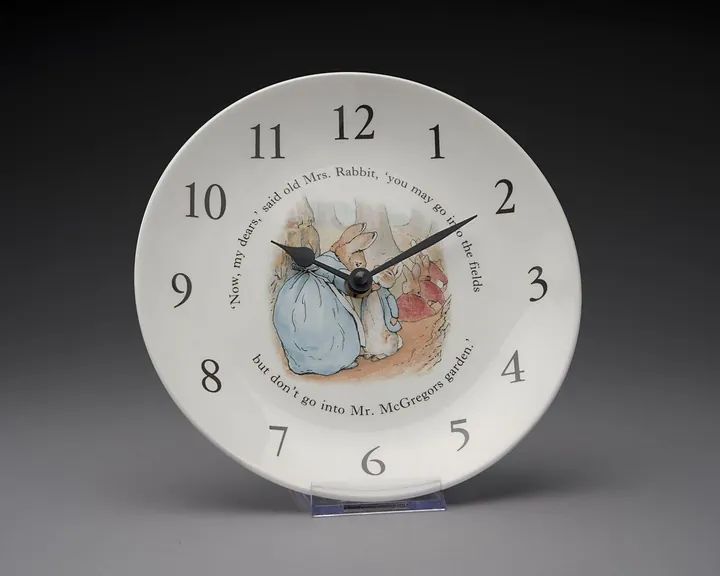
Clock, 'Peter Rabbit', Queen's ware, transfer printing, Josiah Wedgwood and Sons, Barlaston, late 20th century (V&A WE.17466-2014)
Victoria and Albert Museum, London
Clocks · late 20th century
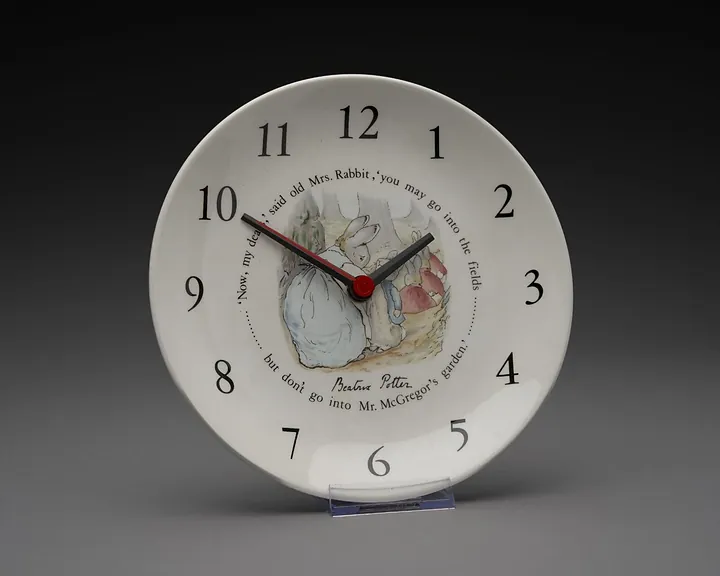
Clock, 'Peter Rabbit', Queen's ware, transfer printing, Josiah Wedgwood and Sons, Barlaston, late 20th century (V&A WE.18029-2014)
Victoria and Albert Museum, London
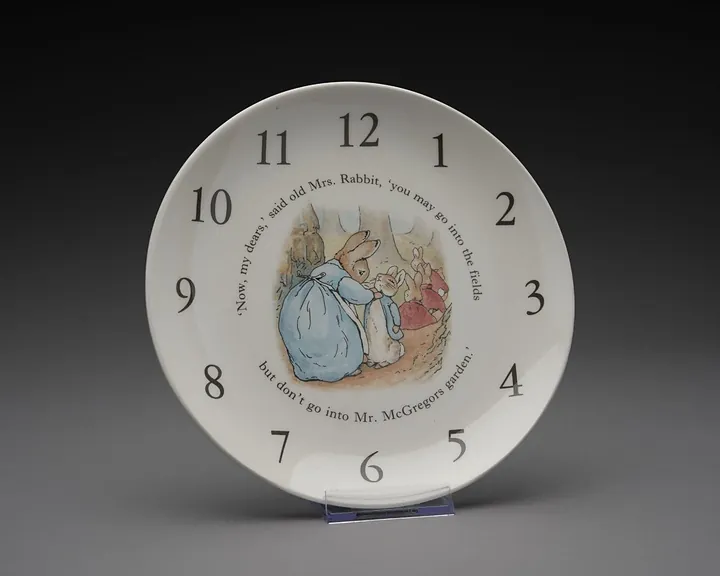
Clocks · late 20th century
Clock, 'Peter Rabbit', glazed earthenware, transfer printing, Josiah Wedgwood and Sons, Barlaston, late 20th century
Victoria and Albert Museum, London
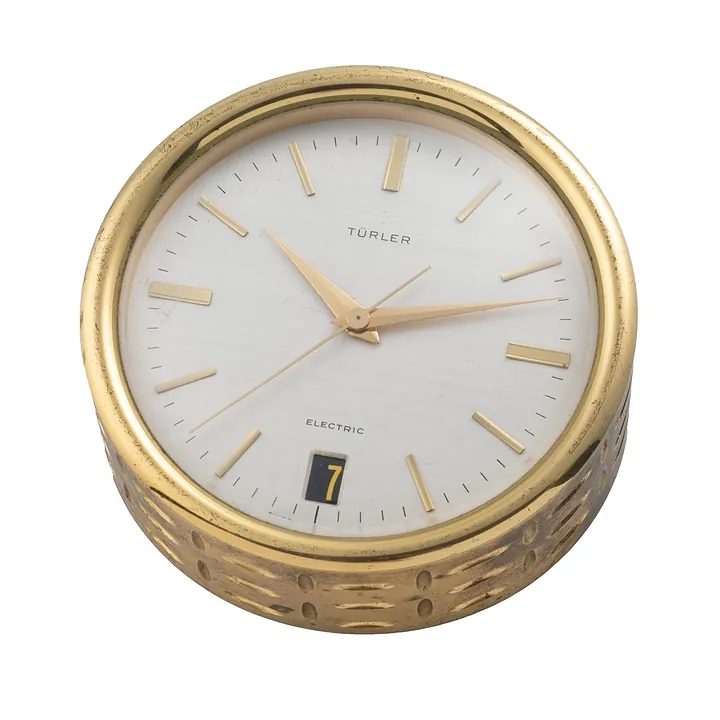
Clocks · c. 1960-1970s
Anonymous clock, c. 1960-1970s
Antiquorum auction archive, Geneva
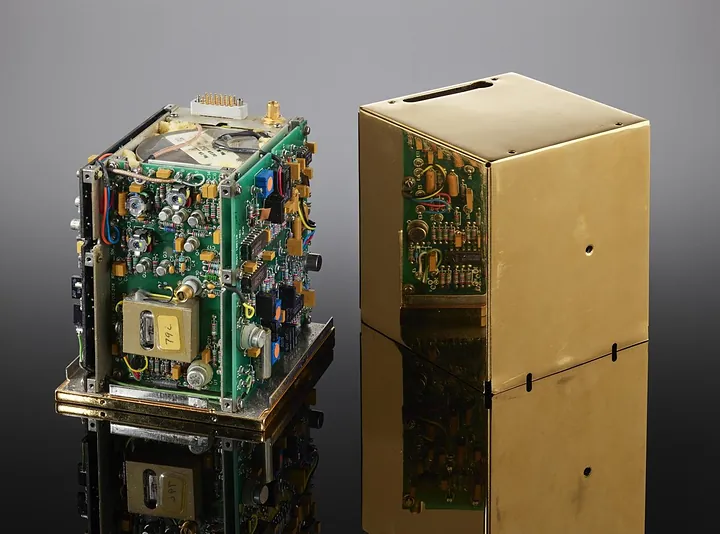
Clocks · 1960–1996
Electric clock by Efratom GmbH, Germany, 1960–1996
Science Museum Group, London
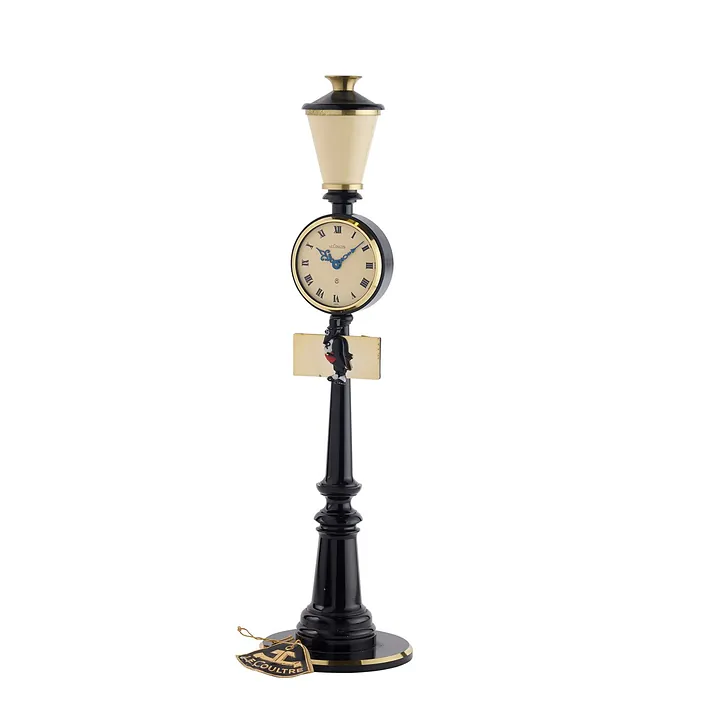
Clocks · c. 1960-1970s
Lecoultre Street Light Lamp, ref. 397, c. 1960-1970s
Antiquorum auction archive, Geneva
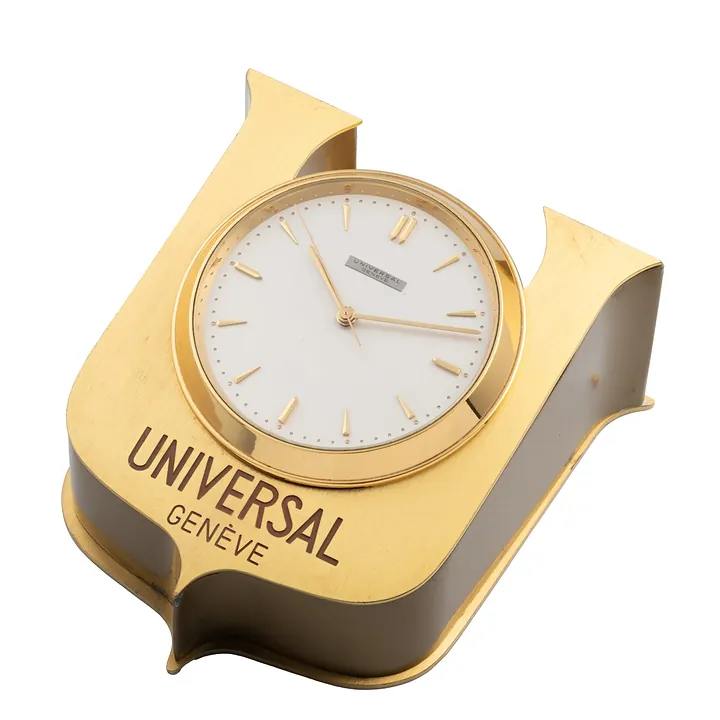
Clocks · c. 1960-1970s
Universal Genève clock, ref. 999.116.01, c. 1960-1970s
Antiquorum auction archive, Geneva