
Clocks · Table clock
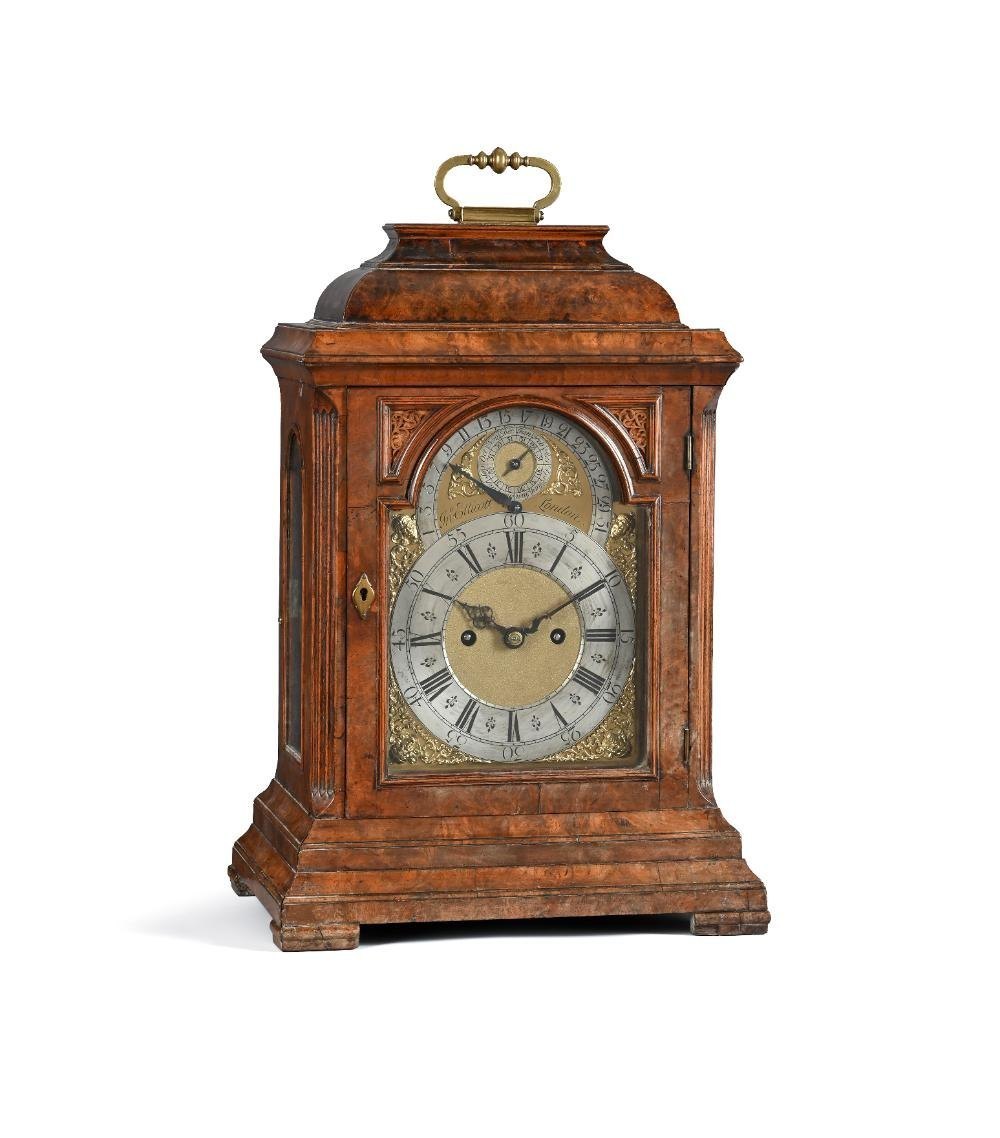
George II burr walnut table clock by John Ellicott
- Maker / attribution
- John Ellicott (source attribution)
- Date
- c. 1745
- Historical period
- Early Modern Horology (1600 – 1750)
- Country of origin
- England
- Place
- London
- Object type
- Table clock
- Holding institution
- Dreweatts 1759 Fine Sales, via Invaluable
- Accession / object no.
- george-ii-burr-walnut-table-clock-by-john-ellicott-512b2eadb8
- Credit line
- Dreweatts 1759 Fine Sales, via Invaluable
- Catalogue title (original)
- George II burr walnut table clock with fly-back calendar, John Ellicott, London, c. 1745 (English)
View the source record ↗ (opens another website in a new tab)Suggest a correction
Record summary
Held and catalogued by Dreweatts 1759 Fine Sales, via Invaluable (object number george-ii-burr-walnut-table-clock-by-john-ellicott-512b2eadb8), this is a table clock attributed to John Ellicott, made in London, England, dated c. 1745. The Atlas places it in the Early Modern Horology period (1600 – 1750) of its Clocks collection. The record is illustrated with 1 photograph.
Assembled from the source record's structured fields. Dates and attributions are given as the source states them; where a field is missing the Atlas leaves it blank rather than estimating.
Catalogue description
Original object description
Produced in London around 1745 by John Ellicott, this George II table clock is housed in a burr walnut veneered case featuring an inverted bell top with a brass swing handle, fluted canted corners, and a double cross-grain molded base set on feet. The 7-inch arched brass dial includes a matted central ground, blued pierced steel hands, cast Indian mask and scroll spandrels, and a silvered Roman numeral chapter ring accented with fleur-de-lys half-hour markers; above sits an arched silvered readout for a retrograde day-of-the-month indication, complemented by a central subsidiary month dial. Powering the clock is a five-pillar, twin-fusee verge movement that strikes on a bell, protected behind a brass backplate ornately engraved with scrolling foliage and a fruit basket. The clock measures 49 cm on its own and rests on an associated George III brass-trimmed mahogany wall bracket dating to roughly 1760, bringing the overall assembly to a height of 82.5 cm.
Historical context
Early Modern Horology (1600 – 1750)
Huygens' pendulum and balance spring transform accuracy; English makers develop the anchor and deadbeat escapements.
Huygens's pendulum (1656–57) improved clock accuracy from about a quarter of an hour to under a minute a day. The anchor escapement (c. 1670) and the long seconds pendulum created the longcase clock; London makers such as Fromanteel, Knibb, Tompion and Quare led European clockmaking, and French makers created the Boulle pendule.
Read the period in the timelineMore clocks from this periodEarlier: Renaissance Horology
Atlas type guide
Bracket, table and spring-driven clocks
Spring-driven clocks freed timekeeping from the hanging weight. The coiled mainspring, documented from the fifteenth century, made portable table clocks possible; to even out its declining force, makers used the fusee, a conical pulley connected to the barrel by a gut line or chain. Renaissance table clocks from Augsburg and Nuremberg — drum-shaped, square or tower-shaped in gilt brass — were luxury scientific objects, often with astronomical dials and alarms.
After the pendulum, English makers developed the bracket clock: a wooden case with a carrying handle, a short pendulum with a verge escapement, and often repeating work to sound the hours on demand at night. Later examples use the anchor escapement. In the nineteenth century, 'table clock' became a broad term for spring clocks of every nationality.
What to look for
- A fusee in the movement (cone-shaped pulley) and the type of line — gut or chain.
- Verge escapement with a short bob pendulum, often with a decoratively engraved backplate.
- Repeat cords or buttons that make the clock strike again on demand.
- Gilt-brass engraved cases and horizontal dials on Renaissance pieces.
- Case shapes: inverted bell, bell top, break-arch, lancet or balloon.
Dating clues
- Drum and tower table clocks: c. 1520–1650.
- Ebony veneered English bracket clocks with verge escapements: c. 1670–1800.
- Engraved backplates were usual on English clocks until c. 1800, then generally plain.
General guidance written by the Atlas editors about this kind of object. It is not a statement about this particular piece; for that, rely on the source record above and on physical examination.
Read next:Anchor (recoil) escapement
Related records
Clocks · 1740–1760
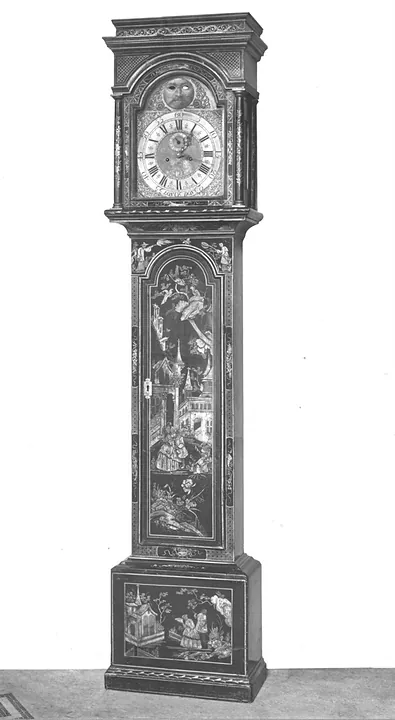
Longcase clock, English, 1740–1760, japanned wood, John Ellicott
Victoria and Albert Museum, London
Pocket Watches · c. 1753
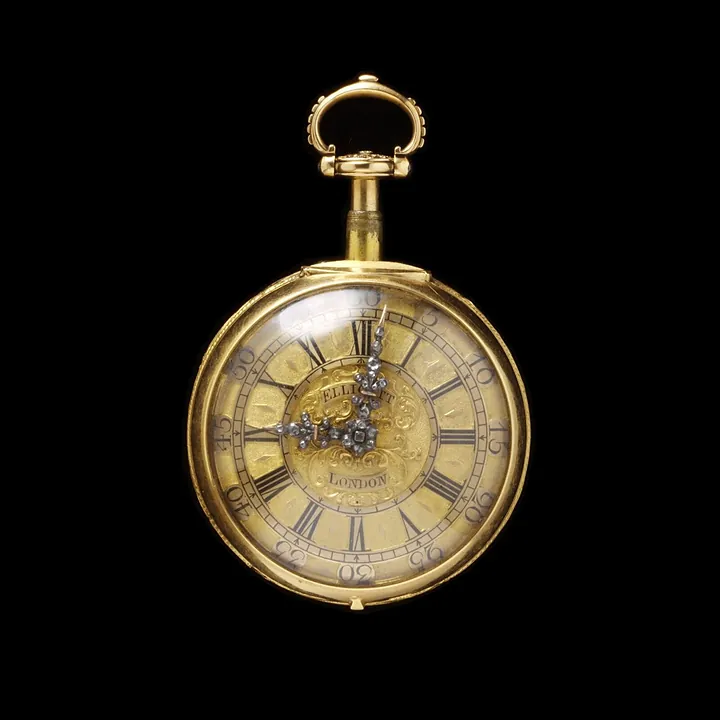
Gold watch, signed 'Jno. Ellicott, London, 3719', the inner case pierced and engraved, with a casemaker's mark 'JB', London, about 1753
Victoria and Albert Museum, London
Pocket Watches · c. 1760
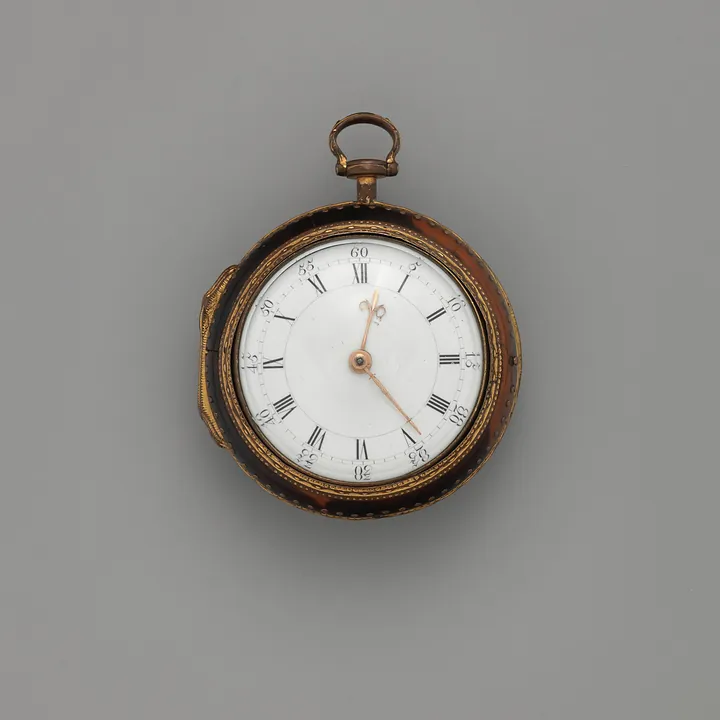
Watch by John Ellicott, England, c. 1760
The Metropolitan Museum of Art, New York
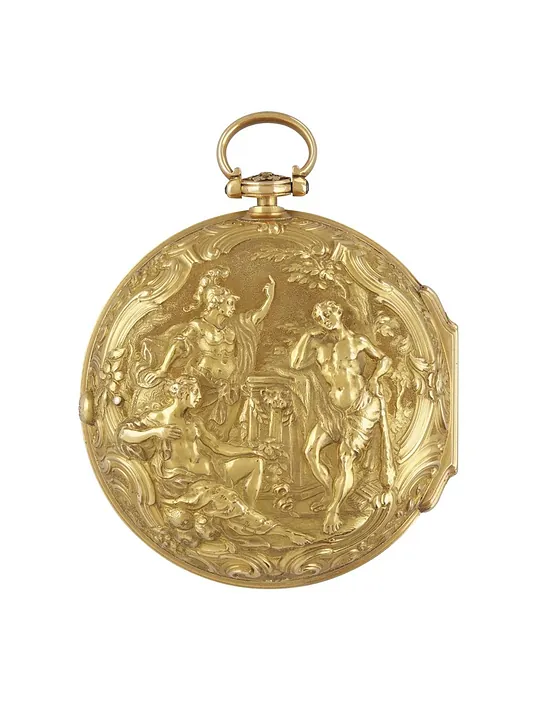
Pocket Watches · 1767
Pocket watch by John Ellicott, England, 1767
Science Museum Group, London
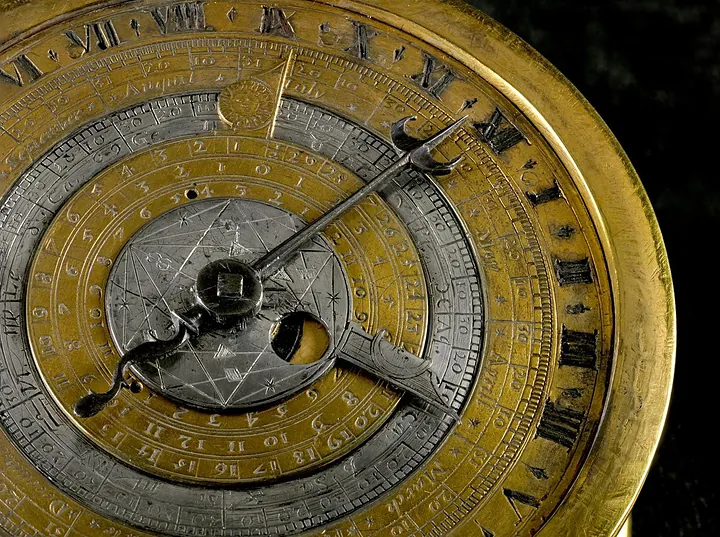
Clocks · 1598–1603
Circular table-clock with calendrical and lunar indications made by Nicholas Vallin in London between 1598 and 1603.
Science Museum Group, London
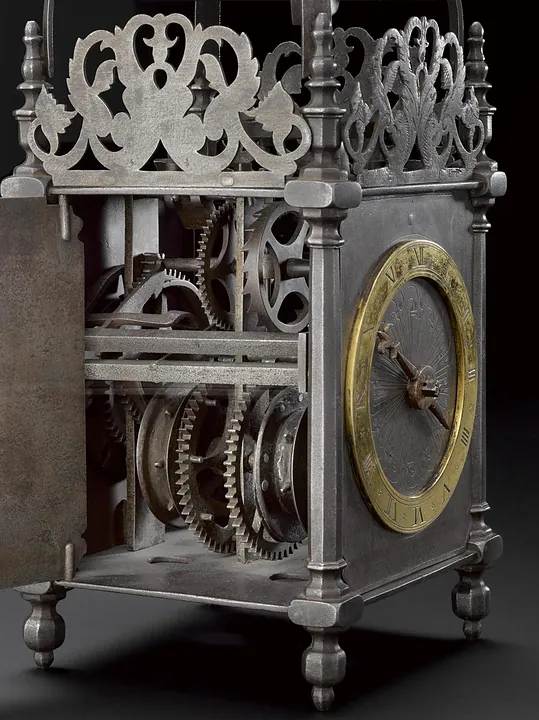
Clocks · 1611
English iron lantern clock, with wheel balance, by John Holloway, Market Lavington, Wiltshire, England, 1611.
Science Museum Group, London
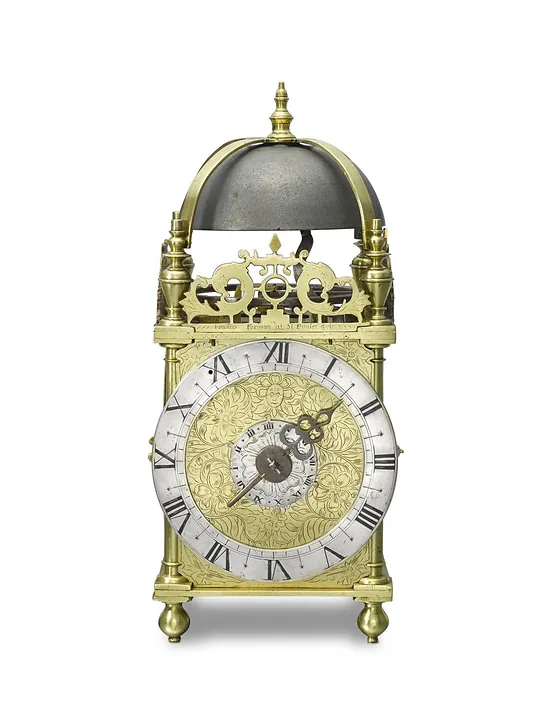
Clocks · 1630
Lantern clock by Francis Forman, England, 1630
Science Museum Group, London
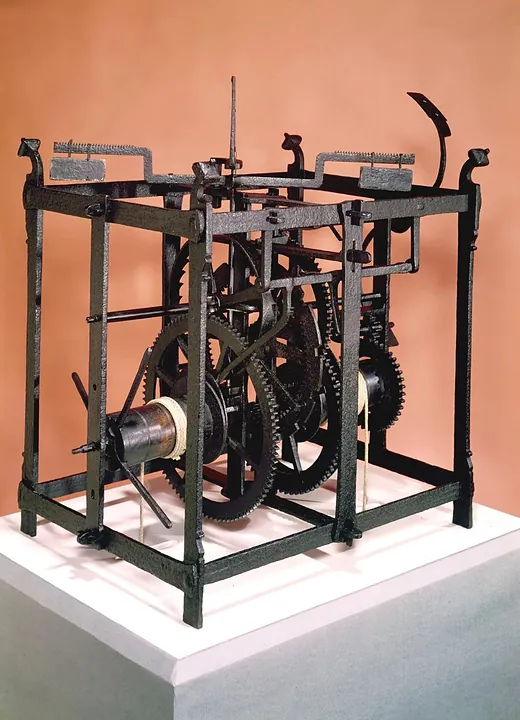
Clocks · 1632–1640
Turret clock, England, 1632–1640
Science Museum Group, London