
Wristwatches · Wristwatch
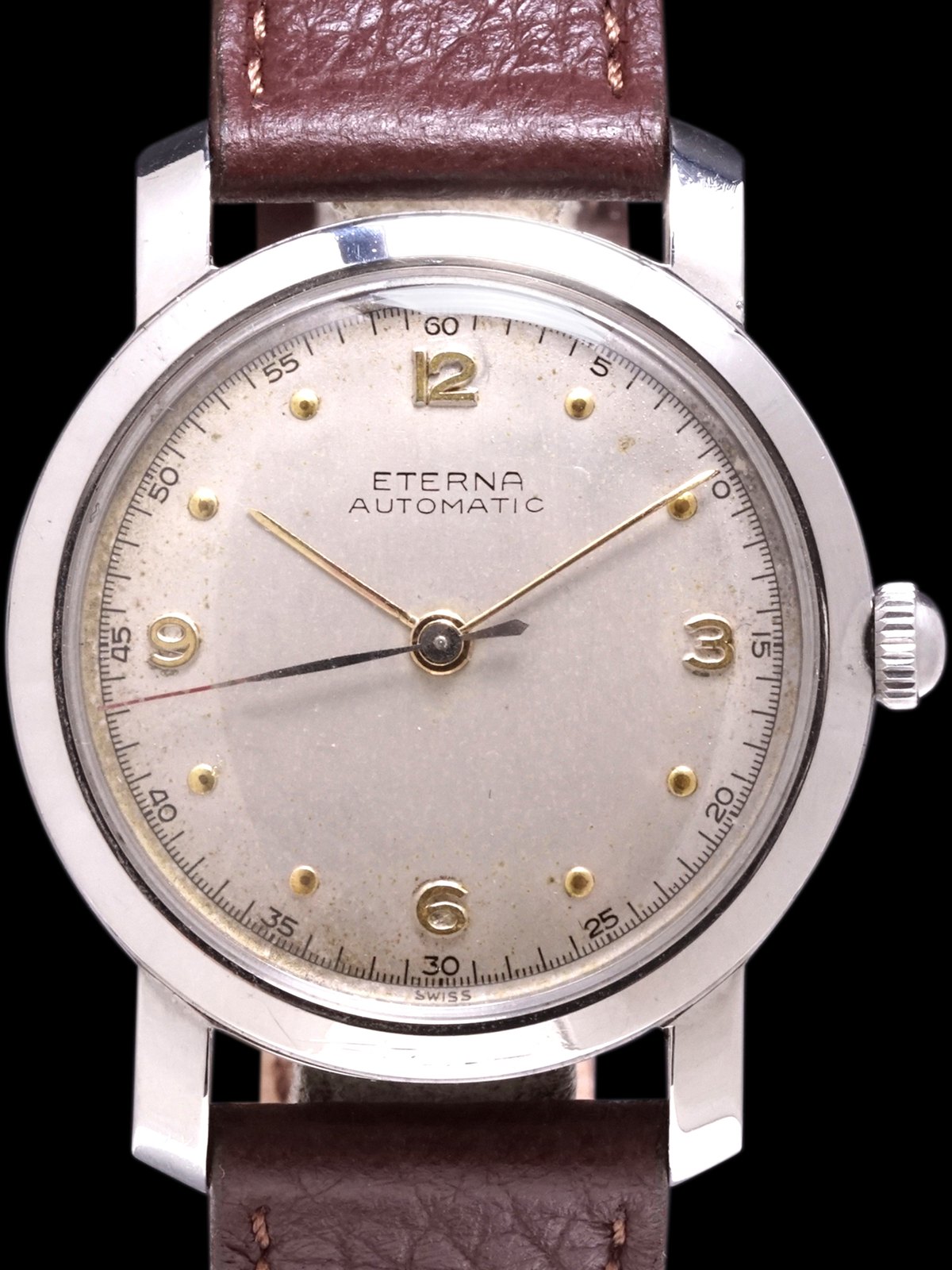
Eterna Automatic "Bumper" Cal. 1159H, 1940s
- Maker / attribution
- Unrecorded in source
- Date
- 1940s
- Historical period
- Golden Age of Mechanical Watchmaking (1900 – 1945)
- Country of origin
- Unrecorded in source
- Object type
- Wristwatch
- Dimensions
- Case 34.5 mm
- Stock no.
- ETRAUT
- Credit line
- Dealer listing, Craft & Tailored (ETRAUT)
- Catalogue title (original)
- 1940s Eterna Automatic "Bumper" Cal. 1159H (English)
View the source record (dealer listing) ↗ (opens another website in a new tab)Suggest a correction
Record summary
Catalogued by Craft & Tailored (dealer), Los Angeles (stock number ETRAUT), this is a wristwatch, dated 1940s. The Atlas places it in the Golden Age of Mechanical Watchmaking period (1900 – 1945) of its Wristwatches collection. Recorded dimensions: Case 34.5 mm. The record is illustrated with 6 photographs.
Assembled from the source record's structured fields. Dates and attributions are given as the source states them; where a field is missing the Atlas leaves it blank rather than estimating.
Catalogue description
Dealer description — Craft & Tailored
In the 1900s, wristwatches were just starting to become fashionable. Schild Fréres, as the company was then known, started to produce ladies’ timepieces that were based on modified pocket watch movement that came from small pocket watches. In 1905, Schild Fréres changed its name to Eterna. Eterna from that point on continued to be at the leading edge of watch development. Matter of fact Eterna is responsible for the first alarm wristwatch which was patented by the company in 1908. Another interesting and little-known fact is that in 1932, Eterna created a subsidiary company called ETA SA. ETA was created to make movements for Eterna and other Swiss watch companies. ETA is still in business today and has withstood the test of watchmaking technology and time, ETA is the largest Swiss manufacturer of both automatic, mechanical, and quartz movements which are the base caliber movements still being used in today's top tier brands still to this day. Eterna is best known for its more sports-driven tool watches such as the Eterna Kontiki and Super Kontiki dive watches, but the brand has produced some very interesting watches in its 165 years of existence, including some incredible time only watch like this 1940's era Eterna Automatic, and that would be just barely scratching the surface of what has come from this brand over its many many years of existence. This specific Eterna "bumper" leverages the Eterna atomic self-winding "bumper" Cal. 1159H movement which in the 1940s was a triumph of horological excellence in itself. The dial is simple yet sophisticated possesses the quality and feel similar to what you'd find in a Patek Phillippe from the same era with a raised font, text, and an outer minute track. The case is simple yet interesting with its unique and broad "fancy" lugs. The thin simple hands paired with simple details like the red tip of the sweep seconds make this a winner in our book. SPECS Stock # ETRAUT Brand Eterna Style Dress Model Automatic Serial 1187490 Size Men's Material SS Dial Silver Millimeters 34.5mm Bracelet 2pc Handmade Leather Strap CASE & BRACELET The case appears to have been lightly polished in the past yet retains its factory case geometry and thick even lugs. The crown is also correct and appears to be original to the watch The watch will come supplied on a textured calfskin leather strap. DIAL & HANDS The original dial has achieved a wonderful and warm patina showing age without any damage or blemishing The original hands show consistent patina throughout and the sweep seconds hand retains its original red tip. ACCESSORIES Non. The watch is keeping time, previous service history is unknown.
Historical context
Golden Age of Mechanical Watchmaking (1900 – 1945)
The wristwatch displaces the pocket watch; waterproof cases, self-winding and grand complications.
The wristwatch overtook the pocket watch. Military use in the First World War, aviation, water-resistant cases (1926), automatic winding (1923–31), rectangular Art Deco designs and early chronographs and calendars defined the period.
Read the period in the timelineMore wristwatches from this periodEarlier: Industrial Revolution
Atlas type guide
Automatic (self-winding) watches
Self-winding watches use the wearer's motion to wind the mainspring. Abraham-Louis Perrelet and Breguet made 'perpétuelle' pocket watches with oscillating weights in the late eighteenth century, but the principle only became practical in the wristwatch. John Harwood patented a bumper automatic in 1923; Rolex's Perpetual rotor (1931) winding in one direction, and later bidirectional rotors (Eterna, Felsa Bidynator), established the modern form. Micro-rotors (Universal Genève, Buren) and peripheral rotors made automatic watches thinner.
What to look for
- A semicircular rotor turning 360° over the movement, or a 'bumper' weight that rebounds between springs.
- 'Automatic', 'Perpetual' or 'Self-winding' on the dial.
- A sealed screw-back case, since automatic watches are wound less often by the crown.
Dating clues
- Bumper automatics: 1923–c. 1955.
- Full rotors: from 1931 (Rolex); widespread after c. 1950.
- Micro-rotors: from 1954–1958.
General guidance written by the Atlas editors about this kind of object. It is not a statement about this particular piece; for that, rely on the source record above and on physical examination.
Related records
Wristwatches · 1900–1999
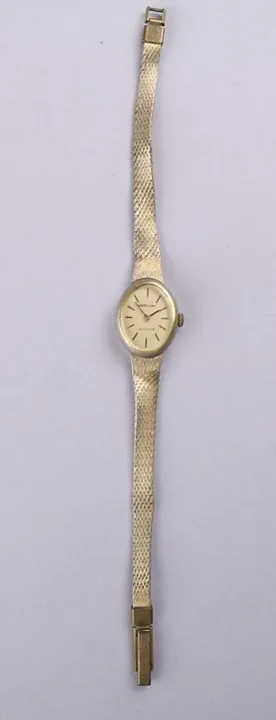
Wristwatch by Mercury, 1900–1999
Modemuseum Hasselt
Wristwatches · 1900–1999
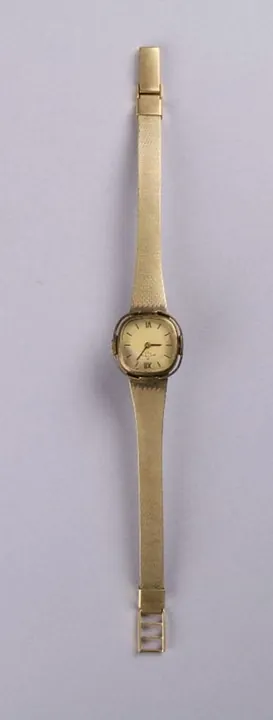
Wristwatch by Nutrix, 1900–1999
Modemuseum Hasselt

Wristwatches · 1920
Wristwatch, 1920
Modemuseum Hasselt

Wristwatches · 1931
Rolex 'Oyster Perpetual' rotor self-winding wrist-watch, lever escapement, in steel case with glass in back, Montres Rolex SA, Geneva, Switzerland, 1931
Science Museum Group, London
Wristwatches · c. 1936
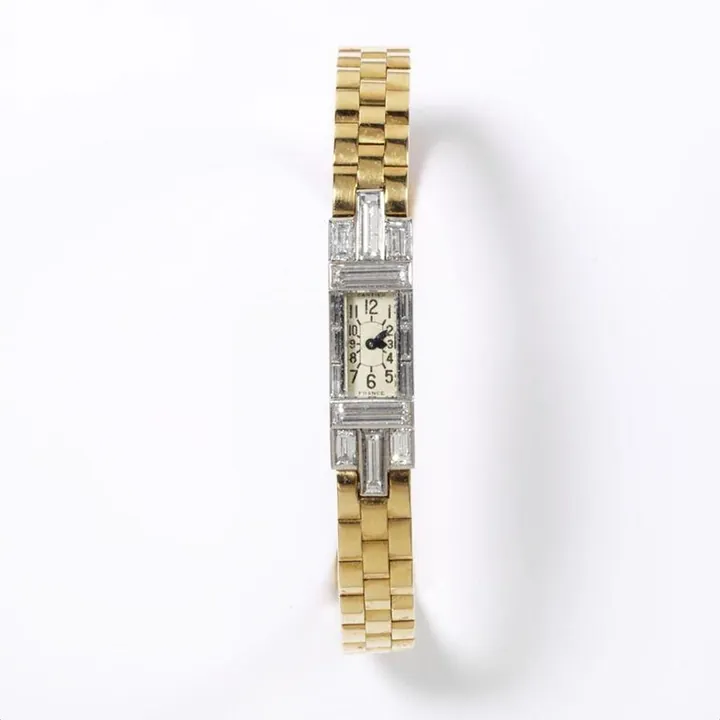
Watch with diamond-set platinum case and gold link bracelet, Cartier, Paris, c. 1936.
Victoria and Albert Museum, London
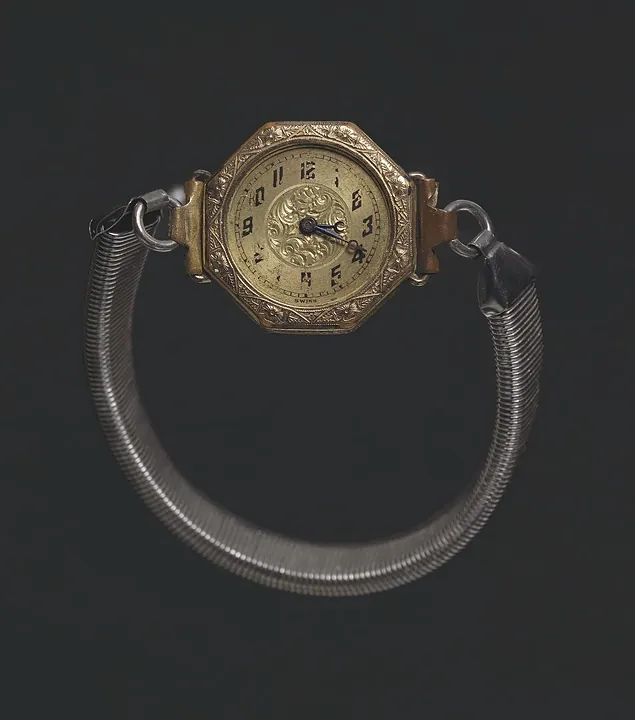
Wristwatches · early to mid 20th century
Woman's wristwatch worn by Harriette Vyda Simms Moore, early to mid 20th century
National Museum of African American History and Culture, Smithsonian Institution, Washington DC

Wristwatches · 1900–1999
Wristwatch by Certina, Switzerland, 1900–1999
Nordic Museum Foundation
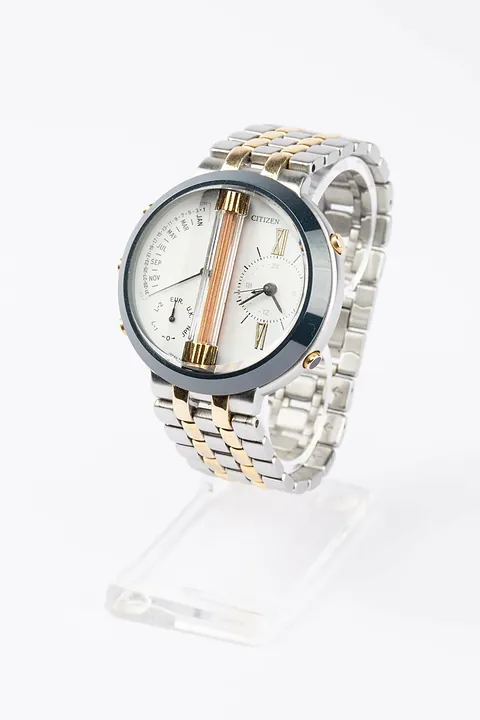
Wristwatches · 1900–1999
Wristwatch by Citizen, Japan, 1900–1999
German Clock Museum